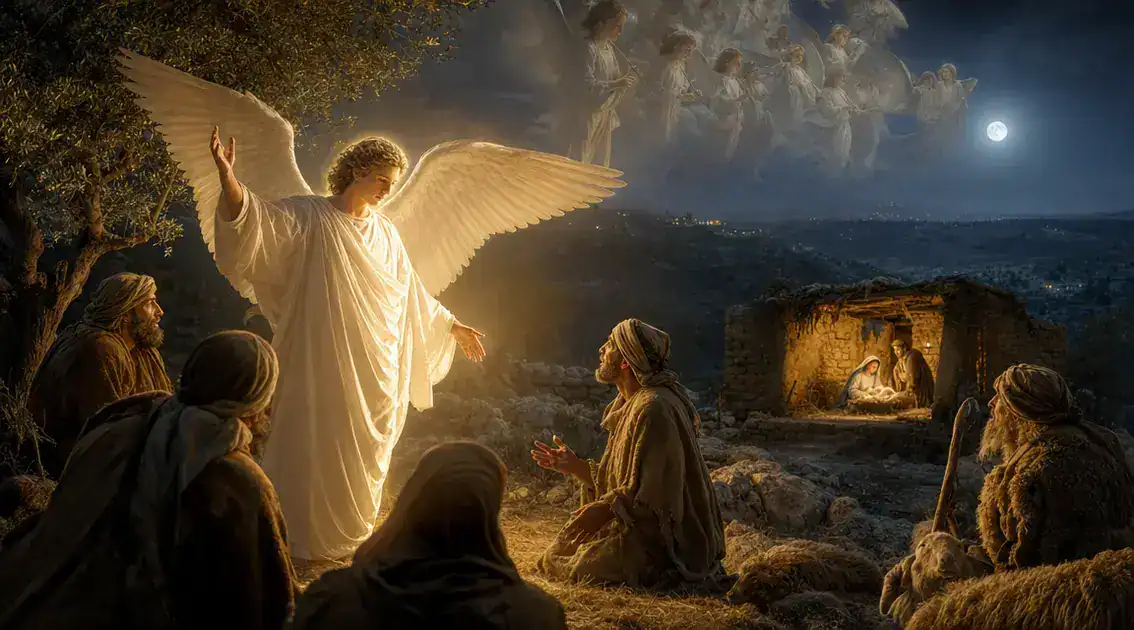

Angels in Genesis appear as divine messengers and theophanies who witness creation, deliver promises, warn of judgment, and enact rescue—teaching hospitality, justice, and attentive prayer as faithful responses that open human life to God’s presence, shaping ethical reform and compassionate action across Jewish and Christian traditions.
angels in genesis — have you ever noticed how these messengers thread creation, promise, and judgment through the earliest stories of Scripture? They arrive quietly, test hospitality, and compel us to watch how heaven and earth meet.
Angelic presence at creation: Genesis and the image of heavenly attendants
In Genesis the sky hangs above a formless deep, and the text says the Spirit of God hovered over the waters. That quiet image gives a sense that life begins under a mindful, living presence rather than by chance. Reading it devotionally lets us feel the hush before shape and light arrive—a sacred stillness that holds the world as it comes into being.
Many ancient readers and faithful interpreters picture gentle heavenly beings at that first dawn, not to steal God’s glory but to witness and serve. These imagined figures, often called the heavenly attendants, stand near the edges of the scene, honoring the Creator and the work of forming life. Seeing them there invites reverence: creation is not merely a scene but a sacred event watched over by heaven.
That devotional vision changes how we live in the world. If the story opens with attendants and a hovering Spirit, then our everyday care for nature becomes part of a larger, holy rhythm. We are invited to cultivate wonder, gratitude, and simple acts of stewardship as responses to a world regarded as both given and guarded.
Theophanies and divine messengers: when God appears through angels
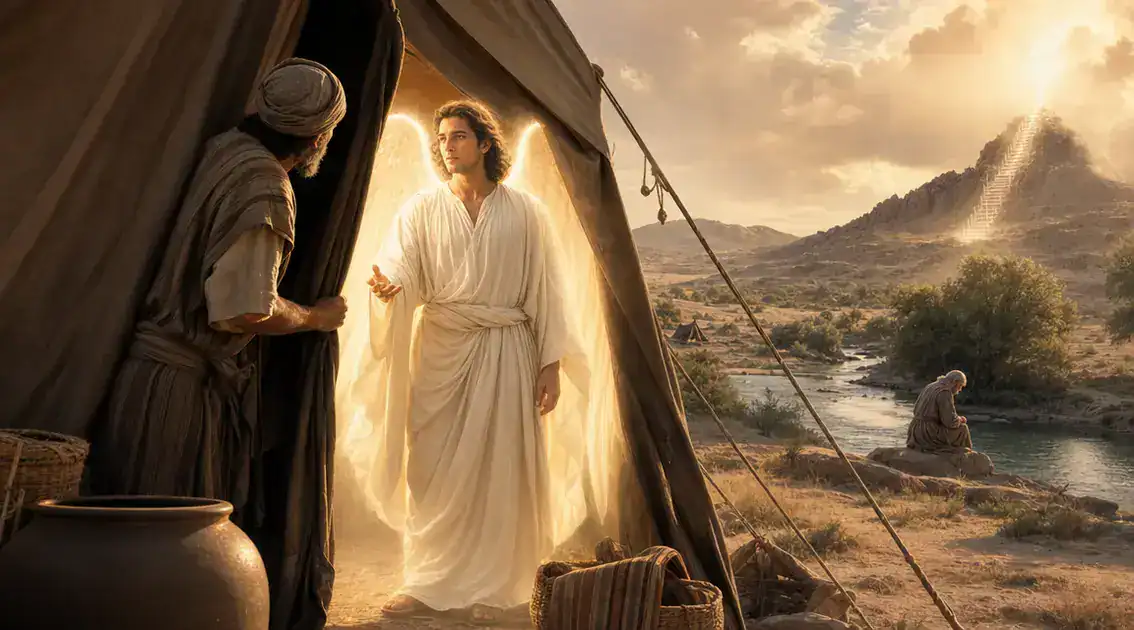
In Genesis, God often comes near not as a distant voice but through a visible presence we call a theophany. Sometimes that presence is named the Angel of the Lord, speaking with authority and care. These scenes feel intimate: a traveler meets a messenger, a tent hosts strangers, and heaven’s notice becomes a plain human encounter.
Read together, the stories form a small gallery of meetings. Hagar meets a comforting messenger by a well; Jacob sees angels on a ladder and later wrestles with a mysterious man; Abraham receives three visitors who bring promise and challenge. Each scene shows God stepping into daily life, bending the ordinary toward the sacred in a way that asks for both attention and trust.
For devotion, these appearances teach us to watch for God in the unexpected. They invite simple acts—listening, offering shelter, or pausing in prayer—so that hospitality and faith become ways to recognize the divine. When we expect God in the ordinary, our eyes open to mercy, warning, and promise woven through the calm rhythms of life.
Abraham’s hospitality and the human response to angelic visitors
Under the oak of Mamre, Abraham hurries to welcome three strangers who arrive at his camp. He bows, offers water for their feet, and urges them to rest under the shade while he runs to prepare a simple meal. The story lingers on small, concrete actions—washing, seating, baking—that show what true hospitality looks like in ordinary life.
Genesis lets the visit carry deeper meaning: these guests bring word and blessing, and the household responds with open hands. Abraham’s readiness to serve turns an ordinary reception into a sacred encounter, and the text invites us to see such moments as potential theophanies. Here, service and welcome become the way blessing moves into a family and a promise begins to take shape.
For devotion, the scene asks a gentle question: how do we make room for the unexpected in our daily routines? Preparing a meal, pausing to listen, or offering shelter are small acts that train us to recognize God at work through others. When we practice simple kindness, we open space for grace to arrive in forms we did not predict.
The visit to Lot: compassion, warning, and the reality of judgment
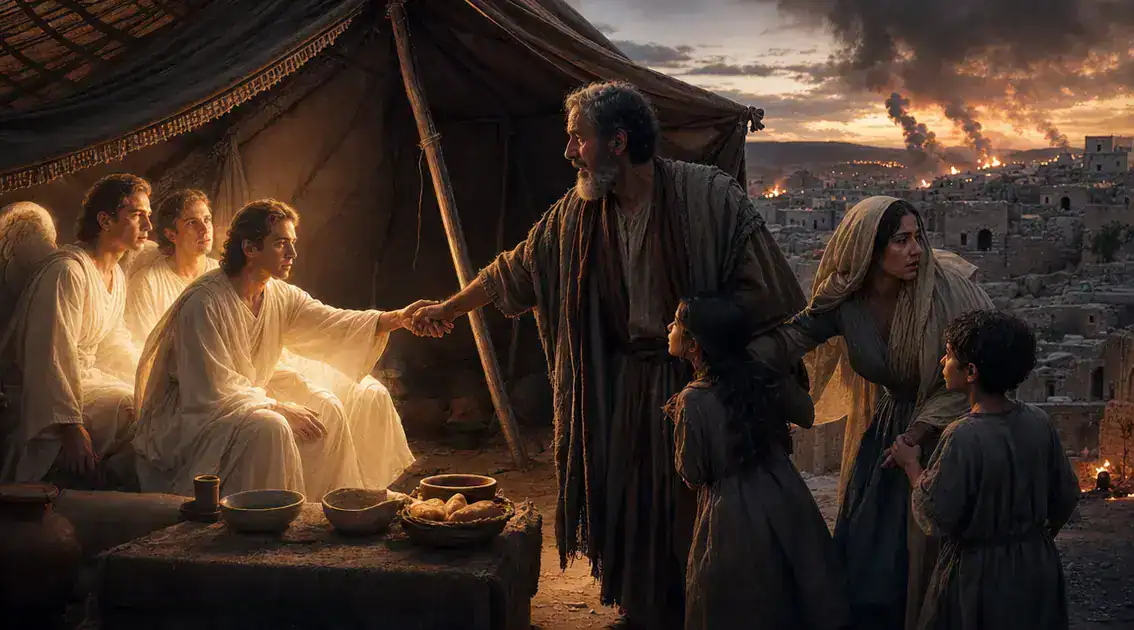
When the angels arrive at Sodom, they enter as quiet guests and meet Lot’s quick kindness. He urges them in, washes their feet, and prepares a meal. In that small homey scene we see both compassion and the first hint of a terrible choice facing the city.
Soon the visit turns urgent: the angels reveal the city’s coming doom and press Lot to leave without delay. They take his hand, guide his family, and speak plainly about where to flee. Their actions balance firm warning with clear rescue, showing that divine messages can be both urgent and caring.
The story asks us to hold two truths together: God’s holiness brings just judgment, yet God moves to save those who listen. For devotion this means attending to warnings, sheltering the vulnerable, and answering calls to move when grace directs us. The scene leaves us mindful that mercy often arrives through a firm, loving command to go and live.
Interpreting the destruction of Sodom and Gomorrah across traditions
The story of Sodom and Gomorrah has been read many ways across time. Jewish, Christian, and other voices each emphasize different details, but most return to two clear themes: judgment for deep wrongs and the need for faithful hospitality. These themes help readers see why the scene troubles us and why it still calls for reflection.
In Jewish tradition the story often highlights social injustice and the failure to care for the stranger. Many rabbis speak about cruelty, greed, and the refusal to help the needy as the heart of the city’s sin. Christian interpreters add layers: some stress moral corruption, while others balance that with God’s outreach and the surprising rescue of Lot and his family. Together these readings show a pattern—warning and mercy walking side by side.
Today many readers turn the tale toward concrete action. They ask how the text challenges us to defend the vulnerable, practice kindness, and listen to warnings that call for change. Devotionally, the passage becomes a reminder that divine concern meets human choice: when we answer with compassion and justice, we live into hope; when we ignore suffering, we invite hard consequences. This blend of caution and care keeps the story present for faith and life now.
Practical devotion: what Genesis’ angels teach our prayer and ethics
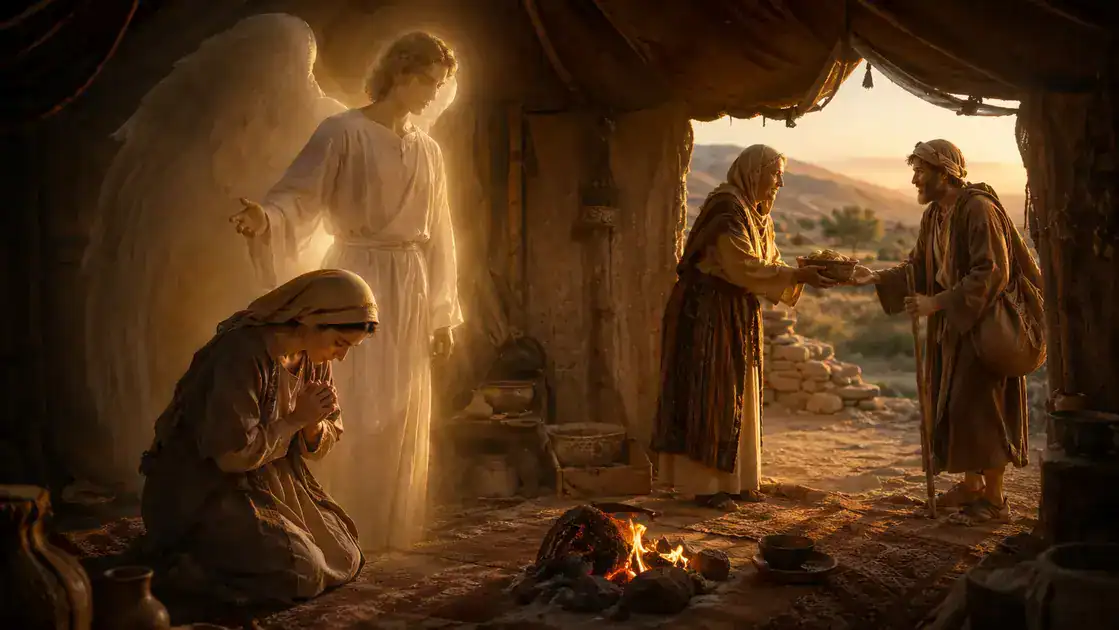
Genesis’ angels teach us that prayer is often a quiet, practical act of attention. They arrive to listen, warn, and help, and so our prayers can begin by simply paying attention to those near us. This kind of prayer is not only words; it is a readiness to act when mercy or warning appears.
These stories also shape a moral life grounded in small, steady choices. Abraham’s welcome, Lot’s protection, and the angels’ guiding hand show that hospitality, justice, and mercy are forms of prayer in motion. When we feed the hungry, shelter the vulnerable, or speak truth that saves, we join the work the angels point toward.
Devotionally, try short practices that train both heart and hands: a moment of silent listening each morning, a brief prayer for strangers you meet, and one concrete act of kindness each week. Over time these simple steps shape a life that expects God’s presence in the ordinary and responds as the Genesis scenes model—attentive, loving, and ready to move.
A prayer for seeing the sacred
Holy One, thank you for sending messengers and moments that wake our hearts. Help us to notice the gentle ways you appear—in a kindly face, a timely warning, or a quiet act of care. Give us eyes to see and ears to hear your nearness each day.
Teach us, like Abraham and Lot, to welcome what arrives with humble hands and brave hearts. Let our small acts of service become pathways of grace. May hospitality, justice, and mercy shape the rhythm of our lives so we might reflect your love.
When judgment calls for sober change, grant us courage to turn and to move. When mercy comes, teach us to receive it and to pass it on. In the ordinary and the urgent, let us meet heaven’s voice with faithful response.
Keep us mindful that the world is watched and held by your care. Send your peace to steady our steps, and the wonder of your presence to warm our days. Amen.
FAQ – Angels in Genesis: questions seekers often ask
Did angels really appear in Genesis?
Yes. Genesis records several encounters with heavenly messengers—Hagar at the spring (Gen. 16), Abraham’s three visitors (Gen. 18), Jacob’s ladder and wrestling (Gen. 28, 32), and the rescue of Lot (Gen. 19). These scenes show God acting near to people through visible, meaningful presences.
Who is the “Angel of the Lord” in those stories?
The title appears in key Genesis scenes and sometimes speaks as God himself (see Gen. 16; 22). Religious tradition reads this in different ways: some Jewish and Christian voices call the figure a divine messenger; many Church Fathers and later Christians see a pre‑incarnate appearance of Christ in certain theophanies. Either way, Scripture treats these encounters as authentic and weighty revelations of God’s presence.
What do the Genesis visits teach about hospitality?
Stories like Abraham’s welcome (Gen. 18) and Lot’s sheltering of strangers (Gen. 19) place simple acts—water for feet, a shared meal—at the heart of holy response. Scripture and tradition argue that hospitality is not just social polish but a spiritual discipline (see Heb. 13:2). Welcoming the stranger can become a way we meet God in daily life.
How should modern readers understand the destruction of Sodom and Gomorrah?
The episode warns against deep social sin—violence, cruelty, and the refusal to care for the vulnerable (Gen. 19). Jewish and Christian interpreters emphasize both God’s justice and God’s mercy, shown in the rescue of Lot. For today, the passage calls us to protect the weak, practice justice, and heed prophetic warnings before harm becomes inevitable.
Can angels warn or guide people today as they did in Genesis?
Scripture shows angels guiding and protecting (Gen. 19; Acts 12:7; Psalm 91:11). Tradition teaches they serve God’s care for the world. That said, guidance now often comes through Scripture, prayer, conscience, and community; believers discern any sense of angelic prompting by comparing it with God’s revealed will and wise counsel.
How can I live out the spiritual lessons of Genesis’ angels?
Begin with small, faithful practices: cultivate hospitality, listen in prayer for God’s nudges, and act for justice and mercy in your neighborhood. Read the Genesis scenes slowly, let them shape your habits (welcome, protect, speak truth), and pair that practice with Scripture and communal worship so your actions stay rooted in gospel truth (see Matt. 25:35–40).