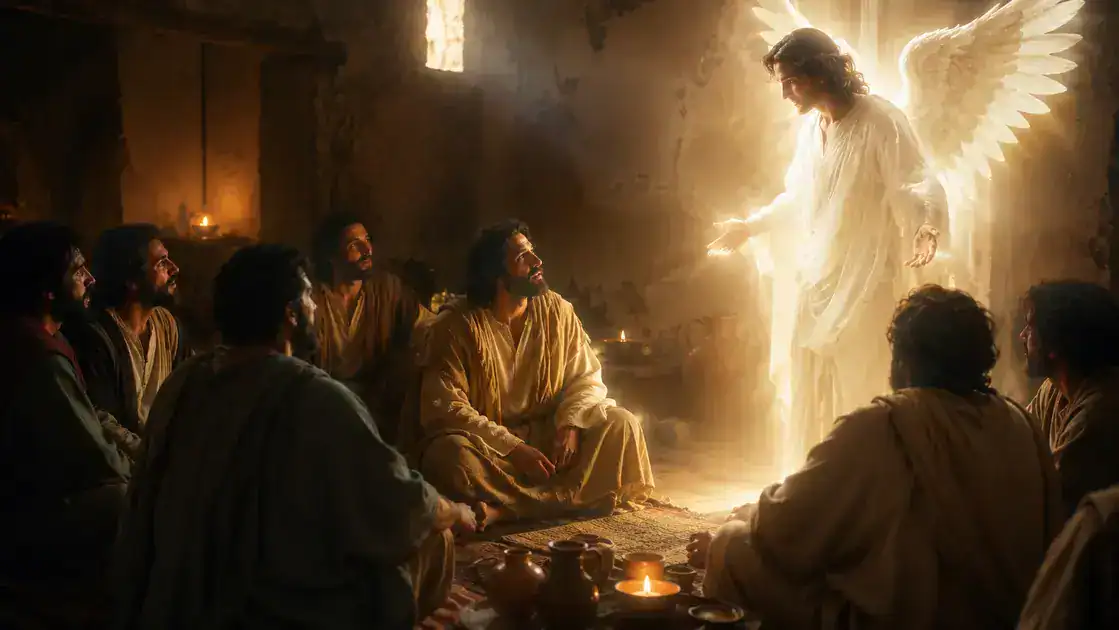

Angels in the Acts of the Apostles are portrayed as God’s timely messengers who intervene with visions, protection, and direction to advance the mission, confirm leaders, free the imprisoned, and open cross-cultural doors—signs of divine providence that guide the early church toward faithful obedience and the spread of the gospel.
angels in acts of the apostles — have you ever wondered how these brief, luminous visits shaped the fledgling church’s courage and mission? I’ve studied these passages closely; here is what stood out.
Angel encounters in key Acts narratives
Acts shows angels as concrete, timely messengers who change the course of events. In prison cells an angel’s presence opens doors and frees the faithful, and on lonely roads a clear word sends a servant into ministry. These short, luminous appearances are not theatrical; they are practical interventions that move the early church from fear toward faithful action.
Notice how the encounters work: a single command, a gentle touch, or a quiet vision shifts a human heart or a whole group. Cornelius receives a vision that breaks down barriers, Peter is led safely past locked gates, and Paul is comforted in the storm with a promise of deliverance. Each scene shows God’s providence enacted through an angel’s voice, steadying leaders and opening new paths for the gospel.
For spiritual readers, these stories invite a simple posture: watchful trust and readiness to obey. They teach that help may come subtly—through a nudge, a clear thought, or a prayer answered in an unexpected way—and that such moments ask for courage more than spectacle. Holding these narratives close can renew hope: when the church is small and the task is large, divine aid may arrive in quiet, ordinary ways.
Theological meanings of angelic intervention

In Acts, angelic appearances suggest that God does not leave his church to chance. These messengers arrive with clear words or actions that nudge leaders and communities toward the next step. Rather than drawing attention to themselves, they carry a simple purpose: to bring God’s guidance into concrete situations and to steady fearful hearts.
Theologically, these scenes highlight God’s providence and the ordered care that shapes salvation history. Angels in Acts function as instruments of divine sending, opening doors, confirming calls, and turning crisis into mission. When Peter is freed from prison or Cornelius receives a vision, the story shows that growth and direction in the church flow from God’s active will as much as from human faithfulness.
Spiritually, these accounts invite a posture of trust and discernment. We are taught to listen for God’s voice in prayer and Scripture, ready to obey even when the promptings are quiet or sudden. At the same time, the angelic ministry directs us beyond itself toward the living center of faith — Christ and the Holy Spirit — reminding us that heavenly help always serves the gospel and the life of the church.
Angels and the expansion of the early church
Angels in Acts often appear at turning points where the gospel moves beyond a single town. In quiet, tangible ways they open doors, free prisoners, or bring a clear message that pushes the mission forward. When an angel frees apostles from prison or when a vision comes to a Roman centurion, these moments make room for the church to grow among new people and places. This shows that heavenly help often works through simple acts that change the path of witness.
These scenes teach that angelic ministry serves the mission rather than drawing attention to itself. The visits encourage leaders, calm fears, and confirm God’s call to reach out to strangers and nations. In this way, angels underline a deeper truth: growth in the church is not only human effort but also a participation in God’s intentional sending. Their presence reminds us that every step of mission rests within a larger, loving plan.
Spiritually, these accounts invite a posture of readiness and hospitality. We learn to look for small signs of guidance, to answer whenever a clear word or peace urges us on, and to trust that God can use even fragile means to bring many to faith. Holding these stories close helps the church move with courage—expecting help, stepping into service, and leaving space for the surprising ways God chooses to expand his work.
Miracles, protection, and divine guidance in Acts

Acts gives us vivid scenes of miracles, protection, and clear guidance that shape the early church’s steps. In night-time prisons we read of doors opened and chains loosened; on stormy seas a calm word brings hope; in visions a stray Gentile is drawn into the family of God. These moments are not showy displays but signs that God walks with his people and keeps the mission alive in times of danger.
Each episode points to a purpose behind the wonder. The miracles protect those sent to speak the gospel, confirm leaders for risky tasks, and remove barriers that would stop the good news. Rather than drawing attention to themselves, these acts steer the community back toward trust and action. In that way, the wonders in Acts underline that divine care seeks the spread of love and truth, not human praise.
For the faithful reader, these stories invite a renewed posture of hope and readiness. They teach us to look for help in humble forms—a door that opens, a sudden peace, a clear conviction—and to respond with simple obedience. Holding these accounts close can steady us in trials, reminding us that whether by angel, vision, or the quiet leading of the Spirit, God’s guidance and protection are given to keep the church moving forward.
How the church fathers read these angelic episodes
The church fathers read the angelic scenes in Acts as signs of God’s close care for his growing people. Fathers like Augustine and John Chrysostom spoke of these visits as proof that God guides the church through times of danger and doubt. They did not treat angels as ends in themselves but as messengers who help the faithful keep moving toward the gospel.
Some writers, like Origen, offered deeper spiritual readings, seeing angels as symbols of God’s wisdom or of the soul’s helpers on the way to God. Yet even when they used allegory, they held to a simple point: these episodes show God’s providence in action. The stories steady the heart, reminding believers that heavenly help accompanies the church’s mission and daily life.
For pastoral use, the fathers urged trust and readiness. They invited people to pray with hope, to obey clear promptings, and to live in ways that make room for God’s work among them. In their letters and homilies, angelic episodes become a call to faithful living—quiet, steady, and rooted in prayer—because the servant who listens may find unexpected help on the journey.
Practical reflections: recognizing angelic presence today

When we learn to notice angelic presence today, it often shows up in small, ordinary moments. A sudden calm in the midst of fear, a clear nudge to call or go, or an unexpected door that opens can all feel like gentle help. These signs are not meant to amaze us but to steady us, offering gentle guidance that keeps people faithful and brave.
Sometimes the sign arrives as an answered prayer—a timely word from a friend, a person who appears at just the right moment, or protection from harm. Other times it is an inner conviction that matches Scripture and wise counsel. The stories in Acts teach us that heavenly help often works through people and events, so we learn to watch for how God uses neighbors, leaders, and simple circumstances to move the mission forward.
To grow in this awareness, practice quiet listening in prayer, read Scripture with patience, and seek the counsel of faithful companions. Make room for small acts of obedience and be ready to serve when guidance arrives. Above all, remember that any sign pointing to care and mission should draw you nearer to love and service—not to seeking signs for their own sake—because true angelic help points to Christ’s work among us.
A gentle blessing as you go
May the quiet moments of Acts remind you that you are seen and held. The angelic visits in those stories point us to a tender truth: God’s presence reaches into ordinary life to steady and guide us.
May you have ears to hear small promptings and the courage to obey. Often help arrives as a calm thought, a timely friend, or an open door. These are gifts, not spectacles, and they ask for simple trust.
Walk with a ready heart. Practice brief prayer, listen to Scripture, and offer service where you are. Let each small act be a way of saying yes to the work God is doing through people and ordinary events.
May peace go before you, wonder fill your steps, and the work of love keep you company. May you carry this sacred story into your day, ready to receive and to give. Amen.
FAQ – Angels in the Acts of the Apostles: questions seekers ask
Where do angels appear in Acts and what do they do?
Angels appear at key moments in Acts to open doors, give messages, and steady God’s people. Scripture shows them freeing the apostles (Acts 5:19), rescuing Peter from prison (Acts 12:7), bringing a vision to Cornelius (Acts 10), and assuring Paul in a storm (Acts 27:23–24). Their role is practical: they serve God’s purposes and help the mission move forward.
Do the angels in Acts mean every person has a guardian angel today?
Acts shows angels acting for God’s plan, sometimes toward individuals. The Bible and tradition also speak of ongoing angelic care (see Psalm 91:11 and Jesus’ words in Matthew 18:10). Many Christian traditions hold that God may give personal guardians, but the chief reality is God’s providence. We are invited to trust God’s care, whether it comes by an angel, a person, or the Spirit.
How can I tell if a prompting is from an angel, the Holy Spirit, or my own thought?
Discernment looks for agreement with Scripture, inner peace, wise counsel, and the fruit of obedience. In Acts, angelic messages fit God’s plan and bear good fruit. The church advises prayer, patient listening, and asking trusted leaders or friends to help test promptings (1 John 4:1 offers a model of testing spirits). Humble obedience and Scripture are the surest guides.
Did the early church fathers take these Acts episodes as literal events?
Yes. Many fathers—such as John Chrysostom and Augustine—read these passages as real interventions of God through angels. Some writers, like Origen, also offered spiritual or allegorical meanings, but the common pastoral use treated angels as signs of God’s providence and help for the church’s life and mission.
Should Christians seek miraculous signs or angelic confirmations?
Scripture warns against demanding signs as proof (see Matthew 12:39). Faith is meant to rest on Christ and God’s word more than on wonders. Yet God can and does give reassurance in trials. The wiser path is to seek faithfulness, prayer, and obedience; trust that God may grant confirmation when it serves his purpose rather than chasing signs for their own sake.
How can I cultivate an awareness of angelic care in daily life?
Practice simple spiritual habits: brief, honest prayer; regular reading of Scripture passages like Acts; listening in silence; and seeking counsel in community. Be open to small acts of providence—a timely word, a calm in trouble, an open door—and respond in service. Tradition invites us to grow in watchful trust, letting such moments draw us closer to Christ rather than to the signs themselves.