
Angelic hierarchy in Judaism vs Christianity reflects both shared scriptural roots and divergent emphases: Judaism often highlights angelic tasks, presence in worship, and mystical names within apocryphal and rabbinic texts, while Christian tradition—shaped by Pseudo‑Dionysius and Aquinas—systematizes choirs and functions to connect heavenly praise with theological order.
angelic hierarchy judaism vs christianity — have you ever wondered why Jewish visions and Christian theologians classify heavenly beings so differently? I’ve read the key passages and writings closely, and these differences reveal more than names: they show distinct ways communities sense and meet the sacred.
Origins and biblical roots: how angels appear in Jewish and Christian texts
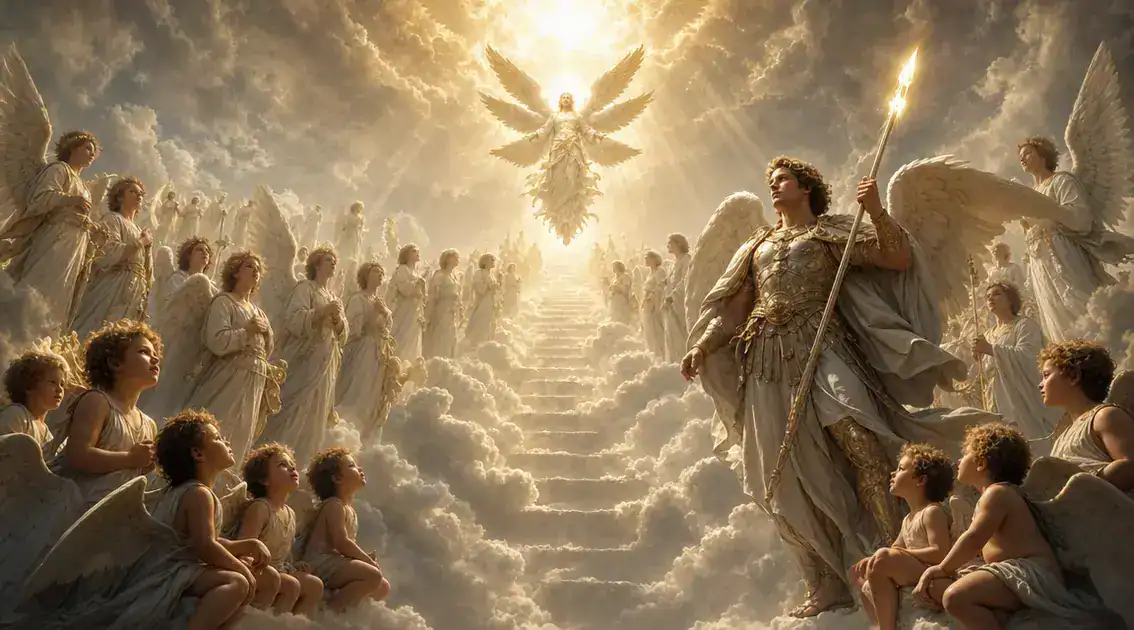
In the Hebrew Bible, angels appear first as God’s messengers and servants who move between heaven and earth. They speak, warn, guide, and sometimes act with fierce power. Think of Jacob’s ladder, where angels ascend and descend, and of the visitors who come to Abraham and the rescue at Lot’s door. Isaiah’s vision brings the seraphim close to the throne, while Ezekiel’s living creatures and wheels give a strange, moving picture of divine presence. These scenes show action and encounter more than a fixed list of ranks.
Key biblical scenes
The New Testament reads those Hebrew images through the life of Jesus and the early church. The angel Gabriel announces births and mission, angels attend the nativity and the empty tomb, and Daniel’s and Revelation’s visions name figures like Michael in roles of protection and battle. Together these passages show a range of tasks: announcing God’s will, guarding people, executing judgment, and joining worship around the throne. Each story deepens the sense that angels act as God’s hands and voices in our world.
Later Jewish writings such as 1 Enoch and rabbinic commentary fill in names and orders, while early Christian readers drew on those roots as they reflected on choirs and hierarchies. Still, the Bible itself often cares more about what angels do than about drawing neat charts. That choice invites a devotional response: angels point us back to God, call us to humility, and remind us that the sacred touches daily life in surprising, tender ways.
Jewish angelology: scripture, apocrypha and rabbinic visions
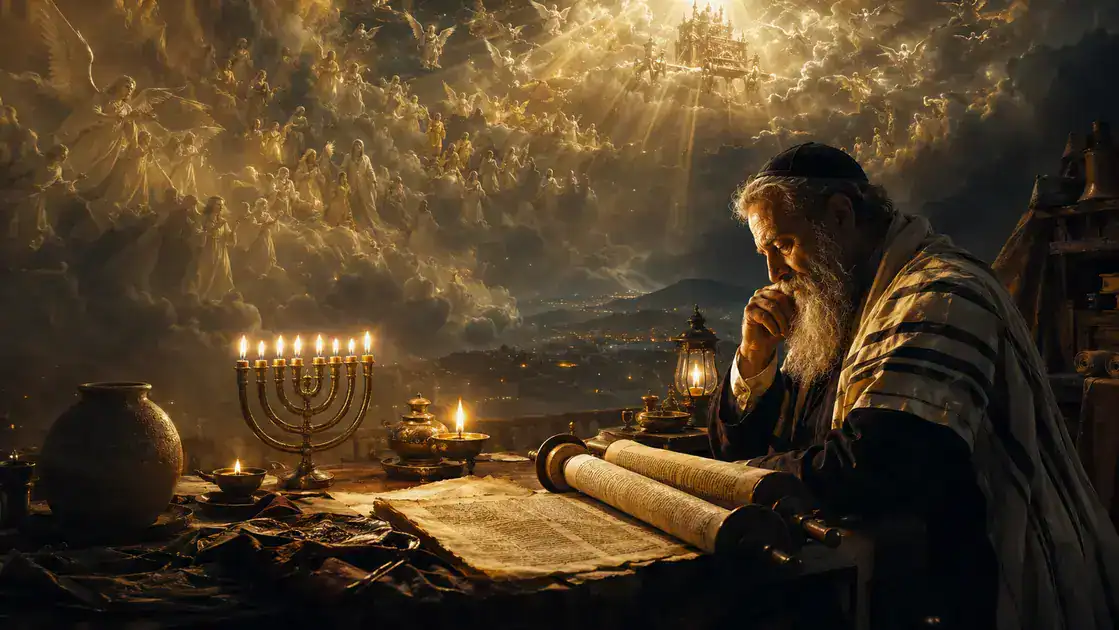
In the Hebrew scriptures angels appear as mal’akhim — God’s messengers and servants who bring news, protection, and guidance. Stories like Jacob’s ladder, the visitors to Abraham, and Isaiah’s seraphim show angels acting near both the divine throne and ordinary life. These passages emphasize encounter and service more than tidy rank, and they invite a humble, watchful faith.
Later writings such as 1 Enoch and other apocryphal books expand the picture with named angels, ordered hosts, and the story of the watchers. Enoch’s journeys and the angelic councils there offer vivid portraits that shaped how many Jewish readers pictured the heavens. Those images do not replace scripture; they deepen the imagination and give shape to how communities spoke about the unseen.
Rabbinic and mystical visions
Rabbinic texts and the mystical Hekhalot literature carry the conversation into prayer, law, and ecstatic vision, naming figures like Metatron and describing throne-chariot experiences. These traditions link angelic activity to worship and moral life, so that angels are not only distant beings but signs that humans are invited into a larger sacred order. In this way, Jewish angelology becomes a living path: it draws the heart upward toward God’s presence while calling the community to faithful action below.
Christian hierarchies: patristic and medieval formulations (Pseudo-Dionysius, Aquinas)
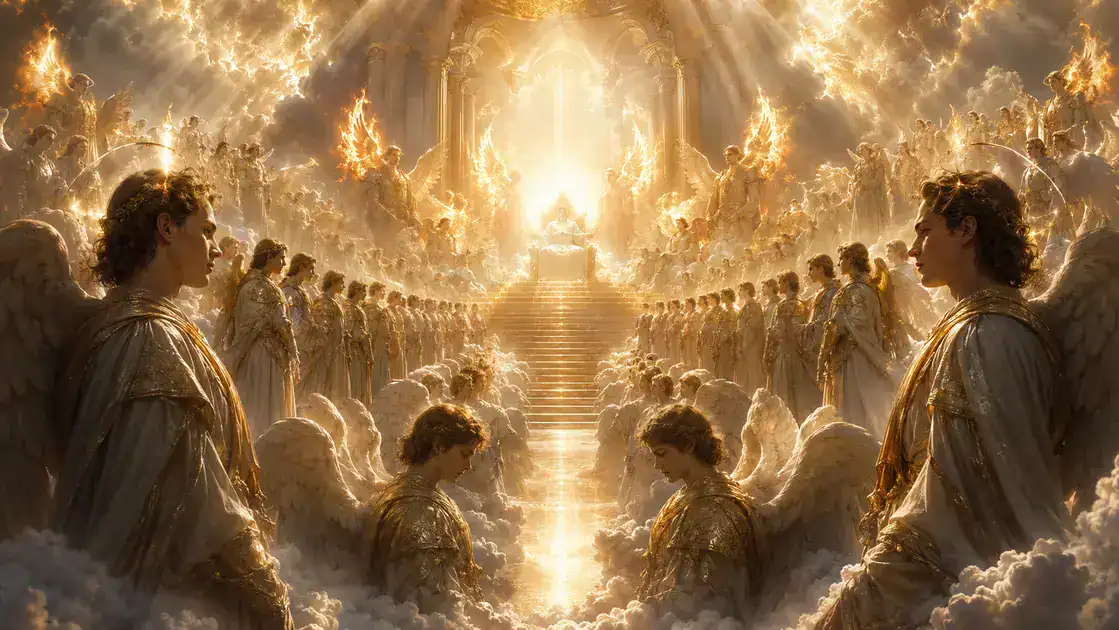
Pseudo-Dionysius offered a vivid map of the heavens, naming nine orders of angels grouped in three triads so readers could imagine how God’s light flows through creation. His language is poetic and practical at once: angels are not distant ornaments but links between God and the world, each choir with a distinct way of praising and serving. This model helped Christians see heavenly activity as a living pattern that shapes prayer, worship, and the soul’s longing for union with God.
Medieval thinkers took up that pattern with a fresh, careful mind. Saint Thomas Aquinas treated the angelic orders in the Summa as real beings with roles and natures that could be reflected on using reason and Scripture together. He kept the contemplative heart of Dionysius while clarifying questions about intellect, will, and hierarchy, so that the idea moved from a striking image into a disciplined theological tool. That work made the hierarchy useful not only for mystics but for pastors and preachers who wanted to connect doctrine to devotion.
Devotional use and humble wisdom
When we read these texts today, the point is less to make a chart and more to enter a spiritual rhythm: angels point us toward adoration, service, and moral care. Medieval art, liturgy, and sermons used the hierarchy to lift the heart — to teach that praise circulates from earth to heaven and back. At the same time, both Dionysius and Aquinas warn against pride and idle curiosity; their writings invite awe and careful love, urging readers to let the image of the choirs lead them deeper into prayer rather than into mere speculation.
Comparing ranks: seraphim, cherubim, ophanim, archangels and choirs
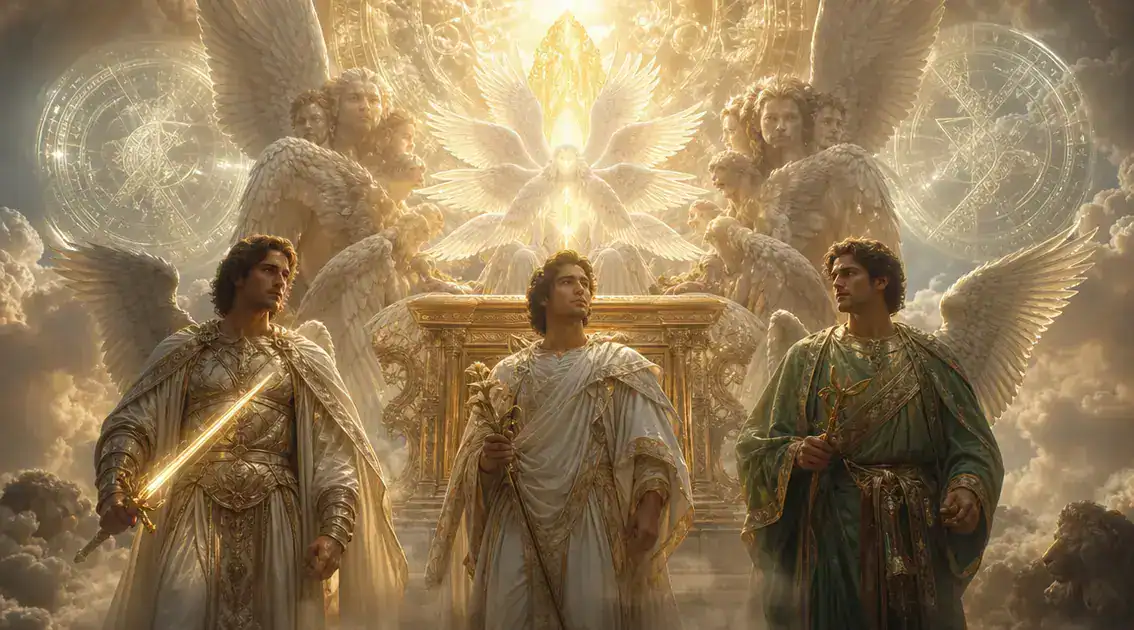
The seraphim appear in Isaiah as six-winged beings circling the throne, calling out God’s holiness with burning love. They feel like the nearest light around God, not a remote idea but a devotional image that invites awe and repentance. This picture asks the worshiper to stand small before holiness and to let praise become the first response.
The cherubim show up as guardians and bearers of presence in Genesis and Ezekiel, carved above the mercy seat and moving with strange, living motion. Their many faces and strong, protective posture point toward God’s hidden throne and toward care for what is holy. In Jewish memory they guard sacred space; in Christian art they mark the mystery and nearness of God to creation.
The ophanim, often called the wheels of Ezekiel, bring mystery and motion—God’s presence in movement and judgment. Nearby stand named archangels like Michael and Gabriel, who carry out protection and announcement in concrete stories. Christian tradition later arranged many orders into choirs to guide liturgy and contemplation, while Jewish sources tend to emphasize the tasks and encounters of these beings rather than tidy lists. Both ways show angels as servants of God who draw us toward faithfulness.
Putting these images together helps devotion more than it feeds curiosity. Seraphim teach burning love, cherubim teach guarded holiness, ophanim teach holy motion, and archangels teach care and mission. Letting these images breathe in prayer can deepen the sense that the unseen world both surrounds and serves our journey toward God.
Functions and symbolism: protection, liturgy and mystical ascent
Angels often serve first as steady protectors in the Scriptures, moving near those who are fragile or afraid. Stories show them guarding travelers, guiding infants, and standing at thresholds where danger could come. When we meet these images, we sense a guardian presence that is practical and tender, not distant or merely symbolic.
Angels in worship and song
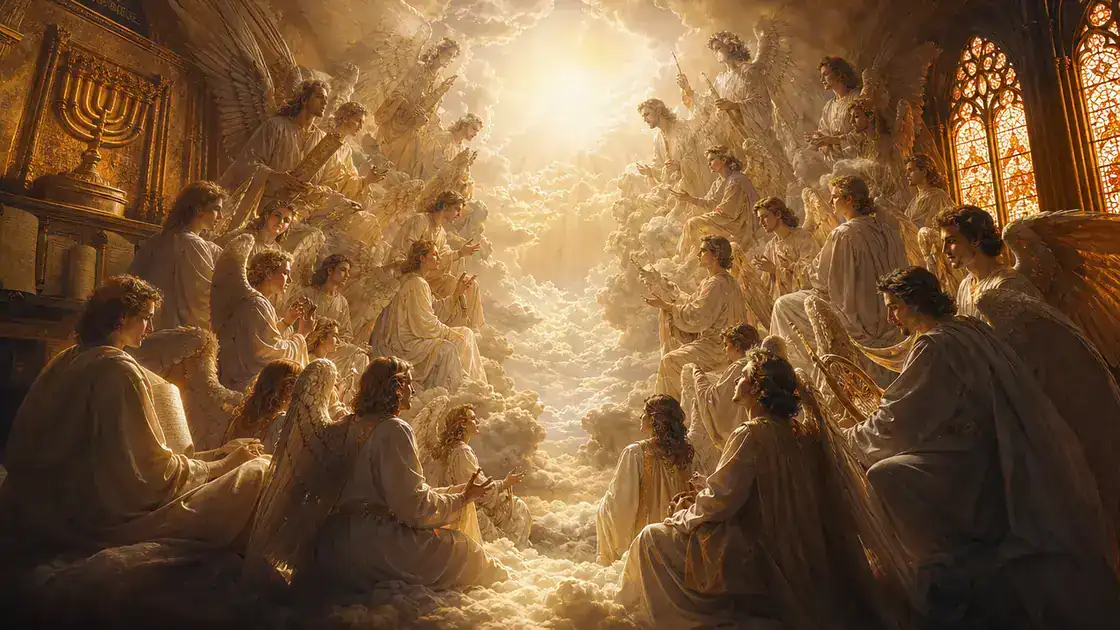
From the altar of the temple to the visions of Revelation, angels join in the work of praise. The seraphim around the throne and the multitudes that cry out “holy” teach us that worship is both human and heavenly. This heavenly liturgy invites our hearts to move with the same rhythm of awe, so that our prayer becomes part of a larger chorus rather than a lone voice.
Those two roles — protection and praise — lead naturally into the path of spiritual ascent. Mystics and biblical figures alike picture angels as guides on the way up: a ladder, a bright messenger, a companion through the inner rooms of prayer. As we read these images, they help us imagine a slow, kindly journey toward God where angels point the way, clear obstacles, and keep us steady. In prayer, their work is not to take the place of our choice but to support our reaching for love and truth.
Letting these functions shape devotion means seeing angels as servants who deepen our life of faith. They teach us how to protect what is holy, how to praise with a larger heart, and how to climb with humility. When we let these images breathe in our spiritual practice, we find courage for the day, a richer voice for worship, and a gentle guide on the road inward.
Living devotion: how each tradition invites encounter with the angelic
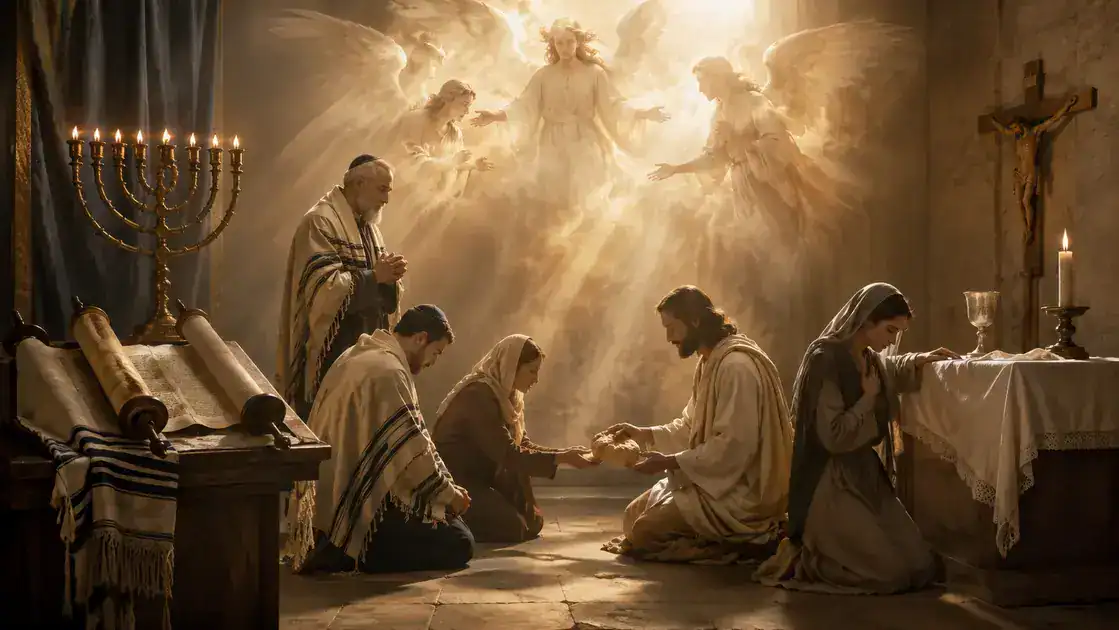
Many people find that angels are not just old stories but living companions in prayer and practice. In both Jewish and Christian life, the presence of angels is felt in simple acts: a hush before prayer, a cup of water offered to the poor, a candle lit at dawn. These small acts create space where the unseen can be noticed and where devotion becomes a daily habit rather than a one-time idea.
In Jewish practice, angels appear in synagogue prayer, psalms, and the rhythms of the calendar. Reciting the Shema, chanting the psalms, and pausing at moments of blessing all shape a life that expects God’s help. Mystical traditions invite the believer to steady attention and symbolic acts, and rabbinic stories teach that fulfilling commandments can call angels near. This is devotion lived in community, in study, and in the steady work of obeying what is right.
Christian devotion also meets angels in liturgy, sacrament, and personal prayer. The Eucharist and canticles lift the heart into the same chorus the saints and angels share, and the practice of honoring guardian angels gives a gentle shape to daily care. Stories of saints who felt angelic help teach that the sacred can touch the ordinary day. These practices invite the faithful to look up in worship and to serve with humble hands.
Across both traditions, the path to encounter is practical and humble. Quiet prayer, acts of mercy, attentive reading of scripture, and communal worship open the heart to angelic presence without chasing visions. Letting devotion shape how you rise, speak, and serve invites a steady companionship that guides and protects while always pointing back to God as the final home of our longing.
A gentle prayer
Quietly now, we name the presence that walks with us: angels who guard, guide, and lift our hearts toward God. We are not alone; we are held by love.
May their unseen care teach us to act with mercy and to pray with bold, humble hearts. Let simple acts of kindness and small prayers shape our days and open us to grace.
When fear comes, remember their steady company. When joy rises, let it join the larger chorus of praise. In small faithful steps, the sacred grows visible and near.
May this reflection rest in you like a soft light, bringing peace and wonder. Go forward with a calm heart, and carry the angels’ gentle call to love and faith into each day.
FAQ – Common questions about the angelic hierarchy in Judaism and Christianity
Do angels really appear in both Jewish and Christian scriptures?
Yes. Angels appear throughout the Hebrew Bible (e.g., Genesis 28; Isaiah 6; Ezekiel 1) and in the New Testament (e.g., Luke 1; Matthew 28; Revelation 4–5). Jewish and Christian traditions read these passages as real encounters with God’s messengers, though each tradition frames their role within its own theological life.
How do Jewish and Christian views of angelic ranks differ?
Biblical texts focus on actions—messenger, guardian, worshiper—while later Jewish writings (1 Enoch, rabbinic and Hekhalot literature) and Christian thinkers (Pseudo‑Dionysius, Aquinas) developed more formal orders. Judaism often emphasizes duties and divine presence, whereas Christian patristic and medieval theology systematized nine choirs to show how divine light flows toward creation.
Are archangels like Michael and Gabriel the same in both traditions?
Michael and Gabriel appear in both traditions with similar roles: Michael as protector (Daniel, Revelation) and Gabriel as messenger (Daniel, Luke). Jewish tradition also preserves Michael and Gabriel in rabbinic and apocryphal texts. Their names and stories are shared, though liturgical uses and theological emphases vary between communities.
Do angels protect individual people, like guardian angels?
Scripture and tradition speak of protective angelic care (Psalm 91:11; Matthew 18:10). Many Jewish and Christian sources teach that God’s care may be mediated by angels assigned to protect or accompany persons or communities. This teaching is offered as pastoral truth: it encourages trust in God’s care rather than promising spectacular signs.
Can ordinary believers expect to meet angels today?
Encounters in scripture range from ordinary hospitality to luminous visions. Many traditions encourage quiet prayer, moral fidelity, and sacramental life as ways the faithful remain open to God’s help. Rather than seeking visions, communities urge attentive devotion—acts of mercy, prayer, and worship—which often bring a felt sense of angelic presence.
How can I live so that the angelic images deepen my faith?
Root your life in Scripture and humble practice: regular reading of the psalms and biblical accounts of angels, participation in communal prayer or liturgy, acts of charity, and brief prayers naming God’s care. Both Jewish and Christian traditions teach that faithful obedience and worship invite the sacred into daily life, shaping a steady openness to the unseen presence that points back to God.