

Saint Michael archangel novena prayer is a nine-day devotional petition rooted in Scripture and Church tradition that seeks the archangel’s intercession for protection, spiritual deliverance, and courageous fidelity, inviting participants to pray set prayers, Scripture (often Psalm 91), sacramental support, and humble perseverance while directing all trust to God.
saint michael archangel novena prayer: have you ever stood at a crossroads, sensing the need for protection and a decisive spiritual victory? This simple nine-day devotion invites gentle courage and focused petition, opening a space for angelic companionship and inner clarity.
Michael in scripture: passages that shape the novena
Saint Michael appears across Scripture not as a distant idea but as a vivid presence who stands at the edge of human need. In the Old Testament vision of Daniel, he arrives at the moment of greatest trouble to give strength to God’s people; in Revelation he leads the heavenly host against the dragon; in Jude he contends with the devil over Moses’ body. These scenes give us a simple, powerful portrait: Michael is both a heavenly warrior and a tender guardian, called by a name that means “Who is like God?”
Reading Daniel helps the novena pray-er see how angels move within God’s plans. Daniel shows long, patient struggle and then relief when the angelic defender comes near. This teaches the heart to wait and to petition with hope. When we pray the novena, we are not conjuring a force but asking a faithful servant of God to stand with us in prayer and to help our trust grow; the biblical scenes remind us that divine help often arrives beside steady faith, not as sudden spectacle.
Revelation and Jude shape the tone of petitions by giving us both assurance and humility. Revelation pictures a decisive victory over chaos, which fills prayer with courage; Jude’s brief, sharp scene teaches reverence and restraint in spiritual conflict. Together these passages invite us to pray with a balance of boldness and trust: to ask for protection and to accept God’s timing. That balance is a heart of the novena—seeking spiritual victory while leaning on the gentle rule of God represented by Saint Michael.
Liturgical and theological meanings of the archangel
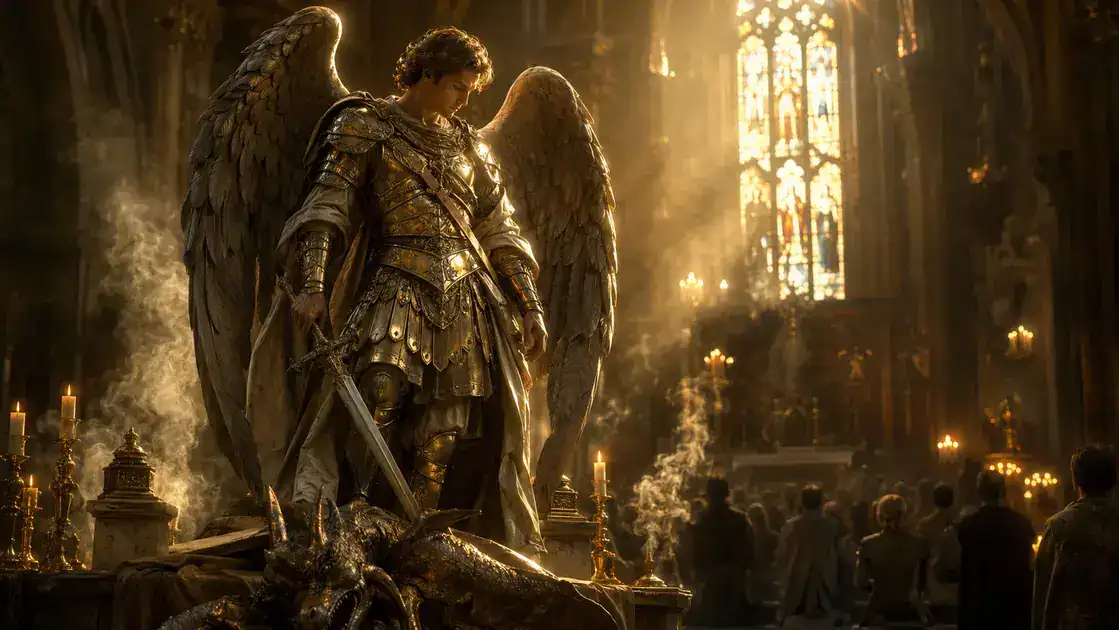
In the life of the Church, Saint Michael appears not only as a biblical figure but as a liturgical presence who shapes how we pray. His name and image surface in hymns, litanies, and the traditional Prayer to Saint Michael attributed to Pope Leo XIII, where he is invoked as a protector. This liturgical usage invites the faithful to see Michael as a minister of God’s care—a defender of God’s people—rather than as an independent power to be summoned.
Theologically, Michael points us toward truths about angels and salvation. Angels serve God’s plan, and Michael’s role as warrior and guardian echoes the deeper reality of Christ’s victory over evil. When we reflect on his title—literally asking, “Who is like God?”—we are reminded of proper worship: angels reflect God’s sovereignty while directing our trust to the one Lord. This keeps devotion to Michael rightly ordered toward Christ and the work of redemption.
That ordered devotion shapes the novena’s heart. Praying to Saint Michael within liturgical rhythms helps integrate private petitions into the Church’s communal prayer life, so our requests for protection become a way of participating in the Church’s hope. Seeing him as both a symbol of spiritual courage and an echo of Christ’s triumph encourages humble reliance on divine mercy, inviting us to ask for help while remaining rooted in the sacraments and Scripture—a devotional balance of trust and reverence.
Structure of the novena: prayers, psalms, and intentions
The novena follows a gentle, repeatable pattern that helps the heart stay steady over nine days. Each day usually begins with an opening invocation, then the Our Father, the Hail Mary, and the Glory Be, followed by the specific prayer to Saint Michael and a short silent intention. This simple rhythm—prayer, psalm, petition—gives structure so the devotion can deepen without strain.
Many who pray the novena add a psalm or short Scripture reading to anchor the request in God’s word. A common choice for protection is Psalm 91, which speaks of shelter and refuge, but shorter psalms of trust and praise also fit well. Each day may hold a particular intention—for personal protection, family needs, healing, deliverance, courage, guidance, the Church, and finally thanksgiving—so prayer grows both focused and expansive as the days pass.
Practical habits help the novena feel natural rather than rushed: choose a quiet corner, light a candle if that aids focus, and keep a small booklet or note of daily intentions nearby. Repetition is not empty; it trains patience and attention. Above all, approach the novena with humble persistence and gratitude, trusting that these prayers join your petition to God’s loving care through Saint Michael’s witness.
How to pray: practical devotion and interior disposition
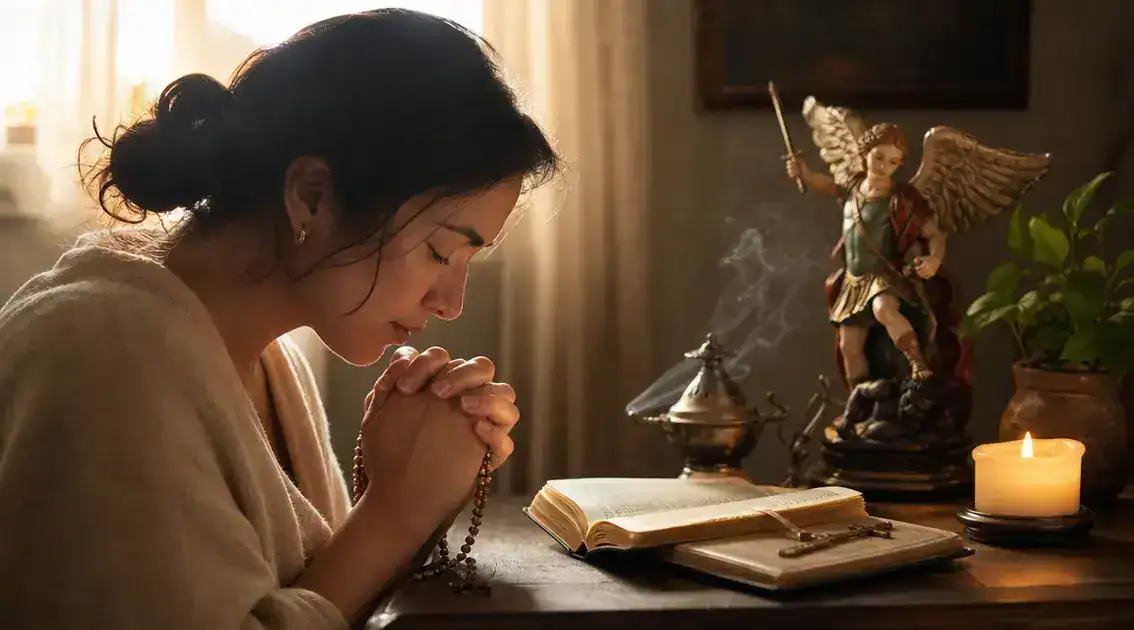
Choose a quiet time and a small corner where you can be steady for a few minutes each day. Sit or kneel in a posture that helps you stay present and breathe slowly to settle the mind. Begin with a short intention and the opening prayers—Our Father, Hail Mary, and Glory Be—then offer the novena prayer, allowing the rhythm to focus your heart on a single heartfelt petition.
Keep the inner disposition simple: gentle trust and humble persistence rather than anxious demand. After the set prayers, spend a moment in silence to listen and name one concrete need. You might read a short verse, such as Psalm 91, or a line from Scripture, then rest in God’s presence and let whatever surfaces be held without hurry.
Use small aids that help you remain faithful: a rosary, a bookmarked psalm, a candle, or a short written list of intentions. Pray with others when you can, or bring your intentions to the parish for communal support, and pair the novena with the sacraments—especially Eucharist and confession—when possible. Over nine days, this steady practice trains the heart to trust, turning repeated petitions into quiet openness to God’s timing.
Stories of protection: testimonies and saints’ encounters
Stories of protection thread through church history in ways that feel both surprising and quietly sure. Pilgrims still tell of the great Monte Gargano apparition, where an early Christian community came to believe that the archangel defended a holy place and turned danger into sanctuary. Centuries later, voices like Joan of Arc’s visions gave individual mission a holy backing, where an angel’s presence stirred courage and clarity in a young heart called to act.
These encounters rarely read like fireworks. Instead, they shape how saints prayed, chose, and suffered. The pattern is simple: an inner assurance that God has not left the struggle to chance, paired with a call to faithful obedience. That combination—quiet courage and steady obedience—becomes the living lesson these stories pass on to anyone who seeks help in a hard hour.
Modern testimonies echo the same note without needing grand signs: an answered prayer, a sudden calm, a protection felt in a crisis. Such accounts invite careful discernment and a humble turn to prayer, not sensationalism. When we remember these stories, we are reminded to ask for intercession with trust, to remain rooted in Scripture and community, and to let the memory of angelic protection point us back to God’s gentle care.
Living the victory: integrating the novena into daily spiritual life
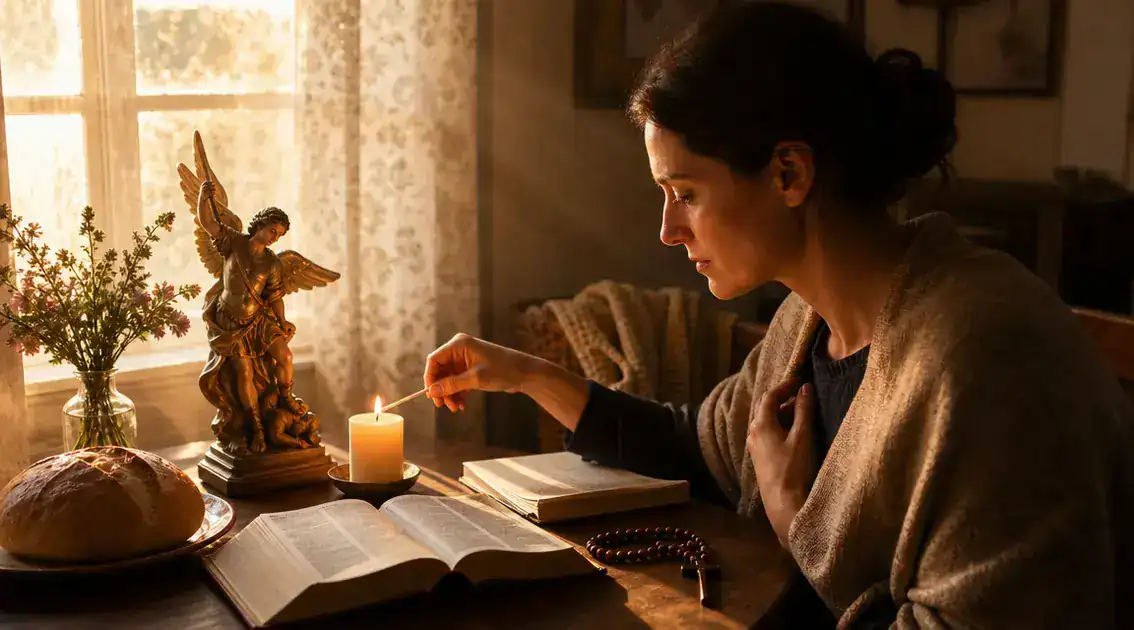
Make the novena a small, steady part of your day so prayer becomes a habit, not a task. Choose a time—morning light, a pause at midday, or quiet evening—and speak the prayers slowly, naming one clear intention. This steady practice trains the heart to notice God’s care and to invite Saint Michael’s help without hurry, turning brief moments into a faithful rhythm of trust.
Bring the novena into the life of the Church by linking it to the sacraments and to simple acts of love. Offer your prayers before receiving the Eucharist, go to confession when you feel weighed down, and let the novena inspire small acts of kindness—visiting a neighbor, giving time, or forgiving quickly. These choices show that spiritual victory grows not only in private petitions but in concrete mercy shared with others.
Keep a short journal of prayers and answered intentions to remember how God moves over time, and pray with others when you can for added strength. Let gratitude shape your petitions: end each day with a thankful note, however small. Over nine days and beyond, this pattern of prayer, sacrament, and service helps the soul live the novena’s victory daily—with patience, hope, and quiet courage.
A gentle closing prayer
As you finish this novena, rest in the quiet truth that you are seen and held. Let the memory of Saint Michael give you gentle courage and a calm heart, a reminder that God’s care meets us in both struggle and stillness.
Lord, send your guardian near: guard our steps, steady our spirits, and give us the grace to trust without hurry. May protection be felt not only in miracles but in small signs of peace and steady hope.
Carry this prayer into small daily acts—brief moments of gratitude, a kind word, a soft yes to mercy—and let those choices shape a life of quiet victory. Keep a short note of answered prayers so your heart remembers how God moves over time.
May you walk forward with wonder, courage, and peace, confident that the light of God and the watchful care of angels go with you each day.
FAQ – Novena to Saint Michael the Archangel
What is the purpose of praying a novena to Saint Michael?
A novena to Saint Michael is a nine‑day petition asking for protection, courage, and spiritual victory. It grows out of Scripture’s portrait of Michael as a defender (Daniel, Revelation) and centuries of Christian devotion. The aim is not to replace prayer to God but to seek the archangel’s intercession while keeping all trust directed to the Lord.
Is the novena to Saint Michael supported by the Bible?
Yes in spirit. Scripture names Michael as a protector and leader in spiritual conflict (Daniel 10–12; Revelation 12; Jude 1:9). The novena itself is a devotional practice developed in tradition, rooted in those biblical images and the Church’s prayer life rather than prescribed as a biblical command.
Can Saint Michael protect me from spiritual harm?
Scripture and Church teaching show angels guarding God’s people (see Psalm 91:11 and Matthew 18:10). Asking Michael’s intercession is asking a faithful servant of God to pray and stand with you. Protection in tradition usually accompanies the sacraments, prayer, and a life turned toward Christ rather than a promise of exemption from every trial.
How should I prepare myself before starting the novena?
Choose a quiet time and place, set a clear intention for each day, and begin with the usual prayers (Our Father, Hail Mary, Glory Be) and a short Scripture like Psalm 91. When possible, pair the novena with the sacramental life—confession or Holy Communion—to root your petitions in the Church’s grace and to approach the devotion with humility and openness.
Are there any dangers or precautions when praying to angels?
Yes—devotional practice should always be ordered toward God. The Bible warns against worshiping angels (Colossians 2:18). Do not seek angels as substitutes for prayer to God, or for secret, mystical shortcuts. Keep devotion to Saint Michael under the guidance of Scripture, the Church, and pastoral advice if unusual experiences occur.
What if I don’t receive a clear answer after completing the novena?
Lack of an immediate sign does not mean the prayer failed. The tradition of novenas invites patience, trust, and ongoing prayer. Answers often come in time, in changed hearts, or in ways we did not expect. Keep a simple journal of intentions and small graces, remain in sacramental life, and continue to ask with humble persistence and gratitude.