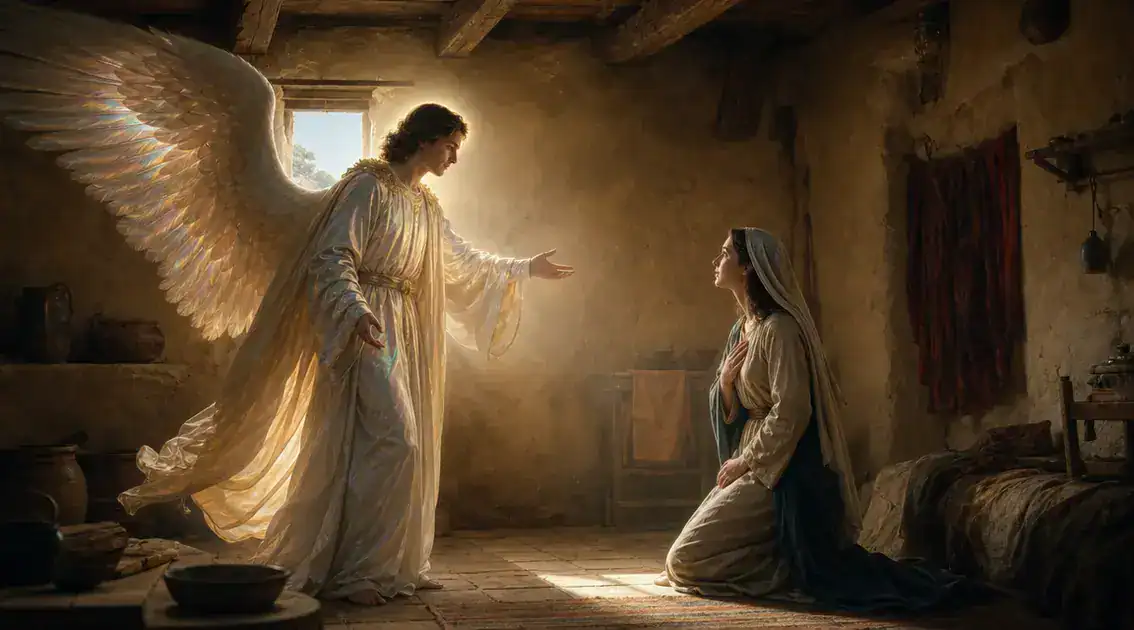

Gabriel the archangel announces God’s plan in the Annunciation, bringing a precise divine message that names Mary as favored one, reveals the incarnation, and calls human freedom into faithful consent, showing that God enters ordinary life through a gentle, covenantal initiative that invites a receptive yes.
Have you ever felt time pause at a single word? gabriel archangel annunciation arrives like that — a gentle interruption that opens heaven into an ordinary room, inviting wonder and a choice.
Gabriel in Scripture: the annunciation scene in Luke 1
In Luke 1, the scene opens in a quiet town where an angel appears to a young woman at home. The messenger is named Gabriel, and his greeting is strikingly direct: “Greetings, favored one” (Luke 1:28). That greeting shifts the ordinary into the sacred; a familiar morning becomes a doorway for God’s action. The text shows Gabriel speaking with calm clarity, announcing a promise that will change history.
Gabriel’s role in this moment is simple and profound: he brings a word from God that makes the invisible visible. He explains the coming birth with plain, honest language — “You will conceive and bear a son” — and ties the child to God’s plan for salvation (Luke 1:31–33). This is not just news; it is the announcement of incarnation, where God chooses to enter human life through a fragile, human family.
For readers and pray-ers, the annunciation invites a quiet response shaped by trust and attention. Mary’s listening and eventual assent models a faith that hears a risky promise and answers with openness. Holding Gabriel’s message in heart and prayer helps us practice a similar openness: to notice when God interrupts our routine, to weigh a startling word with humility, and to respond with a willing spirit.
Theology of incarnation: what Gabriel’s message reveals about God

Gabriel’s message shows that God takes the first step. The angel does not come because Mary has already found God; he comes to invite her into a surprising plan. That simple fact tells us something deep about God’s nature: God reaches into ordinary life with words that bring new possibility. The encounter begins in a small room, not a royal court, which shows that God prefers humility over human grandeur.
That reaching leads to the heart of the matter: the incarnation. When Gabriel announces that God will become flesh, the claim is that God will live inside our human story with all its limits. This is not a distant decree but a choice to share our frailty, pain, and joy. The idea of God-with-us changes how we pray and hope, because it means divine care is not abstract but present and personal.
Finally, Gabriel’s words point to God as faithful and covenantal. The angel ties the news to promises that have shaped Israel’s memory, showing that this event grows from God’s long work of love. At the same time, the message invites a human response; Mary’s assent models the quiet freedom by which we cooperate with grace. Holding these truths together — initiative, presence, and promise — helps us live with a humble trust that God acts in history and calls us to say yes.
Mary’s yes: faith, consent and human freedom in the encounter
When Gabriel speaks, Mary answers with a small but world-changing word. Her reply, often called the fiat, is not a scripted duty but a free, prayerful consent. She does not have all the facts or a full plan; she has a willingness to trust God in the unknown. That willingness shapes the story: it shows faith as a personal choice rather than mere resignation.
Mary’s yes also reveals the true meaning of freedom. Freedom here is not doing whatever we please, but choosing to love and to cooperate with grace. In saying yes, Mary accepts responsibility for a holy gift and steps into risk and service. Her assent models courage: to receive what God offers and to carry it with faithful care.
For those who seek to follow her example, the path begins in simple practices of listening and quiet prayer. We try to notice small promptings, weigh them with honest prayer, and respond with humble trust. In that shape of life, consent becomes a daily habit—a slow training of the heart to say yes to love when it arrives in unexpected ways.
Angelic imagery: symbols, gestures and the language of the messenger
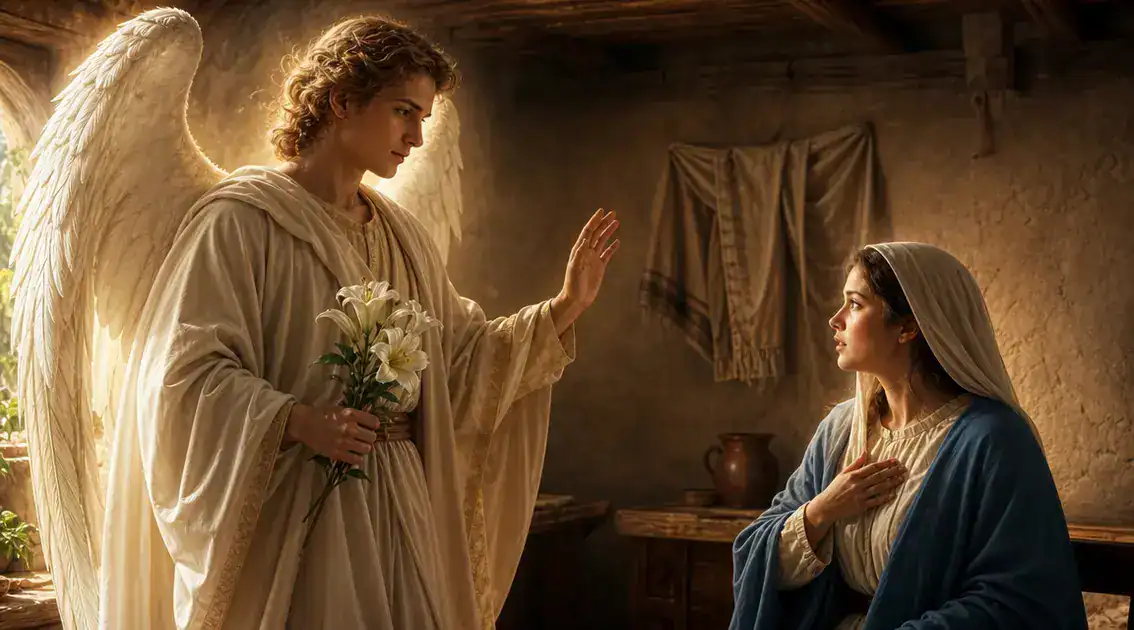
Angelic imagery speaks in shapes and gestures that the heart can read. Simple signs like wings, a soft glow, or a white lily carry meaning: wings suggest swift service and protection, light hints at God’s nearness, and the lily points to purity and promise. These images do not crowd the message; they gently open a sacred space where the human and divine meet.
Gestures matter as much as symbols. An outstretched hand, a slight bow, or a quiet greeting carries tone and intent. In Scripture the angel’s words—phrases like \”fear not\” or \”greetings, favored one\”—arrive with a gesture that invites trust, not command, shaping how the listener may answer with freedom.
When we learn this language, it reshapes our prayer and art. We begin to notice small signs in worship and in daily life, and to let them form a response of attention and care. Practically, this means pausing to listen, letting the images settle, and practicing the interior posture of listen and respond until it becomes a habit of the soul.
Liturgical and artistic responses: how churches and painters shaped the story
Church worship first locked the annunciation into the public memory. Each year the feast of the Annunciation returns the story to the altar, with scripture readings, antiphons, and hymns that shape how a community hears Gabriel’s word. These liturgical acts do more than recall an event; they invite the whole congregation into the scene so that belief is formed by hearing, singing, and shared silence. In this way the church teaches by ritual as much as by words, making the announcement a lived moment in time.
At the same time, painters and icon-makers translated the story into images that touch the heart. Artists like Fra Angelico and other Renaissance masters filled chapels with humble rooms, soft light, and simple symbols—the lily, the open book, the gentle gesture—that become a kind of visual theology. A painted annunciation teaches by sight: it slows the viewer, focuses attention on posture and gaze, and opens a space where prayer and imagination meet. Those images shape the way people picture Mary and Gabriel long after the service has ended.
Together, liturgy and art form a steady path for devotion. The rites give a rhythm for remembering, and the images give a shape for feeling and prayer. Today, when we pause before an annunciation painting or sing the ancient hymns, we take part in a tradition that trains the soul to listen and respond. Using both—reading the appointed texts, looking slowly at a faithful image, and letting the gestures and words sink in—becomes a simple practice of devotional formation that helps the story live inside us.
Pastoral reflections: receiving surprising news in our own lives

Surprising news often lands like a knock at dawn—loud enough to wake the heart, soft enough to bend the knees. Think of Gabriel’s visit: the first impulse may be fear, confusion, or awe. When we meet that mix of feelings, a simple practice helps: pause and breathe, name what you feel, and let the moment sit with you for a few quiet breaths. That small pause keeps your response from becoming a reflex and opens space for a prayerful answer.
Next, bring the news into a gentle routine of prayer and reflection. Read a short passage of scripture, speak the news aloud to God, and ask for clarity rather than immediate certainty. Seek wise companions—someone who listens well and prays with you—because discernment often happens in a holy conversation. Remember that honest questions and careful waiting are not doubt but a faithful way of hearing what God might be doing.
Finally, practice saying small yeses before large ones. Mary’s assent began in a humble, receptive heart; our path can begin with little acts of trust—an extra prayer, a kind word, a step toward service. Let community, sacrament, and simple routines shape your next steps so that hope and responsibility grow together. In time, the startling news will find its place in a life formed by prayer, counsel, and steady, loving choices.
Practical devotions: prayers, feasts and living the annunciation today
Small, steady prayers keep the Annunciation close to daily life. Try a brief morning breath prayer that echoes Mary’s fiat: a short phrase like “I accept, Lord” said slowly three times. Light a beeswax candle and place a white lily or a simple flower near an open Bible as a quiet sign that the day begins with listening.
Mark the church’s feast of the Annunciation each year with a moment that fits your household—a shared prayer, a simple meal, or the singing of one hymn. In daily practice, let small acts become answers: a kind word, an extra hour of care, or offering your work to God can be a living yes. These tiny choices train the heart to notice when grace arrives and to respond with gentle courage.
Bring others into the pattern by joining or forming a short prayer group, visiting a nearby chapel, or slowly studying Luke 1 together with a friend. Use art and music to help the story settle in your imagination—look at an annunciation painting, sing an old chant, or write a single line of prayer each night. Over time these simple rhythms shape a life where the annunciation is not only remembered but lived as a steady way of saying yes to God’s surprising invitations.
A gentle closing prayer
Lord, open our ears to the quiet words that arrive like dawn. Teach us to listen with calm hearts and simple trust, so that ordinary moments may become places of meeting with you.
Give us the grace to answer with small, steady acts of love—an extra kindness, a short prayer, a willing step—so that our lives can mirror Mary’s yes in humble, everyday ways.
Fill us with peace as we go, and keep us aware that heaven touches our days. May wonder and courage follow our steps, and may we carry this sacred story into each choice we make.
FAQ – Questions about Gabriel, the Annunciation, and living the message
What does Gabriel’s announcement in Luke 1 tell us about God?
Luke 1 shows that God takes the initiative to enter human life. Gabriel’s clear message announces the incarnation—God becoming flesh (see Luke 1; John 1:14). It reveals a God who reaches into ordinary moments with promise, mercy, and a call to trust.
Why is Mary’s “yes” (the fiat) so important?
Mary’s response (Luke 1:38) models faithful consent. Her fiat is a free, prayerful assent that cooperates with God’s plan. Tradition calls it a model of humility and openness, showing how ordinary freedom can welcome grace.
Is the Annunciation a historical event or mainly a spiritual symbol?
The Gospel of Luke presents the Annunciation as a real event in history. At the same time, the Church has long read it theologically: it teaches about God’s presence, the incarnation, and human response. Both history and meaning are held together in Christian tradition.
How do churches mark the Annunciation in worship?
Many churches celebrate the Feast of the Annunciation on March 25 with readings from Luke 1, special prayers, hymns, and sometimes processions. Practices like the Angelus and Marian devotions also keep the announcement in regular worship and daily life.
What do common symbols—like the lily, light, or wings—mean in annunciation art?
Artists use simple symbols to teach. The white lily often suggests purity and readiness to receive God’s word. Soft, golden light points to God’s presence. Wings communicate the angel’s role as God’s messenger and servant. These images form a gentle visual theology rather than replace the Gospel text.
How can I bring the message of the Annunciation into my daily life?
Start with small practices: a short morning “fiat” prayer, reading Luke 1 slowly, lighting a candle, or pausing to notice God’s promptings. Join communal prayer when possible and let small acts of service be your everyday yes. These habits help the story shape choices and cultivate readiness for God’s surprises.