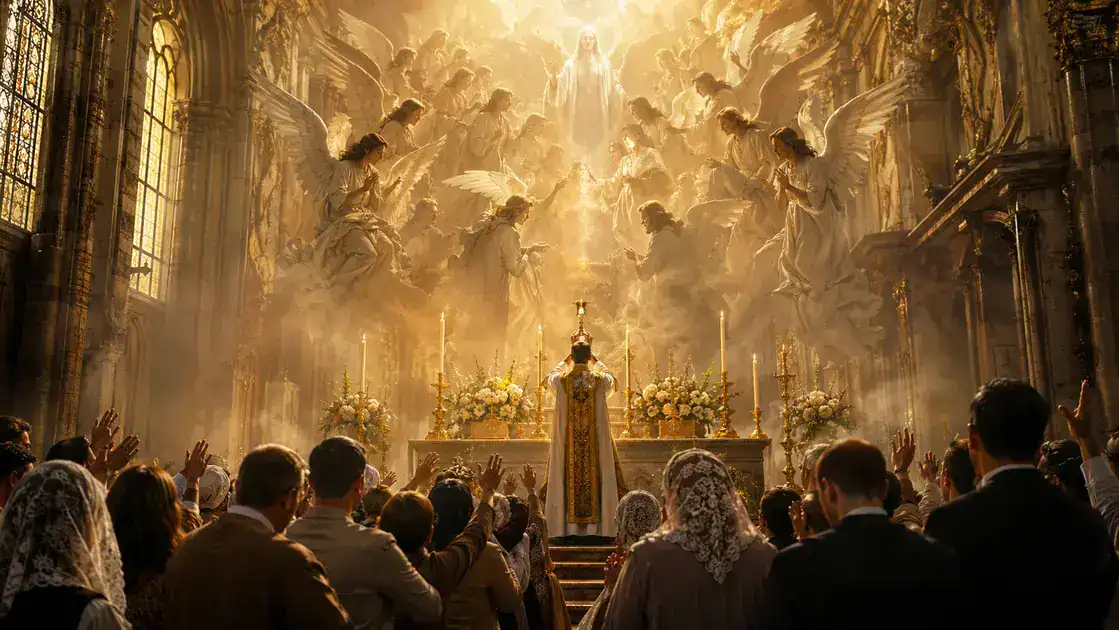

incense and angels in the liturgy symbolize prayers rising to God, as Scripture (Psalm 141; Revelation 8) and patristic tradition portray smoke and angelic ministers presenting the faithful’s petitions before the divine throne, so that earthly worship visibly joins heaven’s liturgy through scent, sacred gesture, and communal offering.
Have you ever noticed the slow curl of smoke lifting from a thurible and felt the space change? incense and angels in the liturgy opens that quiet mystery — an invitation to see smoke not simply as perfume, but as a symbol of prayers rising and a reminder of unseen companions who attend our worship.
Biblical roots: incense, temple worship, and the presence of God
In the oldest worship scenes of Israel, incense marks the meeting place between heaven and earth. God instructs the priests to burn a special, fragrant blend at the altar so the sanctuary becomes a place of holiness and attentive presence. Over that rising smoke, worship felt visible and sacred — a gentle sign that human words and longings were being drawn upward.
Scripture itself makes the link clear: the psalms and prophets often picture prayer as fragrant smoke that reaches God, and the apocalyptic visions show angels holding incense with the prayers of the people. In those scenes, the smoky offering is not merely ritual; it is a living image of communion, where our petitions meet the angelic ministry that brings them before God.
That biblical pattern shaped how later worshipers understood incense: it teaches that prayer is not confined to the lips but moves toward the divine company. When smoke rises in the liturgy, the assembly is reminded that earthly speech connects with heavenly praise, and that we are joined by unseen companions as our prayers ascend. This blending of scent, sight, and scripture invites a reverent hush and steady confidence that our words are carried upward.
Psalm imagery: smoke as prayer in Scripture
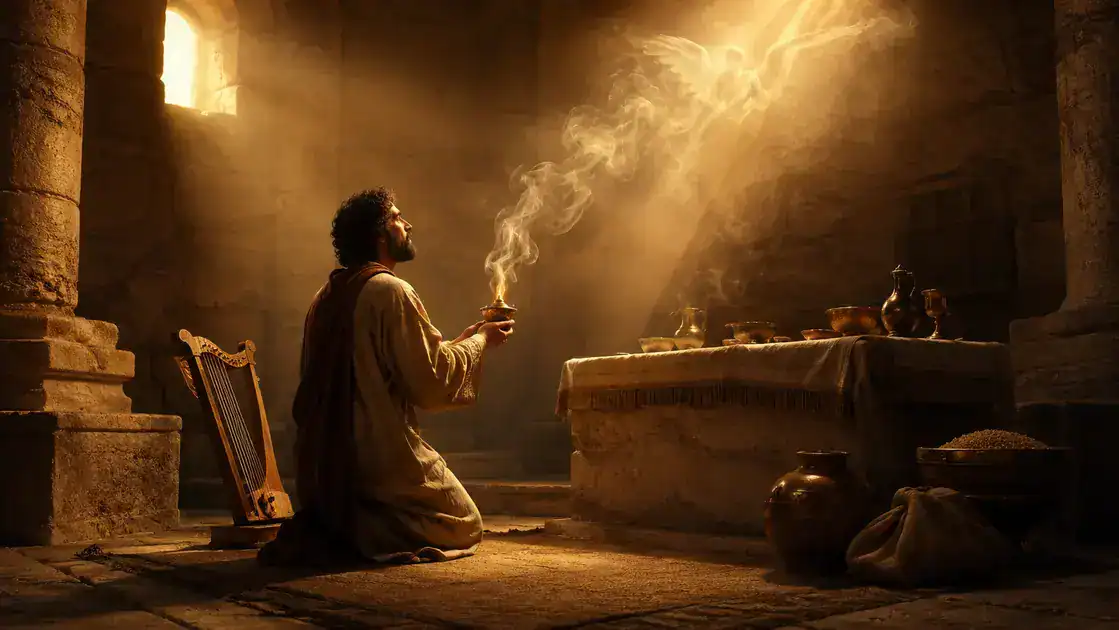
The psalmists draw a simple, moving picture: prayer can be like sweet-smelling incense rising up to God. In Psalm 141:2 the plea to have prayer counted as incense gives us an image we can hold. That image makes prayer feel both physical and holy, a small act that reaches beyond our walls.
When the psalms speak of smoke and scent, they teach that our words join the life of worship itself. The smoke is a visible path for invisible longing, and it reminds us that God listens not only to facts but to the heart’s scent. In that sense, prayer as incense becomes a bridge between our ordinary breath and the presence of God.
So when incense moves in a service, we can let the psalmist’s picture guide us: breathe slowly, name what matters, and trust that those small offerings rise. The image also opens room for the thought that we are not alone in that rising; unseen helpers and the whole company of heaven attend the ascent of our prayers. This gentle linking of scripture and sense helps prayer feel both humble and part of a larger, sacred story.
Angels as liturgical messengers in biblical narratives
In many biblical scenes, angels appear as more than messengers of news; they take part in worship itself. In Jacob’s vision they move between heaven and earth, showing a link between human prayer and what lies above. Later prophetic and apocalyptic images show angels holding incense while the prayers of the people rise, turning worship into a shared action between earth and heaven.
Scripture calls angels “ministering spirits,” sent to serve those who will inherit salvation, so they are not distant observers but active helpers in God’s house. The image of an angel with incense gathers that thought: our words, hopes, and petitions are treated as offerings that are brought into God’s presence. This tender duty suggests angels act as liturgical messengers, carrying the heart of our worship upward.
When we enter a service and see smoke drifting toward the rafters, it can remind us that a wider liturgy is at work. The incense shows our prayers moving, and the biblical pictures invite us to trust that unseen companions attend that ascent. Let that vision shape the way you pray in community: your words rise, are noticed, and are joined by heaven’s own ministry.
Patristic and medieval reflections on incense and angels
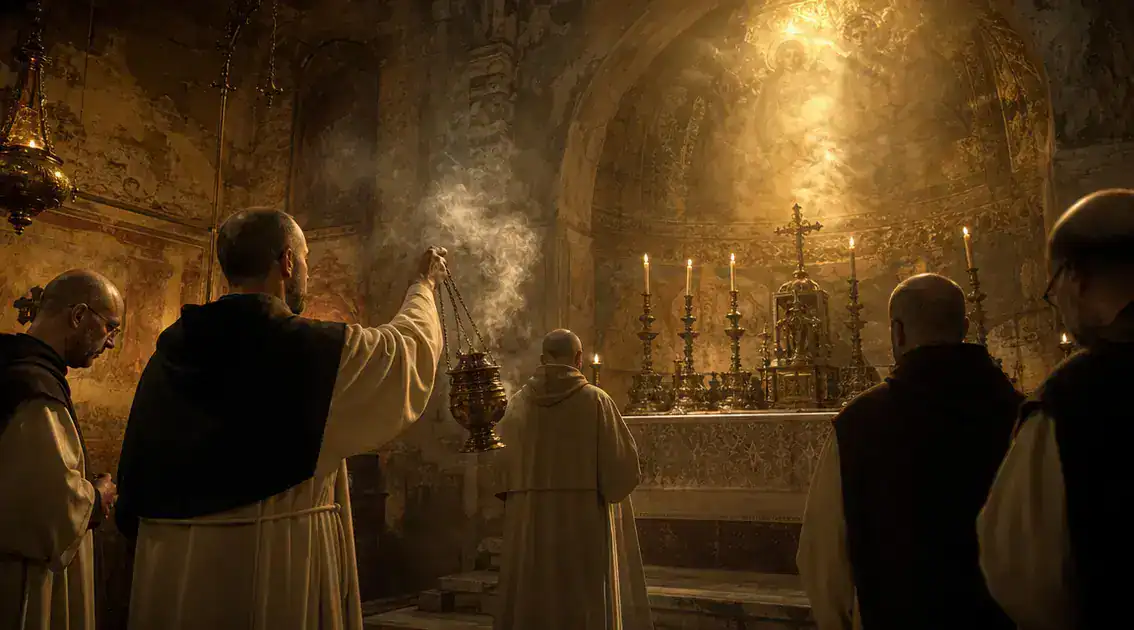
Early Christian writers and medieval theologians paid close attention to the smell and sight of incense in worship. They heard in the rising smoke a voice that Scripture had already hinted at: prayer reaching upward. For many of them, this was not mere decoration but a lived symbol that linked the prayers of the people with the larger, heavenly liturgy.
These teachers often described incense as a kind of sacramental sign — a visible and fragrant way that the church’s words and longings are made present before God. In that view, the smoke is not only sensory but also spiritual: it marks the meeting of human devotion and the ministry of angels who attend the throne. That image helped worshipers feel held by more than their own words.
Medieval liturgy and monastic devotion kept that insight alive through careful ritual practice. Monks and clergy used incense at key moments to remind the assembly of heaven’s nearness and of a tradition that links one generation to the next. When we lean into that lineage today, the simple act of waving a censer can still teach us how our prayers are woven into a timeless, sacred story.
The symbolism of ascent: smoke, fragrance, and heavenward prayer
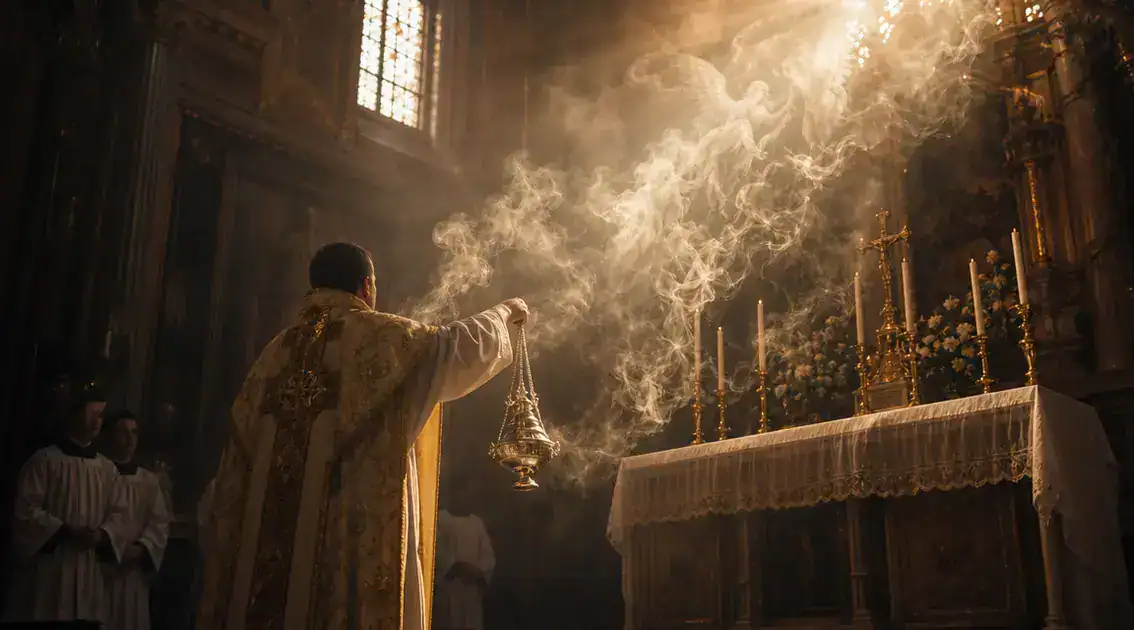
The sight of smoke curling up from a thurible gives a simple, clear message: something is going upward. In worship the rising thread of scent and vapor draws the eye and the heart toward the ceiling, as if the room itself points to a larger sky. This steady motion turns a small act—a handful of burning resin—into a visible saying that prayer moves beyond us.
That motion is why Christians have long used incense as a symbol of ascent. The fragrance carries memory and meaning; it tells us our words are not lost but join a path heavenward. In this way the ascent of smoke becomes a picture of prayers lifted, joined by angels, and presented to God, a bridge made of scent and sight between earth and heaven.
When you stand in that space, you can use the image to shape your prayer. Breathe slowly, let each petition rise with the smoke, and trust that your small offering is part of a larger liturgy. The practice reminds us that prayer is both humble and shared: humble in its single breath, shared in the company of the faithful and the unseen servants who attend the throne.
Liturgical practice: how incense shapes communal prayer today
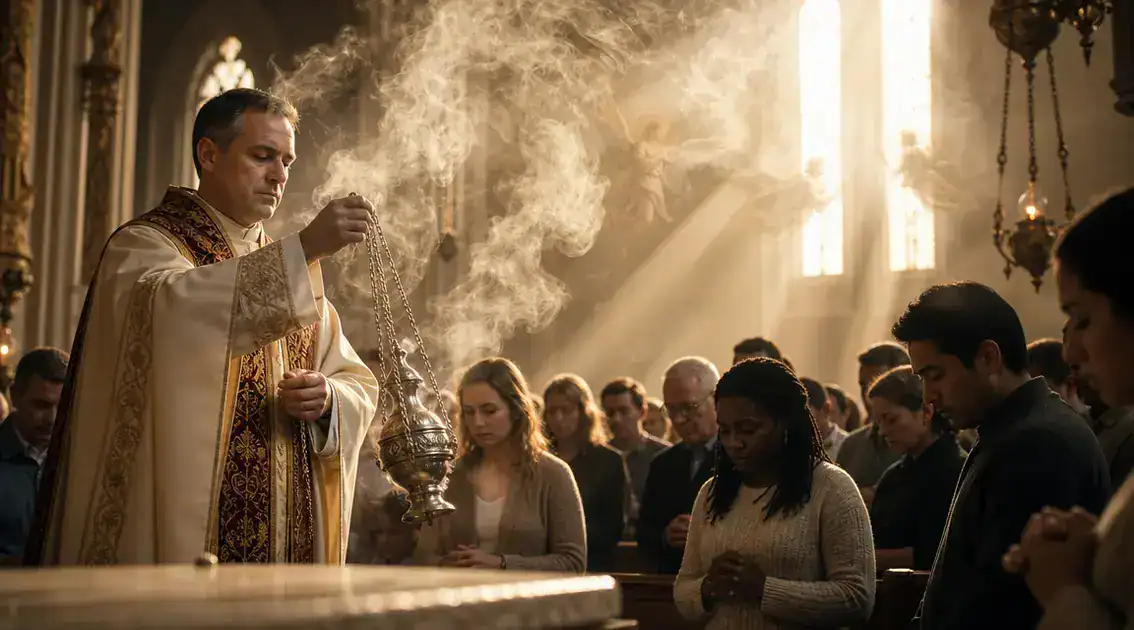
When incense is used in a service, it does more than fill the air with scent; it shapes how a people pray together. The slow, rising smoke asks the room to slow down and listen. Faces turn, heads bow, and a shared silence often follows. In that silence, the assembly feels linked by a single action that all can see and sense.
The liturgical gesture also teaches what we believe about prayer. By making petitions visible, incense reminds the community that prayers are not private notes but offerings placed before God. In many traditions, this image is joined to the thought of heavenly beings who attend our worship. Incense shapes communal prayer by making our words a shared offering that rises toward heaven, inviting both the gathered faithful and the unseen company to take part.
That shaping can be practical as well as spiritual. When the thurible moves, you might breathe slowly, name a person or need, and let that small act rise with the smoke. Clergy and lay leaders can mark key moments with incense so the whole congregation learns a rhythm of attention. At the same time, pastors remember those who are sensitive to fragrance and offer quiet alternatives, so the practice unites rather than excludes.
Personal devotion: praying with incense and inviting angelic companionship
Light a small pinch of incense in a quiet corner or home chapel and watch the smoke rise. The slow curl invites you to slow your breathing and pay gentle attention to the moment. As scent moves upward, let your heart follow the path it makes.
Use a simple pattern: breathe in, name a person or need, breathe out and offer that intention with the smoke. Offerings like incense help us see prayer as something that travels beyond our lips and joins the life of worship. In that gentle image you can imagine unseen companions—angels who attend the ascent and carry the prayer with care.
Keep the practice small and steady so it becomes a reliable way to pray each day or in times of need. Be mindful of others and of scent sensitivities, choosing a milder form or a smaller censer when needed. Let the ritual shape a quiet rhythm: a small offering, a soft breath, and the calm trust that you are held in a larger, sacred company.
May the quiet lift of incense and the thought of angels walk with you as you go. Breathe in the memory of worship and let its calm settle in your heart.
Remember that our small offerings—words, sighs, and hopes—are not lost. In the hush of prayer imagine them gathered and, as if by gentle hands, seen and carried upward toward the holy presence. Let that image give you comfort and wonder.
Choose a simple act to keep this truth near: a short prayer, a slow breath, a tiny offering at a home altar. These small rituals turn ordinary moments into a quiet liturgy and invite angelic companionship into daily life.
Go with peace, held by a love larger than your fears, and with the soft trust that your prayers rise. May you live each day with wonder and calm. Amen.
FAQ – Incense, angels, and prayer in Scripture and worship
Does the Bible really link incense with prayer?
Yes. The psalmist asks that prayer be counted as incense (Psalm 141:2), and Revelation shows an angel offering incense with the prayers of the saints (Revelation 8:3–4). These texts give a clear biblical image of scent and smoke as a way to picture prayers rising to God.
Are angels described as carrying or presenting our prayers?
Scripture calls angels “ministering spirits” sent to serve God’s people (Hebrews 1:14), and apocalyptic scenes show angels attending the prayers of the faithful. Church tradition has long read these passages to mean angels participate in the worship that brings our petitions before God.
Where did the practice of burning incense in worship originate?
The use of incense goes back to Israel’s temple rites, where God gave specific instructions for fragrant offerings (Exodus 30:34–38). Early Christians and the Church Fathers adopted the image as a devotional sign that linked earthly worship with heaven’s praise.
Is burning incense necessary for true prayer or worship?
No. True prayer depends on the heart and the Spirit (see John 4:23–24). Incense is a sacramental sign that can deepen attention and lift the imagination, but it never replaces sincere prayer or the inner work of devotion.
What if someone has allergies or sensitivity to incense?
Pastoral care and charity matter most. Many communities use milder blends, smaller amounts, or offer fragrance-free options. At home, choose alternatives—such as a brief lighting of a candle, a small bowl of aromatic herbs, or a simple ritual gesture—so all can participate without harm.
How can I pray with incense in a simple, meaningful way at home?
Keep it small and intentional: use a pinch of incense or a single stick, breathe slowly, name a person or need, and watch the smoke rise as you offer that intention. Let the act be a gentle reminder that your prayers join a larger liturgy and are held by unseen care, just as Scripture and tradition suggest.