

Do angels eat and drink: Scripture records moments when heavenly visitors accept food (Genesis 18) and visions use eating as symbolic nourishment (Ezekiel 3), and Christian theology teaches that angels, though essentially spiritual, may appear in sensible form or receive divine accommodation to convey God’s presence and strengthen human hospitality.
do angels eat and drink? This question opens strange, tender scenes in Scripture — Abraham’s visitors, prophetic visions, and the garden — inviting us to notice hospitality, presence, and heavenly symbolism.
Angelic meals in Scripture: Abraham’s visitors and hospitality
In Genesis 18 Abraham rises at the heat of the day to meet three visitors who arrive by his tent. He runs to greet them, offers water, bread, and a roasted calf, and they accept his simple meal with quiet grace. The scene reads like a home visit and a holy moment at once, where ordinary food meets an uncanny, sacred attention.
Those who read the story see more than hospitality; they see a doorway where heaven and earth touch. When the visitors eat, the text invites us to consider that welcome itself can be a form of worship. This is not a distant miracle so much as a gentle meeting: human care and heavenly presence braided together in a shared table.
For devotional life, the passage becomes a small guide: tending a guest can be a practice of the sacred, and the table a place where blessing is announced. If we prepare bread with reverence and open our home with humility, we join a long tradition in which hospitality reveals God’s nearness. That simple truth turns everyday meals into moments of prayer and wonder.
Theophany or angel? how Genesis scenes blur the lines

In Genesis, visitors arrive like ordinary travelers, and the story quietly shifts to something more. In Genesis 18 Abraham welcomes three guests and later the text says the LORD appeared to him. That soft folding of human hospitality into divine presence is called a theophany — a moment when heaven touches earth in a way we can almost sit beside.
Later, Jacob wakes at night after wrestling with a stranger who turns out to be more than a man. In Genesis 32 he names the place Peniel, saying, “I have seen God face to face.” The scene keeps its plain, physical detail — a river, a limp, a blessing — while also pointing beyond the visible. The story leaves the figure ambiguous on purpose, inviting us to hold both meanings together.
That ambiguity becomes a gentle lesson for faith. When we offer a meal, a cup of water, or an open ear, we practice a kind of readiness to meet the holy; when we wrestle with grief or prayer, we may find God in the struggle. These Genesis scenes teach a humble posture: keep your hands busy with care, keep your heart open to surprise, and let ordinary moments become places of sacred encounter.
Daniel, Ezekiel and heavenly food: visions and symbolic sustenance
In Ezekiel 3 the prophet is handed a scroll and told to eat it; he obeys, and the text says the words were as sweet as honey in his mouth. The image is simple and odd: a messenger offers a written word, and the prophet takes it into his body. That act turns language into nourishment and shows that prophecy feeds the soul before it speaks to others.
Daniel’s visions work differently but toward the same truth. After long fasting and deep fear, an otherworldly visitor comes to him and lays a hand on his shoulder, strengthening his body and mind. In those moments the encounter itself becomes a kind of sustenance — not a meal on a plate, but a renewing touch that steadies a frightened heart. Here we see divine presence as practical care for a weary prophet.
Both accounts teach a quiet lesson: heavenly “food” often means interior nourishment. Eating the scroll or receiving an angel’s touch models how God’s word and presence enter us and change the way we stand and speak. For personal devotion, this suggests that reading, meditating, and receiving counsel from scripture and prayer are not abstract acts but ways we are fed and held by the divine.
Jesus, angels and the wilderness: feeding, temptation and ministry

Jesus entered the wilderness hungry after forty days of fasting and faced sharp temptations from the tempter. He answered with scripture and did not use power to satisfy himself. When the trial ended, the Gospel says that angels came and ministered to him, offering care that steadied his worn body and spirit.
That quiet scene ties the desert test to his later work of feeding. He refused to turn stones into bread, yet he fed crowds and later called himself the Bread of Life. The angels’ service is a gentle sign that God’s provision is not only about food on a plate but about the strength and presence we need to keep serving others.
For anyone walking a hard season, the image brings comfort: divine care appears as steadying touch, rest, and word. Prayer, scripture, and small acts of compassion can feel like that ministry—practical ways God nourishes us so we can in turn feed others. These moments remind us that hunger in body or soul meets both human help and heavenly tenderness.
Theology of angelic bodies: patristic, medieval and modern views
Early church writers often spoke of angels as pure spirits rather than bodies, yet they also noticed how these beings appear plainly in Scripture. The fathers read stories where angels eat, speak, and sit at a table, and they accepted those scenes as real encounters framed for human eyes. This gives us a simple point: the Bible shows angels in ways we can meet and learn from.
Medieval thinkers such as Aquinas worked to explain how a spirit can show up in a sensible form. He argued that angels do not need food, but God can let them take on a visible, touchable appearance when needed, a kind of divine accommodation. That idea keeps careful theology and everyday faith together so we can hold mystery without losing the warmth of the stories.
Today’s writers offer varied paths: some read these accounts more symbolically, others hold to a literal, mysterious presence. For prayer and practice, the sure lesson remains gentle and practical — Scripture’s angelic scenes call us to hospitality, reverence, and attentive wonder. Whether angels truly eat or simply appear to eat, the stories feed our devotion and point us toward God’s gracious care.
Practical devotion: what these texts mean for prayer and wonder
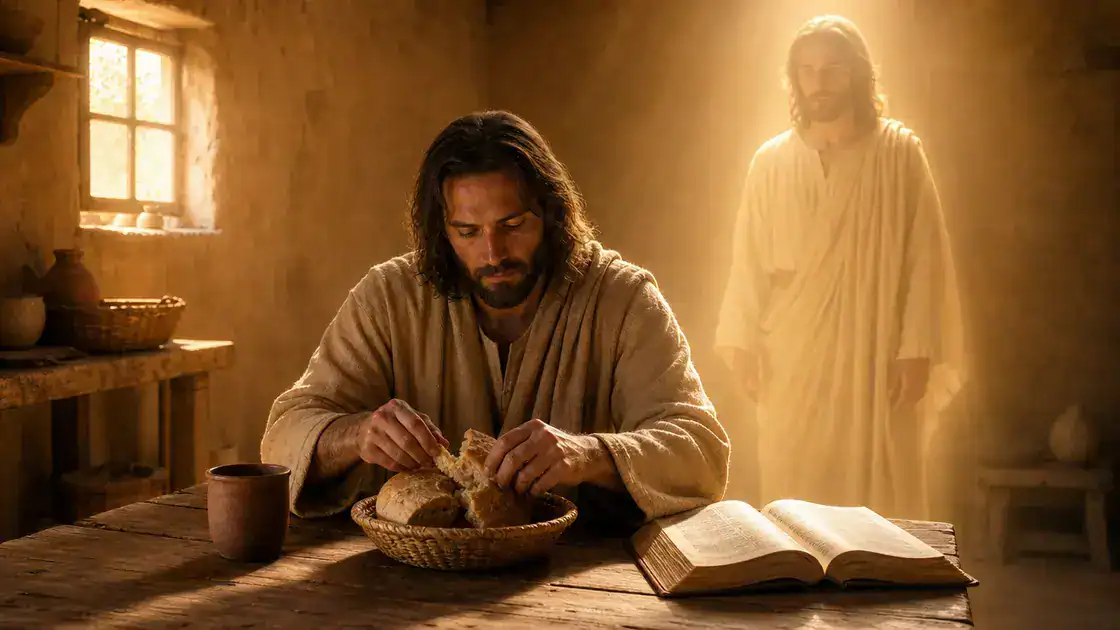
Reading the angelic stories invites small, steady practices that shape the heart. When Abraham welcomed strangers and served a meal, the table became a place to meet the holy. Carrying that scene with you makes simple acts—offering a cup, setting an extra plate, listening to a guest—feel like a quiet form of prayer and hospitality.
Scripture can be taken in like food: read slowly, taste a line, and let it linger. Ezekiel eating the scroll and angels ministering to Jesus show that words and presence feed the soul. Try brief, steady habits—morning reading, blessing a meal, or a short moment of silence—to let God’s word and care enter your daily life.
Those small practices change how you notice the world and keep the spirit open to surprise. Acts of care and simple prayer train you in wonder and readiness, so ordinary moments become places of encounter. Over time that gentle rhythm of attention and service deepens devotion and helps you live as if every meal and greeting might be a sacred meeting.
A gentle benediction on tables and heaven
Scripture keeps returning to small, ordinary things: bread, a cup, a seat at a table. These scenes invite a quiet reading of life where God meets us in the everyday. They teach that holiness often comes through simple care and open hands.
Remember Abraham’s welcome, Ezekiel’s tasted word, and the angels who ministered to Jesus. Each scene shows that God can meet us in flesh and word, turning the ordinary into a place of grace. Let that hold you: the sacred can be near in a shared meal or a single line of scripture.
Carry this into your day with small practices. Set an extra place now and then. Read a short verse slowly. Offer a cup of water with kindness. These tiny acts train the heart to wait, to wonder, and to receive what God gives.
May you be fed by God’s word and softened by his presence. May your hands stay open to guests, and your heart stay ready for surprise. Amen.
FAQ – Angels, meals, and what Scripture and tradition teach
Do angels actually eat and drink in the Bible?
Yes, the Bible records scenes where heavenly visitors accept food — notably Abraham’s visitors in Genesis 18 and the household scenes in Genesis 19. Prophetic visions also use eating as spiritual imagery (Ezekiel 3). Tradition reads these passages in different ways: some take the actions as literal appearances; others see them as God accommodating divine presence to human senses.
If angels can eat, does that mean they have bodies?
Classical teaching holds that angels are fundamentally pure spirits, yet Scripture often shows them in sensible, bodily form. Patristic writers and medieval thinkers like Thomas Aquinas explained this as divine accommodation: God can permit a spirit to appear with physical signs without the angel needing a human body in the same way we do (see Augustine and Aquinas for this distinction).
Could I unknowingly host an angel today?
Scripture urges careful hospitality: “Do not neglect to show hospitality, for by this some have entertained angels unawares” (Hebrews 13:2). That verse encourages generosity and openness rather than searching for signs. Tradition invites humble welcome—feed the hungry, care for strangers—and leave discernment of supernatural presence to God and wise counsel.
What does the idea of angels ‘feeding’ mean for prayer and soul-care?
Many biblical scenes point to nourishment beyond calories: Ezekiel eats a scroll that tastes like honey (Ezekiel 3), and angels minister to Jesus after his fast (Matthew 4:11). These images teach that God’s word and presence renew the heart. In practice, reading scripture slowly, receiving sacraments or prayer, and resting in God’s presence are ways we are spiritually fed.
How should these texts shape our everyday behavior and devotion?
Let the stories shape simple, steady habits: hospitality at the table, careful reading of Scripture, and small acts of kindness. Abraham’s welcome, prophetic feeding, and angelic ministry all point to practical devotion—serving others and letting God’s word enter the heart. Such practices form a posture of expectancy and care rather than a search for signs.
How can I discern whether an experience is truly angelic or simply my imagination?
Discernment is both prayerful and communal. Test any interior message by Scripture (1 John 4:1), by the fruit it produces (peace, humility, charity), and by seeking guidance from trusted spiritual leaders. Genuine encounters will not contradict Scripture, will lead you toward love and service, and will leave you more grounded, not more proud or fearful.