
Can angels sin or make mistakes is answered by Scripture and classical tradition: angels are spiritual beings with intellect and will capable of moral failure, some cast out through pride and disobedience (Jude 6; 2 Peter 2:4; Enoch), a truth that urges humility and faithful obedience.
can angels sin or make mistakes? Have you ever felt that ancient question stir as you read of luminous beings who chose a different path — a mystery that invites both awe and careful thought.
Scripture passages that speak of angels and free will
Jude 6 and 2 Peter 2:4 speak of angels who left their proper place and are kept for judgment, and Luke 10:18 and Revelation 12:7–9 give vivid images of falling and conflict. These passages do not read like abstract poetry only; they point to real choices made by spiritual beings. When the Scriptures name a fall, they invite us to treat the event as a moral turning — not merely fate.
Isaiah 14 and Ezekiel 28 use rich, poetic language about a proud figure cast down, language many readers hear as a portrait of rebellion and exile. While careful readers note the historical and literary contexts, the heart of the message is simple: pride and turning away from God can lead to separation from the place of blessing. The Bible weaves narrative and symbol together so that the story shows both consequence and meaning.
Reading these passages together gives a pastoral and theological shape: angels appear as beings with intellect and will, capable of faithful service or of refusal. Scripture balances awe for their service with sober warnings about disobedience, and that balance moves the reader to a quiet devotion. Such texts do not answer every question, but they call us to humility, to faithfulness, and to trust that God’s justice and mercy hold even the most solemn mysteries.
The fall of certain angels: biblical narratives and early tradition
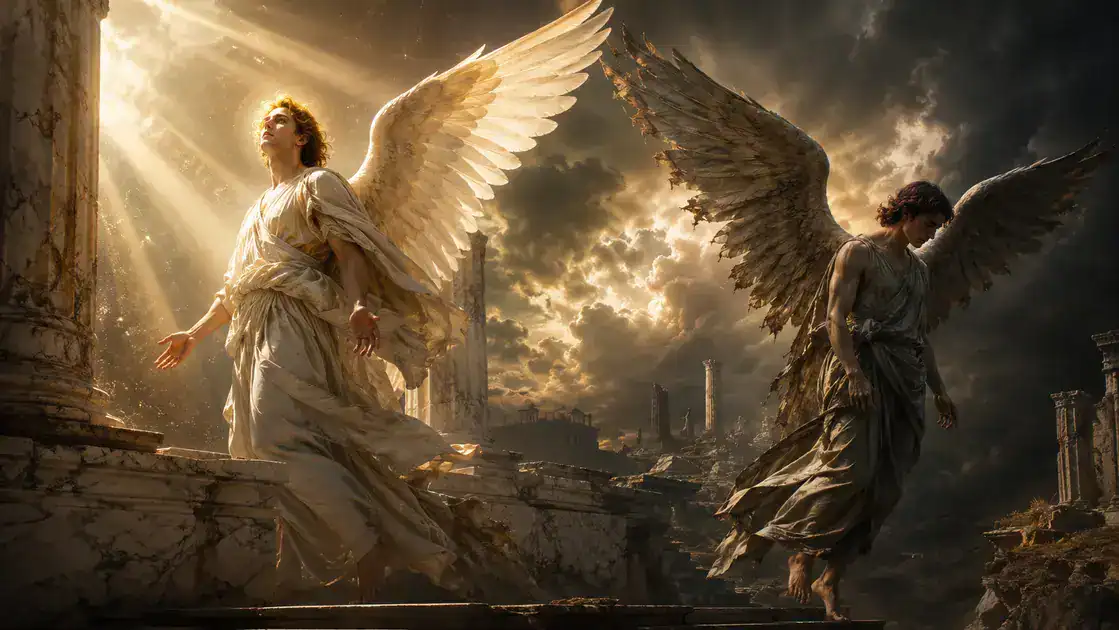
Across Scripture small passages point to a dramatic event: in Genesis 6 the brief phrase about the “sons of God” has long invited readers to wonder about heavenly beings who crossed a boundary. Later writers expand that memory: the Book of Enoch tells of the Watchers, angels who left their stations, took human wives, and taught forbidden arts. The New Testament echoes the reality of angelic failure too — Jude 6 and 2 Peter 2:4 speak plainly of angels who sinned and are held for judgment, reminding us that these are moral, not merely mythical, beings.
Other texts give the fall a poetic face. Isaiah 14 and Ezekiel 28 use the language of pride and downfall to describe rulers, and many readers hear in those images a deeper spiritual drama of one exalted being cast down. Revelation 12 offers a grand, symbolic scene: a war in heaven and a great dragon hurled from the skies. Together, these passages and traditions form a mosaic — some pieces narrative, some symbolic — that portrays a real refusal within the heavenly realm and the sorrow that follows.
What emerges from these stories is not a spectacle but a pastoral lesson: angels are depicted as moral agents whose freedom can be used for faithful service or for rebellion. The early traditions that expand the bare biblical lines do not aim to frighten so much as to teach — pride has destructive power, exile is real, and God’s justice holds even in the unseen world. Sitting with these texts invites humility, careful prayer, and a renewed trust in the God who remains both holy judge and merciful guide.
Theology of angelic nature: are angels capable of moral failure?
Angels are often described as spiritual beings with mind and will, not as robots or mere forces. Scripture and tradition present them as moral agents who can choose to serve or to turn away. This view helps us see that the drama of heaven is not a poem but a moral story about decisions and their weight.
Classical theology argues that angels make choices in a different way than we do. Because they are pure intellects, their choices follow directly from what they know. Many theologians hold that an angel’s choice is swift and lasting—once made, it stands—so their judgment is not a slow moral drift but a single, decisive turn. Other traditions allow for more nuance, but all agree that angels are free in a real sense.
Thinking this through changes how we listen to their stories. If angels can fail, then pride and choice matter everywhere, even in the unseen realm. We are invited to learn patience in prayer and care in our own decisions, trusting God’s mercy while holding to the call to faithful service. Such reflection moves the heart toward humility and steady devotion without easy answers.
Consequences for the fallen: what tradition says about punishment and exile
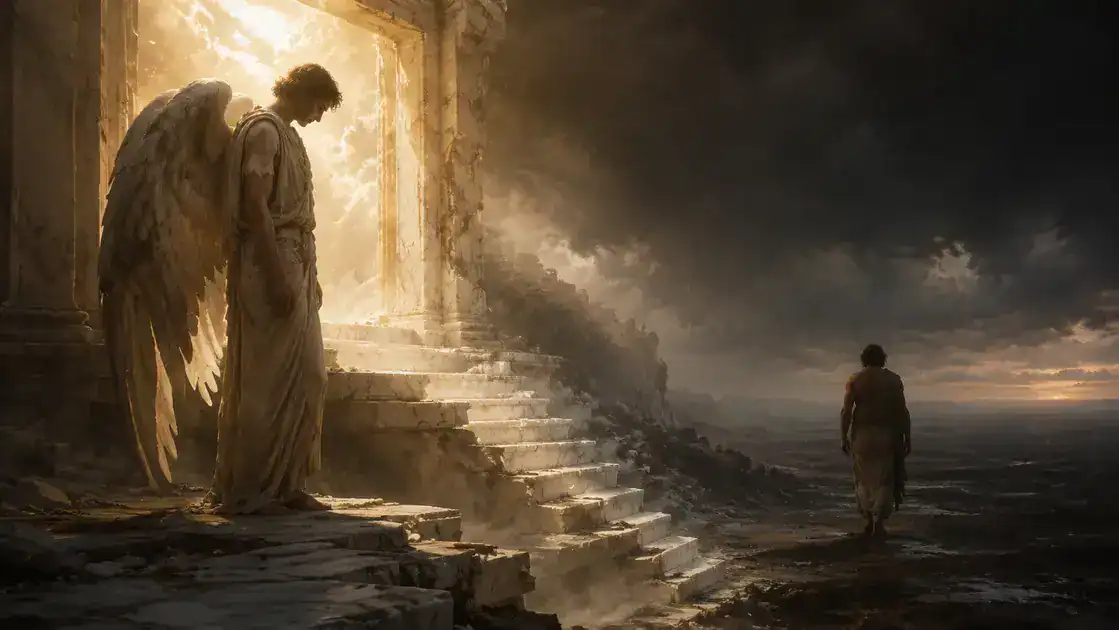
Ancient and later traditions speak plainly about what followed a heavenly revolt: angels are described as being cast out of the place of light, restrained, or held until the final judgment. Passages like Jude 6 and 2 Peter 2:4 picture a solemn holding, while apocryphal texts and early writers add images of exile and bound watchfulness. These stories use strong images so we grasp that turning from God has real consequence in the spiritual realm.
The consequence is less about theatrical torment and more about a deep, irrevocable change in relation to God. Tradition often frames punishment as loss of communion and a kind of banishment: a being made unable to serve the good it once knew. This exile shows itself as sorrow, pride’s hollowing out, and a loss of place in the ordered life of heaven rather than simply pain for its own sake.
Holding these images gently can teach us. They remind us that freedom is real and that choices have weight, but they also lead us back to prayer and humility. Rather than grim fascination, the accounts invite a sober heart that trusts God’s justice while staying close to mercy, and a steady life of faithful love that resists the pride which first brought about the fall.
Mercy, redemption, and the question of restoration for fallen beings
The question of mercy and restoration for fallen beings follows naturally from the stories of exile. Some scriptural images, like Jude 6 and 2 Peter 2:4, present angels as held for judgment, and Revelation speaks of final defeat for the forces of darkness. These texts give a sober tone: rebellion has real consequence, and the idea of a simple reversal is not clearly present in the plain words of Scripture.
Theology often draws a careful line between God’s infinite mercy and the character of angels as different creatures from humans. Many theologians note that angels make decisive choices and that the biblical drama centers on human redemption through Christ, which is the clear focus of the Gospel. Yet the same tradition also trusts God’s wisdom and refuses to limit divine compassion to what we can easily imagine, holding tension rather than forcing an answer.
For the faithful, this mystery invites a prayerful posture more than certainty. We are called to live in humble obedience, to trust God’s mercy toward us, and to learn from the warning the angelic fall offers about pride and refusal. In that quiet witness we find both caution and hope: caution against turning away, and hope that God’s grace meets repentant hearts with healing and steady love.
Lessons for human spirituality: what the angelic fall teaches us
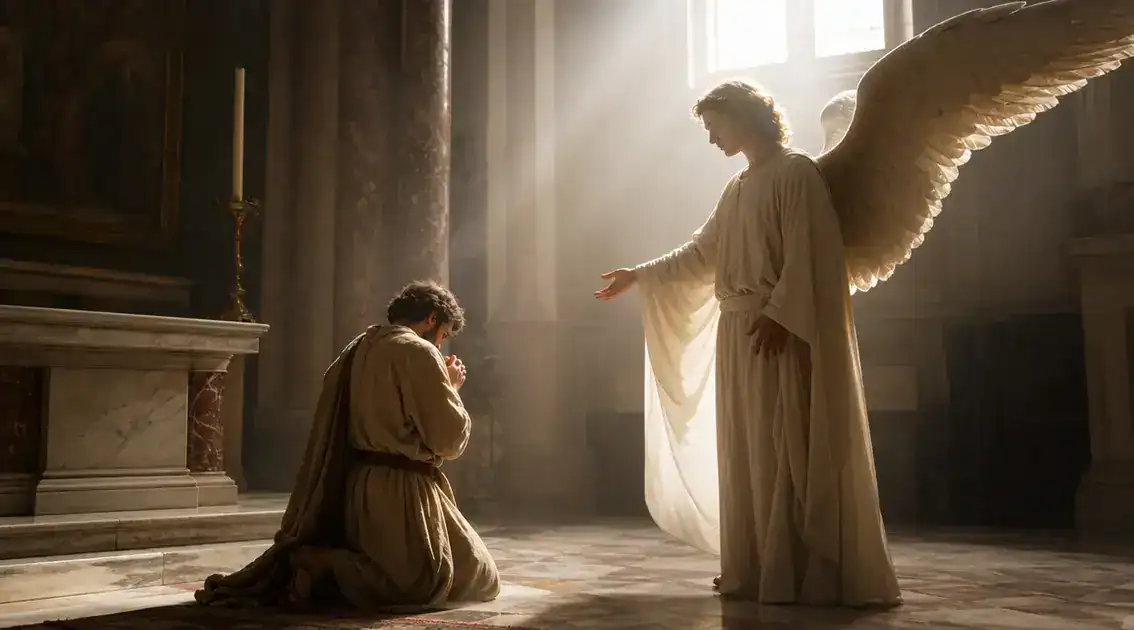
The story of angels who fell helps us see a clear lesson for our own souls: choices matter and the cost of turning from love is real. Scripture and tradition point to pride as the root of that turning, and they show that even powerful beings have freedom to choose. This reminder calls us to watch our hearts with gentle care, not fear.
That watching turns into simple practices. We are invited to cultivate humility through prayer, honest self-examination, and service to others. Saints and writers across the ages point to small, steady acts of love as the opposite of pride, and these practices help the will to choose what is good again and again.
Finally, the angelic fall teaches both warning and hope: warning about the danger of selfishness, and hope in God’s mercy when we return. Let this story lead you to confession, to faithful community, and to a daily habit of choosing mercy over judgment. In those steps we find practical ways to live a life of faithful love.
How Christians, Jews, and Islam view angelic disobedience
Christian reading often points to passages like Jude 6 and 2 Peter 2:4 as proof that angels can choose and fall. Church fathers and later writers treat these moments as moral acts, not mere story. That means angels appear in Scripture as real agents whose choices carry weight, calling readers to sober attention to pride and disobedience.
Jewish tradition holds a range of voices. The brief note in Genesis 6 gave rise to the Book of Enoch and other early tales of the Watchers who left their place and taught harmful arts. Some rabbinic responses read those images more symbolically, seeing the danger in human sin, while other strands preserve a memory of angelic misstep. The shared thread is a warning: power without humility can destroy order and bless no one.
In Islam the emphasis shifts: the Quran tells of Iblis refusing God’s command, but classical teaching usually says Iblis is a jinn, not an angel, and that angels are obedient by nature. This distinction frames the Islamic view that rebellion springs from created wills like humans and jinn, not from the angels themselves. Across these traditions the differences shape prayer, ethics, and how believers learn to guard the heart, inviting humility, watchfulness, and steady devotion rather than easy certainty.
Resting in the mystery with humble hearts
We have listened to stories of angels who chose and of the lessons those stories bring into our lives. The tale is both sobering and gentle, a reminder that freedom matters and that pride can pull anyone away from light.
May our hearts grow soft with humility, and may prayer steady our steps. When we fail, let us turn back with honesty and hope, learning to choose love and service again.
We trust that God’s justice and mercy hold the deepest questions we cannot fully answer. That trust does not erase mystery, but it gives us courage to live faithfully, day by day.
Keep us watchful, kind, and full of wonder. Amen. Go forth in peace, ready to choose mercy and faithful love in small, steady acts.
FAQ – Questions about angelic freedom, fall, and spiritual meaning
Can angels sin according to the Bible?
Yes. Several New Testament passages—most notably Jude 6 and 2 Peter 2:4—speak of angels who left their proper place and are kept for judgment, which the tradition reads as moral failure rather than mere metaphor. These texts present the reality of choice in the heavenly realm and invite sober reflection rather than sensationalism.
If some angels fell, can they be redeemed?
Scripture itself gives no clear story of fallen angels being restored, and many classical theologians hold that an angel’s decisive choice is lasting. At the same time, the wider tradition trusts God’s mercy while admitting mystery; Christian teaching centers decisively on human redemption in Christ, and so the question is treated with humility rather than simple answers.
Is Satan the same figure pictured in Isaiah and Ezekiel who was cast down?
Isaiah 14 and Ezekiel 28 use poetic language about proud rulers and a dramatic fall that later interpreters often read as pointing to a spiritual rebel. Revelation 12 offers a symbolic vision of a dragon hurled from heaven. Careful readers distinguish literary context from later theological reading, but the shared message is clear: pride and rebellion lead to exile from the place of blessing.
What happens to fallen angels now—are they punished or simply exiled?
New Testament passages like Jude 6 and 2 Peter 2:4 describe angels as restrained or held for judgment, and apocryphal and patristic writings add images of exile and binding. Tradition tends to frame the consequence as loss of communion and a state of separation rather than theatrical torment, stressing the moral and relational nature of the punishment.
Do angels have free will in the same way humans do?
Angels are presented in Scripture and theology as real moral agents with intellect and will, but classical thought notes a difference: being pure spirits, their choices follow from immediate knowledge and can be swift and enduring. That means freedom is real but operates differently than human moral development, which often unfolds over time.
How do Christian, Jewish, and Islamic traditions differ on angelic disobedience?
Christian tradition commonly accepts texts that speak of angelic fall and treats the accounts as moral acts; Jewish responses vary, with writings like the Book of Enoch expanding the Genesis memory while rabbinic streams sometimes read the note symbolically; Islam generally distinguishes angels (created obedient) from jinn, identifying Iblis as a jinn who disobeyed. Each tradition frames the theme to shape prayer, ethics, and how believers guard against pride.