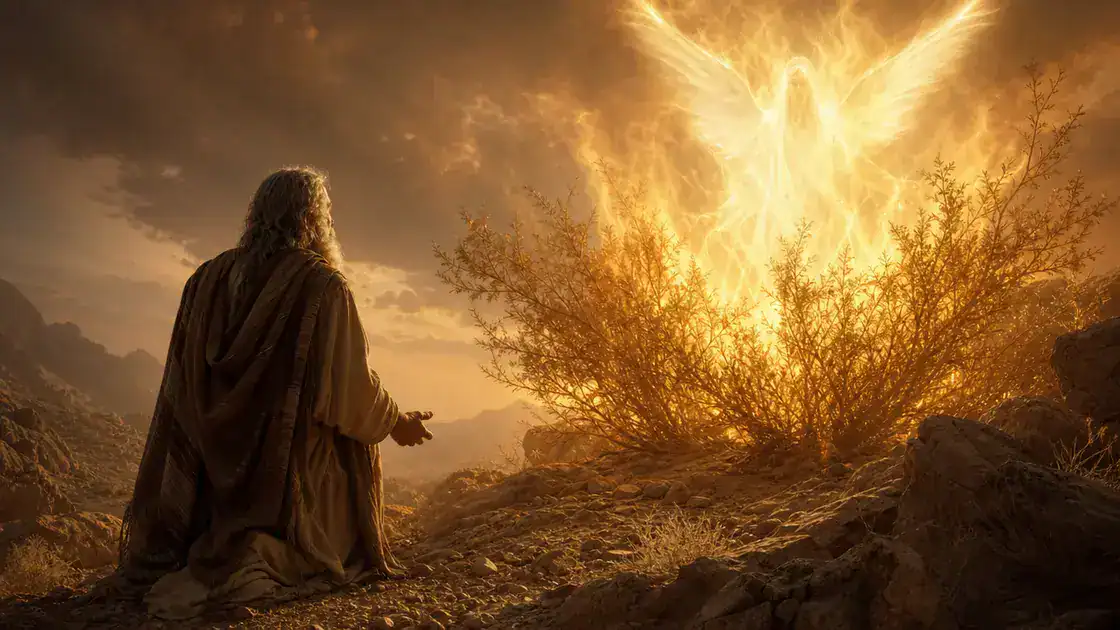

angel moses burning bush refers to the ‘angel of the Lord’ who appears to Moses at Sinai in Exodus 3, a luminous divine messenger whose speech carries God’s authority, summons Moses to covenant service, and has been read in Jewish and Christian tradition either as God’s agent (Memra) or as a theophany foreshadowing Christ.
angel moses burning bush — have you ever pictured that scene: a bush ablaze yet unconsumed, and a voice calling from Sinai?
Text and context: Exodus’s account of the burning bush
Imagine a shepherd on a rocky slope, the wind smelling of resin and dust, when suddenly a thorn bush is aflame yet not consumed. That vivid, strange sight is the opening of Exodus’s scene: a holy interruption in an ordinary day. The flame draws the eye and the heart, and Moses moves closer with a mixture of fear and wonder.
The narrative uses precise, powerful language: it says an “angel of the Lord” appeared in the fire and that the place was holy ground. Then the voice speaks, revealing God’s name as “I AM WHO I AM” and commissioning Moses for a task beyond his imagination. The text holds a gentle mystery—an emissary appears in the flame, and yet the speaker’s authority is unmistakably divine. This layered wording invites both careful reading and quiet prayer.
Set at Horeb or Sinai, the moment sits inside a larger landscape of covenant and calling. Moses the shepherd becomes Moses the messenger; the ordinary work of tending sheep frames a sacred vocation. The call to remove sandals models reverent attention, and the scene asks the reader to notice how everyday life can become the place where God chooses to appear and send us forth.
The identity of the angel of the Lord in Scripture
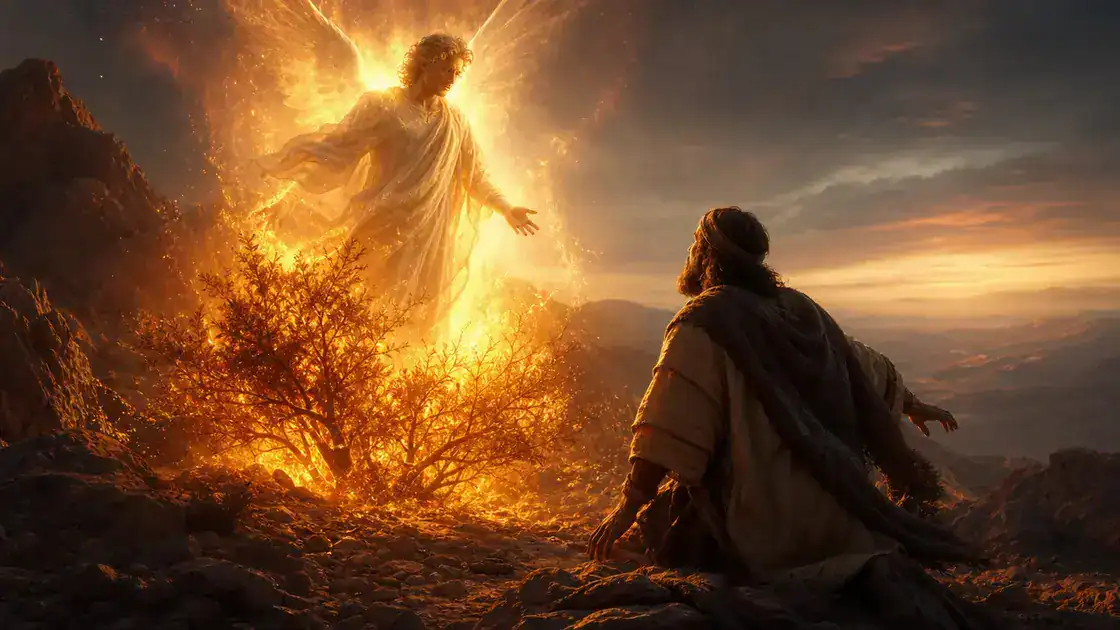
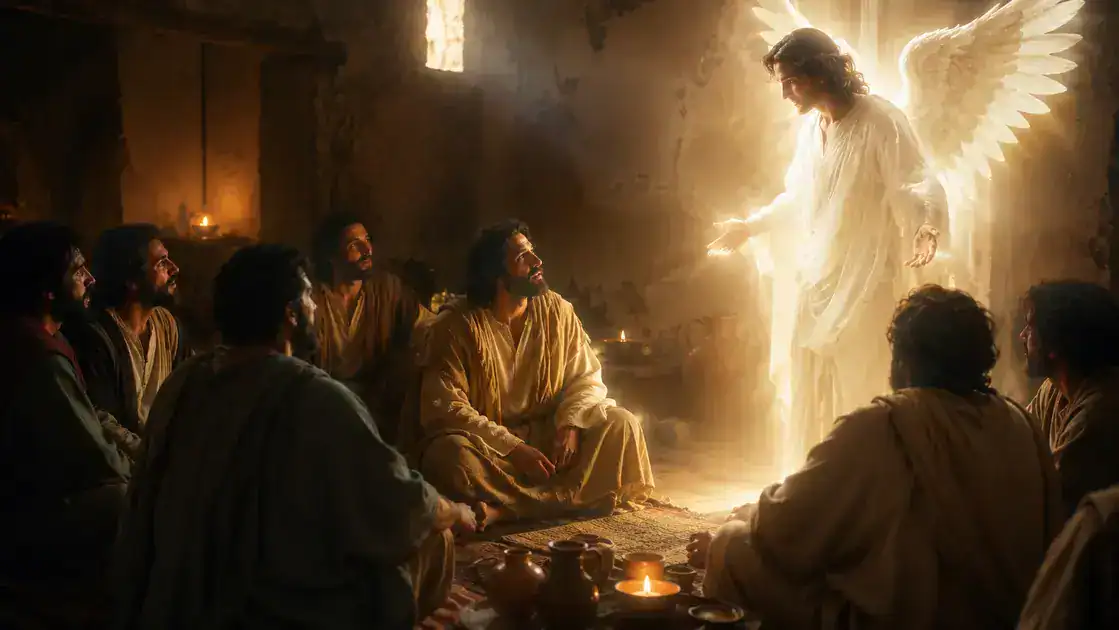
The Bible often shows a bright presence that stands between heaven and earth. In several stories a angel of the Lord appears as a vivid, authoritative presence that speaks and acts on God’s behalf. The figure functions like a messenger, yet the speech and power sometimes read as directly divine, so the scene asks us to listen with reverence and care.
Readers through the ages have offered different, faithful ways to hold that mystery. Some Jewish traditions treat the angel as God’s chosen agent, distinct yet carrying God’s voice. Many Christian interpreters name these appearances a theophany or see a hint of the Son’s presence before the Incarnation. Each reading tries to honor both the text and the deep sense of awe it inspires rather than forcing a single neat solution.
That gentle ambiguity shapes devotion: whether we meet a messenger or a direct appearance of God, the encounter calls for humility, obedience, and attentive listening. The Exodus scene invites Moses — and us — to remove sandals and edge closer. Keeping wonder and practical trust together helps the story move from curiosity to a life shaped by holy call.
Ancient Jewish readings and rabbinic reflections
Rabbinic readers hold the burning bush as a text rich in voice and presence. Early Aramaic translations and commentaries often speak of the Memra, the Word of God, acting in the world so the divine can meet human life. For these readers the figure in the flame can be a messenger sent by God, a way God chooses to disclose a holy claim without collapsing the distinction between Creator and creature.
Midrashic imagination gives the image a tender moral lesson: the bush that burns but is not consumed is likened to Israel—suffering and yet preserved. The call to remove sandals marks the ground as holy and invites a posture of humility. Rabbis linger on Moses’ quiet attention; his step closer models how reverence and listening prepare a person to receive vocation and mercy.
In later Jewish mystical texts some voices explore a loftier layering, where the angelic agent is woven into complex hierarchies and is sometimes associated with figures like Metatron. Even there, the devotional heart stays the same: the story calls us to stand in awe and to let mystery shape our response. This reading life moves from curiosity to practice—quiet prayer, careful listening, and a readiness to follow a call that may arrive in the middle of ordinary work.
Christian theology: theophany, angel, or divine presence?
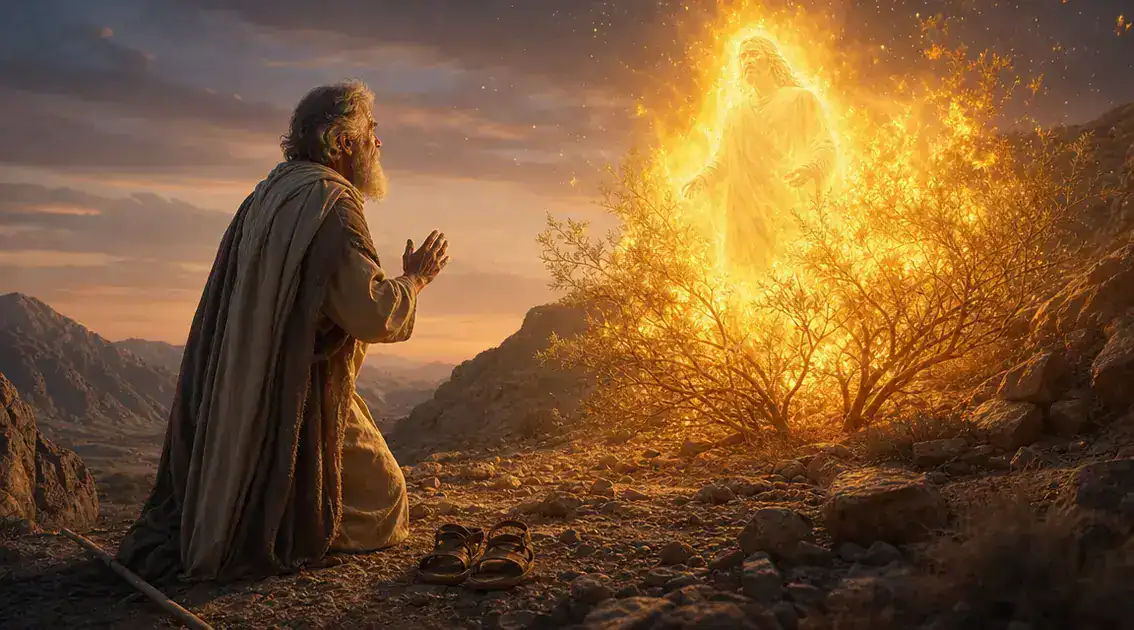
Many Christians read the burning bush as a sacred appearance. The text names an ‘angel of the Lord’ yet the voice speaks with divine authority. Some call this a theophany, a moment where God seems to meet a person in a visible way.
Christian writers offer two faithful paths. One sees a messenger sent by God who acts with God’s power. Another reads the scene as a Christophany, a foreshadowing of the Son before the Incarnation. Both paths hold the text’s awe and the sense that heaven touches earth.
For prayer and life, the difference matters less than the call. Moses steps closer, removes his sandals, and listens. That posture shows us how to meet holy moments: with humility, attention, and a readiness to follow. Let the scene shape your own listening and response to God’s gentle claim.
How this encounter shapes prayer and vocation
The burning bush shapes the heart of prayer by showing us how to pay attention. When Moses drew near, he was told to take off his sandals because he stood on holy ground. That act is a simple model: prayer begins by slowing down, removing the rush, and leaning in to hear what is quiet and true.
From that listening flow comes a call. The voice that speaks from the flame names God and sends Moses into a life of service. That moment shows prayer and work as a single movement: attentive waiting opens us to a call, and that call shapes the tasks we then accept. Courage and obedience grow where silence and wonder are practiced first.
So the story teaches practical habits for daily life. Keep a small space for quiet each day, listen before you act, and practice saying yes in small steps. In this way the bush’s lesson moves from a single event into a steady way of living, where prayer trains us to recognize and follow God’s vocation in ordinary moments.
Practices to discern sacred encounters today
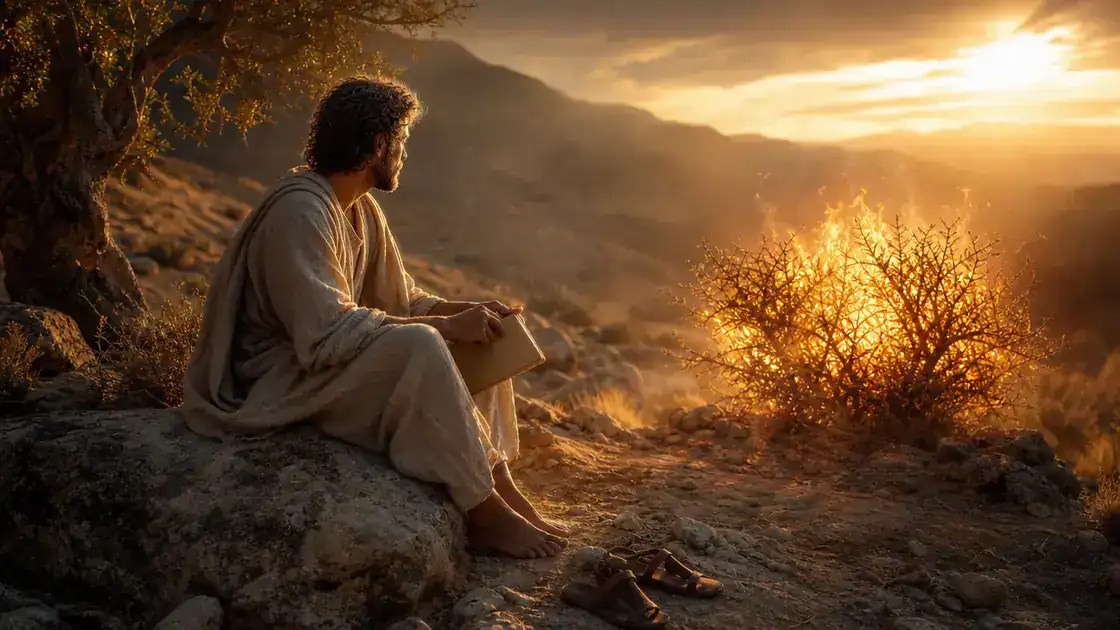
Begin with a quiet room or a patch of earth and make space to listen. Remove shoes, breathe slowly, and let the rush of the day fall away; this simple pause trains holy attention and opens ordinary moments to the sacred.
As you listen, name what you hear and hold it lightly. Test impulses with prayer, scripture, and trusted companions—let scripture and community help you weigh what feels like a call, and be patient with answers that arrive in small steps.
Turn what you learn into steady habits: brief daily silence, a short journal entry after a quiet hour, and honest conversation with a spiritual guide. These practices sharpen your heart for discernment, so when a gentle call comes you can move forward with humility, courage, and clear eyes.
Carry the flame into your day
As you leave this place of reading, may the memory of the burning bush settle in your heart. Let a gentle wonder remain with you. Breathe slowly and remember that holy things often begin in ordinary work.
Lord, teach us holy attention. Help us to remove our sandals of hurry and pride. Give us ears to hear the small voice that calls us to kindness, courage, and service.
May this sacred encounter shape your steps. Say yes to gentle calls. Practice quiet listening, honest prayer, and small acts of obedience. In these ways your life becomes a pathway of blessing.
Go in peace, held by a presence that does not consume but sustains. May wonder guide you, and may your path keep the light. Amen.
FAQ – Common questions about the angel and the burning bush
Who exactly appeared to Moses in the burning bush?
The Exodus account calls the presence an angel of the Lord appearing in the flame and then speaks with divine authority (Exodus 3:2–6). Jewish and Christian traditions read the scene with care: some see a heavenly messenger acting for God, while many Christians also call it a theophany or a pre‑incarnate appearance of Christ. The text holds both sacred mystery and a clear call to listen and obey.
Does the phrase “angel of the Lord” mean a created angel or God himself?
Scripture uses the title in ways that blur strict categories: the angel sometimes speaks as God and bears God’s authority, yet also functions as a messenger. Jewish commentary often treats this as God’s agent (the Memra), while Christian writers sometimes understand certain appearances as the Lord meeting people directly. The faithful response is humility: the encounter points us to God’s presence, whether by messenger or direct revelation.
How should I respond if I feel a sudden, sacred call like Moses did?
Begin simply: slow down, pray, and create a small space of silence to listen. Test the sense of call with Scripture, prayer, and trusted companions or a spiritual guide, and take small steps of obedience. Moses’ posture—removing sandals, edging closer, then answering the call—models reverence, discernment, and willingness to serve.
Can the burning bush story shape my daily prayer life?
Yes. The bush teaches holy attention: ordinary work can be the place God meets us. Practice brief daily stillness, listen before acting, and let small acts of obedience become habits; these disciplines help you notice gentle calls and follow them with courage and humility.
Are there other biblical passages that feature the “angel of the Lord”?
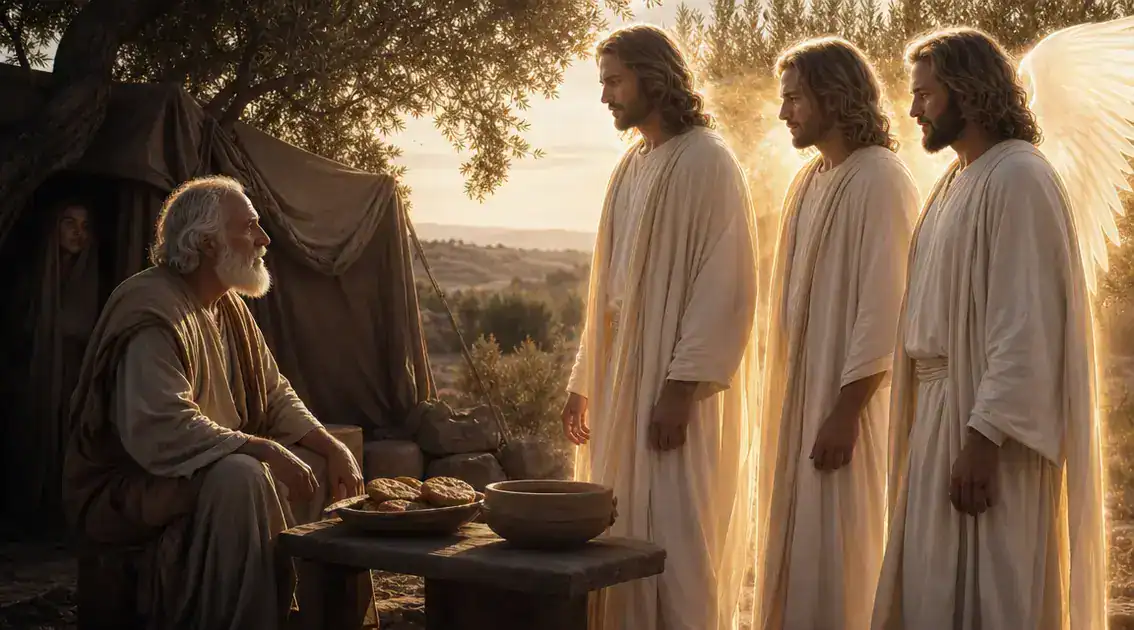
Yes. The title appears across the Hebrew Scriptures: to Hagar in Genesis 16, to Abraham in Genesis 22, to Gideon in Judges 6, and to Samson’s parents in Judges 13, among others. In many of these scenes the angel speaks as God and delivers covenantal direction, showing a pattern where divine will comes through a luminous, authoritative presence.
How do Jewish and Christian traditions differ in interpreting the burning bush?
Rabbinic readings emphasize the Memra or God’s word acting in the world and often teach moral and communal lessons—Israel as the bush that endures. Christian tradition pays close attention to theophany and sometimes sees a Christophany, a hint of the Son’s presence before the Incarnation. Both approaches keep the story’s devotional heart: awe, obedience, and a call to live under God’s presence.