

Saint Benedict and the Benedictine Rule present angels as faithful, ministering companions woven into monastic life through Scripture-rooted liturgy, vigilant prayer, humble obedience, and hospitality, so that the daily offices, lectio, and ordered work become practices by which monks cultivate attentiveness to the quiet presence and service of celestial beings.
saint benedict angels monastic life — have you ever wondered what it means when a monastery speaks of angels? I’ve long been drawn to the gentle way the Rule names the unseen, inviting curiosity and quiet devotion rather than tidy answers.
Angels in the rule: scriptural and monastic roots
The Rule of Saint Benedict grows out of lived Scripture and simple devotion. In the Bible, passages like Psalm 91 and Matthew’s words about angels who behold the Father shape how monastics hear the unseen. These texts give a gentle frame: angels are not distant curiosities but part of the sacred company that surrounds prayer and life.
Within the Rule, scripture is woven into daily practice so that prayer feels like shared worship with the heavenly court. Monks are asked to sing the psalms, keep vigil, and live with hospitality — gestures that echo Hebrews’ reminder not to forget to show kindness, for some have unknowingly welcomed angels. This is not abstract theology but a lived conviction: angelic companionship is woven into the monastery’s rhythm.
That conviction shapes ordinary things: silence becomes listening, the chant becomes a doorway, and humble work becomes offered service in a larger communion. The Rule trains the heart to small acts of reverence so that the monastery becomes a place where heaven and earth meet. Readers can take from this a simple practice: attend to prayerful routine and you may begin to sense the quiet nearness of those who keep watch.
How Benedictine prayer invites angelic presence
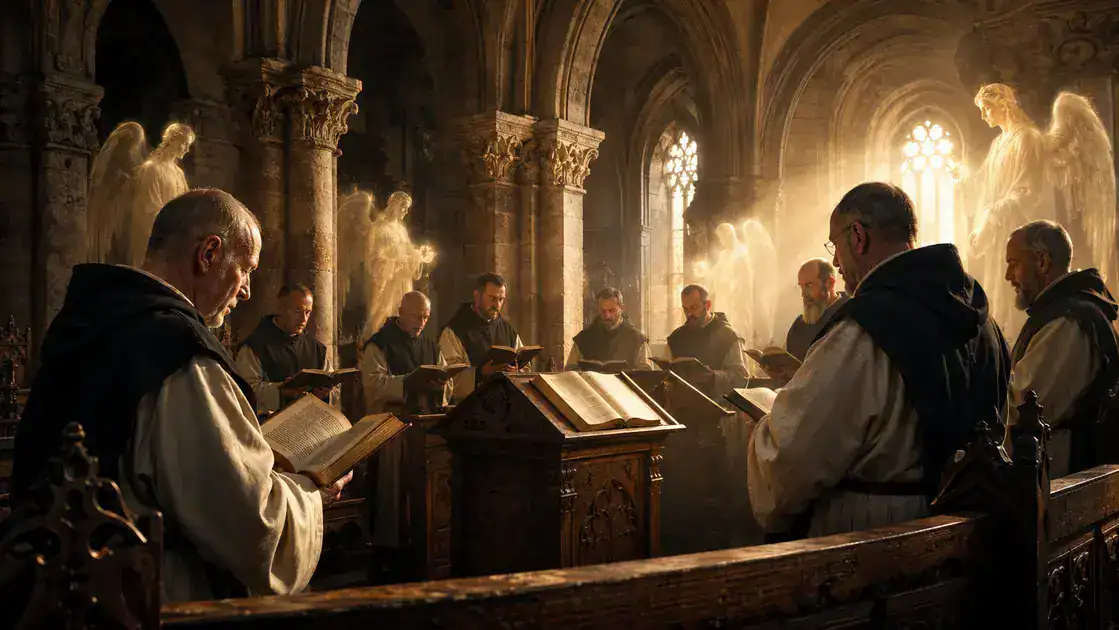
The Benedictine day is shaped around the office, the psalms, and common chant. Singing the psalms together joins our voice to a wider praise and turns simple words into a shared act of worship. In Scripture we learn that angels attend God’s presence and keep watch over his people; Jesus tells us that angels always behold the face of the Father, a detail that invites us to pray as if heaven is listening with us.
Silence and lectio divina create the inner room where that listening can be noticed. Monks read slowly, let a phrase sink into the body, and then carry that word into work and rest. This steady practice makes space for what the Rule implies: the monastery is habitually open to unseen company. The New Testament calls angels “ministering spirits” (Hebrews 1:14), and Benedictine rhythm lets that ministry be felt in small consolations rather than dramatic signs.
That sense of companionable presence changes how ordinary acts are offered. Attending one hour of the office with attention, pausing for a short breath prayer, or offering manual labor as an act of praise all tune the heart toward heaven. These habits do not demand visions; they shape a quiet attentiveness so that the life of prayer becomes a lived awareness of the faithful company that surrounds us.
Liturgical rhythms and signs of angelic accompaniment
The monastery’s day moves by set hours: the morning and evening offices, the eucharist, and the silent stretches between them. These rhythms keep a steady beat for the soul and shape how a community listens. By repeating psalms and prayers, the monastery makes room for a quiet awareness that worship is not only human; the Divine Office gathers us into the same praise sung by the heavenly court.
Signs in the liturgy often point beyond themselves: rising incense that lifts prayer like a visible breath, chant that steadies the heart, the gentle toll of a bell calling one back to attention. Scripture shows angels at worship and at God’s service, and the Rule invites monks to live with that vision in mind. Small consolations—a sudden peace, a felt nearness, a change in how one approaches work—can be understood as subtle signs of angelic accompaniment, not spectacles but quiet confirmations of a larger presence (see Hebrews 1:14).
To receive these signs, the monastery teaches attentive practice more than curiosity. Attend the office with full presence, let silence hold what the psalms stir, and let gestures like genuflection or the shared sign of peace become acts of opening. In this way, liturgical rhythm becomes a school of receptivity: not a search for wonders, but a steady tuning so the heart can recognize when the faithful company draws near.
Saint Benedict’s teaching on vigilance, obedience and celestial watchfulness

Saint Benedict asks monks to be watchful in simple, steady ways. Vigilance in the Rule is not about fear but about attention to God and to small faults that can grow. By rising for prayer, keeping silence, and living with order, the monk trains a heart that is ready to hear a quiet prompt and to turn toward what is holy.
Obedience walks hand in hand with that watchfulness. When one listens to the abbot, the community, and the Rule, self-will softens and the soul learns to follow a wiser path. This listening opens the life of the monastery to unseen help; the Bible calls angels “ministering spirits” (Hebrews 1:14), and Benedictine obedience makes room for that service by shaping humility and readiness.
These teachings show themselves in small daily acts: answering the bell, offering labor as prayer, and pausing for a short examen before sleep. Such habits tune the mind and steady the heart. They do not promise visions, but they form a posture of receptivity so that when grace or consolation comes, the soul is attentive — living under the faithful watch of God and those who serve him.
Bringing the Benedictine sense of angels into daily monastic practice
The Benedictine approach invites small, steady acts that make room for the unseen. Rising for the office, reading a short passage, and offering work with calm attention teach the heart to notice what is gentle and true. Over time these simple acts form a habit of quiet openness, a posture that learns to receive rather than demand.
Hospitality and humble service are concrete ways the Rule lets angelic presence be felt. Welcoming a guest, tending the garden, or sharing bread become forms of prayer when done with care and attention. By offering labor and kindness as a deliberate gift—work as prayer—the community turns everyday tasks toward the sacred and invites grace into ordinary life.
Practice this with small, steady rhythms: a brief morning invocation, attentive silence before meals, and bringing mindful attention to routine chores. These gestures are not a search for signs but a training of the heart; they shape patience, charity, and readiness so the soul can recognize gentle consolation when it comes. In such a life, the monastery becomes a quiet school of watchfulness where heaven and earth meet in daily service.
A gentle closing prayer
May the memory of faithful companions settle softly in your heart and remind you that you are not alone on the road. Let that quiet truth bring comfort when days feel heavy and give light to small, ordinary moments.
Carry the Benedictine gift of steady rhythm into your routine: a short prayer on waking, an attentive pause before work, a moment of silence at day’s end. These simple acts shape a ready heart and open a small door for grace to enter.
Practice hospitality of spirit and humble service as ways to welcome the unseen. In tending the tasks set before you with care, you join earth and heaven in a single, ordinary offering.
May peace go with you, and may the watchful love of God and the angels keep you in gentle company. Amen.
FAQ – Saint Benedict, angels, and monastic practice
Does the Rule of Saint Benedict speak about angels?
Yes. While the Rule rarely lists angels by name, it is built on Scripture and liturgical practice that assume heavenly company. Benedict’s emphasis on prayer, hospitality, and ordered life echoes biblical texts (for example, Matthew 18:10 and Hebrews 1:14) that portray angels as present at worship and attentive to God’s people.
Are the angels described as literal beings or only symbolic in monastic tradition?
Christian tradition — Catholic, Orthodox, and many Protestant writings — treats angels as real spiritual beings who serve God and aid humans. Scripture presents them as active agents (see Psalm 91:11 and Hebrews 1:14). In monastic life their presence is most often experienced as gentle aid, consolation, or protection rather than constant visions.
How does Benedictine prayer help one notice angelic presence?
Benedictine prayer trains attention through the Divine Office, lectio divina, silence, and work offered as prayer. These practices quiet the self and open the heart to subtle consolations. Scripture encourages worship as something shared with heaven (e.g., angels attending God’s praise), so disciplined, communal prayer creates the conditions to perceive that faithful company.
Do angels actively intervene in the daily life of monks?
Tradition says angels are “ministering spirits” (Hebrews 1:14) who serve God’s purposes. Their help in monasteries is usually discreet — a sense of peace, timely insight, or protection in danger — rather than theatrical miracles. Saints’ testimonies sometimes report clear encounters, but more commonly monastic life witnesses small, steady signs of providence.
What role do vigilance and obedience play in opening to angelic watchfulness?
Vigilance and obedience in the Rule shape a humble, attentive heart. When a monk answers the bell, keeps silence, and follows the abbot out of love for God, self-will softens and receptivity grows. Scripture links readiness with God’s care; by practicing watchfulness and obedient charity, one becomes more aware of the faithful company that surrounds faithful living.
Can laypeople adopt Benedictine practices to welcome this sense of heavenly company?
Yes. Many Benedictine practices are simple and adaptable: set times for brief prayer, reading Scripture slowly (lectio), mindful work, hospitality, and a nightly examen. These small rhythms form a heart of openness. Rooted in Scripture and tradition, they invite lay seekers to live with quiet attentiveness to God and the angels who serve him.