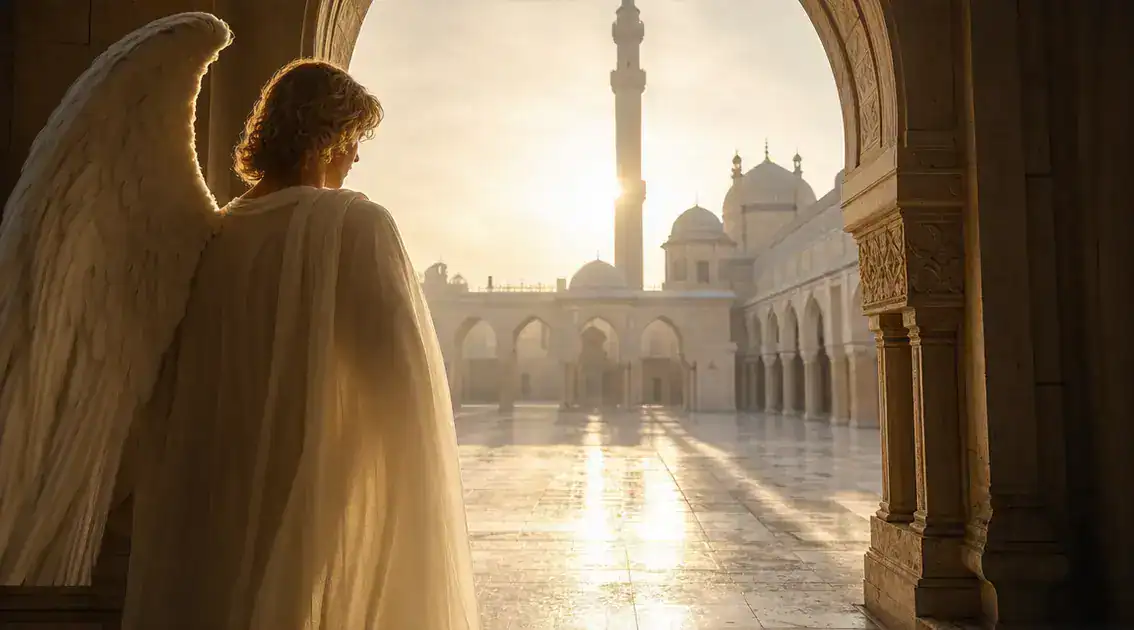

Angels in Islam are created beings of light who serve Allah as messengers (notably Jibril), recorders of deeds, protectors, and attendants at death (including Munkar and Nakir), guiding and supporting believers, carrying revelation, and enacting divine will so that human life is framed by both merciful assistance and moral accountability.
Have you ever felt a quiet nudge that seemed beyond your own thought? angels in islam appear across the Quran and Sunnah as close, purposeful presences — companions, messengers, and witnesses who invite both wonder and reverent practice.
What the Quran says about angels
The Quran shows angels as devoted, obedient servants of God who carry out His will with perfect trust and care. They are presented not as distant myths but as real, active beings who worship and obey without hesitation, moving through the world to fulfill divine purpose.
These beings appear in many roles: as messengers of revelation, as recorders who note our deeds, as guardians and as those who receive souls at the time of death. The Quran tells of angels delivering guidance to prophets and of two angels assigned to each person to observe and record — images that invite both awe and a quiet responsibility in daily life.
Living with that awareness changes how a believer moves through each day: it offers comfort in times of fear, steadiness at the approach of death, and a sense that our actions matter beyond what we see. To know the angels in the Quran is to be invited into a life of gentle reverence, prayer, and mindful conduct, held within a larger, sacred story.
Descriptions and ranks: from Jibril to Munkar and Nakir
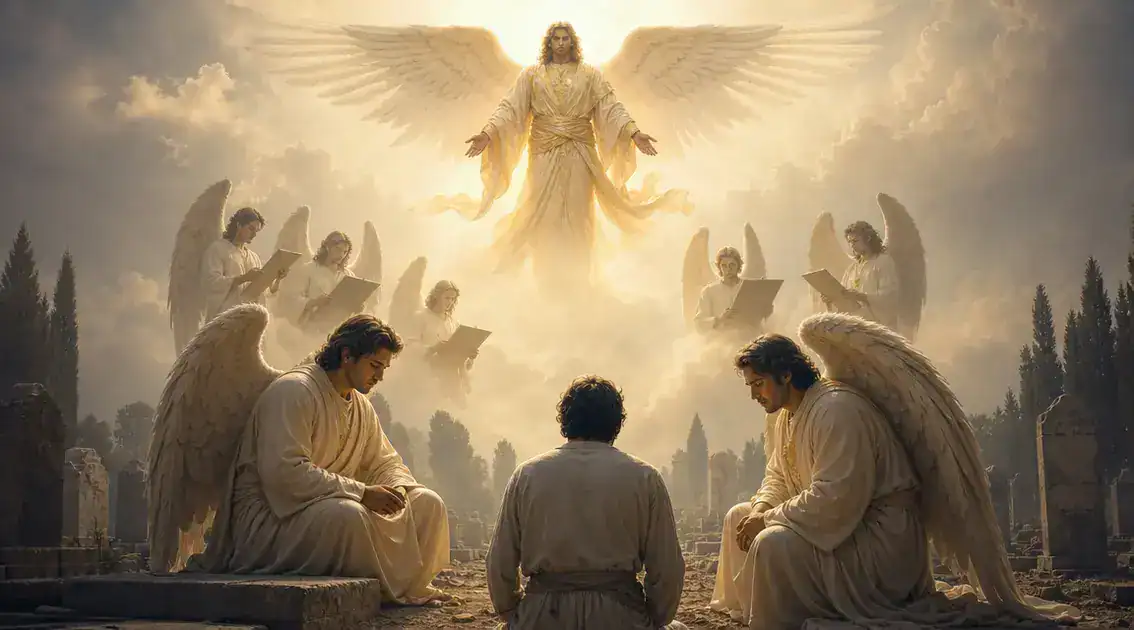
In Islamic tradition, some angels hold distinct ranks and roles that shape how they relate to the world. At the top stands Jibril (Gabriel), the trusted messenger who brought revelation to the prophets and appears as a majestic presence in many hadith. Alongside him are other high angels like Mika’il, Israfil, and the angel of death, each carrying a special duty that serves God’s wise order.
Angels are often described with features that hint at their purpose rather than simple human bodies: wings, great light, or many forms that stretch across the heavens. Classical texts teach that angels are created from light, swift and attentive, yet they act with calm obedience. Lower ranks include the recorders who note deeds and the guardian angels who walk with individuals, showing a neat hierarchy tied to function, not pride.
Among the roles that touch personal faith are Munkar and Nakir, the grave-questioners who gently test the soul’s faith after death. Their presence reminds believers that life is attended by watchful care and accountability, not cruelty. Holding these images together—the lofty messenger Jibril, the humble recorders, and the solemn questioners—helps the heart see a God who arranges the unseen with mercy, purpose, and a call to mindful living.
Roles and duties in hadith and prophetic narratives
The hadith literature brings angels close to the daily life of the Prophet and the early community, showing them as messengers, helpers, and witnesses. In many reports, Jibril visits to teach, test, and confirm revelation, turning complex truths into living guidance that could be practiced and remembered.
Other narrations show angels stepping into moments of danger and comfort: they are said to assist during battles, to surround the faithful in times of trial, and to strengthen hearts with calm and courage. These stories do not make angels a distraction from trust in God, but rather they give a steady sense that God arranges help in visible and unseen ways.
Hadith also describe angels who record deeds, take souls, and carry out God’s commands with exactness, reminding believers of both mercy and accountability. Holding these images gently changes how one prays and acts: the presence of angels becomes an invitation to live with care, compassion, and a quiet hope rooted in divine order.
How angels interact with believers: protection, recording, inspiration
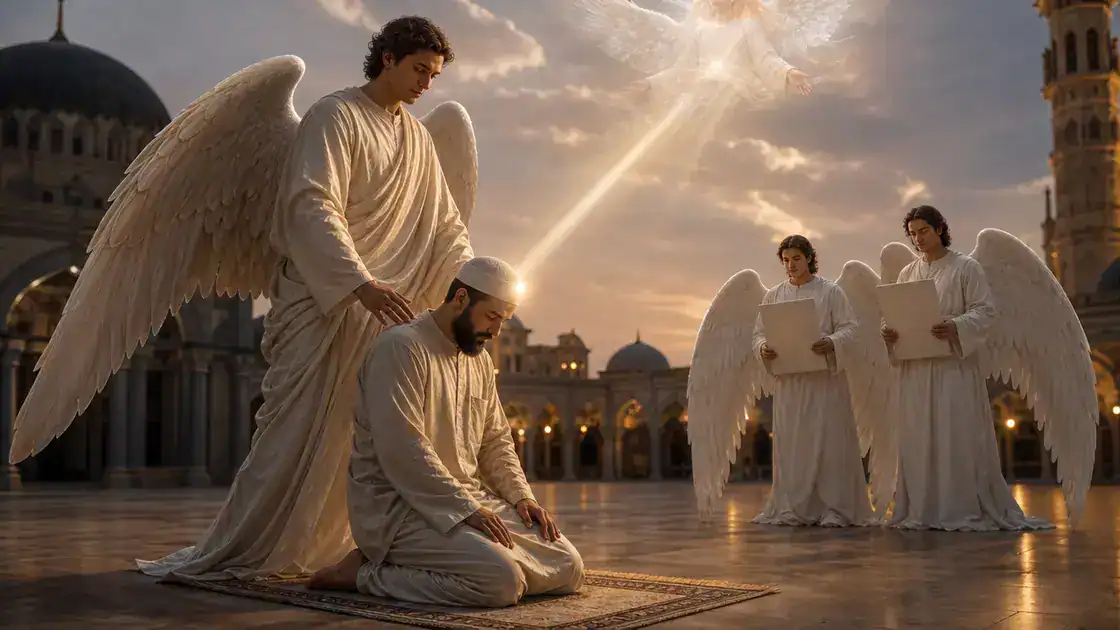
Many believers sense angels most clearly through their quiet care in everyday moments of protection. The Quran and hadith describe angels as companions on journeys, guards at night, and gentle presences around the home. This watchful care is meant to bring calm, not fear, and it asks us to move with trust and simple gratitude.
Alongside that care are the recorders, the attentive witnesses who note what we do and say. Knowing that our deeds are gently observed invites us to choose kindness and honesty more often, because small acts matter. This awareness is not meant to make us anxious but to help us live with honest intention and steady heart.
Angels also come as sources of inner inspiration, prompting remembrance, courage, or the return to prayer when we feel scattered. Many believers recall moments when a quiet thought, a fresh resolve, or the sudden calm before a prayer felt like a friendly nudge from beyond. Holding these ideas together—protection, recording, and inspiration—offers a warm picture of a faithful, unseen company that calls us toward mercy and mindful living.
Practical devotion: recognizing angelic signs and living with reverence
Many believers learn to notice angelic signs in simple, quiet ways: a sudden calm in the heart, help arriving just when needed, or a clear prompt to turn back to prayer. These moments do not shout; they nudge. When you pause and breathe, you may see how small mercies line up around your life as if an unseen hand is steadying your steps.
There are practical habits that invite that gentle company. Regular prayer, sincere charity, and the practice of remembrance (dhikr) open the heart and make a home for mercy. The Prophet’s teachings also praise gatherings where God is remembered, where angels are said to spread their wings in blessing; keeping humble company, seeking knowledge, and speaking truth draw that care nearer.
Living with reverence means letting those signs shape how you move each day: choose honesty over ease, greet others with warmth, and tend to small duties with care. These acts do not demand grandeur, only steady love. As you practice them, the world softens and you begin to feel life held inside a larger, watchful kindness — a daily invitation to trust, act well, and keep your heart open.
A closing prayer for gentle companionship
May God grant us the quiet gift of presence — that we may feel the comfort of His angels near, steady and kind. Help us notice small mercies and live with humble care.
Let our days be shaped by simple acts: a kind word, an honest choice, a moment of prayer. In these small ways we make room for mercy and welcome the unseen help that surrounds us.
When fear or doubt comes, remind us that we are held. May gratitude soften our steps and courage guide our hands, so each day becomes a gentle offering of faith.
Walk in peace, carry wonder, and let this quiet companioning shape how you love others and keep your heart open to mercy.
FAQ – Common questions about angels in Islam
Do angels really exist according to the Quran and Sunnah?
Yes. Belief in angels (mala’ika) is one of the six articles of faith in Islam. The Quran speaks of angels throughout its chapters, and the Prophet’s teachings (hadith) describe their roles—bringing revelation, serving God, and caring for creation—so their existence is affirmed both in scripture and in the sunnah.
Does every person have angels assigned to them?
Yes. The Quran speaks of two noble recorders who note our deeds (kiramān katibīn), and it also describes guardians before and behind a person, understood in tradition as protective angels. Hadith literature further explains that angels watch over, record, and guard people in ways that call believers to mindful, responsible living.
Who are the major angels like Jibril, and what are their roles?
Jibril (Gabriel) is the chief messenger of revelation who conveyed God’s words to the prophets and is named in the Quran. Islamic tradition also recognizes Mika’il (associated with provision), Israfil (who will sound the trumpet at the Last Day), and the angel of death (who extracts souls); the Quran and authentic hadith, together with classical scholarship, explain these distinct, trusted functions.
What are Munkar and Nakir and how do they relate to the soul after death?
Munkar and Nakir are the two grave-questioners described in the hadith who gently test the faith of the deceased in the grave. Their role, as taught in the prophetic tradition, reminds believers that the soul meets accountability after life and invites faithful preparation through prayer, righteous deeds, and steadfast belief.
Can humans ever see angels?
Angels are normally unseen, but scripture and hadith record occasions when they appeared in human form or in brilliant light—most famously when Jibril visited the Prophet. Such appearances are treated in tradition as signs given by God for specific purposes, not ordinary experiences, so believers are encouraged to balance humility with attentive faith.
How can I live so that I feel the nearness of angels in daily life?
Practical devotion draws angelic care nearer: regular prayer, sincere remembrance (dhikr), charity, seeking knowledge, and good company are repeatedly praised in the Quran and sunnah as actions that attract mercy and blessing. Simple habits—kind words, honest work, and gatherings for God’s remembrance—open the heart to quiet consolation and the sense of living within a loving, watchful order.