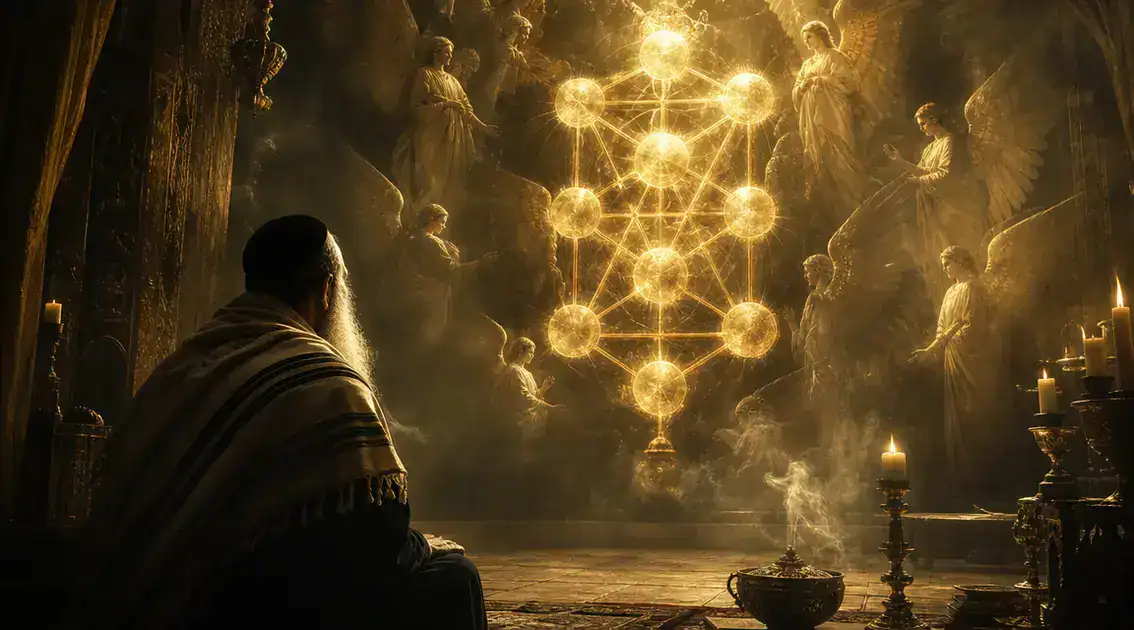

angels in jewish kabbalah are understood as ordered spiritual beings aligned with the sephiroth of the Tree of Life, serving as channels of divine attributes, guides in mystical practice, and companions in tikkun through prayer, sacred names, and ethical action that transform the soul and repair the world.
angels in jewish kabbalah: have you ever felt a sudden hush, as if a presence rearranged the air? This tradition offers a map — the Tree of Life — where sephiroth, sacred names, and angelic figures invite a deeper, quietly lived encounter.
Kabbalistic angelic hierarchies and their scriptural echoes
The Kabbalistic map places angels in ordered tiers that mirror the Tree of Life. These tiers are not cold ranks but living channels through which divine light moves toward the world. In the Hebrew Bible we meet hints of those tiers—Isaiah’s seraphim calling out praise, Ezekiel’s living creatures with many faces, Daniel’s attentive messengers—and Kabbalah reads these as layered echoes of the same bright truth. Seeing these echoes helps us feel angels as bridges between heaven and our world, not distant ideas but parts of a single sacred economy.
Each sephirah draws a certain angelic tone and service that shapes how God’s presence is felt. The fiery praise of the higher ranks answers the light above, while cherubim stand at inner thresholds to guard and guide; other angelic types act as messengers, teachers, or healers in this spiritual order. Rabbinic stories and mystical texts weave these images together so scripture and visionary tradition speak in one voice. This deepens study into prayer, turning knowledge into a lived, quiet way of being.
Understanding these hierarchies leads naturally to devotion rather than mere curiosity. When one meditates on a sephirah or names a sacred quality, one is inviting the corresponding angelic energy to shape the heart—whether that is mercy, courage, or wisdom. Such practice keeps the soul humble and receptive, reminding us that spiritual growth is shared with unseen companions who accompany our small steps. In this way, study and prayer become a single gentle path toward greater holiness.
Sephiroth as dwelling places: where angels meet the divine

The Sephiroth are felt as dwelling places where divine light gathers and angels attend. Each node on the Tree of Life holds a distinct quality of God’s presence, a place where heaven leans close to earth. In moments of scripture—like Moses at the bush or Ezekiel’s vision—we sense a similar meeting, and the mystics name those moments as points where angels and the Divine touch.
Angels in this view serve the character of each sephirah rather than acting at random. The angels near Chesed echo mercy and open hands, those around Gevurah steady strength and clear limits, and angels of Tiferet weave beauty and harmony into the whole. Reading these roles beside biblical images—seraphim of praise, cherubim at thresholds—helps the heart see scripture and mystic tradition as one living story.
Meditation on a sephirah invites a lived meeting with its angelic tone. A simple practice—sit quietly, breathe, name the sephirah’s quality, and hold it in prayer—opens a gentle space where angels can guide and teach. This is not a formula but a way to let hidden companions shape our choices, softening the soul toward mercy, courage, and clarity as we walk our days.
Sacred names and angelic offices in mystical practice
In Kabbalistic practice, sacred names are treated as living ways to draw near to the Divine, not as secret passwords to be wielded. Practitioners listen for a quality rather than recite unfamiliar signs; they seek the tone of mercy, strength, or beauty that a name brings. This approach finds its roots in scripture where God’s presence is revealed through acts and encounters, and the mystic then learns to use names as channels that tune the heart to that presence.
Angelic offices follow naturally from those names: some angels teach, others guard, still others heal. When a mystic sits in meditation, the practice may involve silent repetition, breath, or visual focus on a sephirah’s quality so that the corresponding angelic office can be invited into the soul’s work. These practices are simple in form but require steady intention and humility, for the goal is spiritual formation rather than power or spectacle.
From a devotional view, the truest test of these methods is how they shape daily life. Simple acts—quiet prayer, careful listening, ethical attention to others—open the same doors that elaborate rituals aim for. The angels and sacred names, then, become companions on a shared path of growth: they teach patience, order our choices, and invite a gentle, steady change of heart that shows itself in action and compassion.
Biblical figures, midrash and kabbalah: reading angels together

When the Bible tells of angels visiting Abraham, wrestling with Jacob, or guiding Moses, the stories carry more than a single event; they become doors to deeper meaning. Midrash often opens those doors, offering imaginative readings that show how an angelic visit can teach, test, or bless a person. Kabbalah takes this further by reading such encounters as signs of inner shifts, where the earthly heart meets a higher face of God through angelic presence.
Midrash and Kabbalah together teach us to read scripture not only for facts but for formation. The midrash fills the story with moral detail and human feeling, while Kabbalah names the spiritual movements beneath the scene. In this view, an angel is both a character in a story and a symbol of a work God wants to do inside us—comforting the afraid, calling the one who must change, or opening a new field of vision.
Reading angels in this blended way becomes a devotional practice rather than an academic exercise. Try a simple moment of attentive reading: sit with a short passage, notice where an angel appears, and ask what that presence asks of your heart. With gentle curiosity and prayerful imagination, the text can shape daily choices and deepen a quiet holiness, as the old stories and the mystics quietly guide us toward compassion and courage.
Practical devotion: prayers, meditations and ethical guidance
In Kabbalistic devotion, prayer and quiet attention form the heart of practice. Angels are not trophies to collect but gentle companions who teach us to listen. Begin by sitting still, breathing slowly, and naming a quality you long to grow—mercy, courage, or patience—and hold that quality without force. This simple, steady attention opens a small door where grace can enter and where the angelic life is felt as a guiding presence.
Many traditions support this inward work with short practices: a few measured breaths, a line of sacred text learned for its tone, or a pause before action to ask, “What does mercy ask of me?” Such habits shape decisions more than dramatic experiences. The mystics taught that prayer without right action is thin, so devotion must bend toward how we treat others. Acts of kindness, honest speech, and sharing of time or resources become prayers in motion and show the angels we are learning their lessons.
Try a simple daily routine: morning breath, name a sephirah’s quality, offer a short silent intention, then do one small, concrete kindness before noon. Over time, these small moves gather into a steady life of holiness. Keep the posture humble and the practice gentle, and remember the goal is to be changed so prayer guides your hands and feet. In that slow change, the angelic offices are not distant; they walk beside us in ordinary days.
Contemporary encounters: living with angelic presence in Jewish mysticism
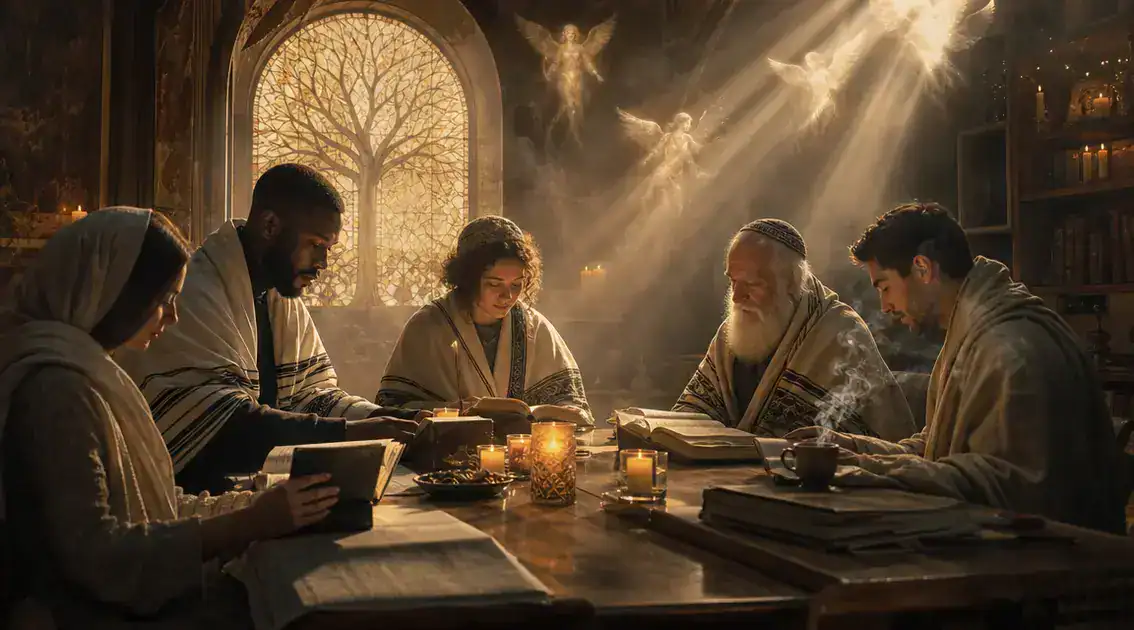
Many people today speak quietly of moments that feel touched by something holy: a sudden calm in a crowded place, a dream that brings clear advice, or a rush of mercy when you least expect it. In Jewish mysticism these moments are not oddities but parts of a living path where the unseen is invited into daily life. When you read stories of the sages or meet a teacher who prays with care, you begin to see how angelic presence can be a gentle, steady companion rather than a one-time spectacle.
Practices help the heart notice those signs. Simple acts—lighting a candle, singing an old prayer tune, studying a short text with a friend—open attention and shape the soul. Kabbalists speak of tikkun or repair, a way of tending the world that draws angelic help through small, honest work. Over time, these habits teach the eye to find the holy in ordinary days and to welcome help without needing drama.
Discernment matters; not every feeling is a message, and humility keeps practice lifegiving. Hold experiences in community, test them with wise guides, and let the work of kindness be the surest sign of true encounter. Living with angelic presence in Jewish mysticism is less about proof and more about a changed life—one that moves more quietly toward compassion, study, and faithful action.
A closing prayer for the journey
May the memory of the angels in Jewish Kabbalah walk with you like a quiet light. Let the Tree of Life shape your choices and calm your heart.
When you wake, name one quality you wish to grow—mercy, courage, or patience—and carry it through the day. Small acts become holy, and each kind choice draws a gentle presence closer.
Trust humble practice more than signs. Study, prayer, and simple service weave heaven and earth together. In time you will notice gentler speech, steadier hands, and a quieter hope.
Go in peace. May your days be held, and may wonder find you often. Amen.
FAQ – Angels in Jewish Kabbalah: questions seekers ask
Do angels appear in the Hebrew Bible and Jewish tradition?
Yes. The Hebrew Bible records many angelic encounters—Abraham’s visitors (Genesis 18), Jacob’s struggle (Genesis 32), Isaiah’s seraphim (Isaiah 6), and Ezekiel’s vision of living creatures. Rabbinic literature and later mystical works like the Zohar and Sefer Yetzirah build on these texts, treating angels as real agents within God’s service and as symbols of divine activity.
What is the relationship between angels and the sephiroth on the Tree of Life?
Kabbalah understands the sephiroth as channels or qualities of divine radiance, and angels are often described as attendants or expressions of those qualities. Rather than separate rulers, angels and sephiroth work together in the mystical map: angels help manifest a sephirah’s attribute—mercy, strength, or beauty—so study and prayer can align a person with that living quality.
Can one safely seek angelic help through prayer or practice?
Yes, with care. Jewish tradition encourages humble prayer, study, and ethical living as the safest ways to welcome spiritual help. Mystical practices that invoke names or focus on sephiroth are framed by a teacher, community, and obedience to Torah; the aim is spiritual growth and repair, not personal power or spectacle.
Are sacred names and ancestral formulas the same as magic?
Not necessarily. In Kabbalah, sacred names are treated as ways to attune the heart to divine attributes rather than tools for coercion. Tradition draws a line between prayerful, ethically grounded use—meant for tikkun (repair) and blessing—and any practice that seeks control or harm. Guidance from a knowledgeable teacher and a life of mitzvot help keep use reverent and responsible.
How can I tell if an experience is truly angelic or just imagination?
Discernment rests on rooted practices: test the experience against Torah ethics, see whether it bears good fruit in your life, and bring it into community or to a trusted teacher for counsel. Genuine encounters tend to increase humility, charity, and a steadier devotion; they do not promote pride, harm, or separation from study and mitzvot.
What role do angels play in practical spiritual life and tikkun?
Angels are helpers in the work of repair, but human choice remains central. Jewish mysticism teaches that angels may assist, inspire, or guard, yet our ethical actions, study, and repentance effect real change in the world. In that sense, angels accompany and encourage the work, while we remain responsible for the steps of tikkun through concrete loving action.