

Apollyon, the angel of the abyss named in Revelation 9, is portrayed as a divinely permitted agent associated with destructive forces released from the deep, serving within God’s sovereign ordering to warn communities, call for repentance, and prompt pastoral care rather than act as an independent cosmic rival.
Have you ever stood before a passage that both unsettles and beckons? apollyon angel of the abyss appears in Revelation 9 as a mysterious, charged presence — a text that asks for prayerful attention more than quick answers.
The figure of Apollyon in Revelation 9
Apollyon appears in Revelation 9 as a sudden, striking figure. John calls him the angel of the abyss and names him Apollyon, which means Destroyer in Greek, echoing the Hebrew name Abaddon. He is described as king over the locusts that come from the smoke of the abyss. The scene is vivid and symbolic, drawing the reader into a holy drama that asks for attention rather than panic.
Readers across history have approached this figure in different ways: some hold he is a literal angelic being carrying out a form of divine judgment, while others read Apollyon as a symbolic personification of forces of destruction held in God’s hands. Either way, the text stresses that this power is not free to act apart from divine permission. That restraint points us toward the comforting truth of God’s sovereignty even amid judgment, inviting careful, prayerful study instead of sensational fear.
A pastoral invitation
When the figure of Apollyon touches our hearts, it often calls for a spiritual response more than an explanation. The presence of a named, ordered force can be read as a wake-up call to prayer, repentance, and compassionate action for those who suffer. Holding the weight of the warning alongside the possibility of grace helps the faithful approach Revelation as both a solemn watchword and a prompt to deeper trust and service.
The symbolism of the abyss in biblical imagination

The image of the abyss in Scripture often points to the deep waters beneath creation, a place of mystery and raw power rather than mere evil. In Genesis the primeval deep (tehom) appears as the chaotic sea that surrounds order, and many Psalms and prophetic texts echo this language to remind us of creation’s origins and God’s rule over what is formless.
In Revelation the abyss becomes a symbolic place where forces are held or released by divine permission, not a rival power beyond God’s control. This helps us read the text with both reverence and restraint: the abyss shows that brokenness and judgment are real, but they remain within the limits of God’s sovereignty, calling the faithful to prayerful watchfulness rather than fear.
Finally, the abyss can serve as a spiritual image for inner depths we must face—fear, grief, and the unknown. When Scripture invites us to name those depths, it also invites healing: bringing our doubts and sorrows into the light of prayer, trusting that the same sovereign hand that orders the sea also holds our lives. This view turns the abyss from a symbol of despair into a call to humble trust and faithful service.
Historical and theological interpretations across traditions
Across Christian history people have wrestled with the figure of Apollyon and the abyss in Revelation. Many trace the name back to Hebrew Abaddon and connect it to themes of ruin and the deep. Early interpreters treated the scene as a sober call: vivid imagery that points beyond itself to a spiritual truth, always held under divine permission and order rather than chaos outside God’s rule.
Over time distinct traditions formed different habits of reading. Catholic and Orthodox voices often read Revelation through liturgy and typology, seeing Apollyon as a symbolic sign that prompts prayer and repentance. Some Protestant readings take a more literal future view, while others prefer moral or idealist readings that focus on spiritual struggle. Scholars classify these as futurist, preterist, historicist, or idealist, but each tries to keep the balance between warning and mercy.
When we lift these interpretations into a pastoral frame, the text’s aim becomes clearer: Revelation calls communities to faithfulness, not fascination with timelines. The appearance of judgment in the text invites repentance and compassionate action toward those in need, and it reassures us that destructive forces operate within limits set by God. This shared pastoral concern can draw readers from different traditions into common practices of prayer, care, and humble trust.
Imagery and language: locusts, king, and trumpet

The book of Revelation uses striking images to catch the heart: the locusts that rise from smoke, a king who leads them, and a loud trumpet that marks the moment. The locusts are described with unusual features so we sense they are more than ordinary insects. Their image pulls us into a scene of upheaval and warning, but the picture is shaped by language that points to spiritual meaning rather than mere spectacle.
The presence of a named leader reminds us that this is not chaos without order. The figure called Apollyon functions as a king over the host, and that name invites us to ask what authority looks like in the midst of judgment. Far from being a runaway force, the scene stresses restraint and purpose, hinting at the larger truth of God’s sovereignty even when hard things come. This helps the reader hold tension between warning and trust.
The trumpet carries a clear voice in the text: it announces what God allows and calls people to respond. In biblical practice trumpets often call the community to attention, repentance, or action, and here the sound works the same way. The imagery together becomes pastoral, not merely prophetic—an urgent summons to prayer, mercy, and faithful living in the face of mystery, trusting that the warning is meant to wake us toward life rather than to leave us in despair.
Pastoral readings: what this passage offers the faithful
Many pastors read Revelation 9 not to frighten but to awaken a caring faith. The passage names hard things so a community can face them together. It reminds us that even judgment comes under God’s vigilant care, which gives the faithful both warning and comfort.
From that place of care, spiritual practice flows naturally: honest prayer, steady lament, and active compassion for those who suffer. Congregations learn to pray for the weak, feed the hungry, and listen to the fearful, turning the vision into concrete acts of love. This is not about chasing signs but about steady responses that heal and hold people.
Finally, a pastoral reading offers hope and presence more than spectacle. The text calls the faithful to remain alert, to comfort one another, and to witness to mercy in small daily ways. When we meet the fearful with prayer and practical help, we live out the passage’s deeper intent: faithful love under the steady rule of God.
Comparisons with other angelic figures in Scripture
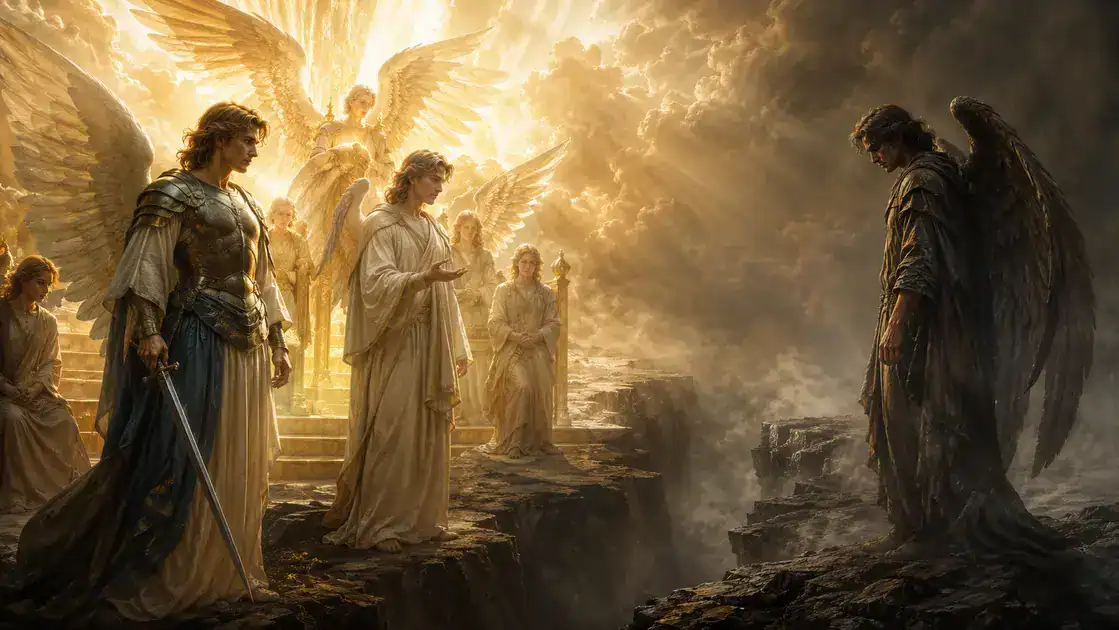
When we place Apollyon beside other angels in Scripture, a clearer picture emerges. Revelation gives Apollyon a specific name and role linked to the abyss, while other angels often serve as messengers, protectors, or worshipers. Noting these differences helps us see that biblical angels are not a single kind but a range of beings with distinct functions within God’s ordered plan.
Consider Michael, who appears as a warrior and guardian in Daniel and Jude, and Gabriel, who brings clear messages and comfort in Luke and Daniel. Cherubim and seraphim appear near God’s throne as attendants who uphold holiness and worship. By contrast, Apollyon is tied to a controlled release of judgment from the deep. Each name and image points to a role that reflects God’s purposeful authority, not independent power or random force.
These comparisons matter for faith. Seeing the variety of angelic roles can calm fears and deepen trust; the text invites us to respond with prayer, service, and steady hope rather than curiosity for spectacle. When we study these figures together, we learn to hold mystery with humility and to live more faithfully under the one who orders even the angels.
Practical spiritual practices for encountering sacred mystery
Begin with small, steady practices that open the heart to wonder. Try brief pockets of silence each day, a simple breath prayer, and a slow reading of a short Scripture verse. Sit with the line, breathe, and notice what feelings or thoughts arise; these quiet moves teach attention and prepare you to meet what is holy.
Bring the body into the practice with gentle, concrete acts: light a candle, fold hands, or offer a short blessing for someone in need. Share readings and simple prayers with a friend or a small group, and make service part of your rhythm. When prayer moves into care for others, the mystery becomes lived and the inner life finds outward shape.
Set a trustworthy rhythm: morning pause, a weekly Sabbath rest, a short evening review, and occasional fasting or silence. Keep a journal of small insights and prayers, and name both grief and gratitude aloud. Over time these habits form a quiet courage—a humble readiness to receive the unknown—and they invite surrender and compassion as faithful responses to sacred mystery.
A prayerful close
May the mystery we have touched remain a gentle companion on your way. Hold both the warning and the comfort as gifts that teach peace and steady watchfulness. Let wonder soften worry and make space for prayer.
May you find rest in the truth that even deep things are held within God’s keeping. Breathe slowly, name your fears, and bring them into the light of simple prayer. These small acts renew courage and invite grace into everyday moments.
Carry this sacred story into the work of your hands and the love you give to others. Let acts of mercy and quiet presence be your answer to mystery, turning insight into faithful care.
Go in calm trust, ready to serve and ready to listen. May your heart be kept in wonder, your steps guided by compassion, and your life held by a faithful God. Amen.
FAQ – Questions about Apollyon, the abyss, and Revelation 9
What does the name “Apollyon” mean and where does it come from?
The name Apollyon comes from the Greek word meaning “Destroyer” and echoes the Hebrew name Abaddon. Scripture names him in Revelation 9:11 as the angel of the abyss, a title that highlights role and function rather than offering a full biography.
Is Apollyon a fallen angel or an agent of God?
Revelation presents Apollyon as an angelic figure carrying out a divinely permitted action. Traditions vary—some read him as a literal angel executing judgment, others as a symbolic figure representing destructive powers—but most careful readings stress that any action is under God’s authority, not independent of it.
What does the “abyss” symbolize in the Bible?
Biblical language often links the abyss to the deep or chaotic waters (compare Genesis and Psalms). In Revelation the abyss functions as a symbolic holding place for powerful forces that God controls. It points to mystery and depth, not an equal rival to God’s rule.
Are the locusts in Revelation 9 meant to be literal insects?
The locusts in Revelation are described with strange, symbolic features and so most readers treat them as symbolic imagery rather than ordinary insects. The locust image echoes Old Testament plague language (for example Joel) and serves to warn and awaken the community to spiritual realities.
How should Christians respond to this troubling passage?
A pastoral response grounded in Scripture is prayerful attention, repentance, and compassionate action. Biblical trumpets and warnings call the community to wakefulness (see Numbers and prophetic calls). Rather than curiosity for signs, the text urges faithful care for those who suffer.
Can Revelation 9 offer hope as well as warning?
Yes. Within the wider message of Revelation, warnings are bounded by God’s purposes and lead toward restoration. The passage reminds believers that even hard events are held within God’s plan, inviting trust, perseverance, and active love as signs of hope.