

Angel sealing chosen ones in Apocalypse 7 refers to God’s act of marking his people—identified, protected, and commissioned—by a heavenly messenger, symbolizing covenant belonging, preservation through judgment, marking the faithful across Israel and the nations, and a corporate calling to worship and witness before the throne.
angel sealing chosen ones apocalypse 7; Have you ever wondered what that sealing means for those named in Revelation 7? I invite you to walk the scene with me.
Context of Revelation 7: the vision, the seals, and the heavenly court
You step into a thunderous vision around the throne where elders and living creatures gather, and the air feels charged with purpose. John watches angels holding back the winds while another angel carries the mark of God to place on foreheads — a moment placed as an interlude between the sixth and seventh seal. The scene reads like a pause in history, a divine breath that prepares the people of God for what comes next.
The act of sealing in this vision points to protection and identity. First we hear of 144,000 from the tribes of Israel, and then a vast, diverse multitude clothed in white joins the court, palms in hand. The seal marks belonging and preserves a faithful witness amid trial; it shows that God both knows and guards those who belong to him.
Seen from the heavenly court, the sealing ties into worship and purpose rather than mere escape. Those who are sealed stand before the throne and join the elders in praise, their destiny bound into the larger story of God’s care. Let this image invite calm confidence: even in judgment scenes, God’s ordering hand both identifies and shelters a people called to testify and worship.
Who are the sealed? interpretive traditions and biblical clues
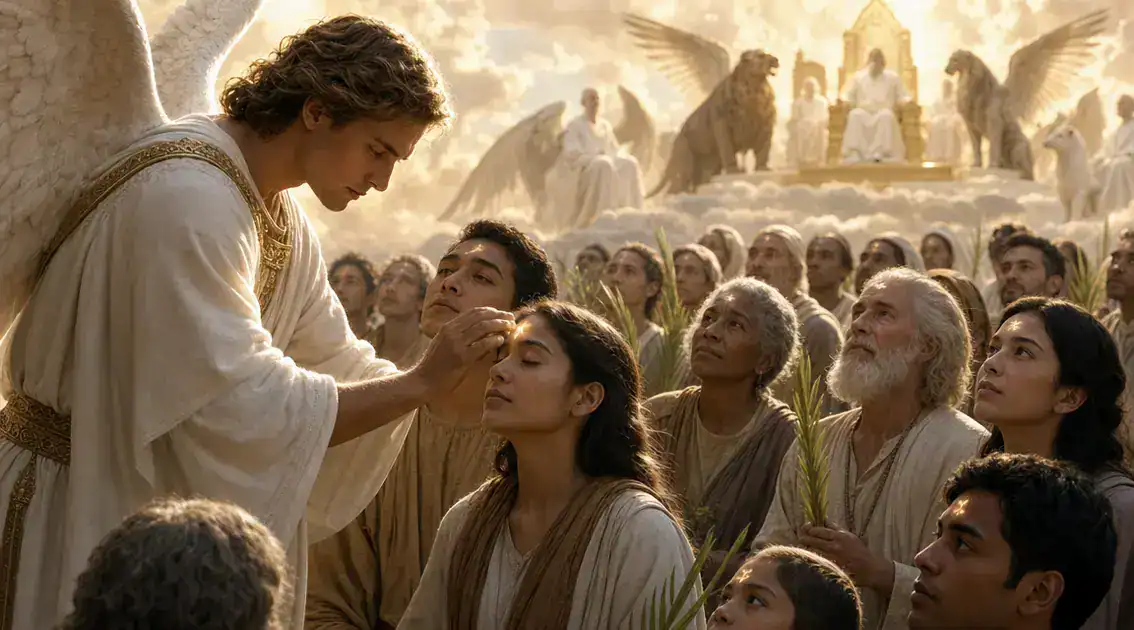
Readers have long asked who the sealed are in John’s vision. Some take the number 144,000 as a literal count tied to Israel’s twelve tribes, while others read it as a symbolic way to name the full people of God. The text then shows a later scene of a vast, diverse multitude in white holding palm branches, and together these images suggest both a rootedness in Israel and a wider, gathered community drawn into God’s care.
John’s language also points back to familiar Old Testament signs of protection. Think of the mark in Ezekiel 9 that spares the faithful or the blood on doorposts in Exodus that kept households safe. By placing a seal on foreheads, the vision uses a clear visual cue of identity: this is God’s people, known and safeguarded. The seal names belonging more than it hides the sealed from trouble.
Finally, the sealing carries a pastoral and missional note. Those who are marked stand before the throne and join in worship, not merely escape judgment. The seal marks them for witness and perseverance, a reminder that divine protection often serves a purpose beyond personal safety. For readers today, the image comforts the weary and gently urges faithfulness: live as one who is known, sheltered, and sent to testify to God’s faithfulness.
The angel who seals: role, symbolism, and connections to Old Testament witnesses
The angel who seals moves with quiet purpose, not haste. He approaches those gathered and places a small mark on the forehead, an action that reads as both care and commission. In the vision the angel is an emissary of God’s will, carrying out a tender task that protects and names the faithful as belonging to the covenant.
This sealing draws on older signs in Scripture. Think of the mark in Ezekiel 9 that spares the faithful and the blood on the doorposts in Exodus that kept homes safe; priests were also anointed and set apart for service. By echoing these images, the angel’s seal ties identity to memory and ritual, showing that God’s protection is woven into the story of his people.
Seen devotionally, the angel’s role teaches a simple truth: God uses messengers to guard and send his people. The seal is more than a shield — it is a sign of identity and mission, a reminder that those marked are called to witness and worship. For the reader, this invites a quiet trust: God knows you, marks you, and sends you into the world with purpose.
Theological meanings: election, protection, and corporate identity in Scripture

Scripture frames God’s choosing as a way to form a people, not to show mere preference. The idea of election appears in promises to Abraham, in Israel’s history, and in the New Testament where those called in Christ become a renewed community. This choosing gives a name and a purpose: the marked ones belong to God and are set within his unfolding plan.
That belonging carries a note of protection. The seal in Revelation recalls the marks of safety in Exodus and Ezekiel, images that show God shielding his own in the midst of danger. Protection here is not a promise of a trouble-free life, but a faithful preservation so that the community endures, worships, and witnesses through hardship.
From these truths flows a strong sense of corporate identity. The sealed are pictured together—tribes, nations, and ages united—so the mark binds people into one body with shared memory and mission. This communal bond shapes how we live: as a gathered people marked for worship, service, and hopeful testimony in the world.
Devotional practices: how this sealing speaks to prayer, hope, and sacramental life
The image of a seal can lead us gently into prayer. When Scripture shows foreheads sealed, it says God remembers and keeps his own. In quiet prayer we name that belonging, speak our fears and hopes, and rest in a God who knows our name and holds us close.
Our sacraments join words to touch and make the seal concrete. Baptism as sealing brings us into Christ’s life, and anointing or the Eucharist renews courage and hope. These rituals remind us that God’s care is not only a thought but a near, embodied presence in the life of the church.
Small, steady practices help that truth shape our days. Make the sign of the cross before you begin work, keep a short bedtime prayer asking for perseverance, and return to the Sunday assembly to be held again in the sacraments. Such habits form a people who live as those who are known, sheltered, and sent to witness love in the world.
A prayer for those sealed and sent
Gracious God, thank you for the tender image of a seal placed on the forehead — a quiet sign that we are known and protected by you. In times of fear or doubt, let that memory settle in our hearts like a steady lamp.
Give us courage to live as marked people: to worship with joy, to bear witness with gentleness, and to care for neighbors with the same grace that held us. May the sacraments and our simple prayers keep us mindful of your presence.
Teach us small, faithful habits — a morning breath of thanks, a brief prayer at noon, a night offered back to you — that help this sealing shape our days. Let our lives reflect the hope we have received and the calling we carry.
May peace go with you, and may wonder soften your steps. Amen.
FAQ – Questions about the angel sealing and Revelation 7
Who are the sealed in Revelation 7?
The sealed are presented as God’s people known and protected in a time of trial. John names 144,000 from the tribes of Israel and then shows a vast, diverse multitude clothed in white (Revelation 7:4–9). Many traditions read this as both a particular link to Israel and a symbolic way to show the full, gathered people of God—those whom God recognizes and preserves for worship and witness.
Is the number 144,000 meant to be taken literally?
Scriptures and commentators differ. Some read 144,000 as a literal number tied to the twelve tribes (a Jewish reading), while others treat it as symbolic—12 × 12 × 1,000—to indicate completeness or the whole people of God. Either way, the point in the vision is that God’s covenant people are identified and held by him.
What does the seal on the forehead signify?
The seal marks identity, belonging, and protection. It echoes earlier biblical signs—Exodus (the blood on doorposts) and Ezekiel 9 (a mark that spares the faithful)—and signals that those marked are recognized by God and set apart for his purpose (Revelation 7:3). It is both a sign of care and a sign of mission: they belong to God and are called to witness.
Does being sealed mean believers will avoid suffering or judgment?
Being sealed does not promise a trouble-free life. The Bible often links divine protection with preservation for purpose rather than escape from hardship. The sealed stand before the throne and worship (Revelation 7:9–17); the seal sustains them through trial so they can remain faithful and bear witness, not merely to shield them from all pain.
How does the sealing relate to baptism and the sacraments?
Tradition sees strong connections: baptism and anointing use water and oil to mark, welcome, and set people apart for life in Christ. The seal in Revelation resonates with these rites as visible signs that God claims and renews a person. Sacraments make that spiritual truth tangible and remind the community that God’s marking is both personal and communal.
How can I live today as someone who is ‘sealed’ in a devotional way?
Begin with simple, steady practices that remember your belonging: brief daily prayer, participation in worship and the sacraments, and acts of service that witness to God’s love. Let those habits shape choices and calm fears—living as one who is known, sheltered, and sent helps faith feel real in ordinary days.