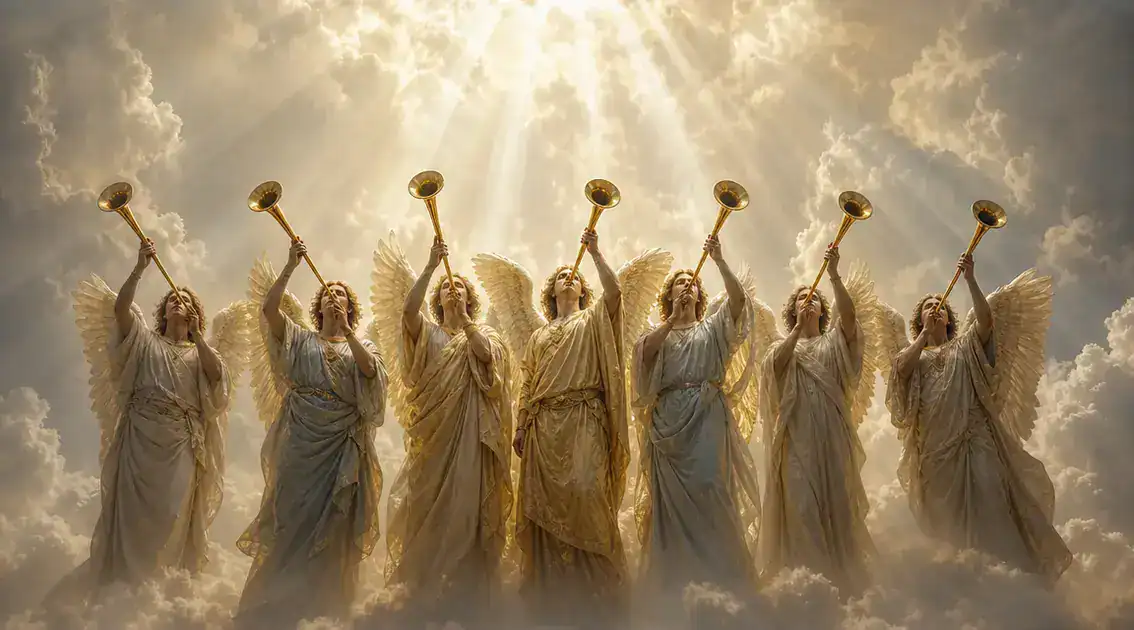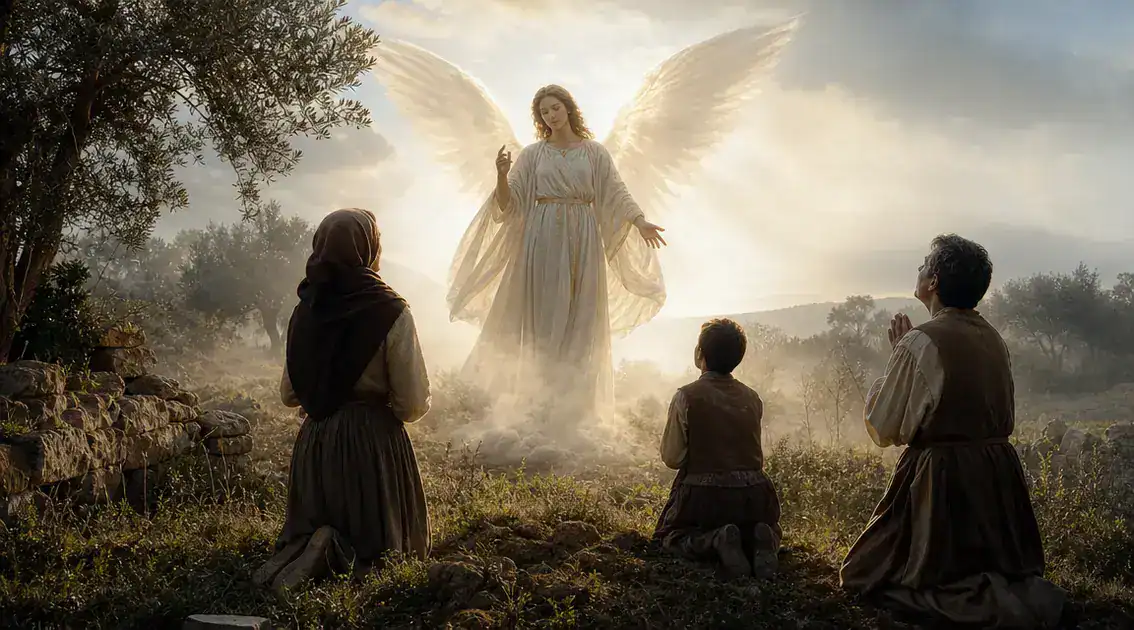

Angels and the final judgment: Angels are depicted in Scripture and the Fathers as God’s ministering agents who announce and witness the end, execute divine decrees (trumpets, seals, bowls), protect the faithful, and hold human deeds in measure so that judgment reveals truth and opens the way to restorative mercy.
Have you ever wondered how angels and the final judgment meet in Scripture and the Fathers, like a quiet chorus at the edge of time? I invite you to explore their biblical traces and pastoral wisdom, noticing how these images shape hope and conscience.
Angelic roles in Scripture: messengers, warriors, and judges
In many biblical scenes angels come first as messengers, carrying word and presence into human life. You see this in the gentle clarity of Gabriel’s visits in Luke and Daniel, where a single word changes the course of a life and a people. These moments remind us that God often meets us through faithful, attentive servants who bring news, guidance, and consolation rather than spectacle.
At the same time, Scripture pictures angels as warriors who stand against the chaos that threatens God’s order. Michael and other heavenly hosts appear in visions and psalms as protectors and fighters for justice, not for personal glory but to defend what is good and holy. This martial image comforts those who face unjust powers, showing that the struggle for righteousness is held within a larger, ordered purpose.
Finally, angels are present in scenes of judgment, acting as God’s instruments to call the world to account and to restore rightness. In prophetic visions and the book of Revelation, angels sound trumpets, open seals, and carry out decrees that reveal both mercy and consequence. Holding these images together helps us see angels not as distant arbiters but as participants in God’s loving governance—agents who bring message, protection, and the sober call to live in truth.
The book of Revelation and angels at the final judgment
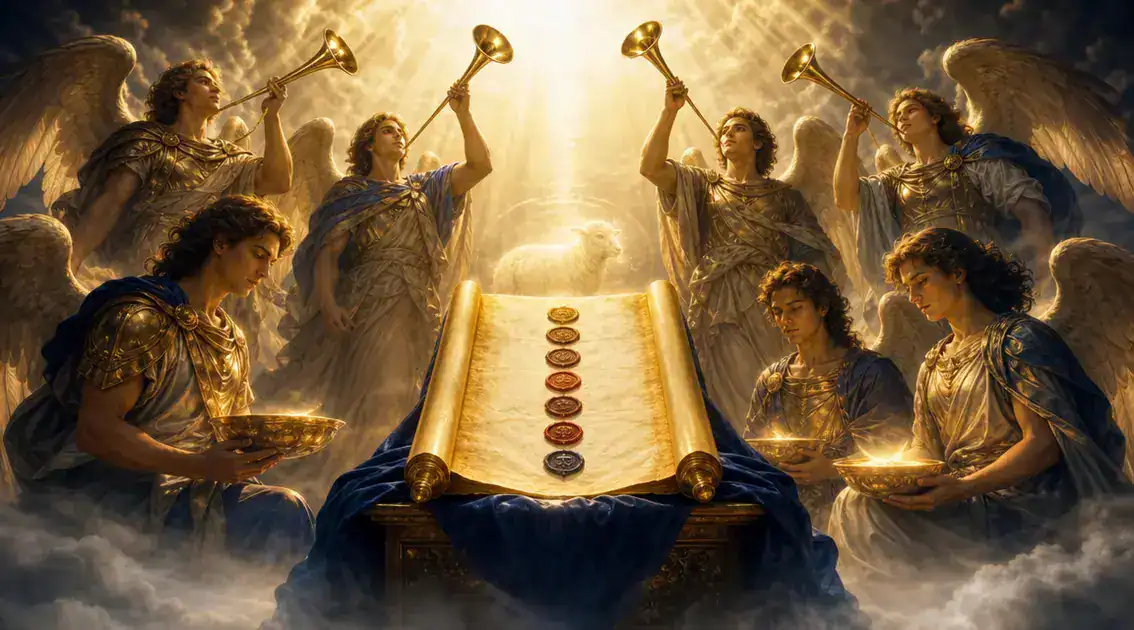
The book of Revelation places angels at the heart of the final scenes, moving the story forward with clear, visible actions. When the Lamb opens the first of the seven seals, angels respond by carrying out stages of God’s purpose; some sound trumpets, some hold bowls, and some stand as witnesses to each moment. These images show angels as active servants of divine order, not cold symbols, and they invite us to watch the unfolding with sober attention.
Scripture gives simple tasks to these heavenly beings so the drama is easy to follow. Angels announce with trumpets, pour out bowls of cleansing, and guard the scroll that reveals God’s will, creating a slow, sacred rhythm. In these scenes the seven seals, the seven trumpets, and the seven bowls form a kind of choreography where angels serve as heralds and ministers, making each stage both audible and visible to the watching world.
For those who read these images devotionally, the angelic role in Revelation calls us to steady hope rather than fear. Judgment in these visions is shown as part of God’s care: it unmasks what harms life and opens a way for healing and renewal. As the heavenly host acts, we can hold awe and trust together, remembering that justice and mercy move hand in hand in the story that the angels help to tell.
Patristic perspectives: what the Fathers said about angels and judgment
The early Fathers read Scripture with prayerful attention and often describe angels as divine ministers who serve God’s care and governance. Writers like Augustine, Gregory the Great, and John Chrysostom point to angels as more than images; they are active participants in God’s work, carrying messages, protecting the faithful, and helping to carry out God’s will at decisive moments. Their language is simple and pastoral, aimed at forming the heart rather than winning an argument.
When the Fathers turn to scenes of judgment, they often balance awe with consolation, seeing angels as instruments of both truth and mercy. Rather than speak only of doom, they invite readers to see judgment as a healing act that reveals what is true and frees what is rightly ordered. This view shapes how they read biblical visions: angels announce, enact, and hold open the path toward renewal, so that divine justice and divine compassion are joined in one movement.
For devotional life, these patristic reflections offer a steadying light. They encourage quiet vigilance, prayer for right judgment in our own choices, and trust that God’s ministers do not delight in destruction but in restoration. Let this gentle teaching lead you to a humble hope—one that looks to the angels not as mere symbols, but as companions in a divine story that calls each soul toward truth and mercy.
Symbols and images: trumpet, scales, and the angelic assembly
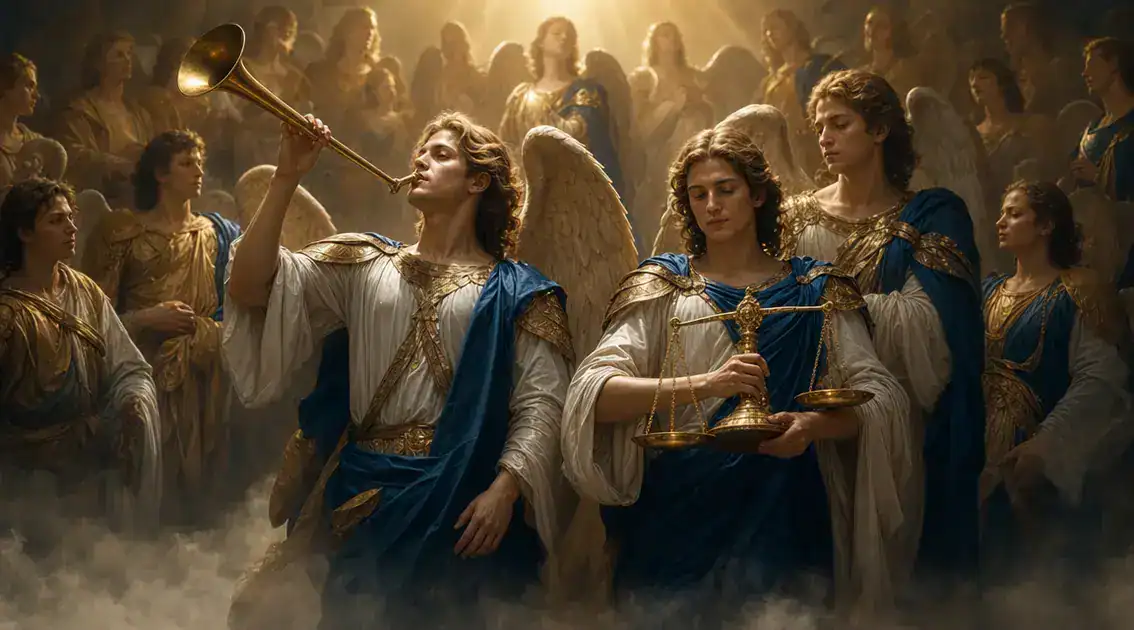
The trumpet, the scales, and the angelic assembly appear across Scripture as clear, simple signs that move the heart. The trumpet calls people to attention, a wake-up sound that urges listening and change. The scales stand for honest measure, showing that actions are weighed with care and truth, not with cruelty but with clarity. The angelic assembly gathers as a holy court and a loving company, holding the scene in sacred witness so that nothing is hidden.
These symbols work together in a gentle choreography: the trumpet rouses the soul, the scales name what is real, and the assembly keeps the moment in prayerful focus. In worship and in quiet reading of Scripture, they shape how we respond—sober, humble, and open to being formed. Rather than frighten, these images invite a steady hope and a readiness to be refined by love.
We can bring them into daily practice by listening for the trumpet in moments of silence, using the idea of the scales to examine our choices honestly, and imagining the assembly standing with us in prayer. Such simple acts help us grow faithful and serene before God’s judgment, trusting that it serves healing as well as truth. Hold close the thought that angels act to call, to weigh, and to accompany, always pointing us toward God’s mercy and the life that follows when we choose what is true.
How this tradition shapes personal faith and our hope before judgment
Belief in angels and their place at the final judgment quietly shapes how many pray and live each day. When we picture angels as God’s messengers and ministers, our choices take on a new weight: small acts of kindness feel seen, and moments of weakness invite gentle correction rather than shame. This awareness asks us to live with attention, as if the life we lead were held within a larger, loving story.
That lived habit shows up in simple practices: liturgy that names the heavenly host, brief prayers asking for an angel’s guidance, and the honest use of the imagination to picture being called to account with mercy. Saints and ordinary believers alike report this as calming rather than frightening—a reminder that judgment is not merely punitive but is meant to bring truth to light and free us for fuller love. In this way, the angelic images help shape a moral life rooted in care, not fear.
Hope grows from these images because angels point beyond themselves to God’s mercy and promise. Seeing angels as companions at the threshold of eternity invites a steady trust: we are not left to face judgment alone, and our lives can be ordered toward healing. Let that trust move you to quiet readiness—gentle repentance, faithful service, and a serene hope that the final accounting is held within a love that seeks restoration.
A gentle sending forth
May the quiet images of angels and the final judgment rest in your heart as a call to steady hope. These scenes do not press with fear but invite a sober trust that God’s mercy and truth walk together, holding every small choice in a wider love.
Remember that the heavenly ministers are not distant judges but companions who point us toward what heals. Let the thought that you are never truly alone shape your days: small acts of care, honest prayer, and a willing heart matter more than we often know.
Carry this theme into ordinary life by pausing for a brief prayer, examining your day with kindness, and choosing one simple act of mercy each morning. These practices form a gentle habit that readies the soul without drama and makes the final accounting a passage of light.
May you go in peace, held by angels and by the One who calls us home. Keep your hope small and steady, your hands ready to serve, and your heart open to wonder. Amen.
FAQ – Angels, judgment, and what Scripture and the Fathers teach
What role do angels play at the final judgment?
Angels serve as God’s ministers in the final scenes of Scripture: they announce, witness, and carry out God’s purposes (see Revelation 8–11; 20). The Gospels also show angels gathered with Christ at the final reckoning (Matthew 25:31). Patristic writers present them as active helpers, not independent judges, who make God’s saving will visible.
Are angels the judges, or do they simply act for God?
Angels are instruments, not the ultimate judge. Scripture makes clear that God (and Christ as judge) pronounces judgment, while angels execute or witness that decision (Matthew 25:31–46; Revelation 20:11–15). The Fathers stress that final judgment belongs to God’s wisdom, with angels serving in ordered humility.
Will my guardian angel be present at the final judgment?
The tradition affirms that guardian angels accompany souls through life and stand with them in God’s presence. Jesus’ words about angels who “behold the Father’s face” (Matthew 18:10) and the Church’s long teaching suggest they are present as loving companions and witnesses at life’s end and in the accounting that follows.
Do angels bring punishment, or are they instruments of mercy as well?
Both. Scripture shows angels carrying out actions that are corrective (Revelation’s bowls and trumpets) and also ministering to the faithful (Hebrews 1:14). The Fathers teach that God’s use of angels aims toward righting what harms life and opening the way to healing, so their role includes both warning and care.
How should belief in angels and the judgment shape my daily life?
Let it bring gentle holiness: honest self-examination, prayer, and simple acts of mercy. The images of angels and judgment call us to live responsibly (Matthew 25) and to trust God’s mercy. The Fathers urged the faithful to liturgy, prayerful vigilance, and charity as practical ways to be ready.
Are the angelic visions in Revelation meant to be taken literally or symbolically?
Scripture’s visions often blend literal and symbolic language to teach spiritual truth. John’s imagery is vivid to convey realities beyond words (Revelation 1:1). Patristic reading typically allows for both: some details may be literal, while many images function symbolically to instruct the Church about God’s justice, mercy, and final restoration.