Dionysius the Areopagite’s Celestial Hierarchy presents a symbolic yet theologically grounded ordering of nine angelic ranks—rooted in Isaiah, Ezekiel, and Revelation—designed to shape Christian worship, guide contemplative ascent via the apophatic tradition, and link heaven’s praise with the church’s liturgical and devotional life.
Have you ever wondered about the ordering of heaven? dionysius areopagite celestial hierarchy opens a luminous map of the angels, inviting quiet contemplation and gentle study.
Dionysius’ context: who he was and why his writings mattered
There is a gentle mystery around the name Dionysius the Areopagite. He writes with a voice that blends Scripture, monkish prayer, and the hush of a chapel at dawn. Readers long for a clear biography, yet his true identity remains wrapped in silence; what matters most is the spirit of his words, which aim to lead the soul toward God rather than to claim fame.
His writings — above all the Celestial Hierarchy — map a path between heaven and liturgy. He describes nine orders of angels not as distant curiosities but as part of a living worship that shapes the church’s prayers and imagination. The book asks readers to see worship as participation in a greater reality, where song and silence alike point toward the divine presence.
For spiritual seekers, Dionysius offers a gentle method: move away from bold descriptions and toward a humble, quieting attention. This is the apophatic way, a practice of trust that holds words lightly so the heart can open. Reading him can soften hurried faith and invite a steadier, prayerful life — one where imagination and reverence walk together toward deeper union with God.
The nine orders: structure, names and spiritual symbolism
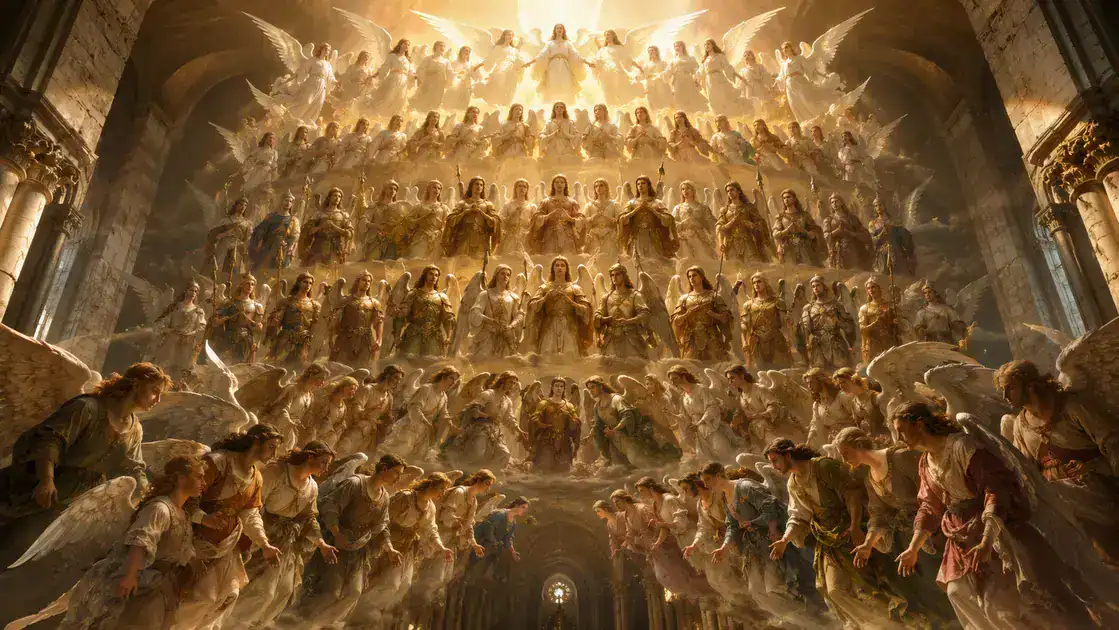
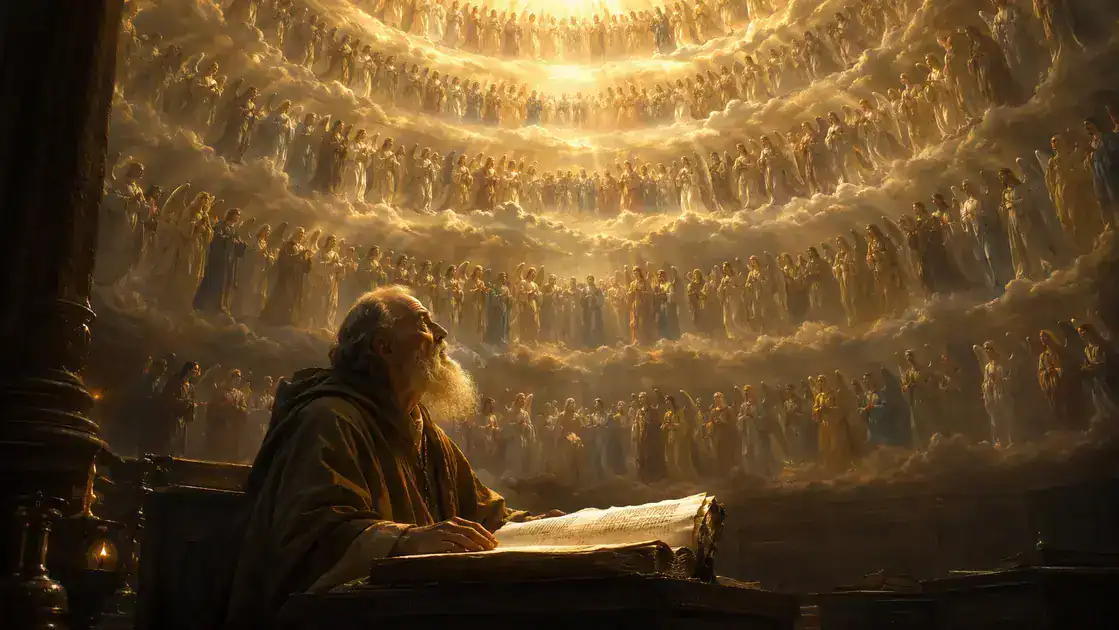
The nine orders of angels form a gentle ladder from heaven’s inner light down toward our daily life. In Dionysius’ vision, the highest triad — the Seraphim, Cherubim, and Thrones — dwell closest to God and reflect burning love, deep knowledge, and steady divine justice. The middle triad — Dominions, Virtues, and Powers — carry out God’s ordering work and share strength for the world. The lower triad — Principalities, Archangels, and Angels — meet human life with guidance, clear message, and faithful care.
Each order has a simple spiritual symbol that opens the heart to prayer. Isaiah’s vision gives us the Seraphim as ministers of burning love, while Ezekiel’s living creatures help us see the Cherubim as protectors of sacred truth. Thrones suggest calm judgment, Dominions and Virtues suggest ordered goodness and grace at work, and Powers and Principalities point to a responsibility to guard and govern. Finally, Archangels and Angels bring the nearness of God into everyday moments, reminding us that the divine reaches out in word and presence.
Learning these names is not an exercise in cataloguing but a practice that gently reshapes devotion. The hierarchy invites a turn from busy thinking to quiet wonder, so that prayer becomes a sharing in a larger song. As you imagine these orders, you are drawn into participation in worship and a prayerful imagination that points your life toward holiness and humble trust.
Biblical roots: scriptural echoes behind the celestial hierarchy
Many of Dionysius’ images come directly from Scripture. He listens to Isaiah’s burning vision and to Ezekiel’s living creatures as more than scenes to admire; they are openings into heaven’s life. Isaiah shows the Seraphim crying “holy” around the throne, and Ezekiel offers strange, moving beings that point to divine presence. Dionysius gathers these echoes and lets them shape a gentle map of ranks and roles.
The New Testament deepens the picture with closeness and mission. Jesus and the apostles speak of angels who watch, deliver messages, and stand before God. Revelation gives us a great chorus around the throne, full of praise and service. Taken together, these passages show angels as both worshipers and workers, and this is the heart of Dionysius’ approach: Scripture supplies images that teach how heaven and earth meet.
Reading these texts with Dionysius is a practice that changes prayer. We do not simply collect proofs; we let the Bible form our imagination and our way of worship. As you slow and behold these scriptural scenes, you are invited to join the song of heaven and to let liturgy shape daily life. This turn toward wonder helps prayer become a shared journey, where Scripture and devotion walk together toward God.
Theological impact: how medieval thinkers and mystics received the work

When Dionysius reached the medieval world, his pages became a quiet bridge between East and West. Latin readers encountered his work through translators like John Scotus Eriugena, and monastic communities carried his voice into daily prayer. The book was read slowly, aloud, and with a sense that words pointed beyond themselves toward a deeper Presence.
Scholars and mystics found in his pages a gentle method for knowing God. His emphasis on the apophatic way — saying what God is not rather than what God is — gave theologians a humble path through difficult questions. At the same time, abbots and teachers used his hierarchy as a way to shape liturgy and imagination, so worship felt less like information and more like participation in heaven’s praise.
Over time, this reception changed how many prayed. Mystics learned to hold images lightly and to listen in silence; theologians learned to balance careful thought with wonder. The result was a renewed attention to humility, beauty, and obedience, where doctrine served devotion and study deepened the heart’s readiness to receive the divine life.
Spiritual practice: using the hierarchy in prayer, liturgy and contemplation
Praying with Dionysius’ hierarchy invites a gentle shift: we do not worship angels, but we allow them to draw our hearts upward. Begin by naming the simple truth that prayer joins a larger chorus, and let that sense of company soften your words. When you speak, imagine the lower orders leaning near to carry your small needs, while the higher orders lift your silent awe toward God.
In liturgy, the hierarchy becomes a living frame for worship. Sung psalms, incense, and steady readings are not mere ritual; they are ways the church echoes heaven. By tuning our senses to beauty and order, we practice participation in heavenly worship—a habit that slowly shapes how we stand, listen, and offer thanks in common prayer.
Contemplation uses the hierarchy as a quiet ladder rather than a set of facts. Slow breathing, brief phrases, or a short office can guide the mind from ordinary cares into apophatic silence, where words fall away and presence remains. Remember also the nearness of the guardian angels—small reminders through the day that prayer is shared, and that each humble act of attention is part of a wider, loving economy of grace.
Contemporary readings: bringing Dionysius’ vision into modern devotion
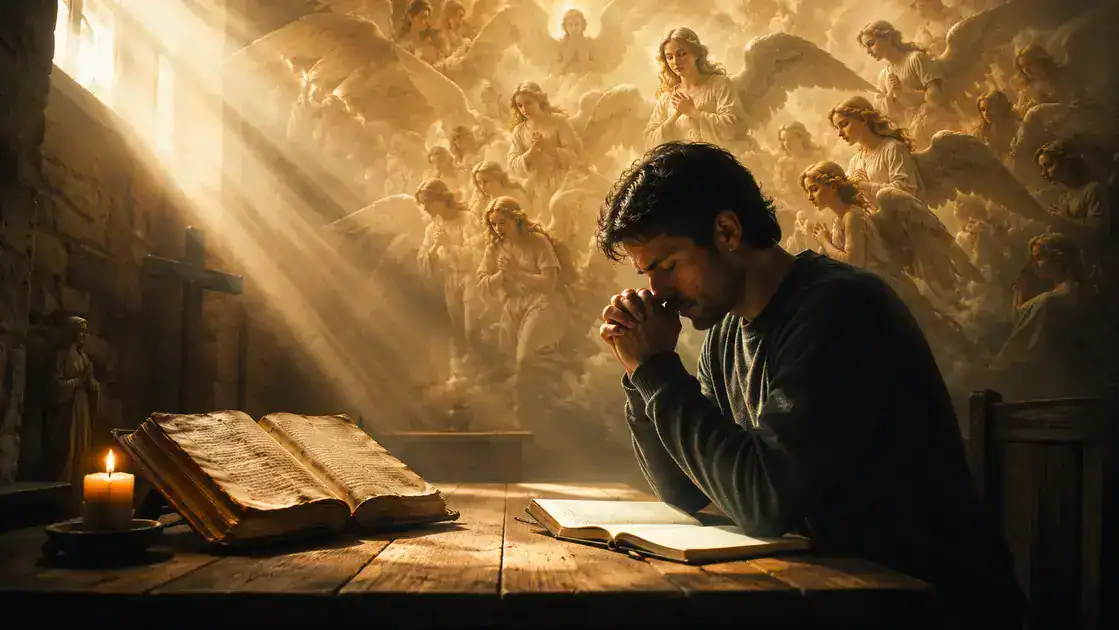
Many modern believers find Dionysius surprisingly close to their own search for God. His focus on the apophatic way fits a time when words often fail and noise is constant. Instead of new doctrines, his pages offer a practice: learn to hold speech lightly and make room for silence.
That practice can enter everyday devotion in simple ways. Try a brief moment of stillness before prayer, or read one short image from the Celestial Hierarchy and sit with it in gentle attention. These small acts become a way to join the church’s worship, a quiet form of participation in heavenly praise that reshapes how you speak, listen, and live.
Communities and individuals both can welcome his vision without turning it into mystic showmanship. Use art, music, and short liturgies that invite quiet attention, and let group reading lead to humble sharing rather than claims of special knowledge. In this way, Dionysius helps modern devotion grow steadier, more patient, and ready to meet God in both ordinary tasks and sacred silence.
May the gentle ordering of heaven touch your heart and quiet your thought. Let the image of the nine orders remind you that prayer joins a larger song, and that worship is a shared breath between earth and sky.
Try a small practice today: a brief pause, a slow breath, a single line of Scripture held in silence. These simple acts invite participation in heavenly praise and train the mind to notice holy presence in ordinary moments.
Trust that the nearness of the angels and the call to quiet attention are not distant ideas but steady companions on the way. Let humility and wonder shape your steps, so that learning becomes prayer and study becomes praise.
May you walk with gentleness, keep a listening heart, and carry this quiet vision into every day. Amen.
FAQ – Common questions about Dionysius, the celestial hierarchy, and living with the angels
Who was Dionysius the Areopagite, and can we trust his writings?
The name links to a figure in Acts, but most scholars call the author Pseudo‑Dionysius. Regardless of his exact biography, his works were treasured by both East and West, read by figures like John Scotus Eriugena, and used in monastic prayer. The value lies in how his texts guide prayer and worship rather than in precise historical details.
What does the Celestial Hierarchy actually teach?
Dionysius presents nine orders of angels arranged in three triads, showing how heaven’s worship and God’s governance touch the world. He draws on images from Isaiah, Ezekiel, and Revelation to show angels as both worshipers of God and ministers to creation. The book aims to shape prayer and imagination toward holy reverence.
If I use the hierarchy in devotion, am I risking worshiping angels?
Scripture warns against worshiping creatures (see Revelation 19:10 where John is told to worship God). Christian tradition also insists angels point us to God, not replace him. Honoring the orders as a way to deepen worship is meant to increase devotion to God, not to make angels objects of worship.
How can I practically use Dionysius’ teaching in prayer and liturgy?
Start small: pause before prayer, read a short image from the Celestial Hierarchy, or let a single angelic name prompt a moment of silent awe. Monastic tradition uses hymn, scent, and rhythm to echo heaven—simple acts like a brief office, a breath prayer, or a piece of sacred music can open the heart to participation in heavenly praise.
Are the nine orders literal beings, or are they symbolic images for spiritual truths?
The tradition treats them as real spiritual ranks while also holding their images as symbolic tools. Scripture itself uses vivid, symbolic visions (Isaiah, Ezekiel, Revelation), so the orders help us name how the unseen world relates to worship and care. Healthy devotion keeps the mystery intact rather than forcing exact literal pictures.
What role do angels play in everyday Christian life today?
Angels appear in Scripture as protectors, messengers, and worshipers (see Psalm 91:11, Matthew 18:10, Hebrews 1). Tradition invites us to remember their nearness through simple practices—short prayers to one’s guardian, attention to beauty in worship, and moments of silence—so daily life is lived with a sense that God’s care is close and communal.