

Do animals have guardian angels — Christian Scripture and tradition do not define a universal doctrine that each creature has a named guardian angel, yet they portray God’s providential care for animals, record angelic encounters involving creatures, and invite a humble hope that angelic or divine care may attend beloved animals.
Have you ever wondered if do animals have guardian angels? That gentle question surfaces when a pet is sick or when creation faces danger; Scripture, theology, and saints offer tender, varied responses worth listening to.
Biblical traces: do animals appear alongside angelic care?
The Bible does not offer a neat rule that every animal has a named guardian angel, yet it keeps returning to a simple, tender fact: God notices the creatures he made. Jesus points to small birds to show God’s care, and the psalms speak of God ordering the wild animals by wisdom. These texts do not answer every question, but they frame a sacred view in which animals belong within divine attention rather than being outside it.
One of the clearest moments where an animal and an angel meet is the story of Balaam and his donkey in Numbers. In that scene a donkey sees the angel of the Lord standing in the path and halts; only then does the human guide perceive the vision. This episode shows an animal responding to a heavenly presence in a way that surprises the human, suggesting that animals may perceive aspects of the spiritual world we often miss. The story invites wonder rather than a tidy doctrine: the animal’s role is not merely metaphor but a real, vivid witness to an angelic encounter.
Other biblical traces deepen the impression without spelling out a formal system. Elisha’s servant is given eyes to see horses and chariots of fire in 2 Kings, Job and the psalms celebrate God’s provision for beasts, and Revelation even places living creatures within heavenly worship. Taken together, these passages do not prove that each pet has a personal angel assigned by name, but they do offer a devotional resource: Scripture portrays a cosmos in which God’s care reaches animals and sometimes meets them through angelic action. That quiet pattern comforts those who love animals and invites a reverent humility before the mysteries of God’s care.
Theological perspectives: what church fathers and councils said

For centuries the church fathers spoke of angels as God’s near servants who move within human life and prayer. Writers like Augustine, John Chrysostom, and Gregory the Great described angels attending to God’s will, guiding worship, and guarding the faithful in gentle, concrete ways. Their reflections treat angels as part of the household of God, present where God cares for people and the created order.
Medieval theologians carried that reverent habit of thought further. Thomas Aquinas taught that each human soul has a guardian angel, a constant companion ordered toward our good and salvation. Because animals do not share the same rational soul, many theological voices concluded that animals fall under God’s general providence rather than receiving the same personal angelic assignment. Still, these thinkers allowed that angels may act within the world of animals when God wills, serving the larger harmony of creation.
Notably, ecumenical councils did not pronounce a doctrine about animals having guardian angels; their decrees centered on Christ, the sacraments, and core mysteries of faith. That silence leaves room for pastoral tenderness rather than dogmatic claim. The tradition thus holds a balanced, humble posture: a clear assurance of angelic care for human souls and a reverent openness to the mystery of how God and God’s messengers watch over the rest of creation — a hope that brings comfort to those who love and tend animals.
Saints and mystics: lived encounters suggesting creatures’ protection
Saints often lived with a quiet tenderness toward animals that felt like prayer in motion. Saint Francis of Assisi is the best known example: he spoke to birds and treated them as brothers, and people tell of birds settling close as if listening. Those simple scenes reveal a practice of reverence rather than a formal argument—saints showed by living what it means to honor God’s creatures.
Across East and West, other holy figures drew animals near by their presence. Stories of St. Kevin holding a blackbird, or of hermits whose gardens were visited by deer and foxes, point to an ordinary holiness that calmed wildness. Mystics sometimes described a felt protection around them, a sense that the spiritual world attended both people and the beasts at their side. Such testimony suggests angels or divine care may act near creatures, even when no clear doctrine is named.
These lived encounters shape how many believers care for pets and farm animals today. They do not resolve every question, but they invite a faithful humility: to love, protect, and bless the creatures entrusted to us. Remembering the saints’ gentle encounters helps turn grief into sacred attention and daily care into a small liturgy of thanksgiving for all creation.
Pastoral care: grieving pets and the hope offered by tradition
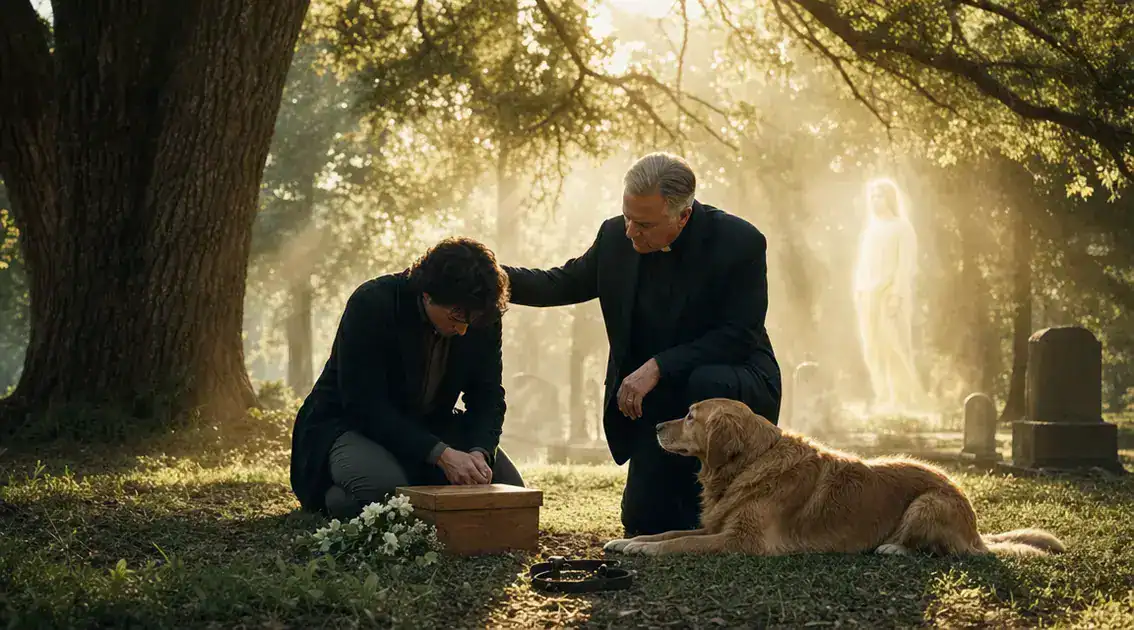
Losing a pet can feel like a small rupture in the soul, a quiet place that once held steady company. In moments like this, pastors and caregivers often remind us that grief is honest and holy, not something to hide. The church offers space to name the loss, to weep, and to bring that sorrow before God in prayer.
Pastoral practice draws on Scripture, prayer, and simple rites to hold the bereaved. Prayers from the psalms, a gentle blessing at a graveside, or a short liturgy of thanksgiving can give shape to pain and memory. Many communities also offer blessings for animals and memorial services that acknowledge how deeply creatures touch our lives and how God’s care reaches into our sorrow.
Practical comforts follow the spiritual ones: telling stories about the pet, keeping a photo, or marking an anniversary with a candle or prayer. Pastors encourage small acts of remembrance as ways to honor the bond and to trust God’s tender providence. This approach does not force answers about mystery, but it offers a steady, compassionate rhythm—prayer, memory, and community—that helps grief breathe and hope to return.
Practical devotion: prayers, rituals, and reverent gestures for animals
Many believers find comfort in small, steady practices for their animals that feel like prayer. Simple moments — a short blessing before a walk, a quiet word of thanks at a bowl, or a soft sign of the cross on a beloved pet’s head — make daily care into a humble act of faith. These gestures do not demand spectacle; they invite presence, helping us notice that kindness and steadiness are themselves spiritual disciplines.
Communities sometimes mark larger moments with gentle rites: a brief blessing at the church door on the feast of St. Francis, a memorial service when a pet dies, or a pastoral visit after a loss. Such practices shape memory and comfort the grieving by putting names and stories into prayer. Pastors and chaplains often encourage simple, sacred acts that honor the bond between human and animal while leaving room for mystery and tenderness.
At home, faithful care becomes a quiet liturgy: clean bedding, timely meals, patient training, and playful time are all ways we shepherd those entrusted to us. Saying a short prayer of gratitude each evening, keeping a photo in a prayer corner, or lighting a candle on an anniversary can turn loss into remembrance and love into daily worship. In these small, steady practices we live out a trusting hope that God watches over all created things and that our care reflects that divine kindness.
A gentle prayer for our companions
O God of all tenderness, we thank you for the animals who share our days and teach us simple love. We rest in the quiet hope that Your care reaches every living thing, that mercy moves through the world in ways we do not always see.
Grant us patience to tend what is entrusted to us, and courage to name our grief when loss comes. Let small acts of kindness—blessing, memory, and steady care—become true prayers that honor the life we held close.
May angels walk near those creatures and near our sorrow, bearing what we cannot hold and helping us to trust. May the comfort you give soften the ache and open our hearts again to wonder.
Go gently, carrying this sacred hope into your day. May peace keep you, may gratitude guide you, and may the love you showed your companion bless you now. Amen.
FAQ – Common questions about animals, angels, and Christian hope
Do animals have guardian angels according to the Bible?
The Bible does not state a formal rule that each animal has a named guardian angel. Scripture does, however, show God’s attentive care for animals and includes scenes where heavenly beings and animals meet (for example, Numbers 22 where Balaam’s donkey sees the angel). These passages invite a prayerful openness rather than a strict doctrinal claim.
What did church fathers and theologians say about animals and angels?
The early fathers described angels as God’s servants who attend his work in the world. Later theologians, notably Thomas Aquinas, taught that guardian angels are ordered to human souls because humans have rational, immortal souls. Councils did not define a doctrine about animals’ angels, leaving room for pastoral tenderness and humble theological reflection.
Can angels protect my pet in times of danger?
Christian tradition affirms that angels carry out God’s will, including protection when God decrees it (see Psalm 91:11 as a consoling text about angelic care). This does not guarantee a specific promise for every situation, but many believers find comfort in praying for protection and trusting God’s providence for their animals.
How can I pray for or bless my animal in a faithful way?
Simple, reverent practices are rooted in Christian life: a brief blessing of thanksgiving, a short prayer at mealtime, or participation in a community blessing (such as those held on the feast of St. Francis). A short prayer might be: “Lord, bless this creature and keep it in your care; grant us grace to love and tend it well.” These acts honor creation and place our concern before God.
What can the church offer when I grieve the death of a pet?
Pastoral care often includes listening, memorial prayer, and simple rites—stories told in community, a brief graveside blessing, or a memorial liturgy. The psalms and communal prayer give language for sorrow and hope. Pastors and chaplains can help name the loss and accompany the mourner with prayer and compassionate presence.
Does Christian teaching say animals go to heaven?
There is no single, definitive dogma across Christianity that declares the eternal destiny of animals. Classical teaching distinguishes the human rational soul, but many saints and modern theologians express hopeful trust in God’s mercy for all creation. The tradition therefore holds a humble openness: God’s loving justice and mercy may surprise us, and we may entrust creation to that same loving God.