

Dominions and divine law are presented in Scripture and Christian tradition as a middle choir of angels commissioned to carry out God’s decrees, bring ordered governance to creation, guide other celestial beings, and sustain moral and cosmic harmony so that divine will, justice, and peace unfold in history and daily life.
dominions and divine law — have you ever wondered how these angelic rulers carry God’s decrees into history and daily life? Join a short devotional exploration of biblical scenes and theological reflections that make their work feel near and practical.
What dominions are in Scripture and tradition
Dominions are a named order of angelic beings that both Scripture and the Church’s tradition treat as caretakers of heavenly rule. They are not mere symbols but figures imagined as helpers who guide other angels and guard the balance of creation. This image helps us see them less as distant spirits and more as active participants in God’s governance.
In the New Testament we find hints of a layered heaven where rulers and authorities exist, and passages such as Colossians 1:16 and references to thrones and dominions sketch an ordered spiritual world. Those lines suggest that God’s will is carried out through a web of ministrations, where each voice and action answers back to the divine source. Such biblical glimpses give us a concrete way to name the invisible structure that holds creation together.
Later tradition, especially the writings attributed to Pseudo-Dionysius and the reflections of early fathers, set dominions among the middle choirs of angels with a clear task: to maintain divine order and to direct lesser spirits toward good. This theological picture invites a simple devotion: to trust that God’s law is lived out not only in scripture and sacrament but through ordered, loving care above us. When we pray for guidance or seek peace amid chaos, we can quietly imagine those heavenly stewards helping to shape our paths toward God’s will.
How dominions execute divine law in biblical scenes
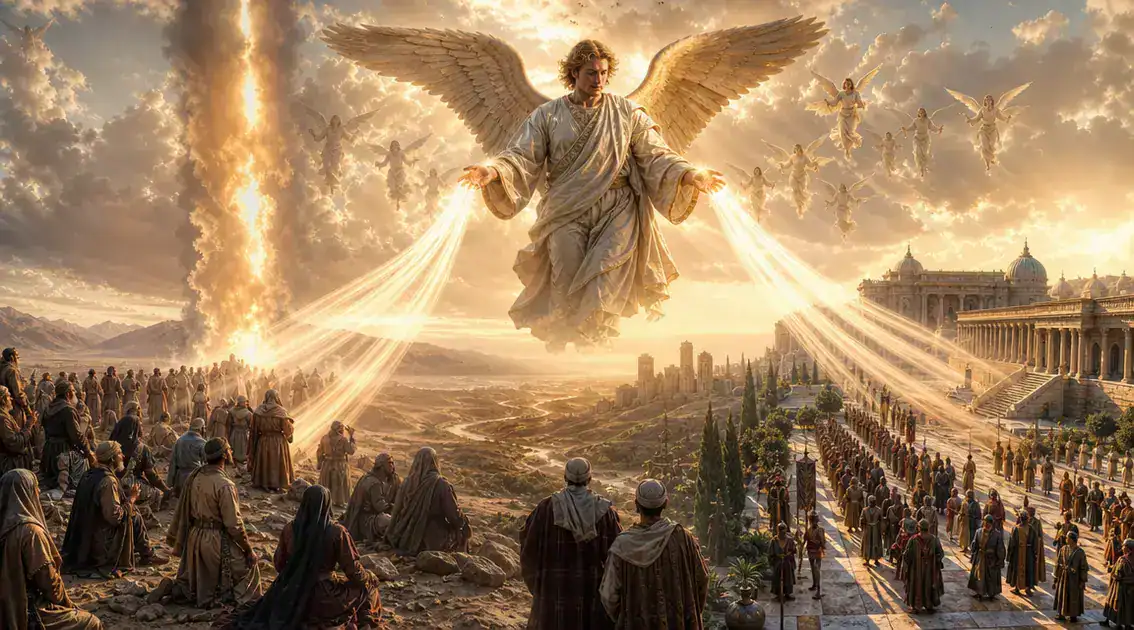
Scripture often shows angels at work in the weave of history, carrying out God’s will in ways we can sense though not always name. Passages like Colossians 1:16 and mentions of thrones, dominions, and authorities give us language to see a structured heavenly order. In many biblical scenes, an angelic presence brings direction, protection, or correction that fits the moral and divine pattern the text is unfolding.
Think of the cloudy pillar that guided Israel by day and the fire by night: a vivid image of guidance that we can prayerfully imagine as part of that ordered care. In other moments, angels act to restrain harm or to carry judgment, as when heavenly messengers interact with kings and cities in the prophetic books. These stories show dominions not as distant rulers but as active agents who help shape events so God’s law — his wise and loving will — is honored in the world.
Noticing these patterns can change how we pray and attend to daily life. When plans fall into place, when protection arrives in quiet ways, or when moral order is restored after confusion, we can thank God and remember that heavenly stewards work within his design. A humble prayer that asks for the help of those unseen guardians is not magic but a way to align our hearts with the divine ordering of love and justice we find woven through Scripture.
Theology helps us see that heavenly rule flows from God’s own will and love. Angels called dominions share in that work by carrying out a portion of God’s rule across creation. They do not act on their own; rather, they help bring divine authority into places where people live, work, and make choices.
Authority in this sense is not harsh control but careful ordering for the sake of life. Dominions guide other spiritual beings and influence the shape of events so that goodness can grow. In this way, divine order looks like a kindly governance that tends to justice, peace, and the common good rather than domination.
For the faithful, this teaching invites a humble trust and a practical response. We pray for wisdom, seek to live in right relationship with others, and welcome the quiet help that brings order to our days. Holding the idea of celestial governance in our prayer can calm anxious hearts and inspire simple acts of justice and mercy in ordinary life.
Recognizing a dominion’s work in prayer and daily life

You may begin to notice a dominion’s work in the small, steady ways life rightens itself after a prayer. When you pause and ask for help, outcomes sometimes unfold with quiet order: a tense talk ends in calm, a needed opportunity appears, or a decision gains clarity. These are not magic tricks but moments that feel like divine ordering at work, gentle signs that God’s care moves through ordinary time.
Pay attention to patterns rather than single events. You might see peace settle before a difficult choice, or find your heart suddenly soft toward someone you judged before. Keeping a short note of these moments or naming them in prayer helps you learn the language of blessing and guidance. Over time, this habit trains the eye to recognize how heavenly care often comes as steady, practical help.
Simple devotional practices make this awareness livable. Begin the day with a one-sentence offering, pause midday to ask for wisdom, and end with a brief examen of where you felt guided. These small acts are not about controlling outcomes but about choosing to cooperate with a presence that seeks our flourishing. In this way, a simple act of surrender and attentive prayer become the everyday doorway through which dominions help steady our paths.
Devotional practices to live within divine order
Begin each day with a simple, quiet offering that sets your heart toward God. A short sentence of surrender or a morning offering names your intent and helps you see ordinary tasks as part of a holy pattern. This small habit trains the mind to look for grace in chores, conversations, and decisions, so the day grows ordered by love rather than hurry.
Through the day, use brief pauses to notice how you are moving with or away from that first intention. A two-minute examen, a breath prayer, or a slow reading of a single verse can re-center you. These practices are not formal tests but gentle turns of attention; they let you receive correction and encouragement without shame, so that prayer becomes a steady rhythm rather than a rare event.
Let devotion move outward into small acts of care and rest. Offer food, listen well, keep Sabbath rhythms, and do simple works of mercy as part of your rule of life. In these choices we cooperate with the divine order we pray for, learning that regular silence, humble service, and steady gratitude form a life where God’s law is lived as love.
A gentle closing prayer
May the quiet ordering of heaven find a place in your heart today. As you go, remember that the work of dominions and the whisper of divine law often come as small, steady kindnesses that turn confusion into clarity. Let that thought bring you a soft peace.
Keep a simple breath prayer at hand: “Lord, guide my steps.” This short offering can reopen your day to grace and remind you that God’s order is gentle and near. When choices feel heavy, return to that breath and ask for help that steadies and soothes.
Live out what you receive with small acts of mercy, regular rest, and honest words spoken in love. These simple habits join your life to the pattern of heaven and make sacred care part of every day. Go in wonder, rooted in calm, and may peace follow you always.
FAQ – Common questions about dominions and divine law
Do dominions really appear in the Bible?
Yes. Scripture names orders of spiritual beings in passages like Colossians 1:16, which lists thrones, dominions, and powers, and Ephesians 1:21, which speaks of rulers and authorities. These lines give a biblical basis for speaking of ordered heavens that carry out God’s will.
What is the role of dominions according to tradition?
In Church tradition, especially in writings like those of Pseudo-Dionysius and the teaching summarized by theologians such as Thomas Aquinas, dominions help maintain divine order. They guide other angels, oversee unfolding events in ways that sustain justice and peace, and help translate God’s governing love into the life of the world.
How are dominions different from archangels and guardian angels?
Archangels (like Michael and Gabriel) appear in Scripture with particular missions. Guardian angels are understood as personal companions assigned to individuals. Dominions belong to a higher, more corporate choir whose work is chiefly about ordering and directing spiritual activity rather than acting one-on-one in a single human life.
Can I pray to or ask for the help of dominions?
Prayer is always directed first to God. Tradition encourages asking God for the help of angels and recognizing their ministry in prayerful trust. You may also invoke the intercession of known angels (for example, in liturgical prayer) while keeping God at the center, since angels serve God’s will and not their own.
How can I tell when a dominion’s care is at work rather than coincidence or wishful thinking?
Look for consistent spiritual fruits: a growing peace in a hard situation, clearer moral insight, or steady restoration of right relationships. Scripture and tradition invite discernment grounded in prayer, counsel, and Scripture. If an experience draws you toward humility, justice, and love, that fruit matches how tradition says heavenly ordering reveals itself.
How does belief in dominions change daily spiritual practice?
Belief in dominions gently reshapes small habits: simple morning offerings, short pauses for guidance, acts of mercy, and Sabbath rest become ways to cooperate with divine ordering. These practices are rooted in Scripture and tradition and help ordinary life reflect God’s law lived as love rather than as mere rule.