

Exorcism and fallen angels refer to the Church’s pastoral response to hostile spiritual forces: Scripture and tradition teach that some angels rebelled, and through prayer, sacraments, and authorized rites the Church invokes Christ’s authority to protect, heal, and restore individuals while exercising careful discernment alongside medical and psychological consultation.
Have you ever stood at the threshold of a quiet church and felt the world tilt toward something invisible? In that hush, exorcism and fallen angels appear across Scripture and sacramental life, inviting a careful, prayerful look at how the Church meets spiritual harm with mercy and truth.
The Bible opens a window into a world where heaven and earth meet, and angels move as God’s messengers and helpers. They appear to comfort, warn, and serve, always under the rule of the Creator, not as free agents but as ministering spirits sent to care for those who seek life. These scenes are simple and clear: God orders the cosmos and gives angels a role within that care.
Alongside this, Scripture shows the reality of rebellion. Some spiritual beings turned away from God and became the restless forces we call demons, a broken mirror of the angelic good. Prophetic images and Gospel stories show both the origin and the effect of that fall, and they also show what breaks it: when Jesus speaks, demons obey. Episodes such as the healing of the man among the tombs reveal God’s authority over the powers and the way truth and mercy cast out fear.
That biblical frame shapes how the Church prays and cares for people today. Ministries of healing and deliverance are rooted in prayer, Scripture, the sacraments, and quiet discernment, all carried out with humility and charity. Pastoral practice trusts the one who governs angels and calms chaos, relying on prayerful presence and the steady claim of Christ’s victory rather than on spectacle or fear.
Historical practice: exorcism from the early church to modern rites
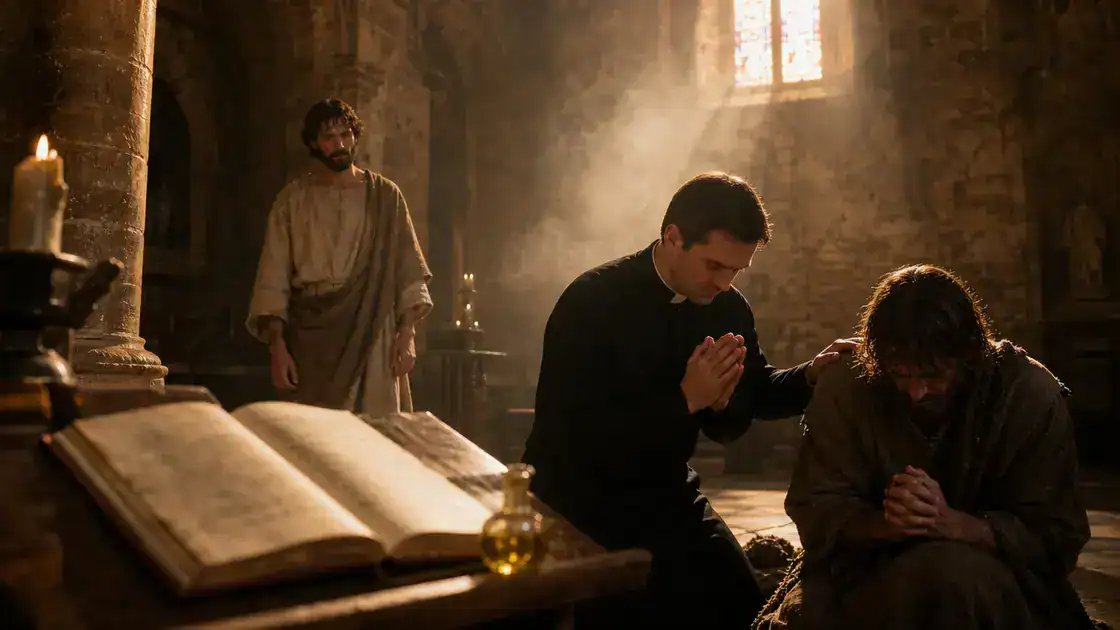
In the first centuries, Christians met the presence of evil with simple, prayerful acts done in community. Accounts in Acts and the witness of the fathers show exorcism as a pastoral gesture: prayer, the laying on of hands, and firm words of faith offered beside the afflicted. This was not a show but a ministry of care, rooted in Scripture and trust in God’s power, where the community supported both the person and the minister doing the work.
As the Church grew, ritual forms developed to bring order and reverence to that ministry. Medieval and later rites gathered prayers, sacred signs like the sign of the cross, blessed oil, and directed scripture into a steady pattern that helped priests pray with clarity and charity. These elements served a pastoral purpose: to protect the dignity of the person and to channel the Church’s prayerful authority, not to seek spectacle. In those centuries, the rite became a careful liturgical craft, passed from one generation of ministers to the next.
Today, the practice keeps that long line of care while adding firm discernment and pastoral training. Modern ministers pray with Scripture, the sacraments, and calm pastoral presence, often consulting medical and psychological professionals first and acting with the bishop’s guidance. There is a renewed focus on discernment and pastoral care, so that rites are used with prudence, compassion, and a steady reliance on Christ’s authority rather than on fear or publicity.
Theology of fallen angels: tradition, symbolism, and pastoral meaning
Christian tradition speaks of fallen angels as real but defeated beings who chose to turn away from God. Scripture uses vivid images of their fall to teach about the cost of sin and the limits of rebellion. These stories do not glorify the dark realm; they point to the truth that all created powers remain under God’s sovereignty and that rebellion ends in loss rather than freedom. Such a view keeps attention on God’s order rather than on the power of fear.
Artists and preachers have long used symbols—broken feathers, shadowed wings, and falling stars—to make the spiritual drama visible to the heart. These symbols help people see that the core wound is moral and relational: pride, discord, and separation from God rather than merely strange phenomena. When we meet these images, they call us to honest self-examination and to humility before the One who heals the breach.
For pastors and caregivers, the theology of fallen angels becomes a guide to compassionate ministry. It asks ministers to center their work on prayer, scripture, and the sacraments while protecting a person’s dignity and reason. Rather than seeking spectacle, pastoral practice trusts in Christ’s mercy and authority and moves slowly, with listening, discernment, and community support. In this way theology becomes a practical tool that brings people back to healing and to the steady light of faith.
The rite of exorcism: symbols, prayers, and pastoral care
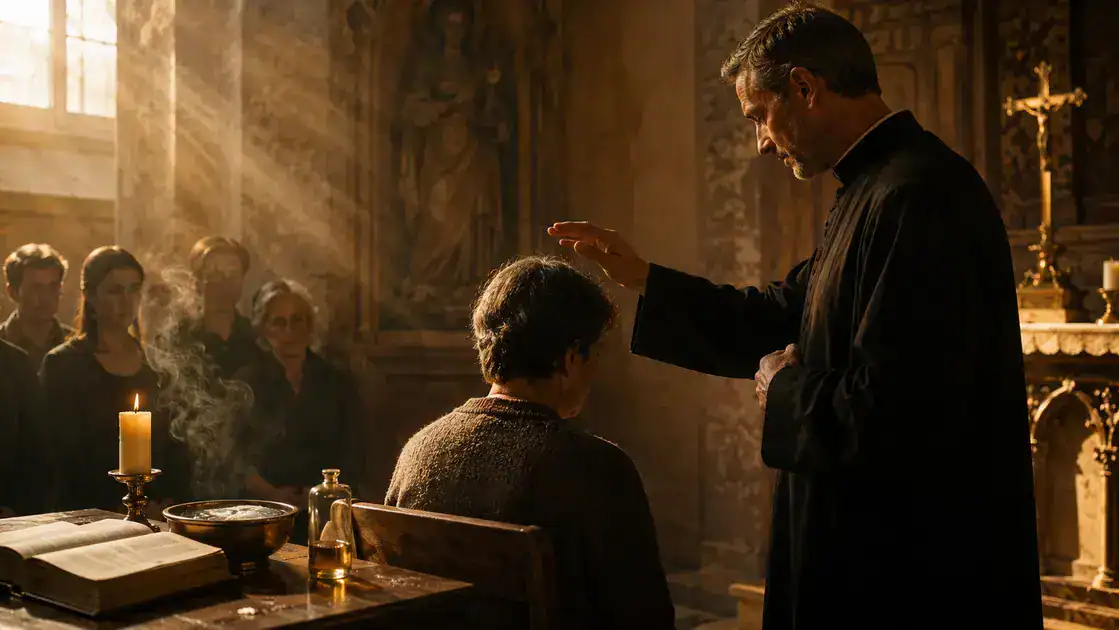
The rite of exorcism uses careful signs to name and meet spiritual need. Priests make the sign of the cross, sprinkle holy water, anoint with blessed oil, and read Scripture aloud. These acts are not magic tricks but simple, visible ways to call God’s mercy into a tense, frightened moment. Each symbol points back to Christ and the life of the Church, giving the afraid a steady truth to hold.
Prayers in the rite speak plainly and firmly in the name of Jesus. They call on Scripture, ask for protection, and plead for healing with measured words. The sacraments—penance, the Eucharist, and anointing—often accompany the prayers, because exorcism is part of the Church’s healing work. Above all, the rite rests on Christ’s authority to bind and to set free, trusting that power rather than human showmanship.
Pastoral care shapes how the rite is used. Ministers listen, seek medical and psychological advice when needed, and work with a bishop’s approval. The goal is the dignity of the person and a restoration to community life, not spectacle or fear. Family, parish, and quiet prayer support the one who suffers, and the minister moves slowly, with compassion, counsel, and prayer until peace returns.
Role of prayer, sacraments, and community in deliverance
Prayer is the first and steady response in moments of spiritual struggle. Simple prayers, reading of Scripture, and quiet presence call on God and create a safe place for the person who suffers. When family, friends, and ministers pray together, fear gives way to a shared trust that someone larger holds the situation.
The sacraments bring that trust into a tactile form the heart can hold. The Eucharist nourishes and makes Christ’s presence near, reconciliation offers a chance to name sin and receive mercy, and anointing and blessings give comfort through touch and prayer. These rites are not magic; they are trusted means by which grace meets a wounded life and begins to heal it.
Community turns private pain into shared care so healing can grow slowly and safely. Pastors, prayer groups, and trusted friends provide steady support, while doctors and counselors may help in parallel. Small, faithful acts—visits, listening, steady prayer—help restore dignity and keep the person rooted in the life of the Church rather than isolated by fear.
Pastoral discernment: safeguarding dignity and avoiding sensationalism
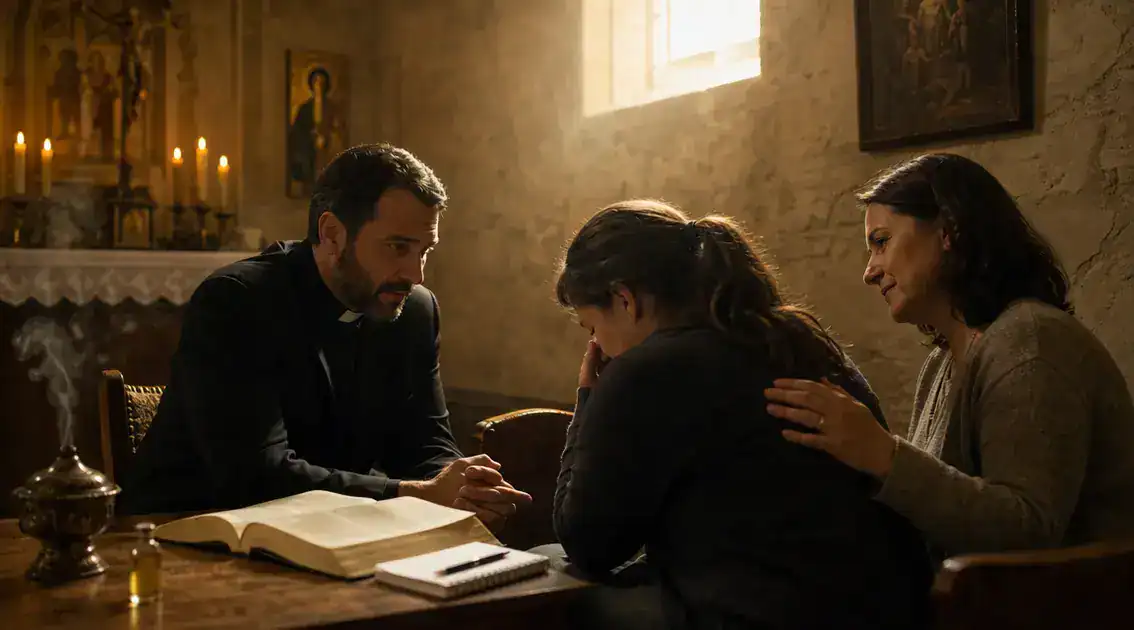
Good pastoral work begins with quiet listening and prayerful discernment. A minister first meets the person with calm attention, asking simple questions and holding space without haste. This gentle listening protects the person’s dignity and helps separate suffering that needs pastoral care from pain that needs medical or psychological help.
Discernment also means careful consultation and transparency. Pastors often seek the advice of doctors, counselors, and their bishop before moving forward, keeping notes and asking permission when rites are considered. This slow, measured process honors the person and creates a safe path that joins prayer, counsel, and community support rather than acting alone.
Avoiding sensationalism is part of faithful care. Ministers refuse public displays or dramatic language that feed fear, and they keep details private so wounds may heal in confidentiality and trust. Rooted in prayer and Christ’s mercy, pastoral discernment aims at steady restoration: patient, humble, and always protective of the human person rather than seeking attention or spectacle.
A prayer for walking in peace
May the Lord keep you close and steady, and may you feel Christ’s presence near in quiet moments and in trouble. Let his mercy calm fear and make your steps sure.
Carry the prayers, the rites, and the care you’ve read here into small daily acts: a brief prayer, a gentle blessing, a warm hand offered to another. These small things join heaven and earth and shape a life of mercy.
May your home hold welcome, your community give steady support, and your heart remain open to healing. Go forward in calm trust, ready to serve and to hope, one faithful day at a time.
FAQ – Questions about exorcism, fallen angels, and pastoral care
Are fallen angels real according to Scripture and tradition?
Yes. Scripture speaks of angelic beings who rebel (see Isaiah 14 and Ezekiel 28 in poetic form, and Luke 10:18 where Jesus says, “I saw Satan fall like lightning”), and Revelation 12 portrays the cosmic conflict; Christian tradition has long read these passages as teaching the reality of fallen spiritual powers under God’s final judgment.
What does the Church mean by exorcism?
Exorcism is a pastoral and sacramental ministry that calls on Christ’s authority to free a person from hostile spiritual influence. It is rooted in the Gospel accounts of Jesus casting out demons (for example, Mark 1:23–27 and Mark 5) and is carried out according to established rites and careful pastoral oversight rather than by private or theatrical acts.
How does the Church distinguish demonic influence from medical or psychological conditions?
Discernment is careful and humble: pastors seek medical and psychological evaluation first, listen closely, and compare signs to Gospel patterns. The Church follows the principle of testing (1 Thessalonians 5:21) and usually consults physicians, mental health professionals, and the local bishop before any formal rite is considered.
Is it safe to seek help from an exorcist or minister of deliverance?
Yes, when done under proper guidance. Legitimate ministers act with a bishop’s authorization, use approved prayers and sacraments, and work with medical and pastoral teams to protect the person’s dignity and health. The goal is healing and reintegration into community, not spectacle.
What can I do as a friend or family member to support someone who seems afflicted?
Pray with and for them, stay with a calm and listening presence, encourage medical care and pastoral support, and protect their privacy. Simple acts—offering to accompany them to confession, bringing them to Mass, or praying Psalm 91 together—are practical ways to join Scripture’s call to bear one another’s burdens (Galatians 6:2).
How should I pray against evil for myself and others?
Turn to Scripture and trusted prayers: the Lord’s Prayer, Psalm 91, brief exorcistic formulas in tradition (invoking Jesus’ name), the sign of the cross, and regular reception of the sacraments. Root your petitions in Christ’s victory (Colossians 2:15) and keep prayer humble, consistent, and community-shaped rather than driven by fear.