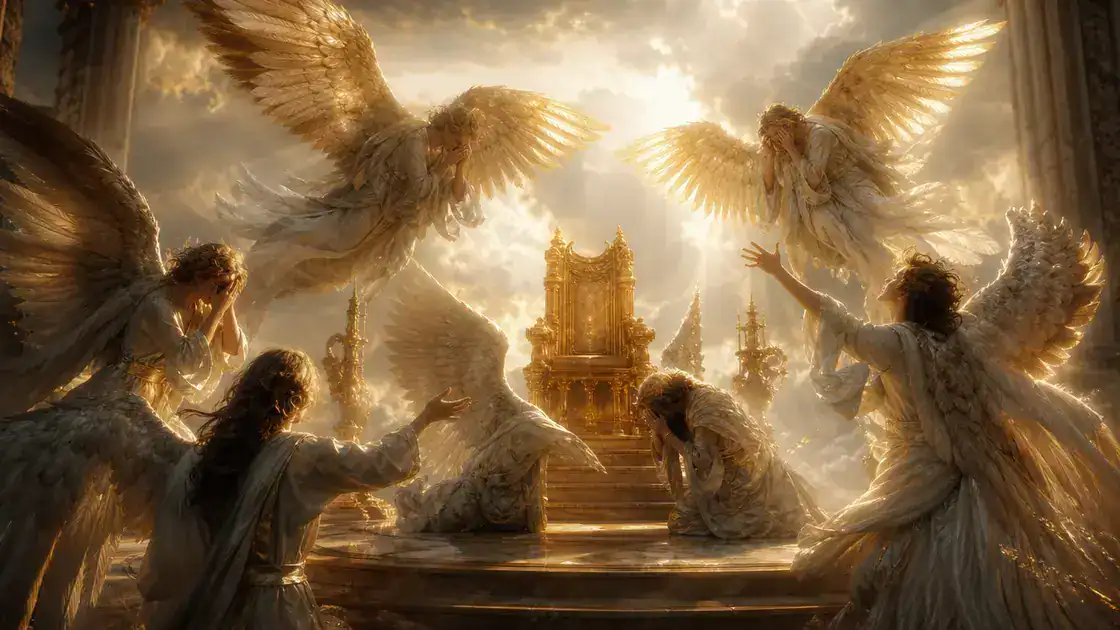

The difference between seraphim and cherubim is that seraphim are throne‑near, six‑winged beings of purifying worship who proclaim God’s holiness and cleanse sinners, while cherubim serve as throne‑bearers and guardians of sacred space, depicted with multiple faces and watchful presence to protect covenant and creation.
Have you ever stood before a scripture scene and felt its wings brush the soul? difference between seraphim and cherubim opens that question gently, guiding you from fiery visions and temple guardians to the quiet lessons they offer for prayer and wonder.
Biblical appearances of seraphim and cherubim
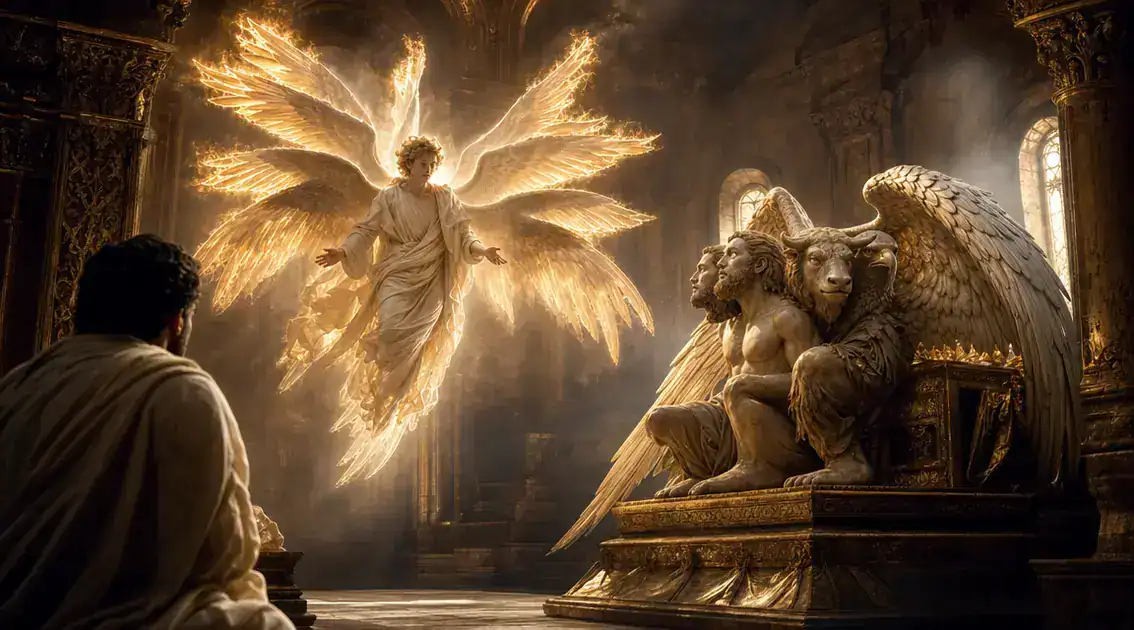
In Isaiah’s vision the prophet stands before the throne and sees seraphim hovering near the Lord. These beings have six wings; with two they cover their faces, with two they cover their feet, and with two they fly. They call to one another, “Holy, holy, holy is the Lord of hosts; the whole earth is full of his glory”, and one seraph touches Isaiah’s lips with a burning coal to cleanse him. This scene gives us a picture of worship that purifies and brings a sinner near to God’s holiness.
By contrast, the cherubim appear in places that mark God’s presence and protection. In Ezekiel’s visions they are swift and complex, with four faces and wheels full of eyes, moving as the divine throne moves, while in Genesis God sets cherubim at Eden’s gate to guard the way to the tree of life. The artisan carving of cherubim above the ark in Exodus speaks to their role as throne-bearers and guardians of the covenant. These repeated appearances show cherubim as caretakers of sacred space and signs of God’s nearness to his people.
Reading these accounts side by side helps prayerfully shape how we imagine heaven drawing near to earth. The seraphim lift our voices in holy praise and offer cleansing; the cherubim hold and protect the mystery of God’s dwelling. Even the visions in Revelation echo both tasks—unceasing worship and the throne’s guarded glory—inviting us into a life of awe, humble service, and steady devotion.
Differences in form, function, and symbolism
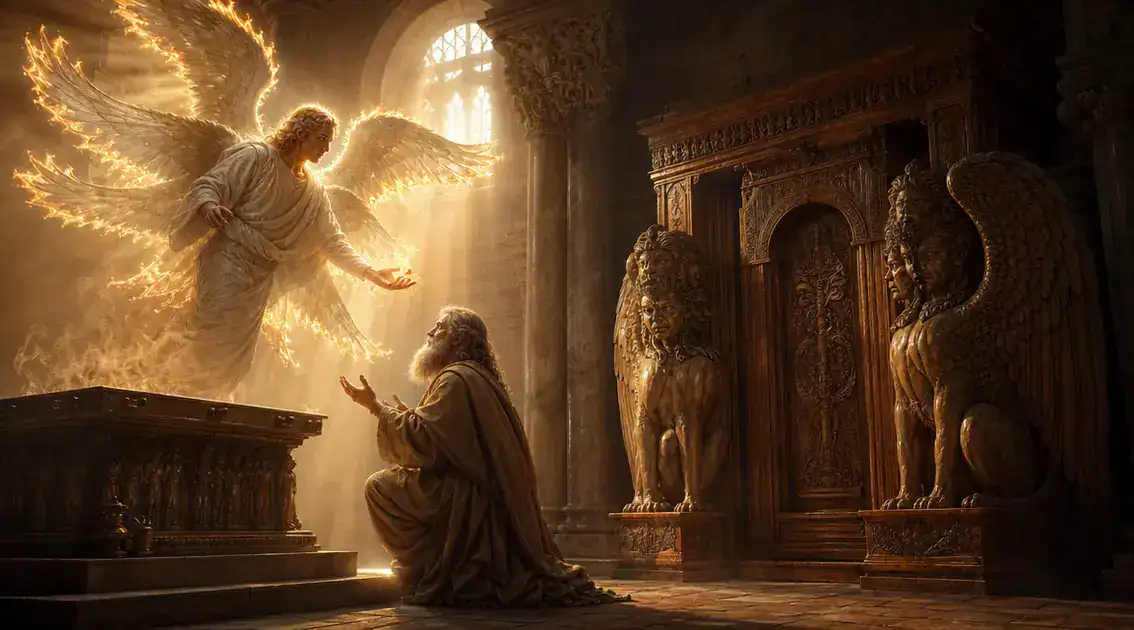
The most visible difference is in their form. In Isaiah’s vision the seraphim are described with six wings: two cover their faces, two cover their feet, and two are for flight. Their presence feels like burning light and song, a vision that presses the heart toward repentance and awe. Cherubim, by contrast, are shown in Ezekiel with multiple faces and complex movement—human, lion, ox, and eagle—often linked to wheels full of eyes. Their shape speaks of watching, strength, and the fullness of creation.
Form points toward function. Seraphim appear where worship and purification meet the throne: they praise and they cleanse, as when a seraph touched Isaiah’s lips with a coal. Cherubim more often serve as guardians and throne-bearers, placed over the ark or at Eden’s gate to mark the boundary of sacred space. This difference reminds us that some angels draw us into worship while others hold and protect what is holy.
Seen devotionally, these differences become spiritual language. The seraph’s fire suggests purifying love that burns away what keeps us from God. The cherub’s faces and watchful eyes suggest steadfast guardianship over covenant and creation. Together they teach a balanced faith: we are called to be cleansed and to be kept, to adore and to be sheltered, always moving toward the mystery of God’s presence.
Theological interpretations across Jewish and Christian traditions
Jewish readers often see cherubim as guardians of sacred places. They appear on the ark and at Eden’s gate, marking where God meets creation and setting boundaries around holy ground. Seraphim appear most clearly in Isaiah’s vision, drawing near with burning praise and touching the prophet’s lips to cleanse him. In this way, cherubim announce God’s nearness while seraphim beckon us into purification and wonder.
Christian thinkers have carried forward these images and given them devotional shape. Many place seraphim closest to the throne, a sign of purifying love and continual worship, echoing the heavenward acclamation that fills the sanctuary. Cherubim are often pictured as throne-bearers and protectors of covenant truth, a reminder of God’s steady rule over creation and history. These roles shape liturgy, icons, and the way churches imagine the life of heaven.
Both traditions invite a response of the heart more than a mere catalog of facts. The cherub’s watchfulness and the seraph’s flame teach complementary practices: careful stewardship of the holy and humble openness to being cleansed. Practically, that means prayer that holds both awe and care, a life formed by reverence for God’s majesty and tenderness toward the world God loves.
Liturgical and devotional ways to encounter angelic presence
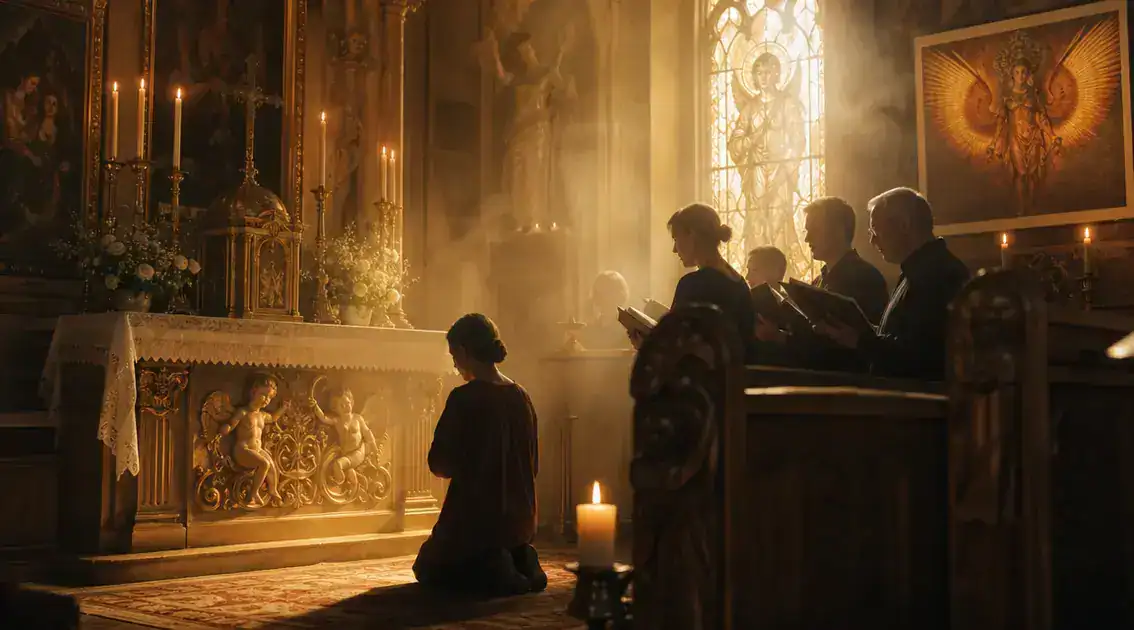
In many churches the presence of angels is woven into the liturgy itself. The congregation sings the “Holy, holy, holy” that recalls the seraphim around the throne, incense lifts like prayer and suggests the unseen, and icons or carved cherubim mark the place where heaven and earth meet. These liturgical signs do more than decorate worship; they shape how we listen, bow, and remember that we stand within a larger, holy story.
At home and in private prayer, simple devotional practices help us stay attentive to angelic presence. People read Isaiah slowly, let the images settle, or keep an icon or small image near a candle to focus their prayer. Others offer a quick, honest word to their guardian angel before sleep, practice short breath prayers, or use lectio divina to linger over scripture and notice what stirs the heart. These small habits teach a patient, prayerful way of seeing the day.
Over time liturgy and devotion work together to reshape our ordinary moments. A church bell, a bowed head, a morning offering—each can become a doorway to awe and care. Rather than chasing dramatic signs, these practices invite quiet attention: to worship that purifies, to guardianship that steadies, and to a life where even small acts are touched by the sacred.
What these angels teach us about God’s holiness and mercy
When we read the visions of seraphim and cherubim, we meet two faces of God’s care: fierce holiness and tender mercy. The seraphim cry out “Holy, holy, holy” and their flame-cleaning touch points toward a love that purifies rather than punishes. That fire does not destroy the one it touches; it makes the heart able to stand in God’s presence, turning fear into humble awe and renewed courage to follow.
The cherubim teach the same mystery from another angle. Placed at Eden’s gate and carved above the ark, they function as watchers and protectors, signs that God both keeps holy things and keeps us from harm. Their posture speaks of care more than distance; they mark borders that are loving, not merely forbidding, and remind us that holiness often looks like steady guardianship over life and covenant.
Taken together, these images invite a faith shaped by awe and compassion. We are called to let God purify what separates us from love and to learn how to guard what is fragile in others. In prayer this means leaning into both reverent silence and active tenderness—allowing the seraph’s cleansing and the cherub’s keeping to form a life that honors God and shelters our neighbor.
A gentle closing prayer
Having walked with visions of seraphim and cherubim, we hold their lessons close: God’s purifying love and steady guardianship. Let these images soften our hearts and steady our steps.
May the seraph’s cleansing fire warm what is cold in us and make us brave to stand before the Lord. May the cherub’s care teach us how to protect what is holy in others and in creation.
Each morning, breathe slowly, name one small offering for the day, and ask for the grace to live in both awe and compassion. These simple acts turn ordinary time into quiet worship.
Go in peace, kept by mercy and called to kindness. Amen.
FAQ – Common questions about seraphim, cherubim, and sacred presence
What is the main difference between seraphim and cherubim?
Seraphim are depicted in Isaiah 6 as fiery attendants of the throne whose praise and cleansing touch draw sinners into worship. Cherubim, seen in Ezekiel and Genesis, function more as throne-bearers and guardians of sacred space (for example, guarding Eden and resting above the ark). The difference is less about rank and more about distinct biblical roles: purifying praise versus watchful protection.
Where in Scripture do seraphim and cherubim appear most clearly?
Seraphim appear most clearly in Isaiah 6, where they cry ‘Holy, holy, holy’ and cleanse the prophet. Cherubim appear in Genesis 3:24 (guarding Eden), Exodus 25:18–22 (over the ark), and vividly in Ezekiel 1 and 10 with complex, living imagery. Revelation 4 echoes the seraphic acclamation, linking these visions across Scripture.
Are these descriptions meant to be literal or symbolic?
Biblical visions often mix vivid, symbolic language with real spiritual truth. Many traditions read the images as both literal beings and symbolic expressions of God’s holiness, care, and the created order. Whether taken more literally or more symbolically, the texts aim to move the heart toward worship, repentance, and trust.
Can people encounter seraphim or cherubim today?
Scripture gives rare, extraordinary visions of these beings rather than everyday encounters. Tradition encourages openness to God’s presence rather than seeking spectacular signs. Christians and Jews alike find that prayer, Scripture, and sacramental life can make the reality behind the images felt in daily devotion, trusting God’s care even when angels are unseen (see Matthew 18:10 for Jesus’ reference to angelic care).
Why are seraphim described with six wings and cherubim with multiple faces?
The forms convey function and theological meaning. The seraph’s six wings express humility, reverence, and movement in worship—covering face and feet while attending to flight and service. The cherub’s multiple faces and eyes suggest watchfulness, strength, and the fullness of creation under God’s rule. The details invite prayerful reflection on how God is both holy and provident.
How can these images shape my prayer and daily life?
Let the seraphim teach you worship that humbly invites God’s purifying love; let the cherubim teach you to care for what is sacred in others and the world. Practically, this looks like moments of silent awe, humble confession, attentive care for neighbors, and small liturgical or devotional practices that form a life of reverence and compassion rooted in Scripture.