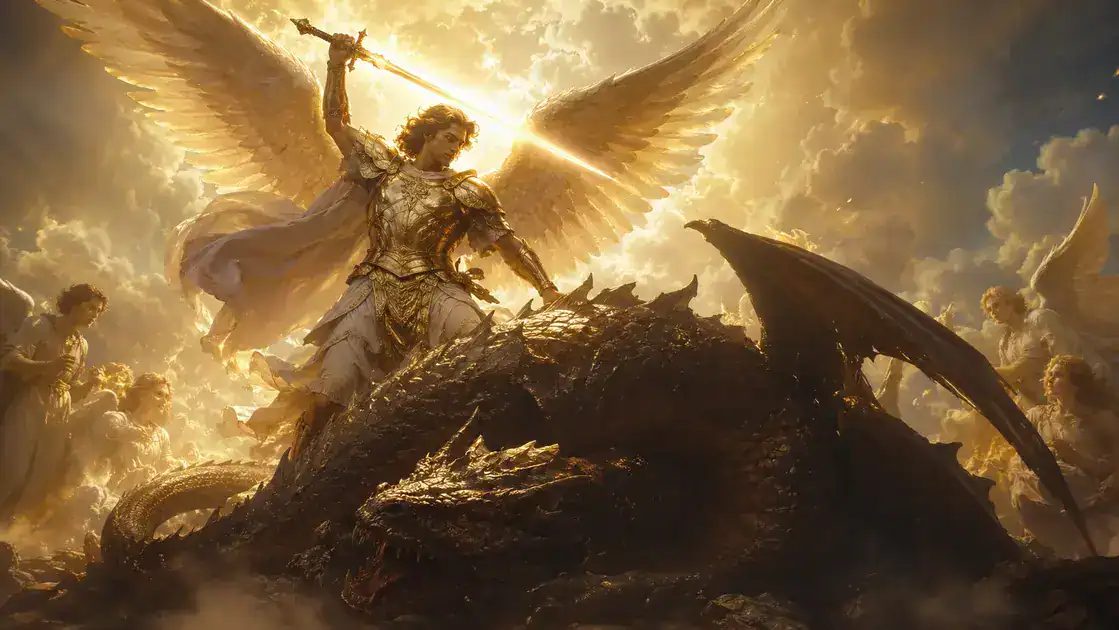

battle in heaven revelation 12 depicts a symbolic heavenly conflict in which archangel Michael and his angels overcome the dragon—identified as Satan—presenting both a cosmic defeat of evil and pastoral consolation that persecution is held within God’s providential plan, inviting believers to faithful endurance, prayerful trust, and compassionate action.
Have you ever wondered about the thunder of a scene in heaven? battle in heaven revelation 12 places Michael before the dragon — an image of divine struggle that still invites our trust and reflection.
Context in Revelation 12: imagery and symbolic meaning
John’s vision in Revelation 12 opens with striking images: a woman clothed with the sun, the moon under her feet, and a crown of twelve stars. A great red dragon waits nearby with seven heads and ten horns, ready to devour the child as soon as it is born. Above this drama, Michael and his angels appear, and the scene feels vast and alive, like a story told on a heavenly stage.
These symbols carry layered meaning without losing their power to move the heart. The woman can stand for God’s faithful people—rooted in Israel and embraced by the church—and the child points toward a new ruler or the unfolding of God’s plan. The dragon represents the threat that pursues life and truth. Together they sketch a cosmic struggle where hope is born even amid danger, and the reader sees that spiritual battles have both a story and a promise.
When we live with these images, they shape how we pray and how we hold on in hard times. The vision reminds us that persecution and fear are not the final word, because the narrative bends toward protection and deliverance. Let the scene help you name the forces that oppose life, and then lean into the quiet truth of God’s care—an ancient picture that still invites trust and steady courage today.
Who is Michael? biblical identity and angelic role
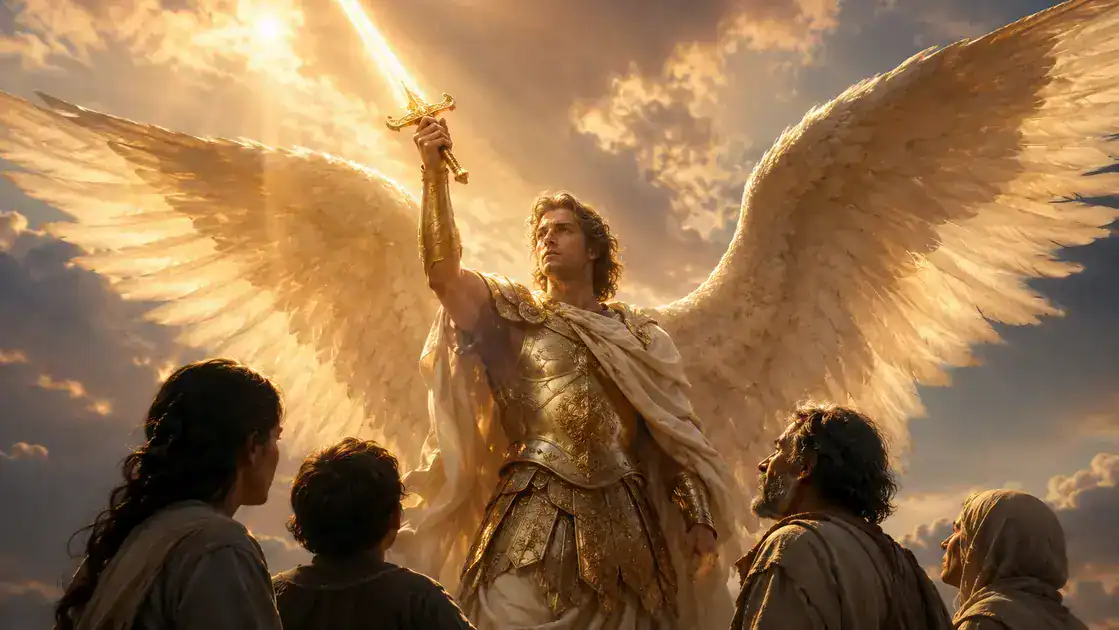
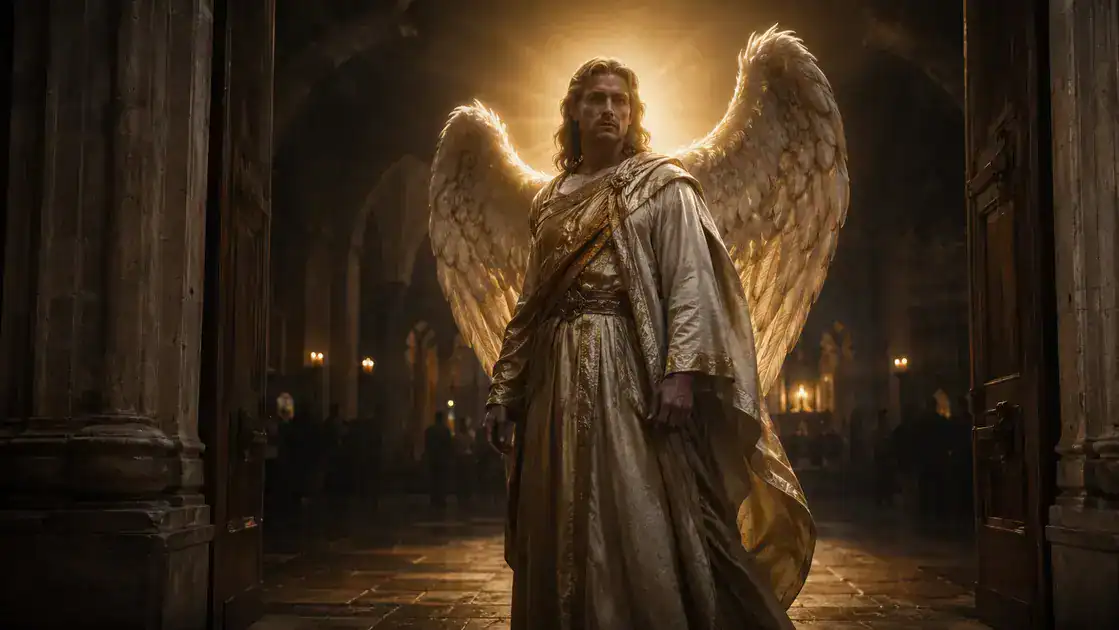
Michael appears in several places in Scripture, often as a strong, steady presence. In Daniel he stands as a protector of the people; Jude calls him the archangel, and Revelation places him at the heart of the heavenly battle. These vivid moments show Michael not as a distant idea but as a living figure in God’s story, a heavenly champion who acts under God’s authority.
His role blends warrior images with tender care. He confronts cosmic threats and watches over the vulnerable, carrying God’s justice and mercy together. The title archangel suggests leadership among the angelic hosts, yet the biblical scenes make clear that his strength flows from God, not from himself. This balance helps us see spiritual conflict as ordered and purposeful, not chaotic.
That image can shape our prayer and daily courage. We are not called to worship angels, but we can learn from Michael’s faithful obedience and steady courage. When fear or injustice presses in, recall the vision of Michael standing firm with sword and light — a reminder that God equips and defends what he loves, inviting us to trust and act with hope.
The dragon’s identity: Satan, empire, and ancient motifs
In Revelation 12 the dragon is a vivid, threatening presence, and the text links that creature with the one we know as Satan. The vision uses strong images so the reader can grasp what is at stake: this is not a mere beast in a story, but a symbol of the force that opposes God and life. When we see the dragon, we are asked to name the enemy clearly, yet not to fear, because the scene also points toward God’s care.
At the same time, the dragon speaks to powerful human systems. The seven heads and ten horns evoke crowns and rule, so many readers hear in the dragon a picture of oppressive empires or corrupt powers that persecute the faithful. This does not erase the personal side of evil, but it helps us see that sin can be personal and structural, and that calling out injustice is part of faithful witness.
These images also draw on older traditions of chaos monsters, like Leviathan or Tiamat, which stand for forces that seek to unmake order. Revelation borrows that language to show a grand cosmic reversal: the one who seemed to hold sway is judged and restrained. Holding these layers together — Satan, empire, and ancient chaos motifs — helps us pray with wisdom, face systemic wrongs without despair, and rest in the promise of final healing.
Theological themes: cosmic conflict, victory, and consolation
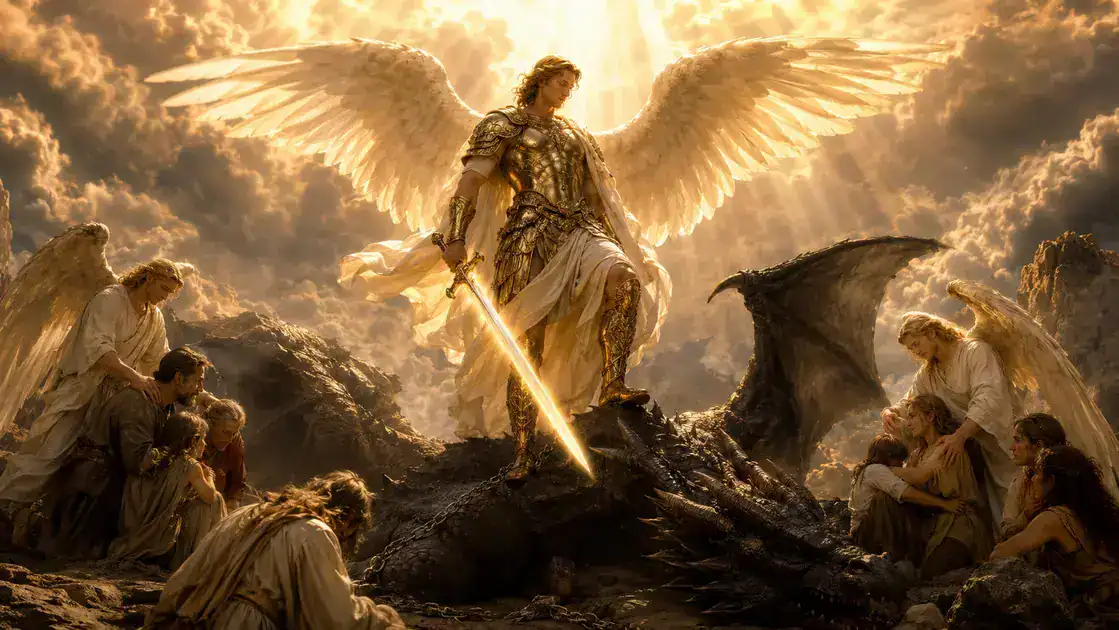
The scene of Revelation 12 frames a true cosmic struggle: the heavens seem to hold their breath as angelic hosts face a roaring threat. This conflict is not mere spectacle; it shows that good and evil are not equal forces but actors in a story with purpose and direction. The vision helps us name the reality of spiritual battle without making it our only story.
At the heart of the scene is a clear note of victory. Michael and the angels overcome the dragon, and that defeat speaks to a deeper truth: evil does not have the last word. This victory is both past and promised—seen in the vision and set toward a final restoration—so believers can stand with steadier hope, knowing God’s purposes press forward.
From that hope flows gentle consolation for those who suffer or fear. The vision reassures the faithful that pain and persecution are held within God’s wider plan and that care and order will be restored. Let this image shape how you pray and live: act with courage, tend others with compassion, and rest in the quiet promise that justice, healing, and peace are part of the same story that gives us courage now.
Devotional practice: reading, prayer, and spiritual application
Open Revelation 12 with gentle patience and let the images settle in your mind. Read slowly and aloud if you can, tracing the woman, the child, and the dragon with your eyes. Let the imagery speak before you rush to explain it; often the heart understands what quick study misses.
Turn those images into prayer by naming what they arouse in you—fear, hope, grief, or courage. Speak honestly to God about those feelings and ask for guidance. You might quietly name your fears and ask for the steadiness of the angels, not to remove struggle but to hold you through it.
Let reading and prayer lead to simple acts of faith in daily life: a kind word, steady service, or standing with those who suffer. Practice small rhythms that remind you of the vision’s promise of care and victory. In these steps—read, pray, act—you make the sacred story live in ordinary time and find courage to move forward with hope.
A closing prayer and reflection
As we close, breathe in the images of heaven and earth meeting. Let the woman, the child, and the angels rest in your mind. These images are not far away but meant to steady us now.
Lord, grant us peace when we face fear, courage when we meet injustice, and gentle eyes to see the suffering around us. Remind us that the battle is watched and that your care holds every life.
May our faith be small acts of love: a kind word, a steady hand, a prayer said for another. Let reading and prayer shape how we live each day, so hope does not stay only in thought but becomes service and mercy.
Go in quiet trust, knowing the story bends toward healing and that you are held in a wide and loving purpose. Amen.
FAQ – Questions about Revelation 12, Michael, and the dragon
What is the main message of Revelation 12?
Revelation 12 presents a layered, symbolic vision of a cosmic struggle: a woman, a child, and a great dragon. The scene points to God’s unfolding plan amid persecution and shows that while evil pursues life, God’s purposes move toward protection and final restoration (see Revelation 12:1–9). Read devotionally, it invites hope and faithful endurance rather than neat literal answers.
Who is Michael in the Bible and what does he do?
Michael is called an archangel and a champion of God’s people (Daniel 10:13, 21; 12:1; Jude 1:9; Revelation 12:7). Scripture shows him as a leader among the heavenly hosts who acts under God’s authority to protect, defend, and carry out divine purposes. His example points us to faithful obedience and God‑given strength, not to angelic autonomy.
Is the dragon in Revelation 12 really Satan?
Yes. Revelation links the dragon with the ancient serpent and names him as the one who deceives the world (Revelation 12:9; 20:2). The book uses mythic and prophetic imagery to show both a personal enemy and the systems that oppose God, so the dragon functions as a portrait of Satan’s power and his influence in history.
How can this passage shape my prayer life and spiritual practice?
Let the images slow you down: read Revelation 12 slowly, pray about the feelings it raises, and bring specific fears or hopes before God. Use the vision to fuel compassionate action—small acts of mercy and steady witness—and to remember that spiritual struggle sits inside God’s larger care. Practices like quiet reading, naming fears in prayer, and service help the vision become lived faith.
Does Revelation 12 promise immediate escape from suffering?
Not always. The vision affirms a sure victory—Michael overcomes the dragon—and offers consolation, but it also depicts ongoing conflict and persecution for God’s people (Revelation 12:13–17). Scripture invites trust in God’s ultimate rescue while calling believers to endurance, witness, and reliance on the Lamb (see Revelation 12:11).
Should Christians pray to angels or ask Michael for help directly?
Christian tradition and Scripture direct prayer to God alone, since angels are God’s servants and not objects of worship (Matthew 4:10; Colossians 2:18). It is appropriate to honor angels and to ask God to send help by his angels, or to seek the example of Michael’s faithful service. Many traditions also encourage asking God for the protection and guidance shown in angelic ministry rather than treating angels as intermediaries in themselves.