Eternal praises of angels Trisagion names the threefold acclamation—’Holy God, Holy Mighty, Holy Immortal’—rooted in Isaiah and Revelation, through which Christian worship joins the heavenly court by repeating a brief, communal prayer that trains the heart in awe, holiness, and contemplative presence.
eternal praises of angels trisagion; Have you ever sensed, in a hush of prayer, a voice that belongs more to heaven than to earth? Walk with me through the Trisagion’s scriptural roots, liturgy, and quiet power.
The Trisagion in Scripture: echoes of Isaiah’s heavenly throne room
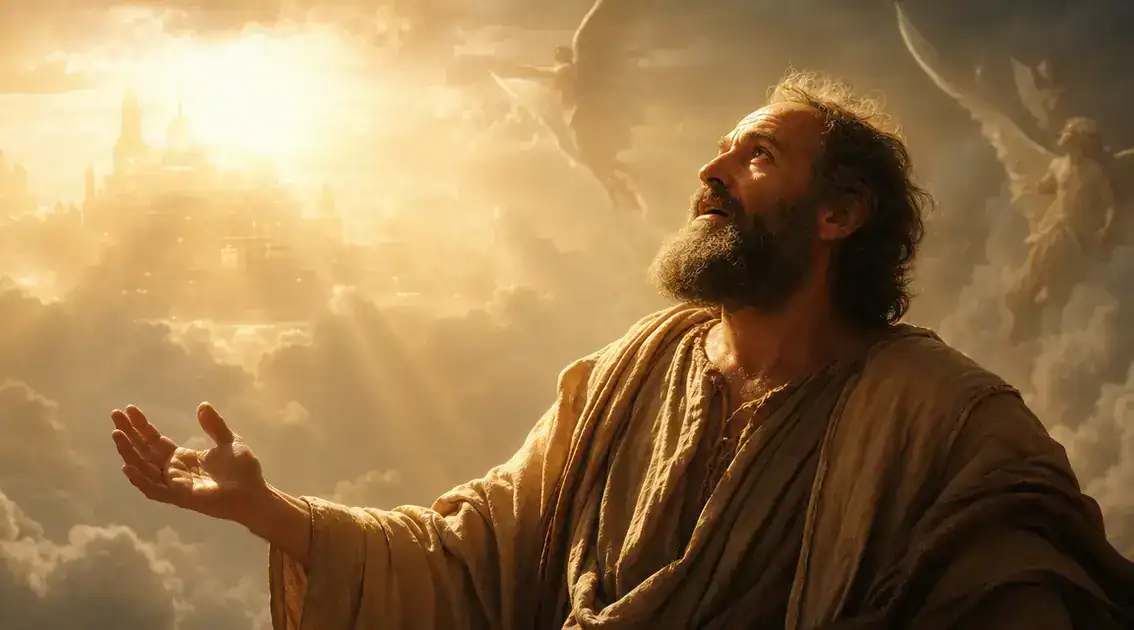
In Isaiah’s vision the prophet stands before a burning throne and hears the seraphim cry; the sound fills the temple and trembles in the heart. The image is simple and startling: holiness is both near and utterly other, a presence that burns and shelters at once. When the threefold cry rises, it sets the whole scene as holy.
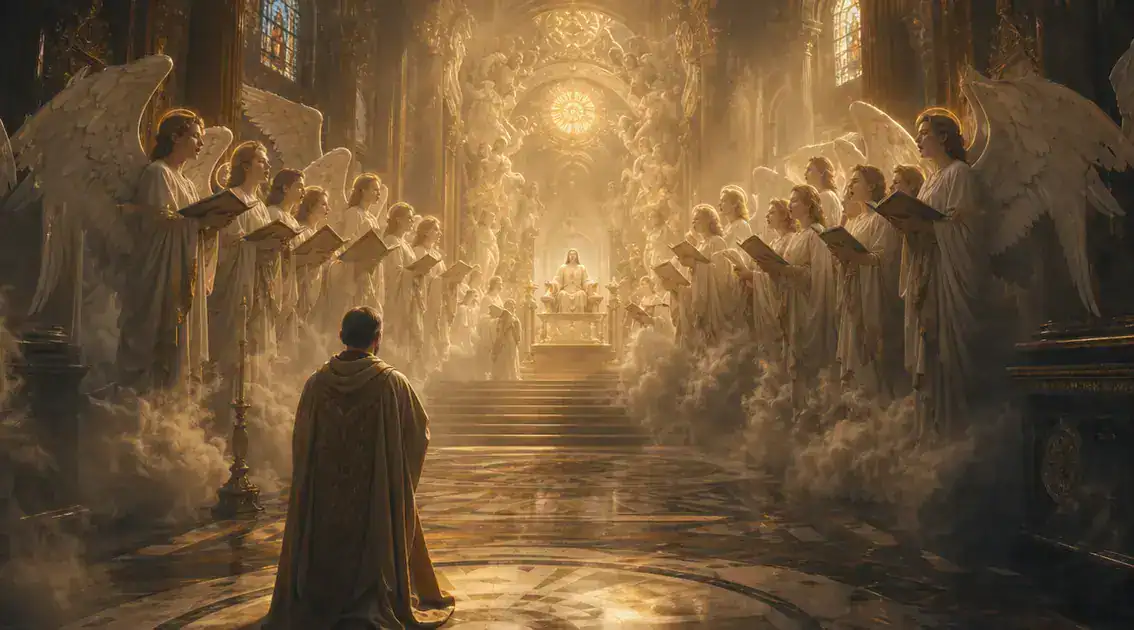
That triple acclamation found its way into the voice of the church as the Trisagion. The ancient formula — Holy God, Holy Mighty, Holy Immortal — carries the echo of Isaiah and the worship scenes of Revelation. Angels speak the pattern of praise; human liturgy borrows that rhythm so worshipers can stand with the heavenly court rather than apart from it.
Praying or listening to the trisagion trains the heart to enter the throne room in a small, quiet way. The words do not explain God so much as place us before divine wonder and mercy, inviting reverence, humble confession, and a steadying hope. In that thin overlap between heaven and earth, the angelic song becomes a bridge that helps ordinary prayer become worship.
Historical development: from Eastern liturgy to Western reception
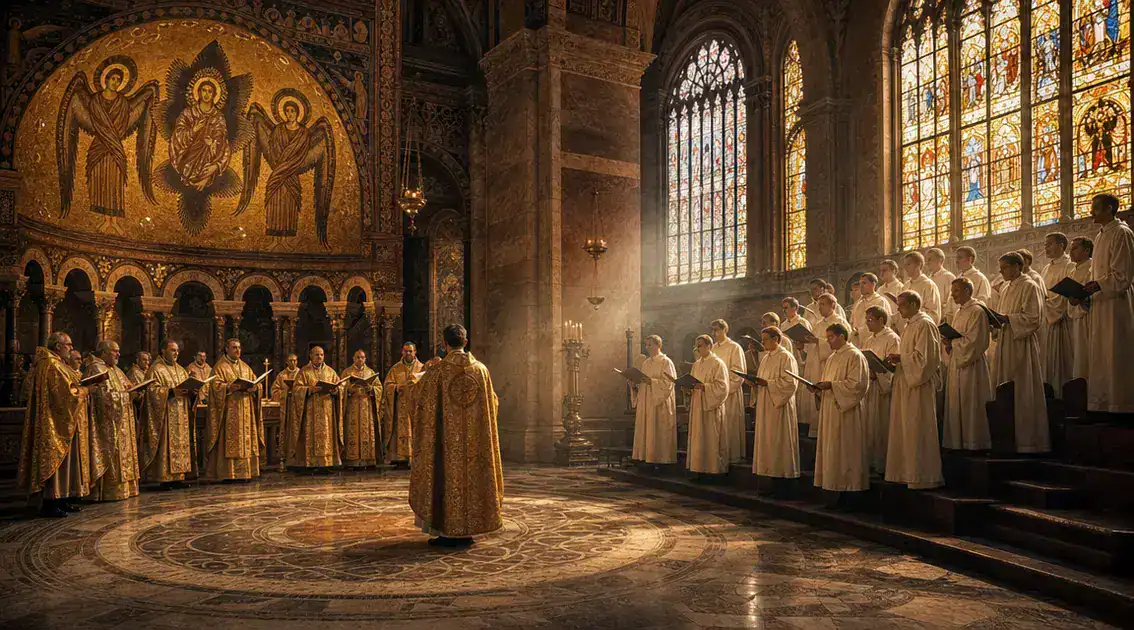
The Trisagion first finds firm shape in the prayers of the Eastern church, where chant and icon meet to form worship. In Byzantine practice the threefold acclamation is woven into the Divine Liturgy, baptismal rites, and moments of solemn intercession, sung by cantor and people together. This pattern grew out of a living memory of Isaiah’s vision and of the early church’s desire to join the angelic song in voice and heart.
Over centuries the chant crossed rivers of language and culture. Pilgrims, scholars, and liturgists carried the formula westward, where it was translated and adapted into Latin rites. Sometimes the words were kept intact; other times they were shaped to local melody and use. These exchanges did not erase difference, but they created a shared hymnody that points back to a common worship of holiness.
Today the Trisagion still binds East and West in small, tangible ways. In monasteries, cathedrals, and simple parish gatherings, the threefold cry surfaces as both a doctrinal touchstone and a devotional practice. Singing it invites the believer into the wider company of heaven, and in that simple act of praise we see how diverse liturgical histories converge on the same sacred awe.
The theology of the trisagion: holiness, mystery, and the threefold acclamation
The trisagion names God’s holiness in a way that stops ordinary speech. The repeated cry — “Holy God, Holy Mighty, Holy Immortal” — does not define God as if we could hold him in a phrase. Instead it points us toward wonder, a reality too vast for a single word. The repetition helps the heart rest in awe rather than in tidy answers.
That threefold acclamation carries layered meaning. For some it is an intensification, a way to say “completely holy” by echoing the same truth three times, and for others it reverberates with the mystery of God revealed in many ways. Either way, the form invites patience with mystery: it reminds worshipers that God is both beyond our reach and present to our praise. In this tension the trisagion becomes a theological hinge between knowing and trusting.
When prayed in church or in private, the trisagion shapes devotion gently but firmly. The steady repetition calms anxious thought and draws attention away from clever answers toward a humble posture of worship. In practice it opens a small doorway into the heavenly court, inviting the believer to stand with the angels in a single, simple act of reverence and longing.
Angelic voices and human prayer: how the trisagion bridges heaven and earth
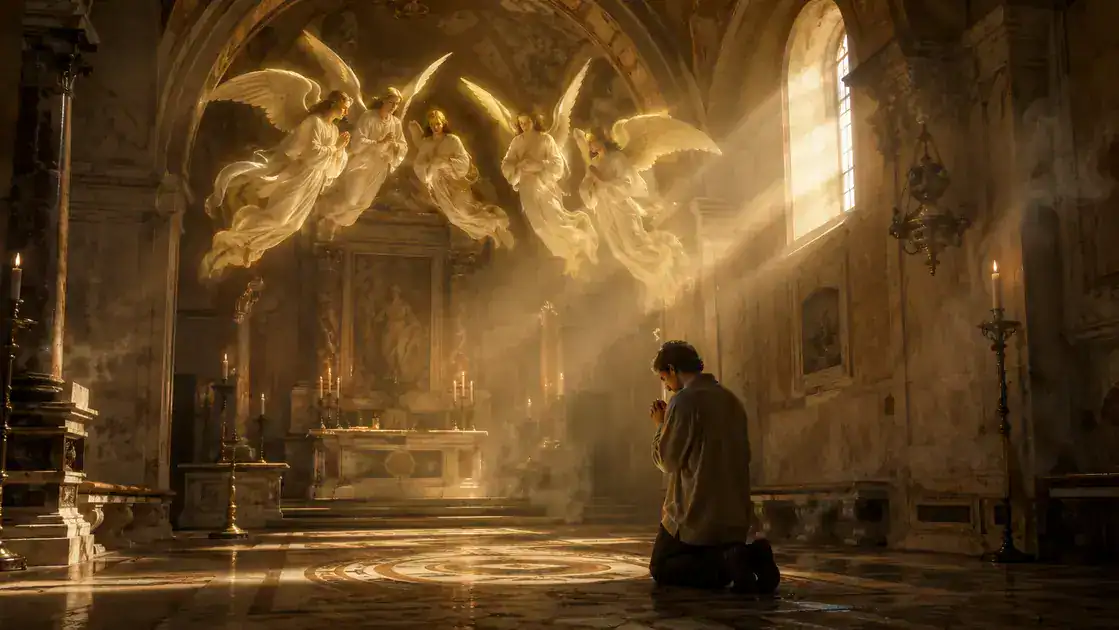
There are moments in worship when a human voice seems to meet something beyond itself. In the Trisagion the threefold cry takes on that quality: it is both human speech and a joining with angelic praise. When congregations speak those words aloud, they are not only repeating doctrine but entering a pattern of sound that has long belonged to heaven.
That meeting happens quietly and simply. A cantor begins, a voice rises, and others follow until the room feels fuller than it did before. In that fullness the boundary between the one who prays and the choir of heaven feels thinner. The Trisagion works like a bridge: it carries our small yes of praise into the rhythm of the heavenly court.
Practically, this changes how prayer feels. Listening closely to the repeated acclamation teaches patience and awe, and singing it together teaches unity and humility. You do not need a special gift to enter that sound; you need only attention and honesty. In the shared voice of the church we practice standing with angels, offering a single, ordinary human prayer that is lifted into something holy.
Liturgical practice: when and how the trisagion is sung today
The Trisagion appears in many modern services, most often at moments when the church calls the faithful to remember God’s holiness. In Eastern churches it regularly opens the Divine Liturgy and surfaces in vespers, baptisms, and memorial services. In Western settings it may appear in solemn masses, during litanies, or at moments of intercession; in each place the cry marks a pause in ordinary speech and invites a shared breath of praise.
How it is sung varies by custom and place. A cantor or choir may intone the lines while the people respond, or the whole assembly may sing the threefold acclamation together in a simple, repeated chant. Some communities keep the original Greek or ancient melodies; others use local languages and fresh harmonies. Whatever the tune, the form uses repetition and rhythm to draw attention away from explanation and toward reverent listening.
For those who want to join, the practice is gentle and practical. Listen first to the lead voice, let the phrase settle in a few breaths, and then offer the words clearly but humbly; posture, brief silence, and attention help the experience feel like worship rather than performance. The Trisagion can also be used in private prayer as a short doorway into the liturgical tradition, a way to join the heavenly chorus without ceremony. Always follow local rubrics and the lead of your worshiping community, for the aim is unity in praise rather than uniformity of style.
Personal devotion: praying the trisagion as a path to contemplative awareness
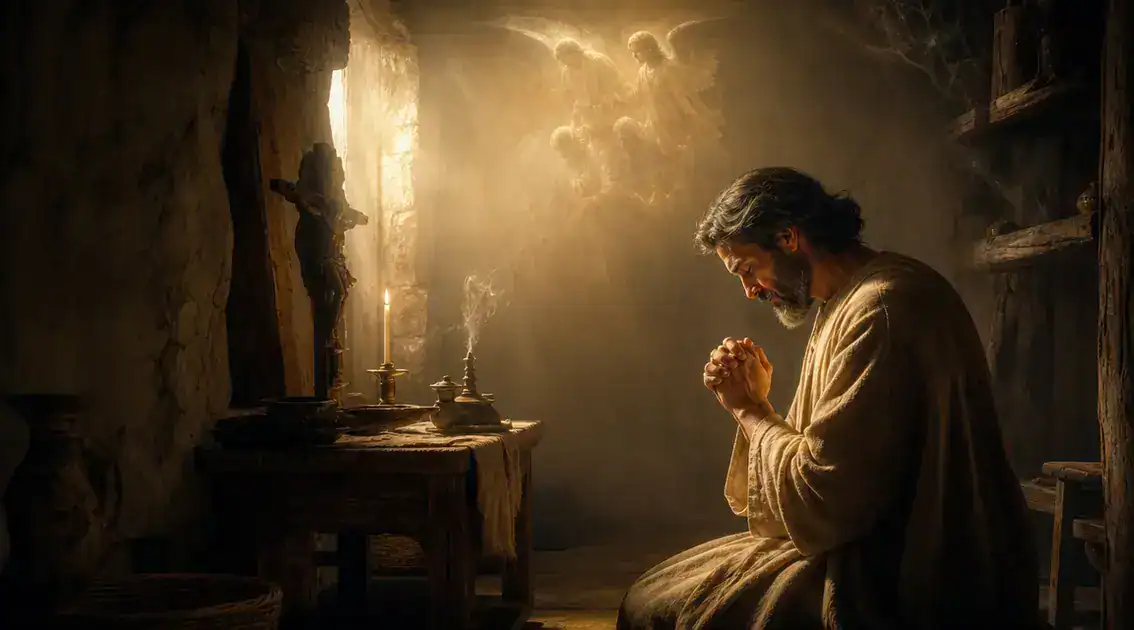
Kneeling with the Trisagion can become a gentle door into prayer. Say the threefold cry slowly, letting each phrase rest like a breath. As you repeat the words, let attention follow the sound and notice how the body softens and the mind grows quieter.
Use the form as a practice of simple listening: breathe in, speak the first line; breathe out, listen; repeat. This rhythm trains the heart to hold reverent attention rather than hurry toward an answer. Over time the repeated acclamation can feel less like saying words and more like entering a shared song with the angels.
Make the practice small and steady: a few minutes in the morning, a short pause at noon, or a quiet return before sleep. Pair the trisagion with a short scripture line or a slow sign of the cross to help the moment settle. In these tiny habits the prayer does its work—softening fear, inviting humility, and opening a quiet space where grace can be noticed.
A closing prayer
May the echo of the Trisagion rest in your heart and steady your steps. Let its threefold cry remind you that holiness surrounds you, even in the small and ordinary hours.
When the day feels heavy, breathe the words slowly and let them open a quiet place within. In that stillness you may meet the hush of heaven and the gentle company of angels.
May you go forward with gentle courage, held by a praise that is older than words. Receive peace, wonder, and a quiet hope to carry this song into ordinary moments.
Return to the Trisagion often: a short prayer, a steady breath, a faithful habit. Small practices turn our days into a continual offering.
FAQ – Common questions about the Trisagion and angelic praise
What is the Trisagion and where does it come from?
The Trisagion is a threefold acclamation: “Holy God, Holy Mighty, Holy Immortal.” It echoes the visions of heavenly worship in Scripture (Isaiah 6:1–3; Revelation 4:8) and became a regular prayer in the Eastern liturgical tradition, especially the Byzantine Divine Liturgy.
Why is the acclamation repeated three times?
The threefold form deepens the act of praise rather than giving a tighter definition of God. Scripture uses triple repetition to mark absolute holiness (Isaiah 6:3). The repetition trains the heart to rest in awe and helps communal worship join the rhythm of the heavenly court.
When is the Trisagion sung in public worship today?
In Eastern churches it appears at the opening of the Divine Liturgy, during baptisms, memorials, and certain vespers. In Western practice it may be used at solemn masses or special litanies. Local custom and rubrics guide when and how it is sung.
Can I pray the Trisagion privately, and how should I do it?
Yes. Pray it slowly and simply, letting each phrase be like a breath. You can pair it with a short Scripture verse or a quiet sign of the cross. The aim is attentive reverence, not performance—few minutes of steady repetition open a contemplative space.
What does the phrase “Holy Immortal” mean theologically?
“Immortal” affirms that God is beyond death and holds life itself. The phrase points to God’s unending life and power over mortality (cf. 1 Timothy 1:17). It comforts worshipers by naming the Lord who is life-giving and faithful in every trial.
Does singing the Trisagion really connect us with angels?
Yes, in the sense that it adopts the very language of heavenly praise found in Scripture. When the church sings the Trisagion, tradition holds that worshipers stand in the same pattern of praise as the angelic court (Isaiah 6; Revelation 4), so liturgy becomes a participation in that larger, sacred song.