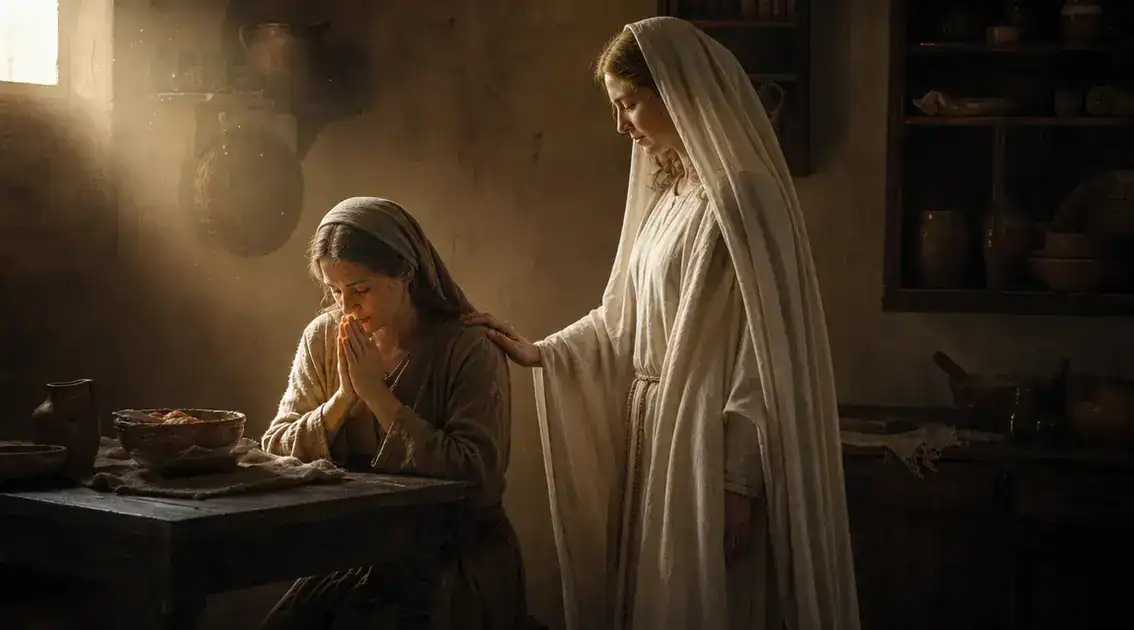

Virtues, angels, and patron saints represent a linked spiritual reality in Christian tradition, where angelic virtues—obedience, charity, and courage—are mirrored in saints’ lives and offered through their intercession, guiding believers toward moral formation, daily practice, and faithful love, rooted in Scripture and communal devotion that shapes conscience and service.
virtues angels and patron saints — have you ever noticed how they appear in Scripture and tradition, quietly shaping our prayers and choices? This gentle mystery invites curiosity rather than certainty, and I’ll walk with you through stories and reflections that illuminate how heavenly virtues and earthly patrons meet in the life of faith.
Angelic virtues in Scripture
In Scripture, angels appear most often as God’s messengers and servants, and their actions quietly teach us how to live. They do not seek glory for themselves; instead they carry out God’s will with steady faith and calm resolve. When Gabriel greets Mary, his reverent obedience and gentle clarity reveal obedience to God’s plan as a virtue rooted in trust rather than force.
Other scenes add depth to that picture. Michael’s scenes in the prophets and Revelation show a firm, protective courage that stands against harm and defends the faithful, while the angels who bring food to Elijah or strengthen Jesus in Gethsemane show service as a tender, practical virtue. The angels’ songs and worship around the throne remind us that praise and love for God are themselves formative virtues that shape action and heart.
These scriptural glimpses invite a simple, lived response: notice how virtues appear in small, ordinary acts as well as decisive moments. We can practice the same habits—quiet obedience in daily choices, humble service to those in need, and courageous fidelity when truth must be spoken. Let these angelic examples guide your prayer and choices, turning sacred scenes into daily practices of faith.
Patron saints and their heavenly roles

Patron saints stand beside the faithful as gentle advocates who point us toward God. Many saints became patrons because their lives touched a particular need, place, or trade, and their example continues to guide those who face similar trials today. In prayer we do not worship them; rather, we remember their care and turn to them as friends who teach us to trust, rooted in the communion of saints that joins heaven and earth.
Scripture gives us images of a gathered assembly before God that shape this belief, and Christian tradition has long held that the holy ones share in Christ’s care for the Church. When we ask a saint to pray with us, we rely on their witness and their closeness to God to bring our needs forward. This faithful service on our behalf is known as intercession, a comforting practice for many who seek help in times of sorrow or decision.
Bringing a patron saint into daily life means learning from the virtues they lived. Their stories teach patience, courage, humility, and charity in small, familiar acts. By remembering a saint’s life, practicing their virtues, and asking for their guidance, we enter a quiet school of holiness that quietly reshapes our choices and habits toward greater love and faithfulness.
How virtues manifest through angels and saints
Angels and saints reveal virtues not as distant ideals but as lived gestures we can see and follow. In Scripture an angel brings food to Elijah and later strengthens Jesus in the garden, teaching that service and faithful endurance are real, bodily acts. Saints like Francis or Teresa show the same pattern: their kindness, prayer, and steady care turn belief into habit and bring grace to simple moments.
These virtues often appear in small, ordinary choices — sharing bread, listening without hurry, speaking a needed word of truth. When we watch an angel deliver mercy or a saint tend the poor, we learn that charity, humility, and courage grow through repeated acts, not sudden perfection. This helps us see holiness as a slow shaping of the heart, made visible in what we do each day.
Living with these examples means learning to notice and imitate them in our routines: a quiet prayer before action, a hands-on gesture of help, or courage to forgive. We can ask for the saints’ intercession and the angels’ guidance, but the truest sign of their influence is when our choices mirror their virtues. Let the small practices you repeat become the path by which heavenly virtues take root in your life.
Popular examples: archangel Michael and patron saints

The archangel Michael appears in Scripture as a bold protector who stands for God’s people in times of trial. In Revelation he leads the heavenly hosts against forces that threaten the good, showing courage rooted in faithful obedience rather than pride. His image invites us to trust in God’s strength when we face fear and to stand for justice with calm resolve.
Alongside Michael, patron saints show the many faces of holiness in ordinary life. Some saints are remembered for care of the poor, others for teaching, healing, or artistic gifts; their lives teach specific virtues made flesh in daily work. When we learn their stories we see how virtue is practiced in particular callings—a saint’s patience in a hospital ward, humility in a workshop, or steady prayer in a cloister.
Together, Michael and the saints form a pattern we can follow: protect what is good, serve where there is need, and pray without ceasing. We might ask Michael for courage and the saints for intercession, but the truest echo of their help is when we act with the same virtues. Small faithful choices—helping a neighbor, speaking truth kindly, praying with persistence—become the way their heavenly care shapes our daily life.
Devotional practices that honor virtues and patrons
Many devotional practices help us honor virtues and the saints who model them. Simple acts—lighting a candle before an image, saying a short prayer, or keeping a small icon on a table—turn memory into action. These outward signs remind us of the saint’s example and invite us into quiet reflection on virtues like patience and mercy, while also opening our hearts to intercession as a practice of trust.
Other devotions shape daily habits that form character. A short morning offering, a weekly novena, or praying the rosary with attention can slow our pace and help virtue grow by repetition. Small acts of service, such as bringing food to a neighbor or visiting someone who is lonely, become prayer in motion when offered with love and humility. In this way, devotion and practice work together: prayer feeds action, and action teaches prayer.
Community rituals also play a gentle role in forming virtue. Parish feast days, processions, and pilgrimages gather people to remember a saint and to renew shared commitments to kindness and justice. When a community prays together or serves together, virtues are not only taught but caught. These practices keep the saints near and make holiness a lived path we walk with others, one ordinary good choice at a time.
Applying angelic virtues and patronage to daily life

Angelic virtues and patronage come alive when we let small acts shape our day. Notice how a quiet prayer before work or a patient reply to a hard question echoes the same virtues angels and saints show in Scripture. These gestures are not grand. They are simple habits that teach the heart to lean toward charity, courage, and humility.
Try naming one small practice you can repeat each morning—an offering of the day, a short examen, or a few words asking your patron saint or guardian angel for help. Over time, this habit of attention trains you to choose mercy and steadiness in real moments: lending a hand, keeping a promise, or speaking truth with grace. The point is not perfection but steady growth in goodness.
In work and family life, look for chances to make virtue practical: share your time, listen fully, defend someone who is overlooked. Invite a saint’s example into these tasks and ask an angel for a quiet nudge when you face fear. As you repeat these small choices, the pattern of heavenly care begins to shape ordinary days into a lived prayer and a faithful way of loving.
A gentle prayer for accompaniment
May the virtues angels and patron saints fill your mornings and quiet hours with a steady, kind light. Let their example guide the small choices that shape your day, and may their care remind you that holiness often grows in simple acts.
Teach us to practice charity, courage, and humility in what we say and do. Help us to turn ordinary tasks into prayers by giving freely, listening well, and standing with those who suffer.
When fear or doubt comes, may we feel a gentle nudge—an angel’s prompt to trust and a saint’s example to keep going. Let these companions lead us neither to pride nor to passivity, but to faithful, patient love.
Go now with peace and a quiet resolve to live what you believe. May wonder stay with you, and may each small faithful step be a prayer that shapes the world.
FAQ – Questions about virtues, angels, and patron saints
Do patron saints really intercede for us?
Yes. Christian tradition and Scripture picture the holy ones bringing our prayers before God. Revelation 5:8 gives a vivid image of saints’ prayers offered like incense, and Hebrews 12:1 speaks of a ‘cloud of witnesses’ that surrounds the faithful. The church has long taught that asking a saint to pray with us is a request for their loving intercession, not a replacement for prayer to God.
How does someone become a patron saint for a place or vocation?
Patronage most often grows from a saint’s life and ministry: their work, martyrdom, miracles, or special ties to a community. Local devotion and the needs of the faithful also shape patronage. In many cases the church recognizes or confirms a patron after long-standing popular devotion, but anyone may privately ask a saint with a clear connection to their need for guidance.
Is praying to a saint the same as praying to God?
No. Prayer to a saint is a request for intercession—asking a holy friend in heaven to pray with us to God. Worship, which belongs to God alone, is distinct from veneration or asking for prayers. This distinction has deep roots in Christian teaching and helps keep our devotion rightly ordered toward God while valuing the saints’ example and help.
Where do angels in Scripture show virtues we can imitate?
Scripture gives several clear examples: Gabriel’s faithful obedience and respectful greeting to Mary (Luke 1) models humble service; angels who sustain Elijah or strengthen Jesus (1 Kings; Luke 22:43) show compassionate service and endurance; and Michael’s role in Revelation displays courageous defense of the good. These episodes help us see virtues embodied in action, not just in words.
How can I tell whether an intuition is an angelic prompting or my own thought?
Discernment matters and is practiced with prayer and simplicity. A prompt that leads you to love, peace, charity, and alignment with Scripture and conscience is more likely good. If an intuition urges fear, selfishness, or harm, treat it cautiously. Pray for clarity, seek the counsel of a trusted spiritual guide, and test the prompting by small, humble steps rather than dramatic claims.
Does everyone have a guardian angel, and can I adopt a patron saint?
Many Christian traditions hold that each person is entrusted to a guardian angel (see Matthew 18:10 as a biblical reference to angels watching over ‘little ones’). As for patron saints, you can certainly choose a saint as your special guide in prayer—pick one whose life or virtues speak to your situation and ask for their intercession. Official patronage for a place or profession may develop through local devotion or ecclesial recognition, but personal devotion is immediate and welcomed.