
Virtues angels at the Ascension of Jesus are understood in Christian tradition as heavenly messengers—members of an angelic order who, clothed in white, witness Christ’s return to the Father, affirm divine order, console the disciples, and summon the community to faithful witness and mission rooted in the promise of his coming again.
virtues angels ascension of jesus — have you ever paused at the Ascension and noticed the two luminous figures in white? I invite you to a brief, reverent look at who they might be and why their presence still matters for prayer today.
Biblical accounts of the ascension: Luke and Acts
In Luke’s closing scene the narrative holds a quiet, tender power: Jesus leads the disciples out as he blesses them, and then he was taken up into heaven. The account is simple and humane — a blessing given, a visible departure, and a band of followers left with awe. Luke notes how they returned to Jerusalem with joy and spent their days in worship, a small but vivid portrait of faith shaped by an unforgettable moment.
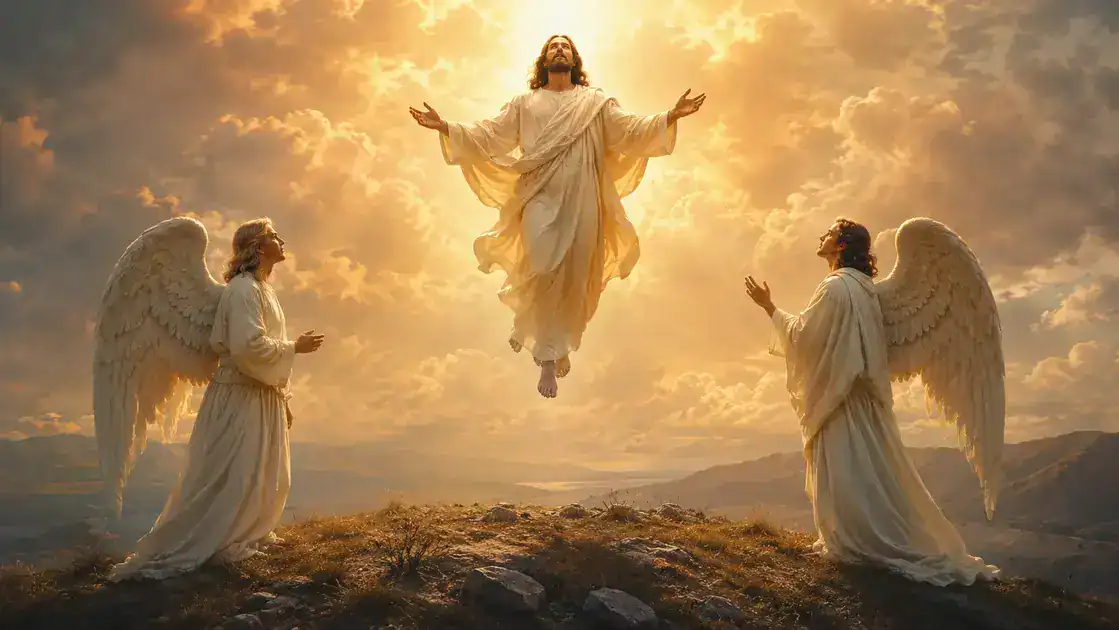
Acts expands that picture with fresh detail: as the disciples watch, Jesus is lifted and a cloud hides him from their sight. Then two figures in bright garments appear, asking, “Men of Galilee, why do you stand looking into heaven?” These are described as messengers who call the witnesses to remember the promise that Jesus will come again. The image of the two men in white links the human act of watching with the divine assurance of return.
Taken together, Luke and Acts give us both the intimate gesture of blessing and the public, communal witness that follows. The scene holds both comfort and mission: the disciples worship with joy and are sent outward in hope. This layered telling invites readers to linger in the moment — to see God’s blessing, to hear the angelic reminder of promise, and to let that witness shape prayer and purpose today.
Who are the angels in white: textual and historical clues
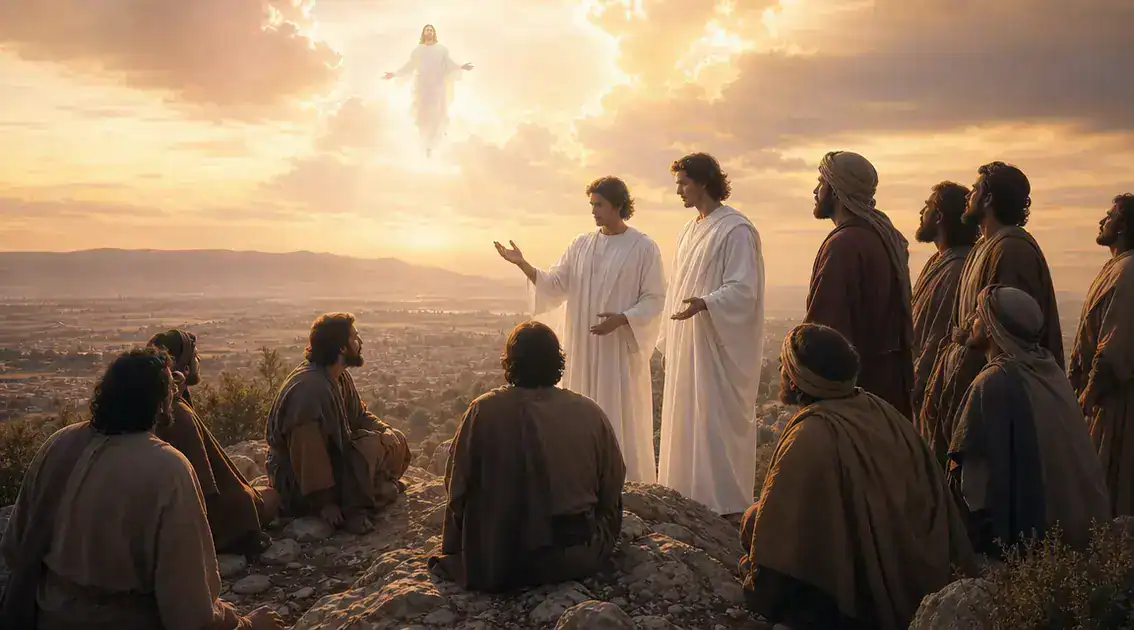
Luke and Acts portray figures who appear in bright clothing at pivotal moments, and their presence is meant to be noticed. In these scenes the witnesses see not a spectacle but a message: the figures are described simply as attendants from heaven, often called two men in white. The scriptural voice treats them with calm clarity, as agents who both console the fearful and point attention outward toward God’s promise.
When we look to history, early Christians tended to read these figures as angelic messengers rather than named individuals. Sermons and hymns from the early church link white garments with purity, victory, and heavenly authority, so the clothing itself becomes a clue. This reading fits a wider Jewish and Christian imagination where light-clad beings signal God’s nearness and carry divine words to human ears.
Together, the textual notes and historical readings shape a gentle, clear picture: these angels function as witnesses who call the disciples back from stunned watching into faithful action. They remind us that the Ascension is both a comforting farewell and a commissioning. For the attentive reader, the scene invites trust that heaven meets earth with presence, purpose, and a call to witness.
The virtues as angelic figures: theological meanings
In Christian tradition the word “Virtues” names a class of angels believed to hold the world in steady motion. These beings are not abstract ideas but angelic persons who carry God’s power into creation. They are often linked with acts that order nature, bring healing, and confirm God’s will in the world.
When readers meet two bright figures at the Ascension, it is theologically natural to hear them as members of this angelic rank. The presence of such messengers points to more than a single message; it shows a heavenly affirmation that Christ’s return to the Father orders the whole cosmos. The Virtues, as witnesses, underline that the Ascension is both victory and governance — God’s reign made present and promised.
For prayer and life, this reading offers a gentle strengthening: angels of order remind us that God’s power is both near and active. Seeing the angels as Virtues invites trust in small providences and large promises alike. Quietly hold that image in prayer when you face disorder or doubt, letting the Ascension’s witness shape courage, hope, and faithful service.
How early Christian tradition named or understood these angels
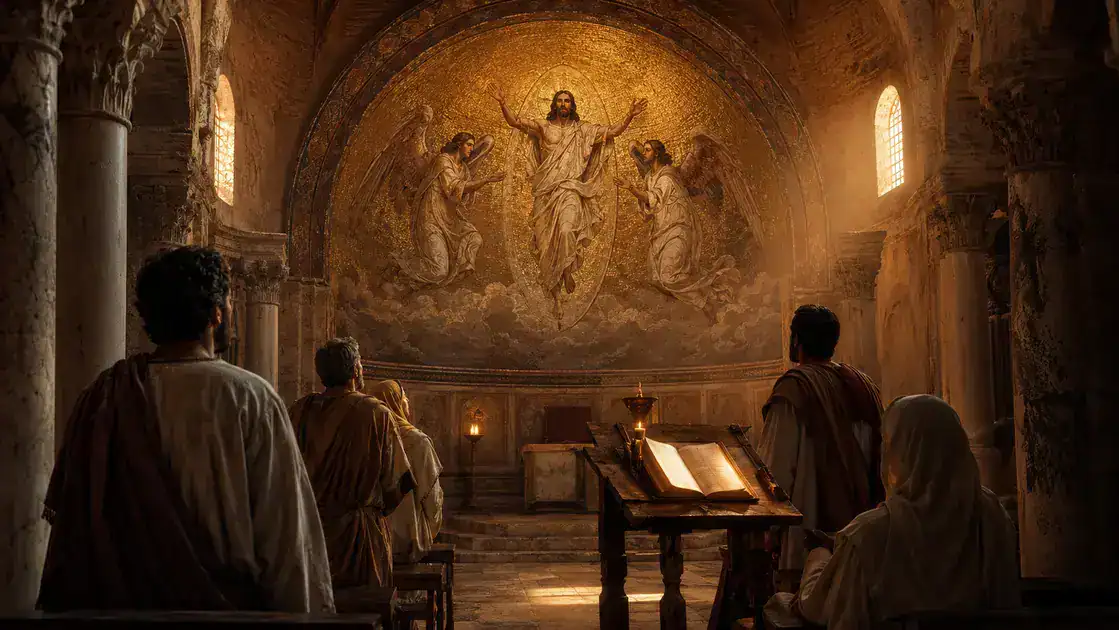
Early Christians often described the figures at the Ascension simply as bright attendants from heaven, not always by proper name. In sermons and letters they are called angels or men in white, a phrase that kept the focus on their role rather than on a title. Some later stories and apocryphal texts added names or details, yet the earliest witness stays plain and pastoral: these figures comfort, remind, and point to God’s promise.
As theology grew, writers tried to place such figures within an ordered vision of heaven. Pseudo‑Dionysius and later teachers offered a helpful map by naming ranks like virtues, powers, and principalities, and they read the Ascension’s attendants as part of that heavenly order. That ordering does not make the scene distant; it shows that heaven’s care has shape and purpose, and that the angels at the Ascension witness both victory and governance.
In worship and art the early church kept this balance between mystery and care. Mosaics, hymns, and liturgical prayers show angels in white near the ascending Christ, tenderly present to the witnesses below. These images and words invite us to receive the angels as consoling messengers and signs of God’s steady rule, a detail that can steady prayer when life feels uncertain.
Art and iconography: portrayals of the two angels in white
Artists have long shown the two angelic figures in white as quiet companions to the Ascension scene, often placed at Christ’s sides or slightly below him. In early mosaics they appear with simple, luminous robes and calm faces, their white garments catching reflected gold from the background. In later Renaissance paintings those same figures gain softer modeling and human detail, yet they still serve as a clear visual message: these are heavenly witnesses to a promise fulfilled.
Different traditions use different visual languages to say the same thing. Eastern icons favor flat, luminous backgrounds and formal poses that invite prayerful gazing, while Western painters use depth, shadow, and facial expression to draw the viewer into the moment. In both cases, elements like white robes, upward gestures, and clouded space work as signs—white for purity and victory, the gesture as an invitation to look toward heaven, and clouds as the meeting place of earth and sky.
These images do more than record a story; they shape devotion. People have stood before mosaics and altarpieces for centuries and let the sight of the two angels steady their hearts. As devotional images, they point us back to the scripture’s call to witness and to wait. Let that visual tradition be a gentle guide: look, listen, and let the angels’ quiet presence remind you of God’s nearness and promise.
Spiritual significance for believers: comfort, witness, and call
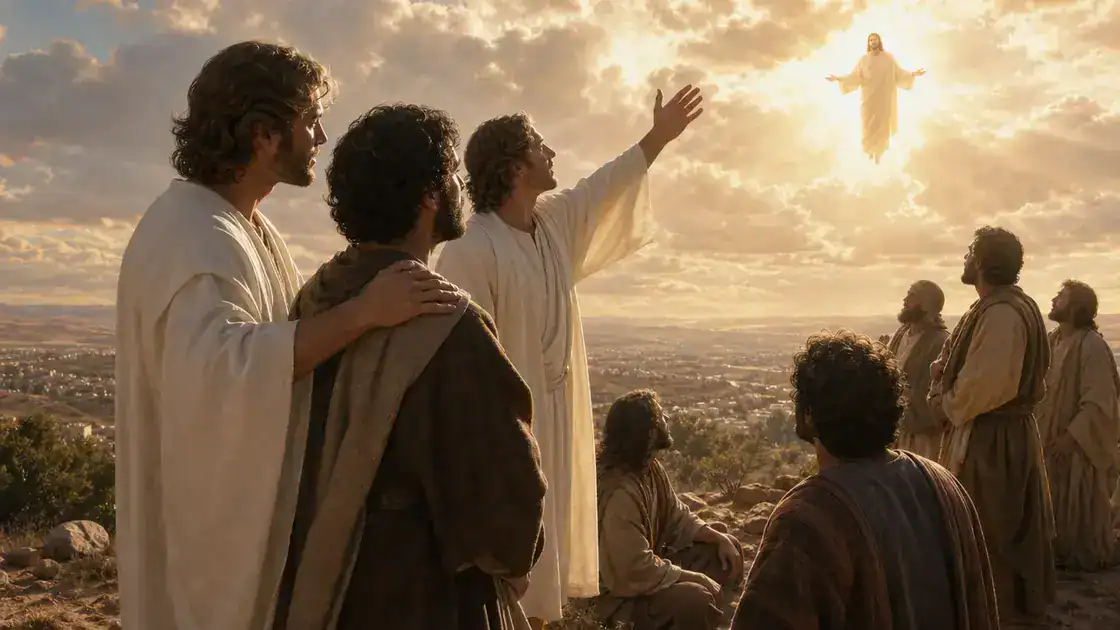
The Ascension comforts those left below by showing that heaven meets earth in a gentle way. The two angels in white stand near the disciples with calm faces, and their presence soothes fear and doubt. Scripture puts this comfort plainly: the heavenly messengers do not flee the grief of the watchers but lean into it, offering reassurance that God’s promises hold true.
That same comfort becomes an invitation to witness. The angels ask the disciples why they gaze upward, a question that moves them from stunned watching into faithful action. Witness is not only remembering what happened; it is living the hope you have seen, turning awe into words, service, and prayer for others to know the same consolation.
In daily life this means trusting that divine care is real and actionable. Let the angels’ quiet presence steady your heart when things feel chaotic, and let their question push you toward small acts of faith. Pray, serve, speak gently of hope, and allow the Ascension to shape both your comfort and your calling in the world.
Practical ways to encounter the ascension story in prayer
Begin by reading the Ascension passages slowly and prayerfully, letting a single phrase rest in your mind. Try a simple lectio divina: read a short verse from Luke or Acts, sit with a word or image, and let it draw out a short prayer. This quiet pacing helps the story move from history into your heart and opens space for the scene to shape your longing and hope.
Use art and imagination to enter the moment: gaze at an icon or painting of the Ascension and imagine the sounds, the light, and the touch of the air as Christ rises. Notice the two angels in white and let them speak as gentle guides—ask what their question, “Why do you stand looking into heaven?” calls you to do today. This practice turns watching into witness, so your prayer becomes both calm holding and a readiness to serve.
Make short, repeatable prayers part of the day: a breath prayer as you walk, a line from the Psalms at dawn, or a brief blessing before work. Share the story in small groups or with a friend, then act on one small call the story gives you—visit, listen, forgive, or offer help. These habits knit the Ascension into daily life, so its comfort and call shape not only your thoughts but your hands.
A gentle sending
We close this hour with a quiet prayer, thankful for the Ascension and for the two bright witnesses who stood by the disciples. Their calm presence shows that heaven meets earth with tenderness and purpose.
May you feel in your heart that you are held by a God who sends comfort and a call. Let that sure love move you from wonder into gentle action, and let the angels’ witness steady your faith in hard times.
Carry this story into small daily practices: a breath prayer, a short reading, a kind word offered without hurry. These simple acts let the Ascension’s promise breathe into ordinary life and make hope visible to others.
Go with peace: may the light that raised Christ lift you, may the angels’ question guide your steps, and may your life quietly witness to mercy and hope.
FAQ – Questions about the two angels at the Ascension and their meaning
Who were the two angels in white at the Ascension?
Scripture describes them simply as heavenly messengers who appear to the disciples (Luke 24:50–53; Acts 1:10–11). The texts do not give personal names; they function as witnesses and as voices that call the disciples from stunned watching into faithful action.
Does the Bible call these angels the ‘Virtues’?
The New Testament does not name them ‘Virtues.’ That title comes from later theological tradition (for example, Pseudo‑Dionysius) that arranges angelic ranks. Some theologians read the Ascension attendants as belonging to that rank because the Virtues are understood to carry God’s ordering power into creation.
What do the white garments signify in these accounts?
White robes in Scripture often signify purity, victory, and the bright presence of God (see Revelation 7:13–14 and various angelic appearances). In Luke and Acts the bright clothing marks these figures as heavenly attendants who bring comfort and a divine message.
How did early Christians and the Fathers interpret these figures?
Early sermons, liturgy, and art treated the figures as angelic messengers who console the disciples and remind them of Christ’s promise. While some later writings and apocryphal texts add details or names, the earliest Christian witness focuses on their pastoral role: to steady the community and summon them to mission.
How should the Ascension and these angels shape my prayer and life today?
Let the scene offer both comfort and call: receive the angels’ calming presence as assurance that God’s care meets our sorrow, and heed their question (‘Why do you stand looking into heaven?’) as an invitation to witness. Simple practices—lectio on Luke or Acts, a short breath prayer, or offering some act of service—help the story move from memory into faithful living.
Is it appropriate to use art of the angels in devotion, and how should one approach it?
Yes. Icons, mosaics, and paintings have long helped Christians enter the mystery of the Ascension. Approach such images as aids to prayer—windows that focus the heart on Scripture and worship—never as ends in themselves. Let the art point you back to the biblical scene, to prayer, and to concrete acts of mercy inspired by the Ascension’s hope.