

What are principalities angels — angelic beings described in Scripture and tradition that act as guardian messengers over nations and peoples, exercising spiritual influence within God’s sovereign order while remaining subject to Christ’s authority, and whom prayer, discernment, and just action may invite into the work of blessing communities.
what are principalities angels — have you ever stood before a map or a sunrise and felt that history itself carries a hidden companionship? This piece invites a gentle, reverent look at how Scripture and tradition imagine angelic guardianship over peoples and nations.
Biblical roots: principalities in Paul’s letters
When Paul names principalities, he points to living realities that shape people and places. He speaks as someone who feels the pressure of powers around him, not as one listing abstract terms. This language invites us to notice how choices, customs, and unseen influences can steer whole communities toward life or harm.
In letters like Ephesians and Colossians, Paul places these powers inside a wider, hopeful story. They belong to a spiritual order that touches history, yet they do not stand outside God’s rule. Paul balances sober awareness with a clear promise: Christ’s victory puts every authority into a larger frame of redemption, so that fear need not be our first response.
That vision leads to simple, steady practices. Paul urges prayer, discernment, and the readiness of the heart—what he calls the armor of God—so we can meet influence with love and truth. As we pray for nations and neighbors, we join a communal work that resists harm and opens the way for blessing, trusting that faithful acts matter within the spiritual shape of the world.
How tradition reads principalities as guardians of nations

Across centuries, many in the church have read principalities as more than ideas; they are seen as guardian angels of nations who watch over peoples and places. This reading comes from a humble desire to place history inside God’s care. When communities face famine, war, or hope, tradition imagines unseen companions who share in that story.
Early Christian writers and later medieval theologians often described these powers with tender seriousness rather than fear. They drew on Scripture, on visions, and on pastoral wisdom to speak of angels who guide leaders, protect cities, or press upon a nation’s conscience. These accounts invite us to think of principalities not as distant rulers but as part of a woven life that links heaven and earth.
That vision shapes how communities pray and act. Simple practices like prayer for nations, public blessings, and liturgical petitions grew from the hope that care can be offered on behalf of many. Such practices ask for wisdom for leaders, mercy for the suffering, and the gentle sway of love over power—trusting that faithful attention participates in the healing of whole peoples.
Scriptural scenes suggesting national guardianship: Daniel, Esther, Revelation
In Daniel’s visions, we meet beings who act on a national scale. He speaks of a “prince of Persia” and names Michael, the great prince who stands for God’s people. These scenes show spiritual beings engaged with courts, kings, and the fate of whole realms, as if heaven and history are in conversation.
Esther’s story adds a quieter example of care at work in a nation’s life. Though God’s name is not spoken, the plot reads like providence moving through human courage and timely mercy. Many readers hear an angelic kind of protection in the way a court is turned and a people are spared—an unseen watchfulness that works through ordinary people.
Revelation widens the view to the end of the age, where angels shape the fate of nations in vivid imagery. Angels blow trumpets, pour bowls, and stand at the four winds, suggesting an ordered, moral role for heavenly messengers in the world’s destiny. Read together, these scenes form a scriptural thread: angels move across history, near the courts of kings and the edges of empires, inviting us to pray, to act, and to trust that large stories are not without care.
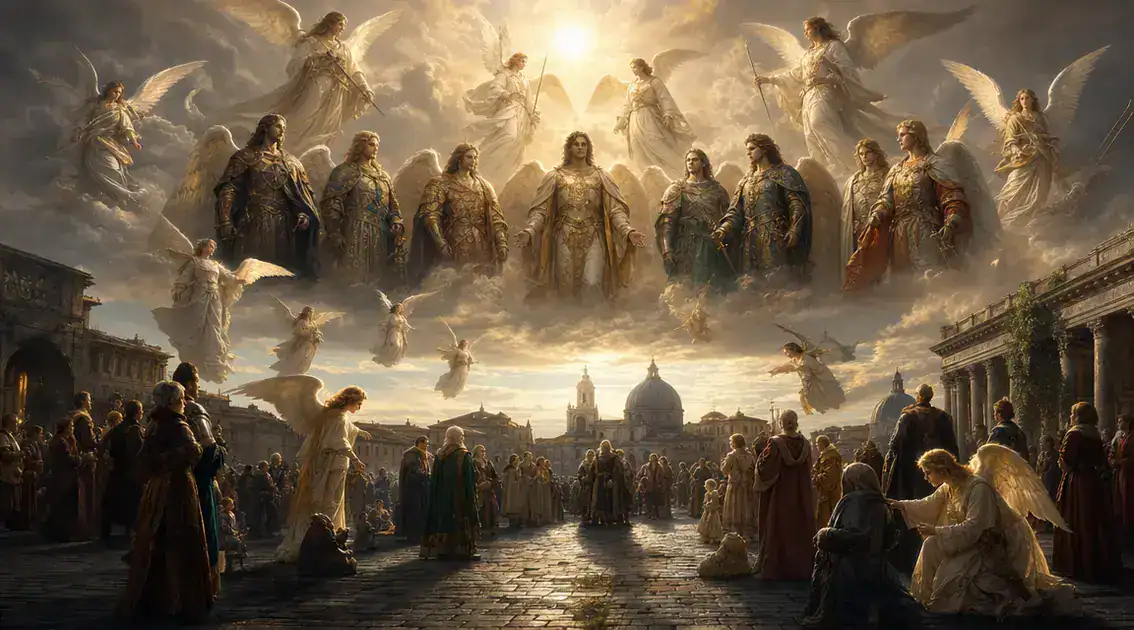
Many theologians describe an ordered life among spiritual beings, a gentle hierarchy that names roles rather than rank. In this view, principalities stand as caretakers for communities, placed between archangels who act broadly and guardian angels who attend individuals. The language helps us imagine how spiritual influence might pass through customs, laws, and the life of a people.
Authority here is seen as service, not domination. Principalities can shape cultural habits, civic choices, and public life, yet their power remains under God’s sovereignty. That means any spiritual influence may be turned toward healing or toward harm, depending on the moral direction and prayer of a community.
For everyday faith, this leads to simple practices: discernment, intercession, and faithful action. We pray for leaders, seek justice, and live honestly in our neighborhoods because spiritual influence often moves through ordinary decisions. Trusting the ordered love of creation invites us to welcome unseen help while holding fast to prayer and works of mercy as the true means that bless nations.
Devotional practice: praying for nations and discerning collective protection
Praying for nations often begins in a quiet place with ordinary people turning their faces toward the troubles and hopes of others. This is not a fast fix or a secret formula, but a steady habit of asking God for wisdom, justice, and mercy. When communities pray together, they practice prayer for nations as an act that names needs and opens hearts to change.
From prayer grows the need for discernment, a gentle listening that helps a community see where influence leads to life or harm. Discernment comes through Scripture, counsel, and plain attention to how choices affect the weak and the poor. It asks simple questions: Who gains? Who suffers? What path offers healing? These questions guide both prayer and public action.
Finally, discerning prayer leads to concrete care—blessing leaders, serving neighbors, and seeking just policies—ways of embodying what might be called collective protection. This protection is not a shield we craft alone but a shared commitment to mercy and truth. By combining honest action with humble prayer, communities participate in a larger hope that unseen care and faithful work can bend history toward healing.
A prayer to carry into the day
Gracious God, we thank you for the quiet ways you watch over peoples and places. Help us to sense the gentle care that moves through history, whether we name it or not. Let this awareness shape how we pray and how we act.
Teach us to pray for leaders, neighbors, and the stranger at the gate. May our simple acts of mercy and truth join a larger healing work. When we choose justice and kindness, we participate in the good that unseen care can bring.
Give us eyes to see where help is needed and courage to offer it. Keep our hearts humble and our hands willing, that the love we show in small things might bless whole communities. Walk with us, steady our steps, and fill us with a lasting peace.
Amen.
FAQ – Common questions about principalities and guardian angels
What does the Bible mean by ‘principalities’ and where does the term appear?
The New Testament uses the term in passages like Ephesians 6:12 and Colossians 1:16 to name spiritual beings or forces that shape powers and structures. Scripture speaks of them as part of a wider spiritual reality that touches history, courts, and communities, seen also in prophetic books such as Daniel and Revelation.
Are principalities the same as guardian angels of nations?
Many in Christian tradition read principalities as angelic beings who care for peoples or regions, so they are often thought of as guardian-like for nations. This view appears in writings of the church fathers and medieval theologians, who imagined a network of heavenly care linking angels to the life of whole communities.
Should we pray to principalities or to angels when interceding for a nation?
We do not pray to angels or principalities; prayer is directed to God through Christ (see 1 Timothy 2:5). It is right, however, to ask God to send his help and to pray that angelic care may serve God’s will. Tradition encourages asking God to use every good means, seen and unseen, for mercy and justice.
Can principalities be opposed or fall into evil influence?
Yes. Paul warns about spiritual powers that can work against God’s purposes (Ephesians 6:12), and Scripture shows that some spiritual forces can promote harm when they turn from God’s goodness. Yet Scripture also affirms Christ’s victory over every power (Colossians 2:15), so faithful prayer and righteous action resist harmful influence.
How can I pray for my nation in a way that honors this teaching?
Pray regularly for leaders, the vulnerable, and for policies that protect the weak, following the practice urged in 1 Timothy 2:1–2. Pair prayer with concrete acts of mercy and civic responsibility, listen for wisdom, and ask God to guide hearts and institutions toward justice and peace. Simple, communal prayer and practical service together embody hope for a nation.
How do principalities relate to personal guardian angels?
Traditionally, principalities are seen as concerned with collective life—peoples, cities, or nations—while guardian angels attend to individuals. Both belong to the same created order of ministering spirits, and both serve under God’s authority; Scripture (for example Matthew 18:10 and passages about Michael) and tradition keep the focus on God as the source of all care.