Thrones, in the writings attributed to Dionysius the Areopagite, are a high order of angels symbolizing God’s settled justice and contemplative presence, serving as theological images that guide prayer, steady the soul, and invite believers into a disciplined, ordered likeness of heavenly governance.
Have you ever felt the hush of a temple and wondered what holds heaven together? thrones dionysius areopagite invites us to peer into a delicate map of celestial order, an ancient lens that can deepen prayer and imagination.
Dionysius and the origins of the celestial hierarchy
In a quiet moment of prayer, the ancient vision of heaven begins to feel close and human. Dionysius the Areopagite writes like someone who has sat long in scripture and silence, weaving images from Ezekiel, Isaiah, and the Gospels into a gentle map of the divine order. He names the orders of angels so that we might recognize the shape of God’s life, not as cold theory but as a pathway for the soul.
His pattern groups angels in three triads of three, a simple ladder pointing toward the source of all light. The thrones sit high in that ladder, associated with divine justice, stillness, and the settled peace that comes from being rooted in God. Dionysius blends biblical sight with contemplative language so that each name—seraphim, cherubim, thrones—functions as an invitation to a deeper gaze rather than a mere label.
Knowing this origin invites a different practice of prayer. We do not only learn facts; we learn to attend. To meditate on the thrones is to let ordered beauty steady our hearts and to let the mind grow quiet in the presence of holy mystery. This is contemplation in a practical key: simple, steady attention that opens the soul to the living pattern of heaven.
What thrones represent in scripture and patristic thought
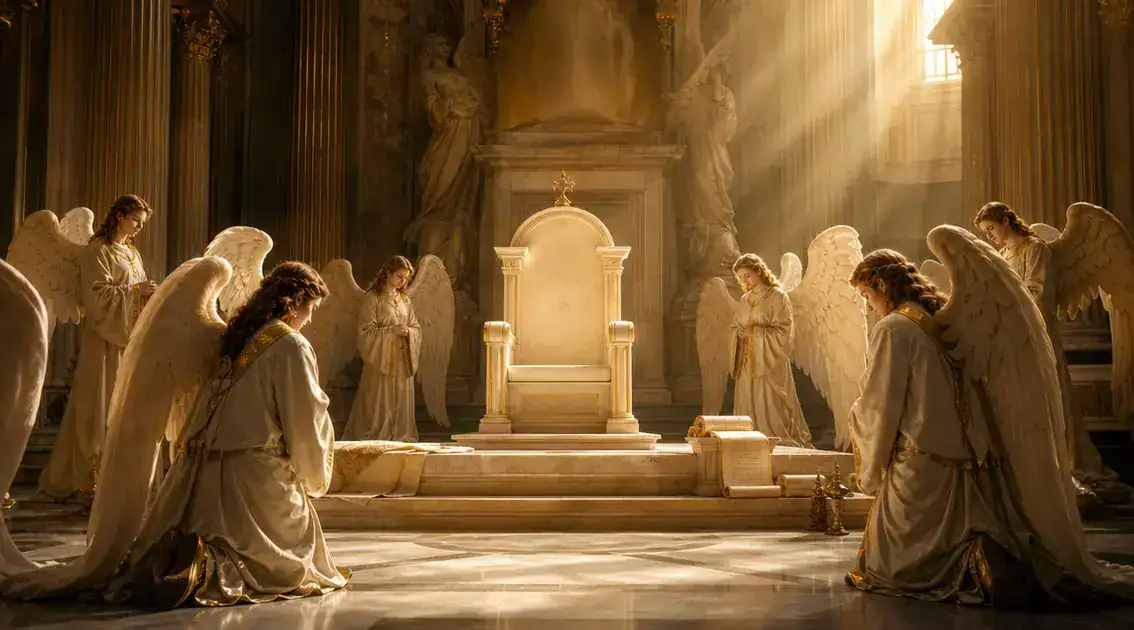
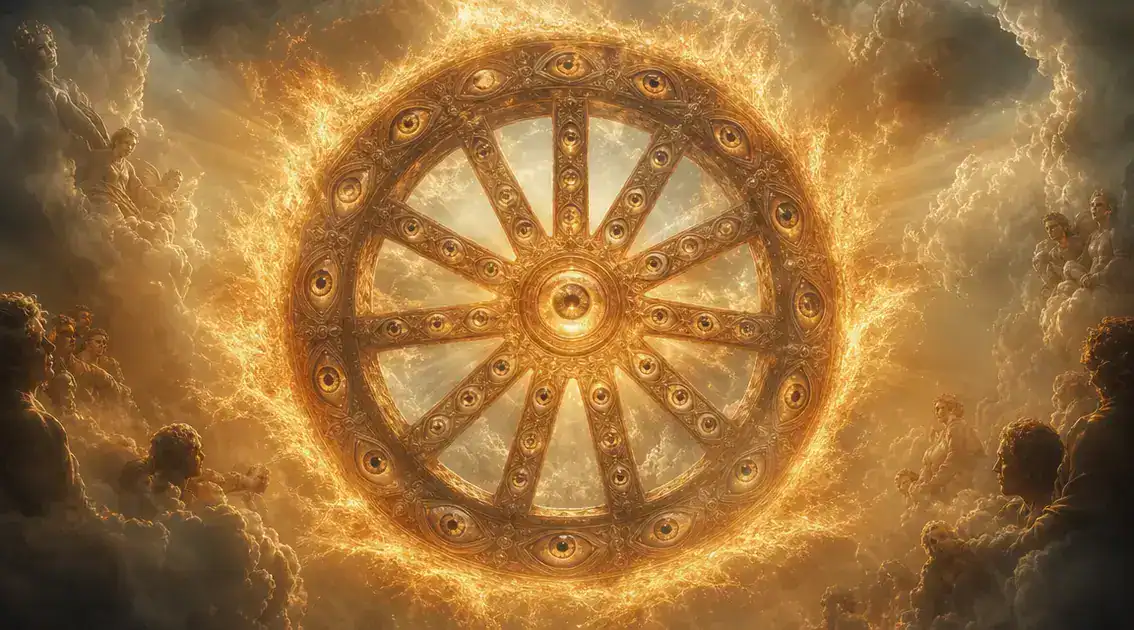
When Scripture speaks of thrones, it often links them to God’s quiet rule and steady presence. Images in Ezekiel and Revelation show thrones not as displays of dominance but as signs of order and care, places where divine will rests like a calm center. The biblical language invites a gentle attention to how God holds all things together.
The church fathers read these images with prayerful eyes. For Dionysius and other patristic writers, the thrones point to a form of heavenly ministry rooted in justice and contemplative witness. They describe thrones as bearing God’s settled judgment and as a call to inner ordering, so that the soul may reflect divine balance rather than human unrest.
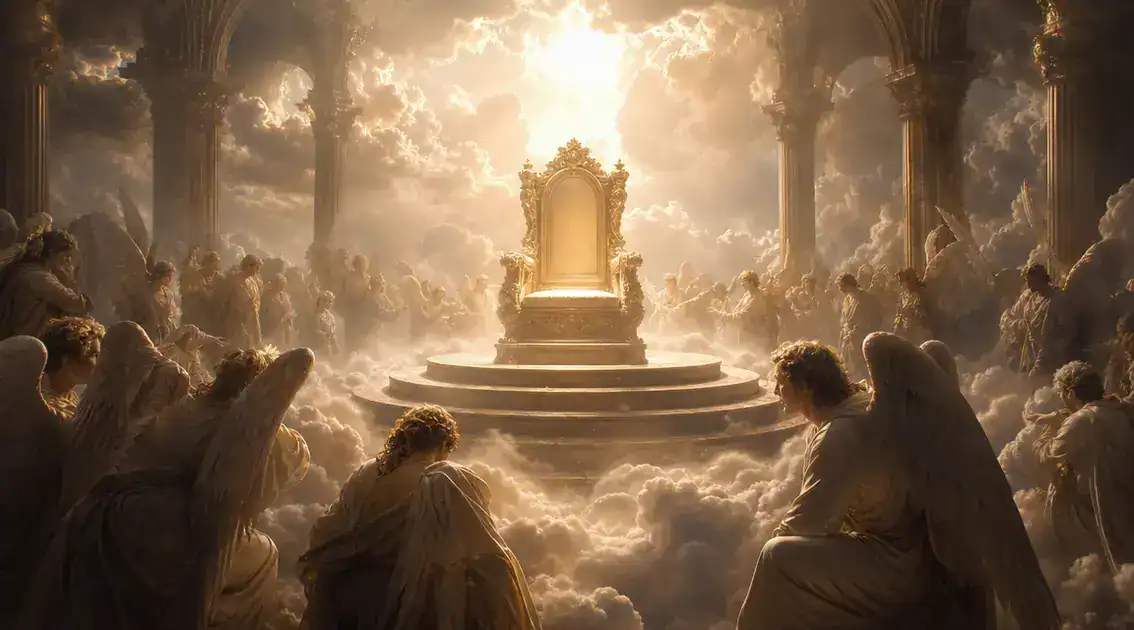
This theological picture shapes simple spiritual practice. Meditating on the thrones can teach patience and trust; it steadies the heart by reminding us that God governs with care. Try a brief exercise: breathe slowly, imagine a calm, steady throne of light, and let that image guide you toward a small surrender to God’s ordered love—an act of rest more than effort, a quiet opening to presence.
Symbolism and spiritual function of the thrones in worship
The image of the thrones in worship points us to God’s steady presence among his people. In many liturgical traditions, the throne is not a seat of pride but a sign that God holds all things in careful order. When worship gathers around an altar or a lectern, it echoes that heavenly ordering, reminding the community that their song and silence meet a calm and just center.
This symbolism has a clear spiritual work: it trains the heart to rest in divine steadiness. By attending to the throne as a symbol, worshipers learn a contemplative focus that steadies scattered thoughts and softens rush. That quiet attention opens space for intercession, for asking God to bring justice and healing without frantic hurry, and for receiving the peace that comes when we place our needs before a wise and steady love.
Practically, this can shape how we pray and how a congregation moves together. Try a simple practice during personal or communal prayer: imagine a calm throne of light at the center of your worship, breathe slowly, and let each breath rest on the sense that God’s rule is both loving and firm. Over time, this small habit can turn liturgy into a place of real spiritual ordering, where hearts learn patience, voices learn humility, and lives are drawn into the gentle governance of grace.
Comparing Dionysius with later medieval and modern interpretations
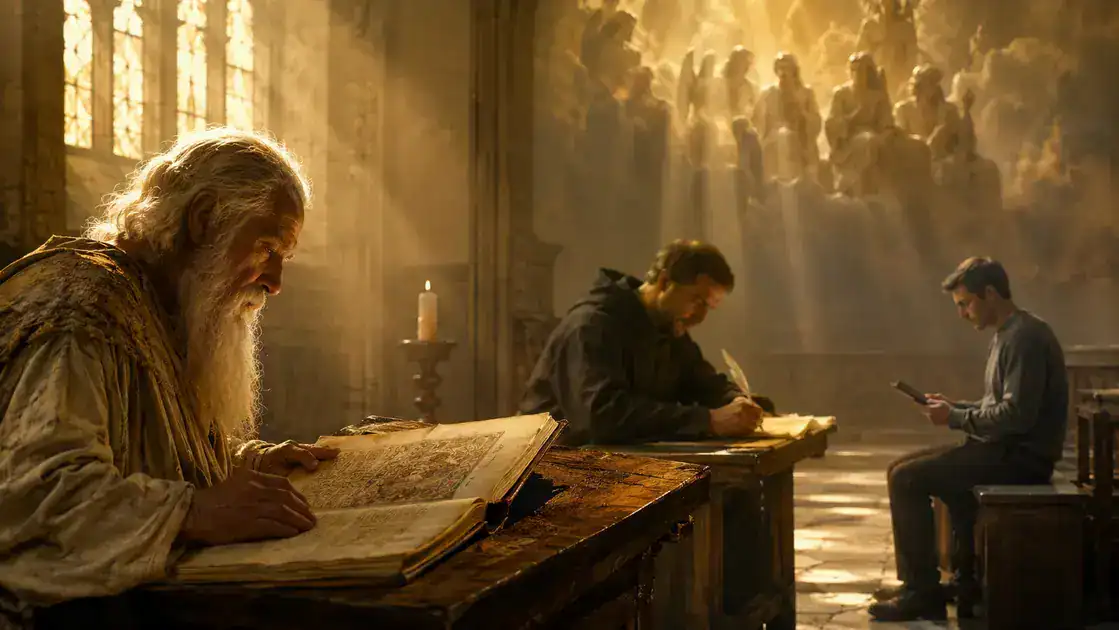
Across time, readers have heard Dionysius as both poet and guide, a writer who shapes prayer as much as theology. His language of tiers and lights points toward a simple goal: a steady movement of the heart upward, a gentle mystical ascent that asks only attention and openness. This way of speaking has a devotional weight that invites the reader into silence rather than into argument.
Medieval thinkers received that voice with a practical hunger for order and devotion. Figures such as John Scotus Eriugena and many monastic teachers translated and taught these texts so that liturgy and study could move together. For them the angelic orders became a map—an ordered path that helped monks and theologians discipline the mind and shape prayer, a lived reminder that the cosmos is held by a loving, intelligible order.
Modern readers bring different questions but often the same longing. Scholars trace sources and context, while spiritual seekers use the orders as metaphors for inner life. Whether treated historically or devotionally, the heart of the teaching stands: contemplation and ordered love remain the aim. That shared aim lets ancient language speak to present need, offering a quiet practice of attention that spans ages.
Practical devotion: encountering the thrones in prayer and contemplation
Find a quiet corner and settle your body so you can breathe steadily. Close your eyes for a moment and imagine a simple column of light like a throne at the center of your attention. Let that image be a gentle anchor rather than a spectacle; the thrones in Dionysius’ vision invite calm more than excitement.
Use a few slow breaths to tune your heart to that steadiness. With each inhale, imagine drawing light into your chest; with each exhale, let restless thoughts fall away. Offer a short, quiet phrase—something like “hold me” or “be with me”—and let that phrase land on the sense of ordered care you picture in the throne.
Practice this for a few minutes in private or as part of a simple liturgy. Over time the exercise helps you meet stress with patience and meet decisions with a quieter mind. In community, shared silence around the throne image can deepen worship, teaching the whole body to rest in a steady, loving rule rather than in hurried control.
A closing prayer on the thrones
Quietly we turn toward the image of the throne and let its calm enter our chest. May its steadiness hold us when worry comes and teach us to rest in God’s ordered love.
Give us grace to meet each day with patient attention. Let our prayers be simple, our choices steady, and our hands ready to help others. May this quiet ordering shape how we live and speak.
When doubt presses, remind us of the throne’s gentle rule and steady care. Let that memory ease our hurry and deepen our trust in God’s wise presence.
In this soft silence we say yes again. May the peace of the thrones walk with us now and every day. Amen.
FAQ – Questions about Dionysius, the thrones, and sacred practice
Who was Dionysius the Areopagite and why does his teaching on thrones matter?
Dionysius (the name in tradition linked to the Areopagite of Acts 17) wrote in the late patristic era to help Christians pray and think about heaven. His works, especially The Celestial Hierarchy, shaped how many believers imagine angelic orders and trained communities to move from scripture into quiet worship.
Are the thrones a biblical idea or a later Christian invention?
The word and images appear in Scripture (for example, Colossians 1:16 lists thrones among spiritual powers; Revelation 4 and Ezekiel’s visions give throne imagery). Patristic writers like Dionysius read those texts devotionally, not inventing the idea but weaving biblical glimpses into a contemplative map.
What do the thrones represent spiritually in prayer and life?
In Dionysius and the Fathers, the thrones point to God’s settled rule, just ordering, and contemplative witness. They invite us to trust steady governance rather than anxious control, making the image a guide for patient attention and moral balance in daily life.
How can I use the image of the thrones in my prayer life?
Try a short practice: sit quietly, breathe slowly, and picture a calm throne of light as a center of ordered presence; let a brief phrase—such as “hold me” or “rule my heart”—rest on each breath. This simple discipline echoes biblical calls to draw near to God’s throne of grace (Hebrews 4:16) and trains the heart in peaceful attention.
Do all Christian traditions accept Dionysius’ hierarchy the same way?
No single tradition treats his work identically, but many Eastern and Western churches have found his language spiritually fruitful. Medieval theologians adopted and adapted his ideas for monastic and liturgical life, while modern scholars note the anonymous (pseudo-Dionysian) authorship yet still value the texts for prayerful formation.
Is encountering the thrones only for mystics, or can ordinary believers access this teaching?
Encountering the thrones is not reserved for a few. Scripture invites all to approach God’s presence, and simple contemplative practices—silence, short breath prayers, liturgy—make the same tradition available to ordinary believers. Over time, these small acts open a deeper taste for the ordered love the thrones signify (Colossians 3:15).