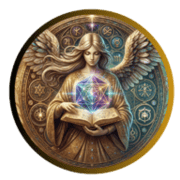
Dominions scepter and orb symbols denote the angelic office of ordered stewardship—where the scepter represents delegated authority to guide and protect, and the orb embodies custody of the created world—inviting believers to see heavenly governance as humble service, to seek wisdom in leadership, and to pray for care that heals and preserves creation.
Have you ever felt the hush that falls before an unseen authority? The dominions scepter and orb symbols surface in sacred art as quiet signs of angelic oversight, inviting gentle curiosity rather than easy answers.
Iconography of the scepter and orb in scripture and tradition
The scepter and orb surface in scripture and early Christian imagination as simple signs of rule and care. In the psalms and prophetic writings we meet images of a king’s rod and the circle of the earth that point us toward a world ordered by God, and artists later translated those cues into visible symbols. Over time, painters and mosaists showed angelic figures bearing a gilded scepter or a jeweled orb to make tangible the idea that heaven participates in divine governance.
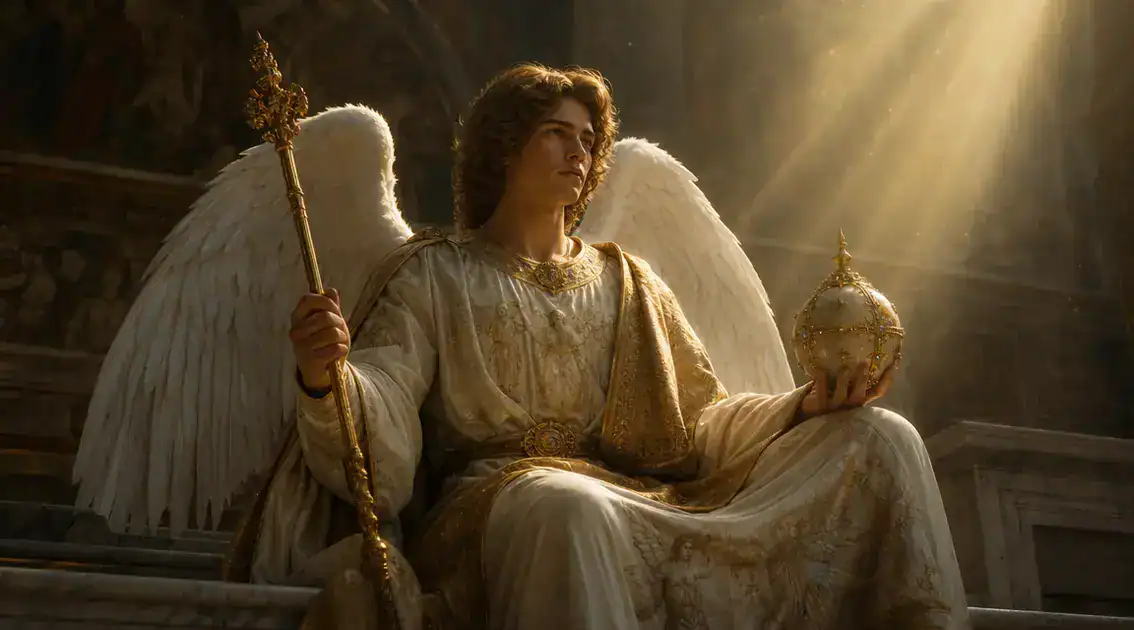
Seen through a theological lens, the scepter speaks of delegated authority and the right to guide, while the orb speaks of stewardship of the created order. Dominions, in the traditional angelic hierarchy, are often shown with both objects to indicate their role in ordering and guarding creation under God’s will. This iconography frames angelic power not as domination but as ordered service that reflects God’s rule.
Turning to the devotional use of these images, a painting of a dominion with scepter and orb invites quiet attention and prayerful thought. Let the visual details—light on metal, the tilt of a hand, the calm face—draw you into a short, reflective practice: name the order you long to see, ask for wisdom to accept authority that serves, and receive the reminder that the cosmos rests in loving care. Such contemplation deepens a sense of belonging under a living sovereignty rather than offering abstract doctrine.
Dominions in the angelic hierarchy: role and meaning
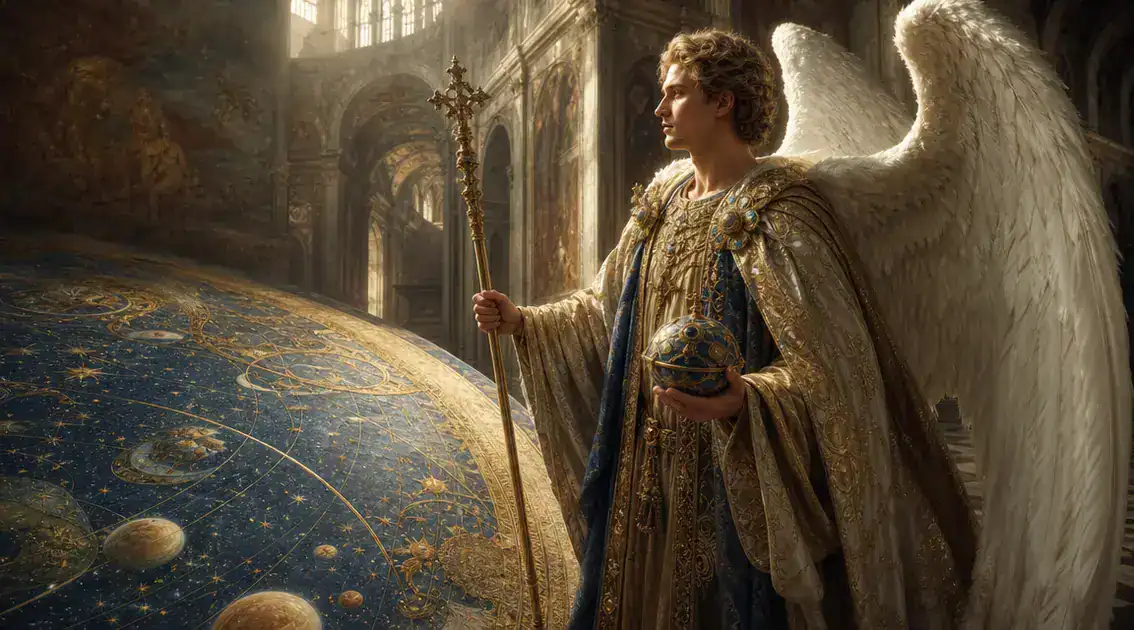
The dominions appear in tradition as a steady presence that keeps the world ordered under God’s care. They are pictured less as rulers who seize power and more as watchful stewards who steady the flow of creation. In art and prayer they remind us that authority in heaven mirrors the shape of service on earth.
Scripture names several ranks of spiritual beings and offers images of cosmic order that help us see the dominions’ role. These texts and images suggest an active work of arranging, guiding, and protecting the good in creation. Read devotionally, those passages point to the task of ordering and guiding creation—a ministry that supports life rather than dominating it.
That understanding shapes how we live and pray. If dominions model a form of servant authority, then we can ask for their help in bringing order to our own hearts and communities. Their presence invites a quiet trust: that God’s governance is tender, that heavenly care attends the small things, and that we are invited to cooperate with a higher, gentle order.
The scepter has long stood as a simple, visible sign of rule and care. In biblical scenes we recognize the shepherd’s staff and the king’s rod as close cousins to the scepter, both pointing to one clear idea: someone is guiding and protecting the flock. When artists place a scepter in an angel’s hand, they translate that same pastoral and royal trust into a heavenly context so we can see authority as service.
Seen theologically, the scepter speaks of delegated divine authority—power given, not seized, to uphold order and justice. Dominions bearing the scepter remind us that heavenly governance works through ordered roles that reflect God’s wisdom. This shifts our view of power from domination to stewardship, where authority exists to guard goodness and restore balance where it is broken.
That understanding shapes how we pray and live. Holding the image of a scepter in mind can help us ask for clarity when we lead, patience when we must govern, and humility when we exercise influence. In quiet reflection, the scepter invites us to seek a posture of service: to steward what we have been given, to protect the fragile, and to point people gently back toward the Source of true authority.
The orb as emblem of cosmic stewardship and creation
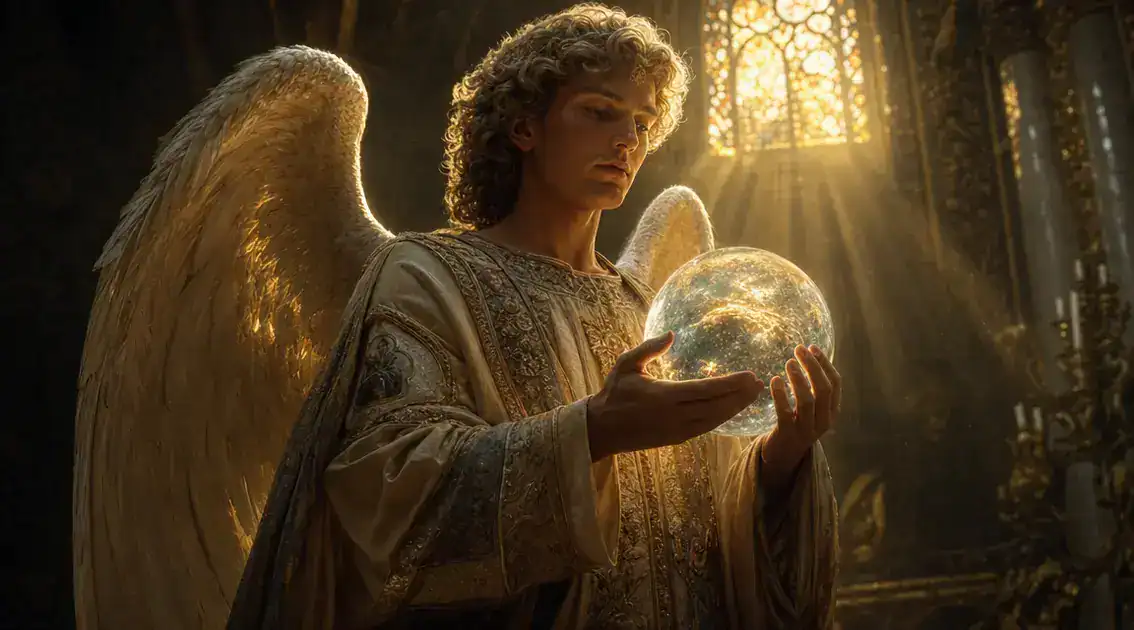
An orb often appears in sacred art as a small, perfect globe held gently in an angel’s hand. It looks like the world made visible, round and whole, so that the eye can rest on the idea of creation kept in care. Artists use the orb to show that the cosmos is not random but lovingly held within a larger order.
Seen devotionally, the orb points us to cosmic stewardship rather than raw power. It tells a simple truth: responsibility for the world is shared under God’s rule, and heavenly beings take part in that work. This image helps us imagine authority as careful tending, where protection and nurture come before control.
That sense of care asks for a quiet response from us. Looking at an orb can become a short prayer for the earth, for our neighbors, and for the small tasks we carry each day. Let the orb remind you to act with gentleness, to care for what is fragile, and to join the larger work of keeping the world whole.
Patristic and medieval interpretations: Aquinas to Byzantine art
Early church writers and Byzantine artists treated sacred symbols as more than decoration; they saw them as windows into heavenly truth. Icons and mosaics used gold backgrounds, simple gestures, and measured forms so the viewer could sense a spiritual presence rather than study a lesson. In those spaces the scepter and orb became visual language, quietly telling the story of ordered care and divine rule.
By the medieval period, thinkers like Thomas Aquinas offered a careful theological framework that helped translate these images into doctrine. Aquinas spoke of angels as ordered intellects who serve God’s plan, and artists answered with clear, steady images that made that ordering visible. Manuscripts and church mosaics paired careful text with luminous art so that reason and sight moved together toward understanding.
Looking at these works devotionally invites a slow, prayerful attention. Let the gold and calm faces draw your gaze inward, and allow the scepter and orb to become prompts for trust and service. In that contemplative space the medieval and patristic heritage shows its aim: to turn our seeing into love and our knowledge into humble obedience to the One who holds all things.
How these symbols shape prayer, liturgy, and devotional practice
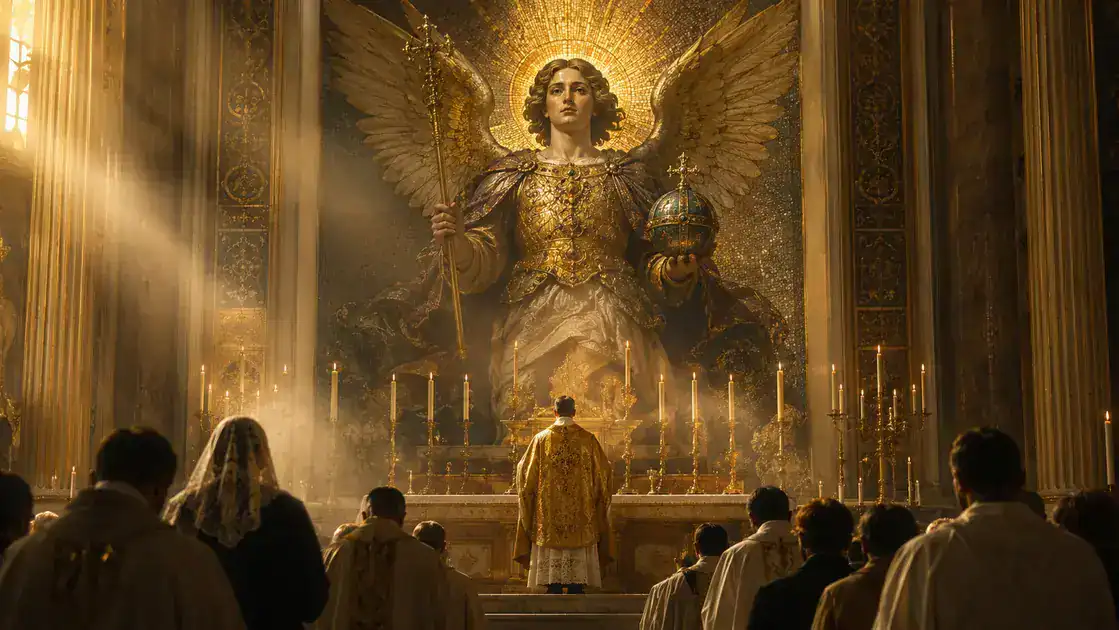
In churches and private prayer, the scepter and orb help shape how we imagine heaven touching earth. When these symbols appear in icons, processions, or altar art, they do more than decorate: they draw our minds to a divine ordering that cares for creation. Seeing a scepter or orb can turn a distracted heart toward trust and remind us that authority exists to protect and heal.
Devotional practices use these images to form the imagination gently. A short moment of silent prayer before an image, a slow breath while looking at an orb, or a brief petition asking for wise leadership can become simple spiritual habits. These practices teach participation rather than distance, inviting us into the same attentive work that the dominions represent: ordering life around what is good and loving.
On a practical level, the symbols can guide daily choices: to act with stewardship, to lead with service, and to care for the vulnerable. Try a tiny prayer: name one place you need order or healing, imagine the orb or scepter resting there, and ask for humble strength to do your part. Over time those small acts form a life that echoes the heavenly care the images portray.
Encountering dominions today: spiritual discernment and personal reflection
When you seek the dominions today, it often begins with a quiet noticing rather than a dramatic vision. In a paused moment of prayer or while gazing at sacred art, you may feel a gentle ordering—an invitation to discern what brings peace and humility rather than pride or fear. Let that small sense guide you: true heavenly influence tends toward clarity, care, and a steadying calm.
Practical discernment grows with simple spiritual practices. Spend a few minutes in silence, name what feels chaotic, and imagine the orb or scepter resting there as a way to center your prayer. Share reflections with a trusted companion or spiritual guide, test impressions by Scripture and the church’s wisdom, and watch for the fruits of gentleness and service as signs of right guidance.
Finally, let this encounter shape small choices. Offer a short prayer for one person or place, practice an act of service, or keep a modest journal of moments when you felt ordered by God’s care. These tiny habits help the heart learn the language of stewardship and make the dominions’ quiet ministry a lived reality rather than an abstract idea.
A quiet blessing
May the image of the scepter and orb settle gently in your heart, reminding you that heaven’s care watches over the world and you. In small, steady ways, you are never alone.
May you receive wisdom to lead with kindness, courage to protect what is fragile, and patience to serve without seeking praise. Ask for guidance, then listen in the calm places of your day.
Hold a simple practice: a short prayer, a kind action, a moment of stillness. Let the scepter teach you gentle direction and the orb call you to careful stewardship. These small habits change how we live.
Go forward in peace, kept by a loving order that heals and holds. May wonder and quiet trust walk with you now and always.
FAQ – Questions about the scepter, orb, and the dominions
What do the scepter and orb mean in Christian imagery?
The scepter and orb are visual signs of ordered care: the scepter suggests delegated authority to guide and protect, while the orb suggests stewardship of the created world. This use grows from biblical images of rule and ordering (see Colossians 1:16 and Ephesians 1:21) and was shaped by centuries of liturgical art and patristic reflection.
Are dominions mentioned in the Bible, or are they a later tradition?
The term and role appear in Scripture as references to ranks of spiritual beings (for example, lists of thrones and dominions in Colossians 1:16 and Ephesians 1:21). Christian tradition then developed a fuller hierarchy—drawn from Scripture, the Fathers, and theologians like Aquinas—to help believers pray and imagine how heaven participates in God’s governance.
Is it appropriate to pray for help from dominions or angels?
Yes, prayer for angelic assistance is rooted in Scripture and tradition, though Christians direct worship to God alone. Scripture shows angels ministering to God’s people (Psalm 91:11; Hebrews 1:14), and the church has long asked for angelic aid as companions and guardians, always placing them under Christ’s lordship and God’s will.
How are dominions different from archangels or guardian angels?
Archangels (like Michael and Gabriel) appear in Scripture with specific, named missions. Guardian angels are understood in many traditions as companions assigned to individuals (see Matthew 18:10). Dominions are a broader rank whose role is often pictured as ordering and overseeing aspects of creation—less personal than a guardian angel, but still service-oriented rather than autonomous.
Can images of the scepter and orb be used in worship or liturgy?
Yes, when used carefully and theologically. In many churches, icons, mosaics, and liturgical art employ these symbols to point worshipers toward God’s ordered care. The patristic and medieval practice was to let images draw the heart to prayer, not to replace Scripture or lead to superstition; art should always lift the mind to God rather than become an object of devotion itself.
How might I include these symbols in my personal devotional life?
Use them as aids to pray for order, wisdom, and care. A simple practice: hold an image of the orb or scepter, name one place that needs healing, and ask God for wisdom and stewardship—then act with a small, concrete service. Test impressions by Scripture and the church’s wisdom, and look for the fruits of gentleness and service as signs of right guidance.