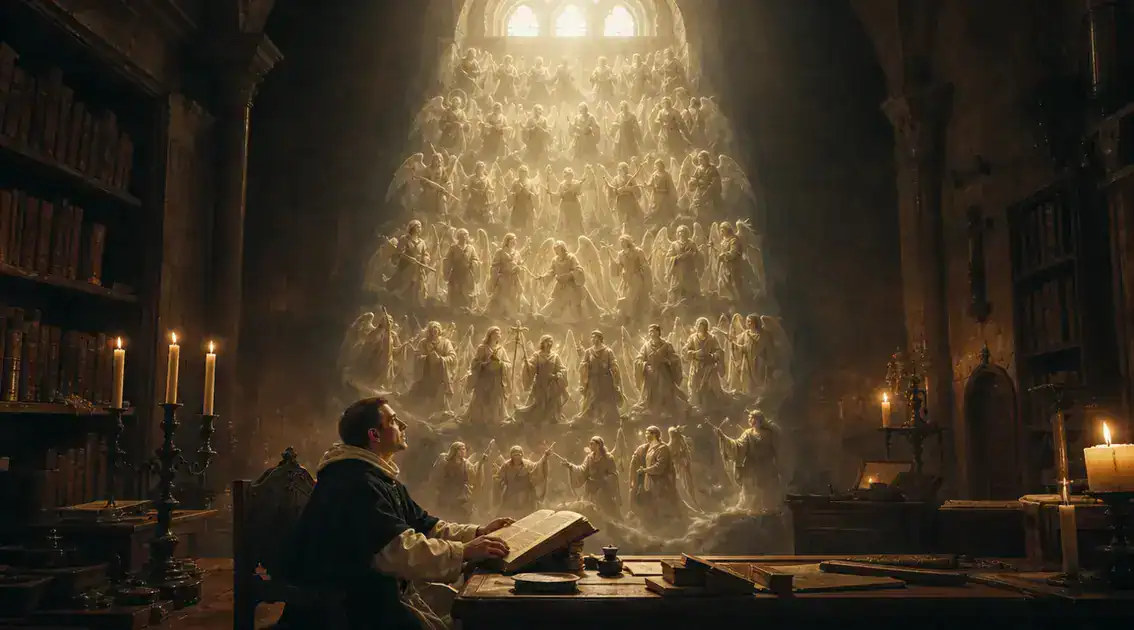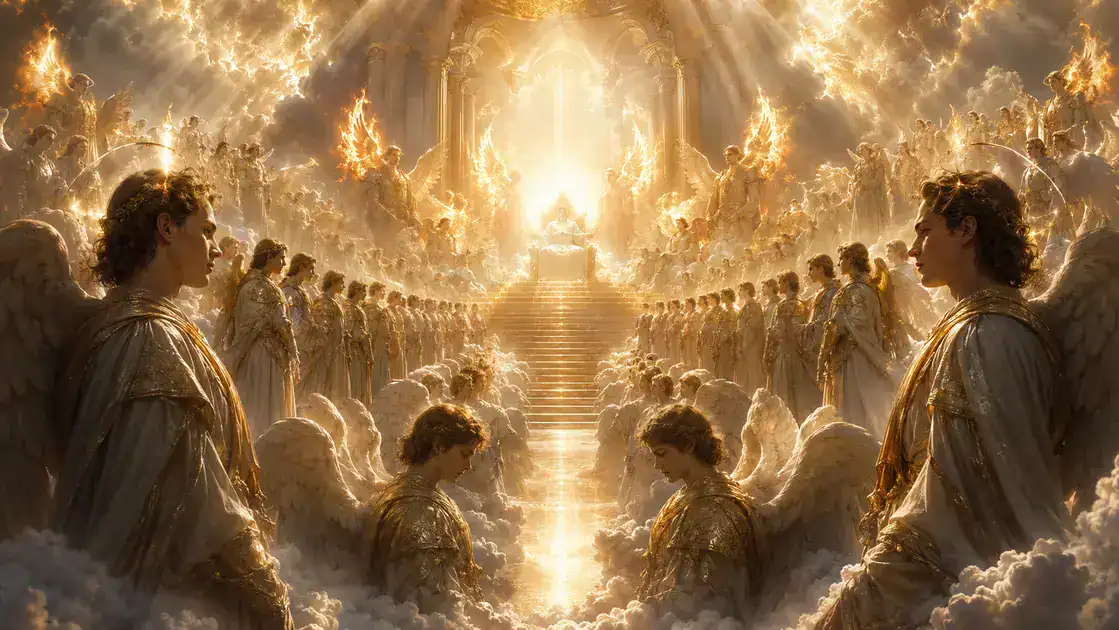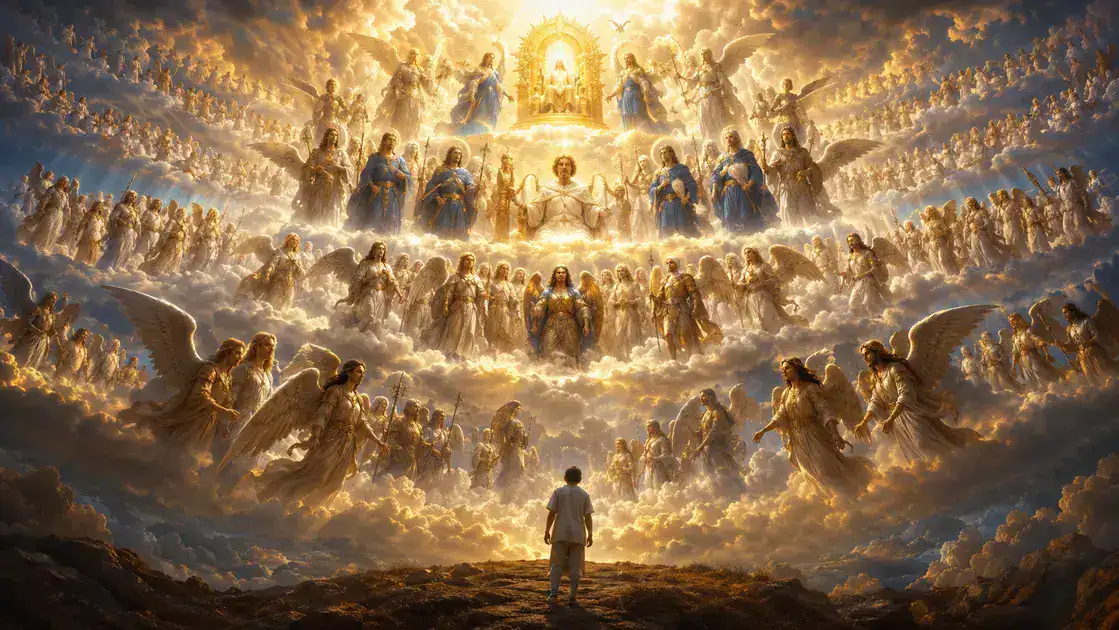

The complete hierarchy of angels maps nine orders within three spheres—contemplative, cosmic, and ministering—showing how seraphim, cherubim, thrones, dominions, virtues, powers, principalities, archangels, and angels worship God, govern creation, and serve humanity, a pattern drawn from Scripture and patristic tradition to guide prayerful understanding and everyday devotion.
complete hierarchy of angels — have you ever wondered which orders dwell nearest to God and which walk beside us? This brief guide traces the nine orders and three spheres through Scripture and devotion, inviting quiet reflection.
Understanding the three spheres: contemplative, cosmic, and ministering
The three spheres describe how angelic life radiates outward from God’s presence, like light moving through clear air. Nearest the throne is the contemplative sphere, where seraphim, cherubim, and thrones dwell in steady worship and longing. Scripture gives us bright images—Isaiah’s burning seraphim, Ezekiel’s living wheels, and the elders around the throne in Revelation—to show that worship at God’s throne shapes their being and points us toward a deep, quiet devotion.
The next ring is the cosmic sphere, where dominions, virtues, and powers keep the world ordered and hold patterns of grace that govern nations and nature. These angels work where law and mercy meet, tending the rhythms of day and night, season and tide, and sometimes nudging history toward justice or healing. When Scripture speaks of heavenly hosts that influence rulers or restrain violence, it gestures to this middle work, a steady care that sustains creation and invites trust in God’s providence.
The outer, ministering sphere moves closest to human life: principalities, archangels, and angels who bring messages, protect travelers, and offer gentle guidance at crossing points in our days. They arrive not as loud signs but as small aids—a sudden courage, a clear thought, a saved step—that remind us we are never wholly alone. This nearness calls us to simple attentiveness in prayer and life, noticing how grace appears in small moments and how angels are often present as helpers near to our daily lives.
The nine angelic orders: roles, symbols, and biblical references
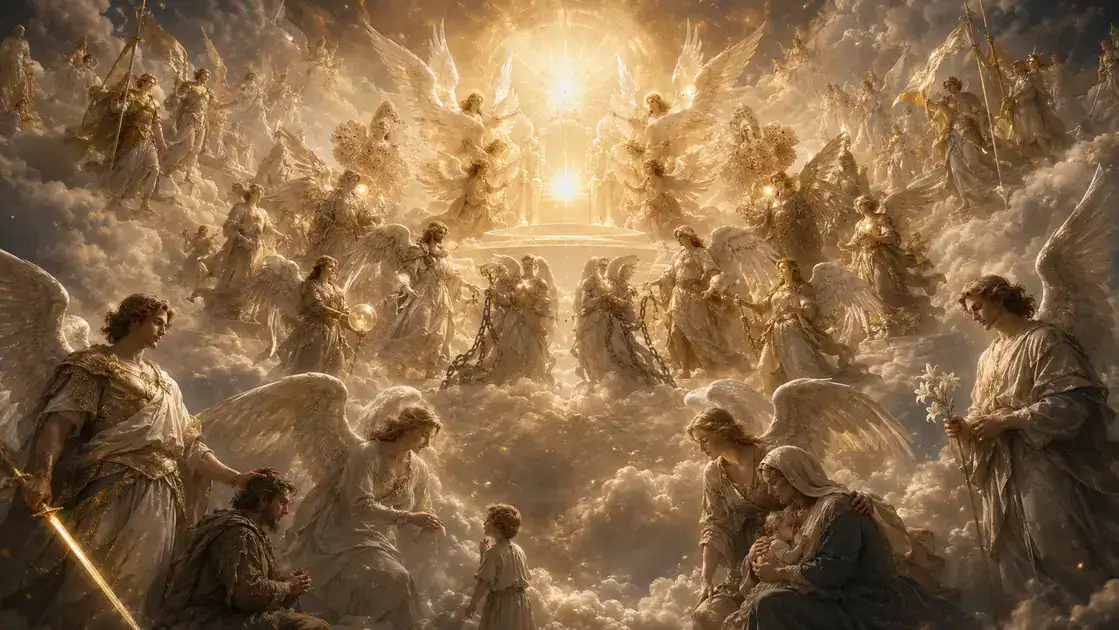
The nine angelic orders are often spoken of as a single, living choir rather than a neat list. Seen together they form a ladder of service and presence: some dwell in silent worship, some shape the patterns of the cosmos, and others move close to human life with gentle care. Each order carries its own symbols and tasks, which help us imagine how heaven and earth meet without turning mystery into a diagram.
Close to the throne are the contemplative ranks: seraphim with their burning love, cherubim with keen, watchful eyes, and the thrones that embody God’s steady justice. Isaiah’s vision of seraphim (Isaiah 6) and Ezekiel’s living wheels (Ezekiel 1, 10) give us vivid images, while Revelation’s court around the throne (Revelation 4–5) shows their ceaseless worship. These symbols teach us that worship is not only praise but the very shape of angelic being.
The middle orders—dominions, virtues, and powers—tend the cosmic order and guard creation’s harmony. Colossians 1:16 names thrones and dominions as part of the unseen world that participates in Christ’s rule, and passages like Ephesians 6 remind us that some of these ranks relate to spiritual forces beyond daily sight. Finally, the outer orders—principalities, archangels, and angels—bear messages, protect nations and people, and meet us in the small crossings of life; think of Michael and Gabriel in Daniel and Luke, or the gentle guardians who bring sudden courage or clear guidance. Their symbols—swords, lilies, trumpets, shields—are not mere props but signs of mission: protection, announcement, and service that invite us to live with eyes open to grace.
Archangels and principalities: scriptural appearances and patristic insights
Archangels stand out in Scripture as named messengers and defenders who meet us at turning points in God’s story. Daniel shows Michael as a guardian of Israel and a heavenly champion, while Luke gives us Gabriel as the gentle bearer of the annunciation that changes lives. These appearances remind us that God uses specific messengers to bring guidance and courage, not only in epic visions but in the quiet moments when a message must be received.
Principalities, by contrast, are often described in the New Testament as ranks that shape nations and social orders, named in passages like Ephesians and Colossians. The early fathers, from Augustine to Gregory, read these texts as testimony that God’s care reaches into public life: principalities give form to structures and can be both a help and a challenge to human freedom. Patristic writers also held the archangels up as models of faithful service—figures who act with clarity and humility, pointing attention back to God rather than to themselves.
Holding these images together can change how we pray and live. We may ask for the courage of Michael when facing hard choices, or for the clarity of Gabriel when we need to hear God’s word; we may pray for cities and leaders with the quiet awareness that principalities touch public life. Such devotion is not about spectacle but steady trust—a practice that lets us notice help where it comes and work for peace in the places we can touch.
Angelic ministry in daily life: devotion, discernment, and prayer practices
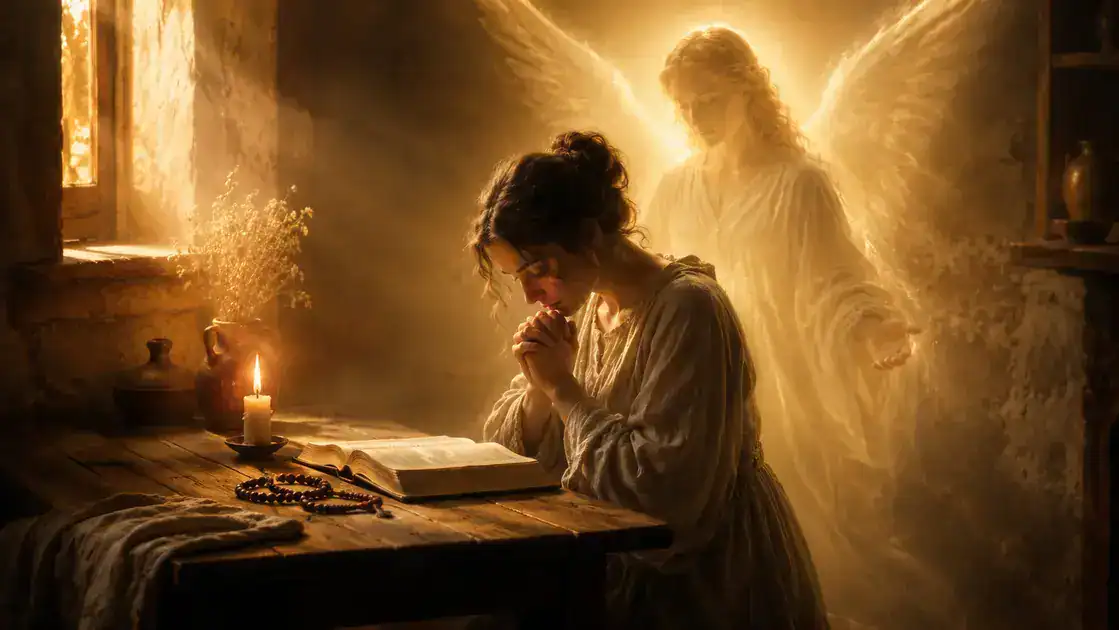
Angelic care often appears in small, quiet ways that change our day. A sudden calm in a hard moment, a clear thought to choose mercy, or an unexpected help at just the right time—these are how many people meet the divine. When we remember this, everyday life becomes a place for gentle devotion rather than mere routine.
Discernment helps us see what is truly helpful. Learn to test thoughts by Scripture and prayer, look for lasting peace rather than fear, and seek counsel in community. The New Testament invites us to test the spirits and hold what leads to love and truth; this simple rule keeps us humble and wise as we notice angelic promptings moving our hearts toward good.
Practical practices deepen that awareness: a short morning offering, a brief examen at day’s end, a quiet petition to a guardian before travel, and a habit of simple gratitude. Small rituals—lighting a candle, reading a Psalm, pausing to bless your work—train attention so grace is recognized. Over time these gentle habits help you live with steadier eyes, seeing how heaven touches ordinary steps.
Theological interpretations across traditions: Jewish, Christian, and mystical perspectives
In Jewish tradition angels appear mostly as messengers and servants of the covenant. The Hebrew word mal’akh means one who is sent, and we see these figures guiding Abraham, wrestling with Jacob, and protecting Israel in Daniel. Prayer and law shape how angels are understood: they act within God’s promises and appear in visions that call the people back to faithfulness. This gives angelic presence a communal, covenantal tone rather than a private spectacle.
Christian readings emphasize both worship and ministry. The New Testament and Revelation lift up angels as worshipers around God’s throne and as helpers in the life of the church. Saints and writers like Pseudo-Dionysius shaped a contemplative map of ranks and roles, which helped believers think of angels as part of a shared heavenly liturgy. Many Christians also speak of archangels and guardian angels who bring needed courage and clear messages in key moments.
Mystical perspectives find a bridge between these views by naming how angels connect inner prayer with the outer world. Jewish mystics explore angelic roles within the sefirot, while Christian mystics describe how angelic beings can point the soul toward union with God. In practice, this leads to simple habits: quiet prayer, attention to signs of peace, and humble trust that heavenly help often arrives as guidance for the heart. Such practices invite us to live with open eyes, sensing how sacred presence moves through daily life and through the wider story of faith.
May you walk with them
As we pause, breathe in a quiet sense of blessing and presence. Let the memory of heaven’s nearness settle like soft light on your day, simple and steady.
Remember we are never truly alone. The sacred ranks and gentle guardians move with God’s care, often unseen but always near, bringing courage, clarity, and comfort in small ways.
Practice small acts of attention: a short prayer on waking, a moment of thanks at noon, a quiet offering before sleep. These little habits make room to notice grace and to answer when guidance comes.
Go forward with peace and wonder. May the love that fills the spheres keep your heart, and may you carry this calm into every step you take.
FAQ – Common questions about the hierarchy of angels and sacred tradition
What do people mean by the three spheres of angelic life?
The three spheres name how angelic life radiates from God: a contemplative sphere nearest the throne, a cosmic sphere that sustains creation, and a ministering sphere that meets humans. Biblical images—Isaiah’s seraphim (Isaiah 6), Ezekiel’s living wheels (Ezekiel 1), and the throne-room vision in Revelation (Revelation 4–5)—give shape to this picture. Tradition then reads these images devotionally, not as a rigid system but as a way to trust that heaven worships, orders, and serves.
How do the nine angelic orders appear in Scripture and tradition?
Scripture names or pictures many kinds of heavenly beings: seraphim (Isaiah), cherubim (Ezekiel, Genesis), and ranks like thrones and dominions appear in New Testament lists (Colossians 1:16; Ephesians 1:21). Early Christian writers such as Pseudo‑Dionysius and later patristic teachers arranged these images into nine orders to help prayerfully reflect on their roles. Those orders are symbols of service and worship, not a checklist to master.
Are archangels and principalities real Biblical figures or later ideas?
Both. Archangels such as Michael and Gabriel are named in Scripture—Michael in Daniel and Revelation, Gabriel in Daniel and Luke—serving as defenders and messengers. Terms like principalities, powers, and dominions appear in Paul (Colossians 1:16; Ephesians 6) to describe ranks that relate to nations and spiritual forces. Early theologians read these texts to show how God’s care reaches personal life and public order.
Does each person have a guardian angel?
Many Jewish and Christian traditions affirm that God assigns angelic care to individuals. Jesus’ words in Matthew 18:10 and passages like Psalm 91:11 are often cited to support this trust. Tradition—especially in Catholic and Orthodox teaching—speaks of guardian angels as faithful companions who guide and protect in ordinary ways. The practice is devotional: we honor God for such care and learn to be attentive to gentle promptings of grace.
How can I discern whether a thought or prompting is angelic and good?
Scripture gives practical rules: test the spirits (1 John 4:1), judge by Scripture and the fruit it bears (peace, humility, love), and seek counsel in prayer and community. Simple steps help: pause, offer the thought to God in brief prayer, check it against Scripture, and look for the peaceful fruit that endures. If something breeds fear, pride, or confusion, it is wise to hold back and seek further discernment.
Should angels be worshipped or prayed to directly?
No. Scripture and the early church forbid worship of angels. When John bowed to an angel, he was told to worship God alone (Revelation 19:10; 22:8–9). Angels are honored as God’s servants and companions, but devotion must lead us upward to God. It is fitting to give thanks for angelic care and to ask God—through prayer—to use such help, always keeping worship directed to the Holy One.