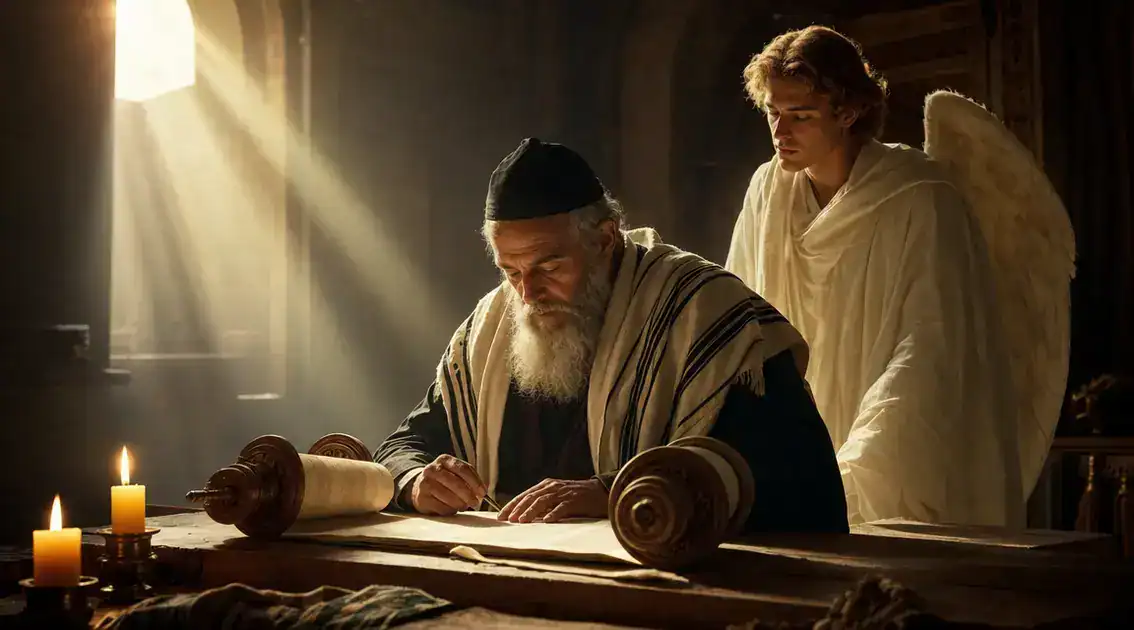

Angels in Judaism are depicted in Scripture, Talmud, and Midrash as divine messengers and ministers of God who guard, heal, witness, and instruct humanity, shaping moral duty and communal prayer while urging ethical action, repair, and compassionate service as the tangible way God’s hidden care meets ordinary life.
angels in judaism often appear in Talmudic and Midrashic tales—have you noticed how those fleeting encounters shape prayer, justice, and everyday hope?
Angels in biblical and rabbinic imagination
In the Bible, angels arrive like a sudden light in the dark — not as distant ideas but as messengers of God who meet people at decisive moments. They bring news, warn, heal, and sometimes simply appear to steady a trembling heart. These brief encounters shape the story of faith because they show a God who uses living, bright presence to touch our days.
Rabbinic imagination takes those moments and listens closely, turning single meetings into a wider conversation about how heaven meets earth. Rabbis tell tales where angels argue, sing, and teach, and they give angels roles that reflect human hopes: protector, guide, and witness. By naming tasks and scenes, the rabbis teach that sacred help is woven into the world, not locked away in myth.
When we read these texts slowly, the image that grows is not of remote power but of care that asks for our response. The angelic scenes invite simple practices: quiet attention, ethical listening, and prayer that opens us to guidance. In this way, the biblical and rabbinic stories form a single, warm path — one that asks us to live as if the holy can touch our ordinary hours.
Talmudic accounts: stories, functions and debates

The Talmudic pages bring angels into everyday speech and law, showing them acting in the midst of human life. They arrive to warn a traveler, to sing in heaven, or to serve as witnesses to a righteous deed. These scenes do not treat angels as distant symbols but as part of the moral world the rabbis live in; they are woven into stories that teach and test the soul.
Rabbis often pause to argue about what these angelic acts mean. Some passages present angels carrying out God’s will with clear purpose, while others stress that moral choice belongs to people alone. These debates are not mere theory; they shape how a community prays, judges, and cares for the needy. The back-and-forth teaches readers to hold mystery and responsibility together.
Reading Talmudic accounts with care invites a practical response: notice, learn, and act. The angelic moments tend to point toward justice and compassion, calling attention to repair and mercy in daily life. By studying these tales, we let sacred imagination guide our choices, turning story into steady practice and a quieter, kinder way of living.
Midrashic visions: symbolic meanings and moral lessons
Midrash often turns brief biblical images into living lessons, treating angelic visions as doors into moral meaning. Where the text gives a single, spare line, the Midrash listens and expands, asking what that light, ladder, or voice wants us to know about how to live. These retellings use concrete images to shape the heart, not only explain words.
For example, the vision of Jacob’s ladder is read by rabbis as more than a dream; it becomes a way to teach about human life and choice. In Midrashic telling, angels moving up and down are read as signs of how deeds rise or fall, and the scene turns into a moral map. Those angels stand for mercy, justice, and the effect of our actions, making the story quietly practical.
Because Midrash teaches by image, it also points toward simple spiritual practices: noticing small openings to repair harm, choosing kindness in ordinary moments, and linking ritual to ethical care. When a Midrash describes an angel pausing over a single good deed, it invites us to see that small acts matter. This symbolic imagination asks readers to live so that light keeps ascending in the world.
Hierarchy, names and roles in rabbinic tradition

In rabbinic thought, angels are given order and tasks so people can understand how the hidden world meets the visible. They are not rivals to God but ministers of divine will, sent to carry messages, guard travelers, and serve as witnesses in heaven. This sense of order helps the tradition speak plainly about care, duty, and the woven life between heaven and earth.
Names in the tradition point to purpose. Michael appears as protector and advocate, Gabriel as the strong messenger, Raphael as healer, and Uriel as light and counsel. When rabbis use these names, they are teaching by story: each figure shows a different way God’s care touches life, making the abstract feel near and concrete.
These roles shape how people live and pray. Angelic functions in the texts call us to justice, mercy, and attentiveness to small acts of kindness, since those acts mirror the work angels are said to perform. The rabbinic image asks not for fear or superstition but for steady moral response, a life that honors the soft presence of care by answering with moral responsibility.
Encounters that teach: angels, prophecy and ethics
Angelic encounters in scripture and rabbinic story often come at a turning point, where the message is both word and call to action. An angel may bring a vision or speak a word that awakens the prophet, but the real lesson is not the spectacle — it is the charge that follows. These moments link prophecy and ethics, showing that hearing God’s voice leads to caring for others and living rightly.
Rabbis and midrashim read those encounters as moral lessons. Angels act as messengers, yes, but they also serve as witnesses and examples, drawing attention to what must be repaired. When a vision exposes injustice or a warning arrives in the night, the clear response is repair, mercy, and honest work. In this way, the heavenly visit points toward daily choices: to feed the hungry, to seek justice, and to speak truth with humility.
For readers today, these stories invite a simple practice: listen for what the text asks and answer with small, steady acts. The encounter becomes a teacher when it changes how we treat neighbors and the poor. Rather than wonder alone, the presence of angels in these tales urges us into moral responsibility, reminding us that sacred vision is meant to shape ordinary life.
Practical devotion: praying, remembering and living with angels

Many find that devotion to angels in Jewish life begins with small, steady practices rather than grand visions. Lighting a candle, pausing before a meal, or offering a brief silent prayer can open the heart to a felt presence. These acts are not magic; they are ways of training attention so we notice the patterns of care that the tradition names and remembers.
Another common thread is memory turned into action. Saying a quiet prayer for the sick, giving a small gift to someone in need, or visiting the lonely are simple ways to live as if the world is held by unseen care. In this way, ritual and charity work together: the outward act supports an inward trust, and the inward trust pushes us toward kindness and repair.
Practically, building such habits can be gentle and gradual: begin with one mindful pause each day, then let that pause lead to a kind act when the chance appears. Over time, these tiny responses shape a life that notices suffering and answers it, a life that takes seriously the rabbinic picture of care. The goal is not to seek spectacle but to grow a steady practice of attention, humility, and moral action that reflects the sacred imagination the texts give us.
A final prayer for the path ahead
As we close this reflection, remember a simple promise: we are never truly alone. The texts invite us to live with an open heart, to notice the small ways care shows up, and to answer with kindness.
Let the stories you read shape quiet habits — a pause before action, a prayer for the sick, a hand to someone in need. These small things make big changes. They turn belief into practice and wonder into steady care.
May you walk with the soft sense of presence that the rabbis and prophets describe. When choices come, let mercy guide you. When fear comes, let courage rise from the memory of help you did not earn but can pass on.
Go gently, keeping these images close. May your days be marked by attention, humble service, and the calm joy of a heart that sees and heals. Amen.
FAQ – Common questions about angels in Jewish scripture and tradition
Do angels really exist according to Jewish scripture and tradition?
Yes. The Hebrew Bible records many angelic visits (for example, the visitors to Abraham and the visions in Daniel), and rabbinic literature treats angels as real heavenly agents who serve God’s will. Psalm 91 and other texts speak of divine protection often understood as angelic care.
Does every person have a guardian angel in Judaism?
Some rabbinic texts and later Jewish traditions speak of ministering angels assigned to protect individuals or Israel as a whole. Views vary: while certain sources describe an accompanying angel, Judaism ultimately emphasizes God’s direct providence, and different sages balance the roles of angelic help and human responsibility.
Can I pray to angels or ask them directly for help?
In Jewish practice, prayer is addressed to God alone. It is proper to ask God for protection, including the sending of angels, but direct worship or formal prayer to angels is not part of mainstream Jewish liturgy. Traditional piety focuses on invoking God while remembering angelic service described in the texts.
What are common angel names and roles in rabbinic tradition?
Rabbinic and biblical writings name figures like Michael (advocate/protector), Gabriel (mighty messenger), Raphael (healer in later tradition), and Uriel (light or counsel in some sources). These names point to roles—messenger, guardian, healer, witness—helping communities understand how the hidden world relates to human needs.
Do angels have free will or moral choice like humans?
Generally, rabbinic tradition portrays angels as created to carry out God’s commands rather than as moral agents like people. They can act in stories to teach lessons, but most texts treat them as obedient servants of God who do not repent in the human sense. This difference keeps moral choice squarely with human beings.
How can I live in a way that honors the angelic teachings of these texts?
Live the ethics the stories highlight: study Torah and Midrash, practice small acts of kindness, visit the sick, and pause in prayer or gratitude. The tradition teaches that angelic visits point toward repair, mercy, and attention; answering with steady compassion turns sacred imagination into real care for others.