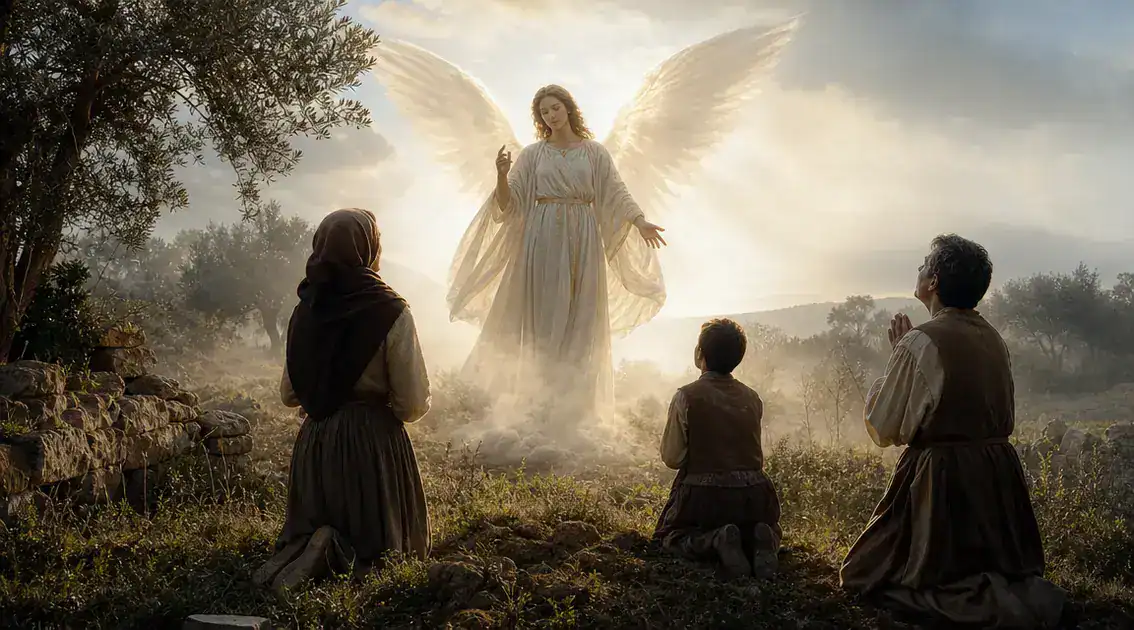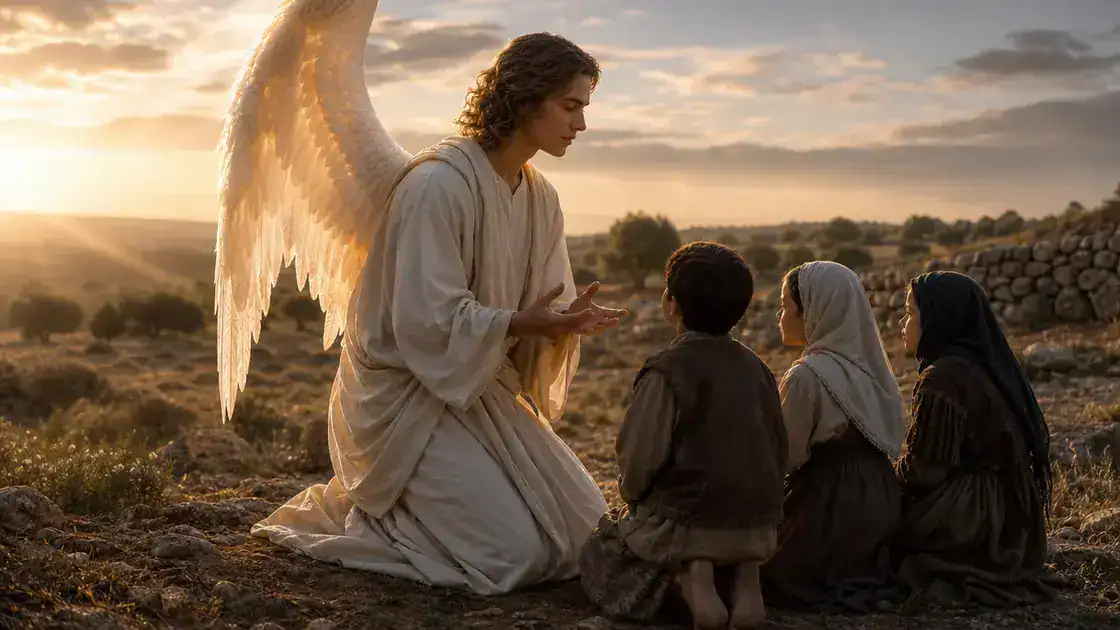

four angels of the apocalypse are the four angels described in Revelation who stand at the four corners of the earth restraining the four winds until God’s appointed time, marking an ordered divine governance that pairs the sealing of the faithful with measured judgment and offers a call to watchful prayer and communal mercy.
four angels of the apocalypse — have you ever wondered what it means when Revelation places angels at the four corners of the earth? This brief reflection listens to Scripture and tradition, inviting a pause of prayerful attention to a startling, hope-filled image.
What Revelation says about the four angels
In Revelation we meet a striking image: four angels placed at the edges of the world, holding back the winds that would bring judgment. Imagine them not as furious warriors but as solemn guardians whose hands restrain great breath and power. This scene invites us to see that even the storm is measured within God’s care, and that the timing of events answers to a divine wisdom beyond our sight.
As the text continues, another angel moves among the faithful, marking them with a seal that protects them from the coming harm. That seal of God and the angels’ restraint belong to one movement of mercy and purpose. Rather than a random burst of chaos, the vision shows a God who limits destruction so that mercy and calling have space to work in human lives.
When we linger with the image of the four angels at the four corners, we are invited into a posture of watchful prayer. The angels point us back to God’s governance: all power is held within a loving order. For the reader, this means we can hold our fear gently, trust in God’s timing, and respond by living faithfully under that guarded calm.
Historical and Jewish backgrounds to the four corners motif
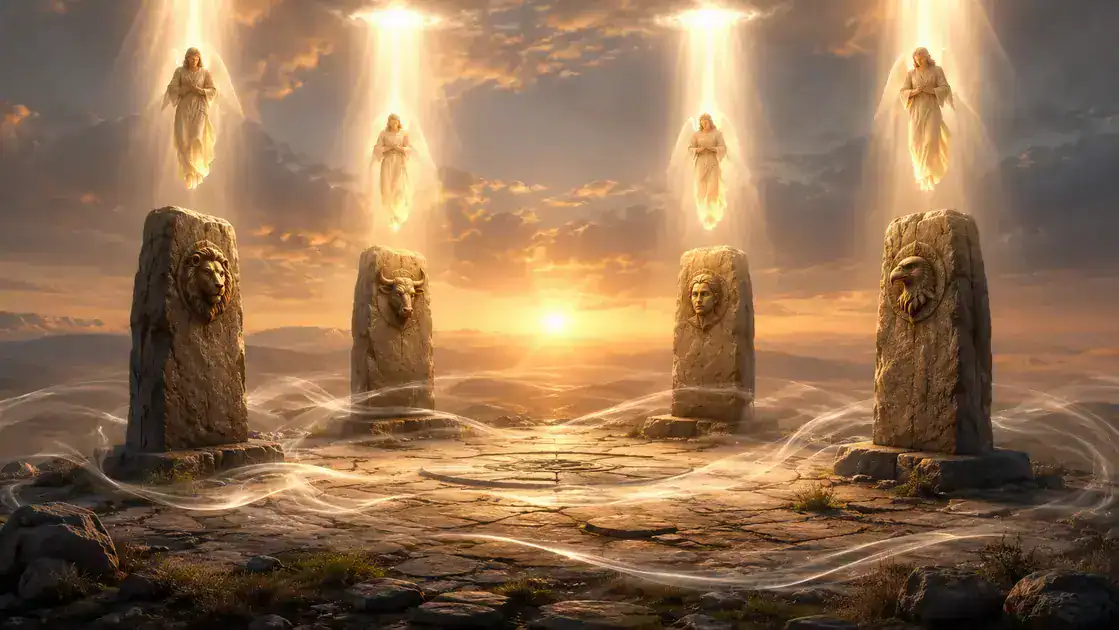
The image of the four corners grows from a world that read space in directions. In Hebrew Scripture, phrases like “the four corners of the earth” help readers picture the whole world held in God’s hands. Ancient Near Eastern art and thought also set guardians at the compass points, so the idea would feel familiar to first readers while still pointing to a deeper, faithful trust.
Jewish writings deepen this picture with striking figures: cherubim that face in four ways, and the theme of the four winds that move across the world in controlled power. In apocalyptic texts these signs order the cosmos and frame God’s action, not to terrify but to remind worshipers that even wild forces answer a higher will. The echoes of these images appear later in Revelation, where the same motifs return as a language of hope and guarded timing.
Seen devotionally, these backgrounds teach a simple lesson: the world’s directions are not chaotic for God. The motif invites a posture of calm attention, a readiness to pray for every region of life and every turning of history. Holding the ancient images close can help us pray with steadiness, trusting that God’s care reaches to all four corners and that apocalyptic hope is meant to steady, not to unsettle, the soul.
Symbolism of winds, corners, and the restraint of judgment
The image of the winds in Scripture often stands for powerful forces at work in the world: change, judgment, and renewal. When the text speaks of the angels at the four corners, it uses a clear picture to show the whole earth under God’s care. These directions are not mere geography but a way to say that every place and people come under the same divine attention.
In Revelation the angels hold back the winds, which points to a careful, measured governance of history. This is the meaning of the restraint of judgment: God’s timing is exact, and mercy and calling are given space before any full release of power. The scene pairs this restraint with a protective mark on the faithful — the seal of God — showing that judgment and mercy belong to the same divine plan, not to chaos or random force.
For prayerful readers, these symbols invite a patient, hopeful stance. We are asked to live with steady devotion, to pray for those at every corner, and to act with compassion while trusting God’s timing. This image steadies the heart: the winds may be strong, but they are held within a loving order that asks us to stay awake in watchful love and hopeful service.
How major traditions interpret the four angels
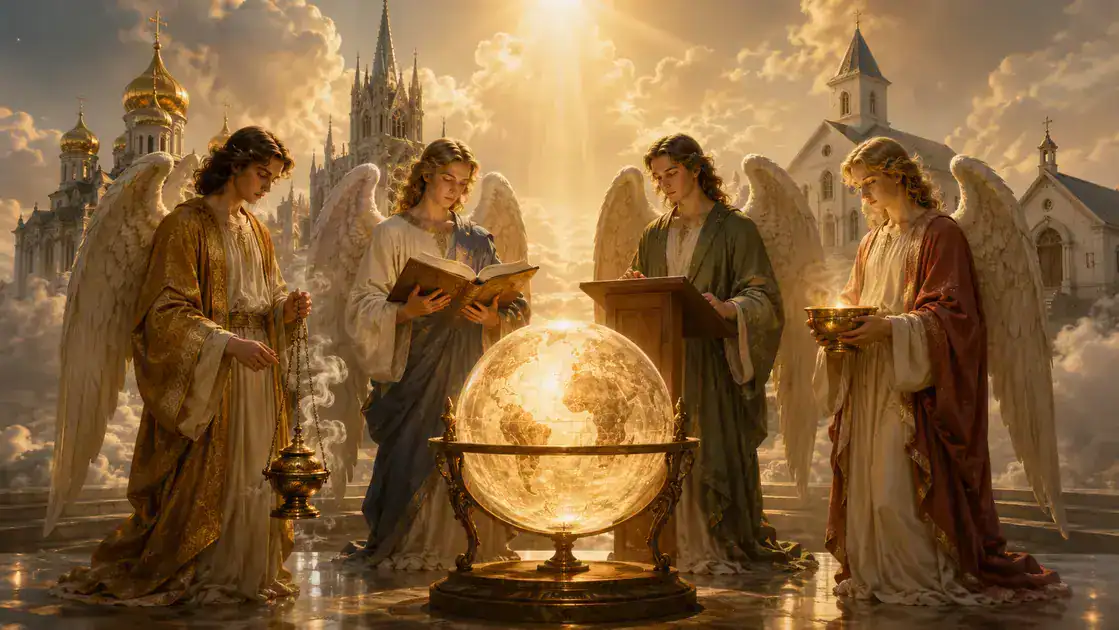
The way Christians read the image of the four angels often reflects the shape of their worship and prayer. Some traditions dwell on the angels as agents of God’s careful rule, while others see them more as signs in a prophetic drama. Across these readings there is a shared sense that the vision asks communities to remember God’s presence at every compass point of life.
In Catholic reflection the angels often connect to the church’s sense of sacrament and prayer. The scene is read devotionally: angels hold back winds so that mercy and the work of the church have room to breathe. This view highlights the restraint of judgment as part of a pastoral economy in which prayer, penance, and intercession matter for the timing of God’s action.
The Orthodox tradition tends to place the image within a wider cosmic liturgy. Angels are seen as part of heaven’s worshipful life that surrounds creation, and the vision reminds believers that liturgy and prayer join earth to heaven. Protestants frequently emphasize the text’s prophetic edge, reading the angels as a sober call to watchfulness and faithful witness under God’s sovereignty. In each case, the image becomes a practical aid: it steadies prayer, shapes worship, and summons a call to faithfulness in daily life.
Practical devotion: prayers and practices inspired by the scene
Bring the image of the four angels into your quiet time and let it shape a short, steady prayer. Picture the angels holding back the winds and the seal of God that protects the faithful. This helps prayer feel both urgent and calm, a small act that joins you to a larger story of mercy and measured timing.
Try a simple practice: lay an old map on a wooden table and place four candles at the cardinal points. Spend a minute or two praying for each corner of the earth, naming people or places if you like. Use a short breath prayer between each candle—breathe in “Come,” breathe out “Lord”—to steady the heart and keep your focus gentle and present.
Invite this image into community life as well: gather briefly with others, light the candles, read a short Scripture, and offer silent intercession for those who suffer. Follow prayer with small, practical acts of care so devotion becomes service. Such practices turn the vision of restraint and protection into daily mercy and a quiet call to watchfulness that shapes how we live and pray.
What the four angels mean for communities facing crisis
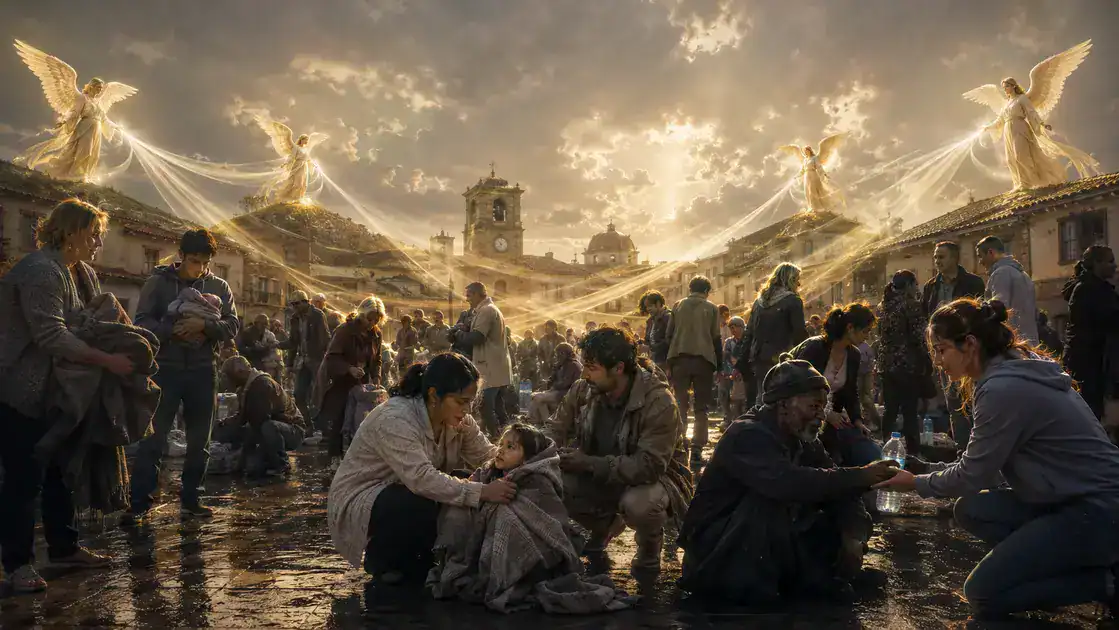
When whole neighborhoods face storm, fire, or loss, the vision of the four angels can feel like a steady hand. The angels hold back the winds and give mercy time to work. That image shows a God who watches over every place where people suffer, and it comforts communities that fear chaos.
That comfort leads to clear action. Neighbors open doors, share food, and tend wounds while they pray. Prayer steadies the heart, and practical help answers the prayer in small, faithful ways. The angels’ restraint invites patience, wise planning, and steady service instead of panic.
Communities can build simple habits that live this image. Gather for brief prayer and name the places and people you will serve, prepare a few local supplies, and check on the most vulnerable first. Keep a practice of watchful prayer and kind presence so hope travels with each act. In these small steps the vision becomes a call to faithful presence that steadies both the hurting and those who help.
Holding the four corners in prayer
May the image of the four angels resting at the earth’s edges fill you with calm. Let it remind you that even the winds of change are watched and measured by a loving hand.
Carry this vision into your quiet moments with a simple breath prayer, and let the thought of the seal of God steady your heart. Small acts of care and steady prayer join mercy to action and keep hope alive in hard times.
Wherever you serve, practice a gentle, watchful prayer—check on neighbors, offer a meal, listen with patience. These small habits make the vision real and help faith bear fruit in ordinary days.
May peace go with you, the courage to stay present, and a sense of wonder at how God holds all four corners. Amen.
FAQ – Questions about the four angels of the apocalypse and sacred meaning
Where do the four angels appear in Scripture?
They appear most clearly in Revelation 7:1–3, where four angels stand at the four corners of the earth holding back the winds. The image echoes earlier Scripture and apocalyptic motifs, such as the four living creatures in Ezekiel 1 and references to the “four winds” in Daniel 7:2, linking the vision to a long biblical tradition.
Are the four angels agents of judgment or mercy?
The text presents them as part of a balanced divine economy: they restrain the winds until God’s timing, while a sealing angel marks the faithful (Revelation 7). That pairing shows judgment and mercy moving under God’s governance, so the angels function within both warning and protection rather than as simple destroyers.
How have Christian traditions understood these angels?
Readings vary but share common threads. Catholic reflection often highlights pastoral mercy and the role of prayer in God’s timing; Orthodox readings place the image in cosmic liturgy and heaven’s worship; many Protestant voices emphasize prophetic sober watchfulness. All traditions see the image as calling the Church to faithful presence and prayer.
Should believers pray to the angels or only to God?
Christian tradition urges prayer to God while honoring angelic ministry. Scripture models prayer and dependence on God (e.g., the Lord’s Prayer), and Church teaching typically describes angels as servants who assist God’s purposes. A warm, simple practice is to ask God to use angelic help while directing worship and petitions to God alone.
What practical meaning does this vision have for communities in crisis?
The scene invites steady action: pray with attention, prepare help for neighbors, and practice compassionate presence. The angels’ restraint suggests patience and measured response, so communities are called to combine prayer with concrete care—food, shelter, listening—so mercy meets need in practical ways.
How can I carry this image into daily devotion?
Use brief, focused practices: a short breath prayer invoking God’s timing, lighting four candles while praying for different world regions, or a moment of intercession for those at the “four corners” of your life. These small acts root you in hope, remind you of the seal of God for the faithful, and turn holy imagination into steady, loving service.