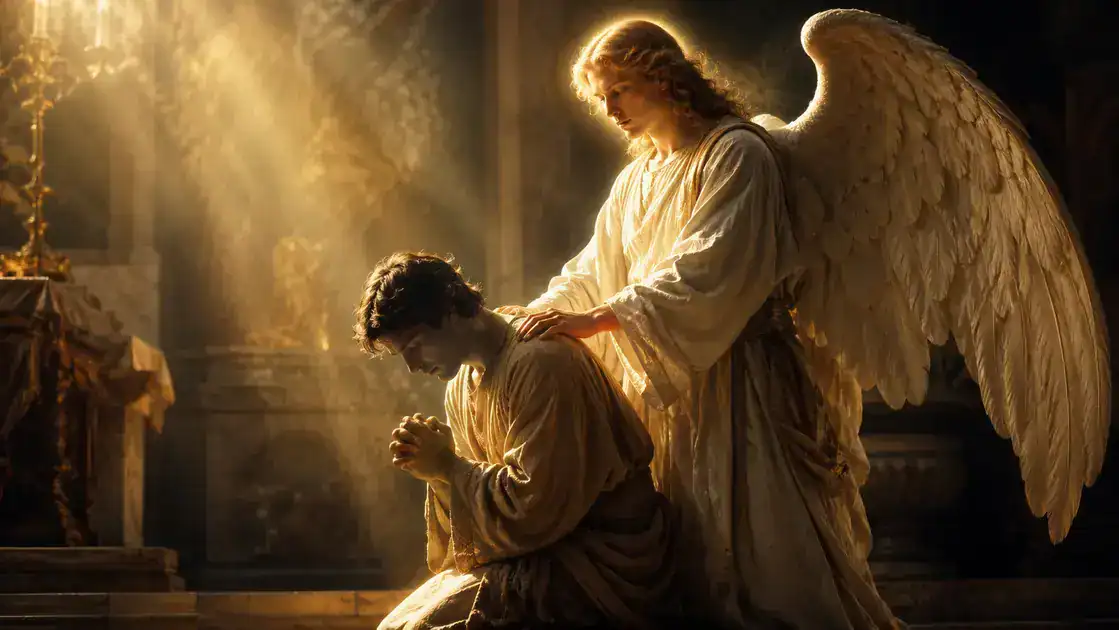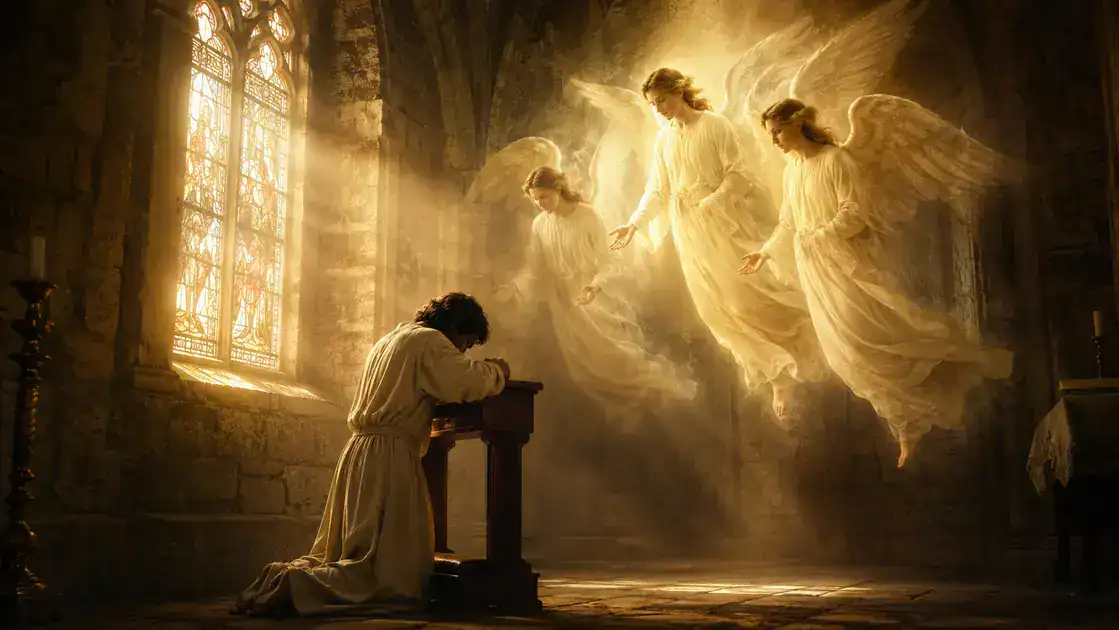

The litany of the angels is a concise devotional prayer rooted in Scripture and Christian tradition, consisting of short invocations naming angelic offices and archangels to entrust petitions and praise to heaven, cultivating attentive rhythm, trust, and the sense that ordinary life is held within God’s protective and worshipful presence.
Have you ever sensed a hush fall over a sacred moment, as if heaven itself draws near? The litany of the angels; offers short, resonant invocations that invite attentive listening and gentle devotion.
Scriptural roots: angels in the Old and New Testaments
From the earliest pages of Scripture, angels appear as God’s close companions to humanity, acting as messengers and guardians. In Genesis three visitors come to Abraham with important news, and Jacob dreams of a ladder where angels ascend and descend, a striking image of heaven meeting earth. The Psalms and prophetic books picture angels watching over the faithful and carrying God’s presence into the world, showing a steady pattern of care and communication.
The New Testament continues this sacred work in clear, human moments. An angel greets Mary at the Annunciation and tells the shepherds of Christ’s birth; angels minister to Jesus after the desert and stand at the empty tomb to proclaim resurrection. These scenes show how angels announce God’s saving work and stand as visible signs of divine action in both covenant eras, linking promise and fulfillment.
That biblical continuity shapes how we pray today. When we use the litany to call upon the holy angels, we are joining a long stream of Scripture where heaven touches our ordinary days. Remembering their role to protect, serve, and worship helps the litany become a simple, faithful practice that grounds our prayer in scripture and invites a quieter, more reverent attention to God’s nearness.
Historical origin of the litany and early devotional practice

The litany of the angels grew from a simple, old Christian habit of calling on heaven for help. Communities in late antiquity and the Middle Ages used short, sung responses to ask for protection, guidance, and praise. This pattern made prayer steady and familiar, so people could join together even when words were few.
Monks and friars shaped many of these prayers as they copied and decorated manuscripts by candlelight. Scriptoria preserved lists of angelic titles and brief invocations used at vigils, processions, and bedside devotions, showing how the practice moved between chapel and daily life. Here we see prayer as both memory and action, rooted in communal worship and careful devotion.
Over time the litany passed from cloisters into parish life and private devotion, carried by pilgrims, confraternities, and prayer books. Laypeople learned the steady rhythm and felt comfort in calling on unseen companions through simple phrases. That long, lived practice still shapes the way many pray the litany today, as a quiet bridge between Scripture, tradition, and everyday need.
The text explained: invocations, phrases and theological meaning
The litany uses short, rhythmic invocations addressed to the angels, followed by a simple communal response. Each line names an office or action—guardian, messenger, minister—and the prayer calls those roles to mind. This pattern of call and reply keeps the heart attentive; the repeated phrases help listeners move from thought to trust without long or complex sentences.
Within the litany, certain names and titles stand out. You will meet archangels such as Michael, Gabriel, and Raphael, each pictured in Scripture with a clear role: Michael as protector, Gabriel as messenger, Raphael as healer or guide. These names are not magic words but reminders of how God works through created spirits; the litany uses them to focus our hope and to ask for the angels’ intercession and care in ways that the biblical stories make familiar.
Beyond the words themselves, the theological heart of the litany is its invitation to join heavenly worship. Repeating brief invocations trains the soul to remember God’s presence and the company of heaven. This practice nurtures humility and trust, turning prayer into a steady beat rather than a one-off event. As we speak each phrase, we enter a quiet dialogue that ties our everyday needs to the larger story of God’s protection, mission, and praise.
How to pray the litany: posture, rhythm and personal intention
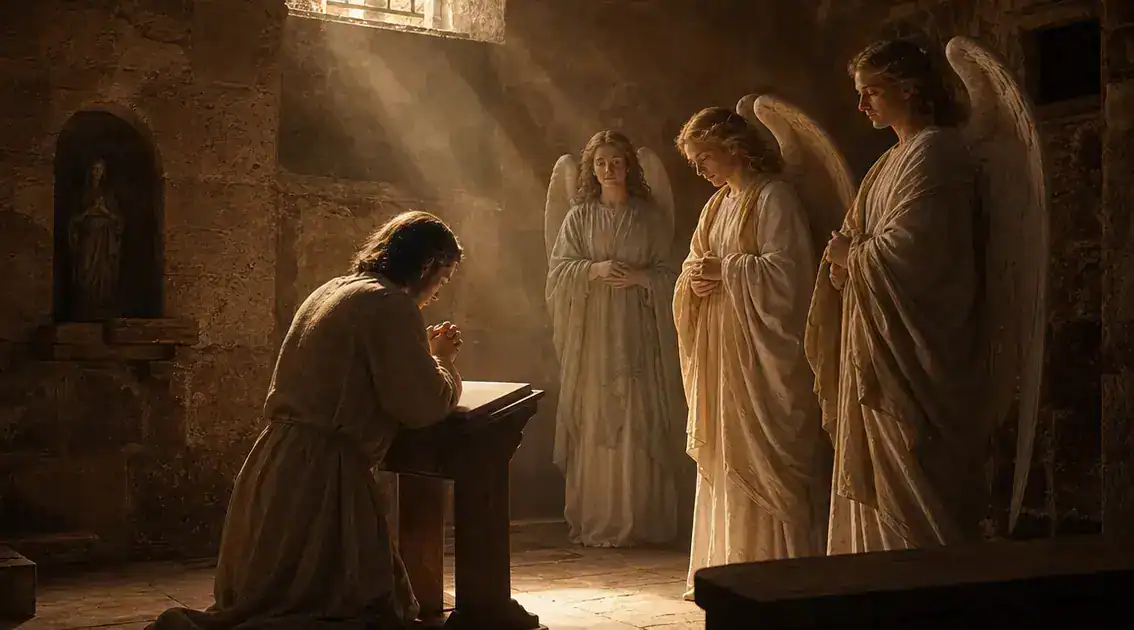
Choose a simple, steady posture that helps you stay present: kneel or sit with your back straight and hands gently folded, or stand if that feels more attentive. A plain wooden prie-dieu or a quiet corner of the house can become a sacred place when you return there with regularity. The goal is not perfection but a posture of humble attention that reminds you you are standing before God and the company of heaven.
Let the litany’s rhythm guide your breath and heart. Speak each short invocation slowly, pausing to breathe and to listen between the call and the response. Many find it helpful to pray aloud with a steady cadence, or to use a quiet, measured whisper; the repetition trains the mind to move from thought to trust and creates a gentle drumbeat for prayer rather than a hurried checklist.
Bring a single, clear intention before you begin—someone to entrust, a choice to ask for guidance on, or simply the desire for peace. Offer that concern to the angels as a form of companionship, asking them to present your need before God while you remain open to God’s will. This practice is less about invoking power and more about learning to pray with confident dependence, letting the litany shape patience, hope, and deeper awareness of God’s care in daily life.
Spiritual fruit: how the litany shapes prayer and daily life
Praying the litany often brings a quiet change in ordinary days. The short, steady phrases help the heart slow down and remember that we are not alone. Over time this simple rhythm turns moments of hurry into brief acts of trust, and many people notice a growing sense of calm where once there was anxiety.
That calm shows itself as small, lasting fruits: more patience, clearer gratitude, and a deeper courage to face decisions with prayer rather than noise. Calling the angels to mind gives a felt sense of company and care, not as a dramatic sign but as a steady presence at your side. These changes are not sudden; they grow as a steady habit of remembering the presence of heaven in everyday life.
Practically, the litany can be woven into daily tasks—before a meal, on the way to work, at a bedside, or in a quiet pause between meetings. Short invocations spoken slowly are enough to reframe the moment and to hand a worry over to God through the angels. In this way the litany becomes a gentle practice that shapes how you live, bringing prayer into ordinary time and steadying the soul for service, love, and patient hope.
A closing prayer: carried by the holy angels
May you rest in the quiet truth that you are never truly alone. Scripture and the prayers of the saints remind us that God surrounds our days with care, often through unseen companions.
Angels do not wipe away every trouble, but they steady the heart and make burdens lighter to bear. Their presence helps us stand, breathe, and keep our eyes turned toward hope even in hard moments.
Practice the litany as a gentle habit—a short phrase at dawn, a whispered petition during a busy day, a quiet invocation before sleep. These small acts tie our ordinary hours to the life of heaven and teach the soul to trust with patient fidelity.
May peace settle like soft light around you, and may wonder rise in the small things. Walk forward with the steady company of heaven, one faithful step at a time.
Is the litany of the angels found word-for-word in the Bible?
The litany itself is a devotional prayer developed in Christian tradition, not a single biblical text. It draws directly on Scripture—angelic appearances in Genesis, Psalms, the Gospels, Daniel, and passages like Psalm 91 and Hebrews 1:14—to shape short invocations that echo biblical roles and praise.
Who are the archangels named in the litany and what do they represent?
Traditional litanies commonly name Michael, Gabriel, and Raphael. Scripture shows Michael as a protector (Daniel), Gabriel as a messenger (Luke 1 at the Annunciation), and Raphael as a healer and guide (Tobit in the Catholic and Orthodox canon). These names point us to different ways God works through heavenly ministers.
Can anyone pray the litany, or is it meant only for clergy and monks?
Anyone may pray the litany. Historically it moved from monastic and liturgical settings into parish and private devotion because its short refrains help laypeople join in steady, communal prayer. It is fitting for personal, family, or communal use as a simple way to remember God and the company of heaven.
Do angels hear our prayers and intercede for us?
Scripture calls angels ministering spirits sent to serve those who will inherit salvation (Hebrews 1:14). Tradition often speaks of angels presenting care or aiding God’s work on our behalf. Still, intercession is ultimately before God; invoking angels in the litany asks them to accompany our petitions to God, not to replace prayer to the Lord.
How often should I pray the litany to receive spiritual benefit?
There is no strict rule—regularity matters more than length. Many find a short daily moment (morning, before a task, or at bedtime) helps form a habit of attention and trust. Even brief, faithful repetition can shape patience, gratitude, and a steady awareness of God’s care.
Is it safe to ask angels for help, or could it be idolatrous?
Asking angels to pray for us is an established practice in Christian tradition when understood rightly: we direct worship to God alone and view angels as created servants of God who assist and worship him. The litany frames requests as companionship and intercession, not worship of the angels themselves; avoid superstition and keep the focus on God’s will.