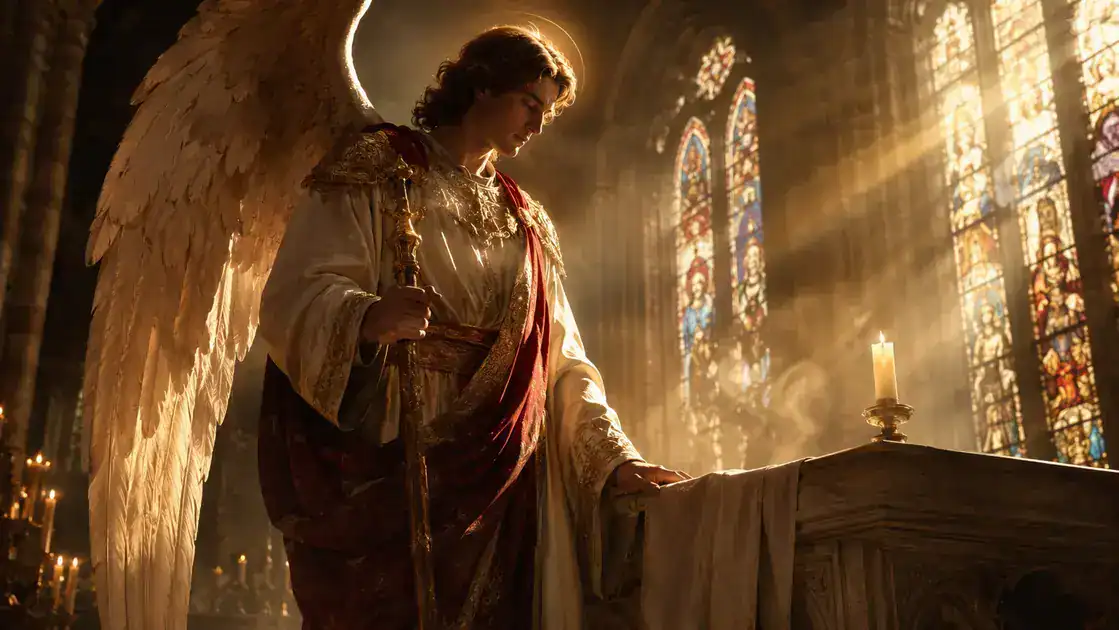

Angelus prayer history traces the devotion from biblical cues—like the Annunciation and thrice-daily prayer in Psalms and Daniel—through medieval monastic hours and village bells, showing how a brief angelic salutation became a shared daily practice that shaped communal memory, sustained private piety, and invites modern renewal of presence and prayer.
angelus prayer history — have you ever paused at the sound of a bell and felt time itself tilt toward prayer? This short piece follows that ancient rhythm, showing how a simple devotion shaped communities and quieted daily life.
The roots in Scripture: biblical echoes of thrice-daily prayer
Scripture gives steady hints of a rhythm that shapes the day. In the Psalms the faithful speak of prayer offered as ‘evening, morning, and at noon’, naming three simple moments to turn the heart toward God. In the book of Daniel we meet a person who prays openly three times each day, refusing to hide his devotion even when danger looms. These passages frame prayer as a habit that trains time itself to become a living space of encounter.
That biblical habit lived on in the worship patterns of Israel and then in the life of the early Church. The New Testament shows followers attending the temple at set times, such as when Peter and John went up for the ‘hour of prayer’. This continuity helps us see how prayer at fixed hours was not a later invention but a way the people of God learned to mark their days with attention and reverence.
Monastic communities later shaped those scriptural cues into a steady discipline, naming hours like terce, sext, and none to hold the day in prayer. For believers, these pauses do more than fulfill a rule: they teach us to remember God amid work, rest, and care. Each pause becomes a small sacrament, a chance to quiet the mind and bring the ordinary back into the presence of the Holy.
Historical development: from medieval bells to universal devotion
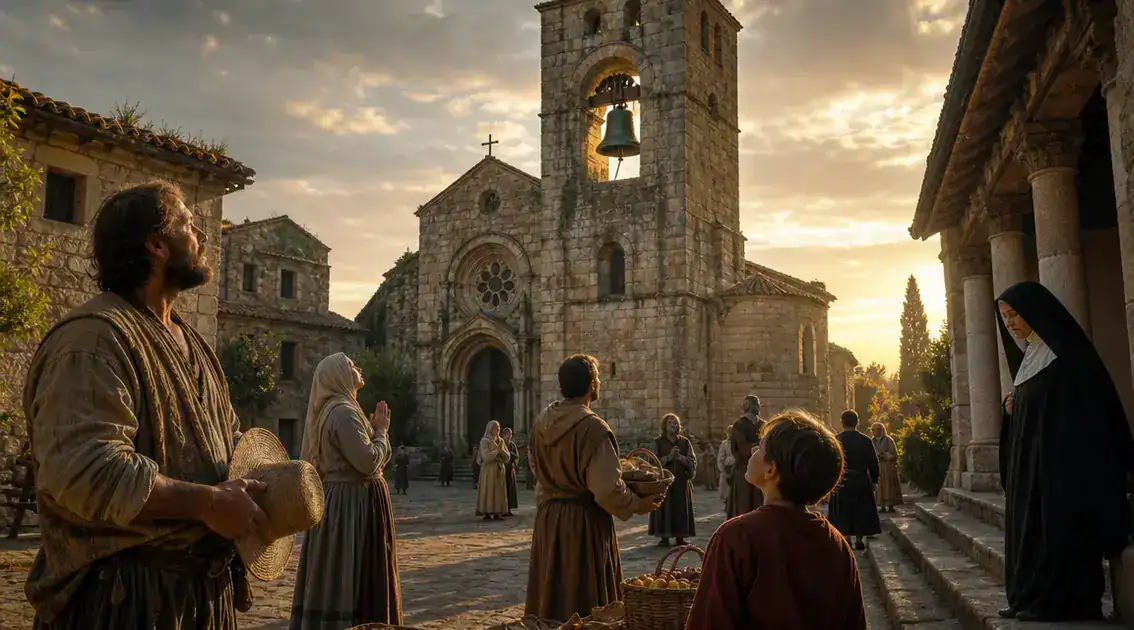
In the Middle Ages the toll of a bell marked more than time. Villagers and travelers alike paused when the church bell rang, and those clear tones braided daily work with prayer. Monasteries rang hours such as terce, sext, and none, and as their bells pealed, the townspeople learned a steady rhythm of turning the heart toward God. The bell became a simple, public reminder that sacred moments can live inside ordinary days.
From those rhythms grew a named devotion centered on the Annunciation and the angelic greeting. The prayer we now call the Angelus moved out from cloisters into fields, markets, and ships, carried by priests, lay confraternities, and the printed word. Small practices—pausing work, bowing the head, saying a few short words—helped the devotion take root across different walks of life, so the sound of the bell could be heard as an invitation to prayer by everyone nearby.
Change and challenge came with time, but the habit left a quiet legacy. Even in busy towns the bell could still hush a crowd and gather attention for a brief, holy pause. Today the Angelus survives in liturgy, in family memory, and in private devotion, offering a way to re-center at predictable moments. Each toll links one brief instant to a long stream of faithful attention, teaching us how small, repeated acts can shape a life of prayer.
The annunciation and the angelic salutation: theological heart of the Angelus
The Gospel of Luke gives us the scene that shapes the Angelus. At Nazareth the angel greets Mary with a simple word that opens God’s plan in the silence of a home. This moment, the Annunciation, shows how God meets ordinary life with a sacred greeting.
The angelic salutation is both message and invitation, a short phrase that holds a deep promise. It calls for trust and a free response, and it points to the mystery of God becoming present in our flesh. When we say the angelic salutation again and again, we learn to listen for God’s voice in the small things of our day.
Praying the Angelus brings that first greeting into daily time, turning bells and pauses into opportunities for faith. Each repetition trains the heart to answer with readiness, echoing Mary’s quiet yes. In this way the old prayer keeps us close to the Gospel moment, making the Annunciation a living habit that shapes how we meet the world.
Popular piety and liturgical adoption across cultures
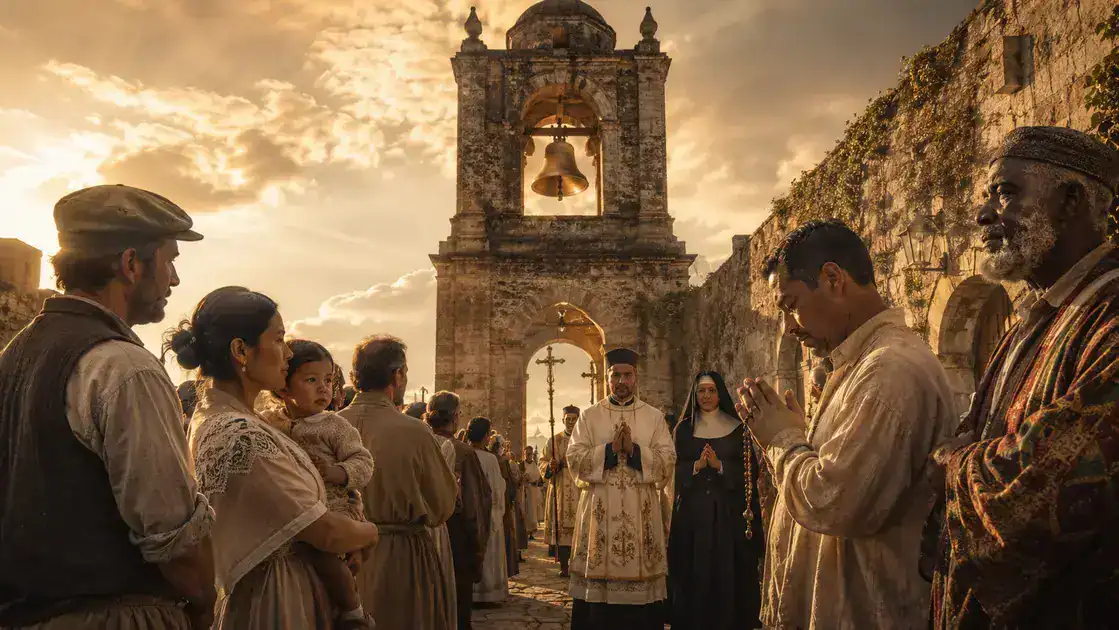
Across towns and villages the Angelus became more than a prayer for the few; it became a shared pause for many. People learned the words at home, in the market, and in the fields, and the bell’s call drew them together. Small groups—families, neighbors, and confraternities—kept the habit alive, teaching it to children and making the hour a gentle, public act of faith.
The Church also shaped that popular devotion by folding it into public rites and calendars. Clergy and communities placed the Angelus beside other prayers and feasts so it would mark daily life as well as liturgical time. As missionaries crossed oceans, they carried the practice with them, and local churches adapted the form to fit language, dress, and rhythm while keeping the same heart of prayer.
These adaptations show how a single devotion can hold many cultures without losing its soul. In one place the bell rings at dawn over terraced fields; in another a family pauses in a crowded plaza at noon. Each variation teaches the same lesson: shared prayer makes time holy, and simple acts passed down by ordinary people can keep a sacred rhythm alive across generations.
Spiritual practice: how the Angelus shapes daily prayer and presence
The Angelus shapes prayer by offering a simple, regular pause in the middle of a busy day. When the bell rings, people stop whatever they are doing and turn their attention outward and upward. This is not a long ritual; it is a brief, steady habit that trains the heart to notice God in small, ordinary moments.
To practice it, one need only choose three quiet moments and make a small, intentional pause. A head bowed, a short prayer, or the sign of the cross are enough to center the spirit. Over time these tiny acts build a pattern of presence that carries through work, rest, and family life, so prayer becomes part of how decisions are made and how kindness is offered.
People who keep this rhythm often speak of a subtle change: days feel more held and less rushed. The Angelus creates a shared rhythm between individual prayer and communal memory, helping us notice gratitude, ask for strength, and return to hope. Even now, whether by a village bell or a quiet alarm on a phone, that steady call can teach us to live more awake to what truly matters.
Controversies and modern meanings: decline, revival, and spiritual resonance
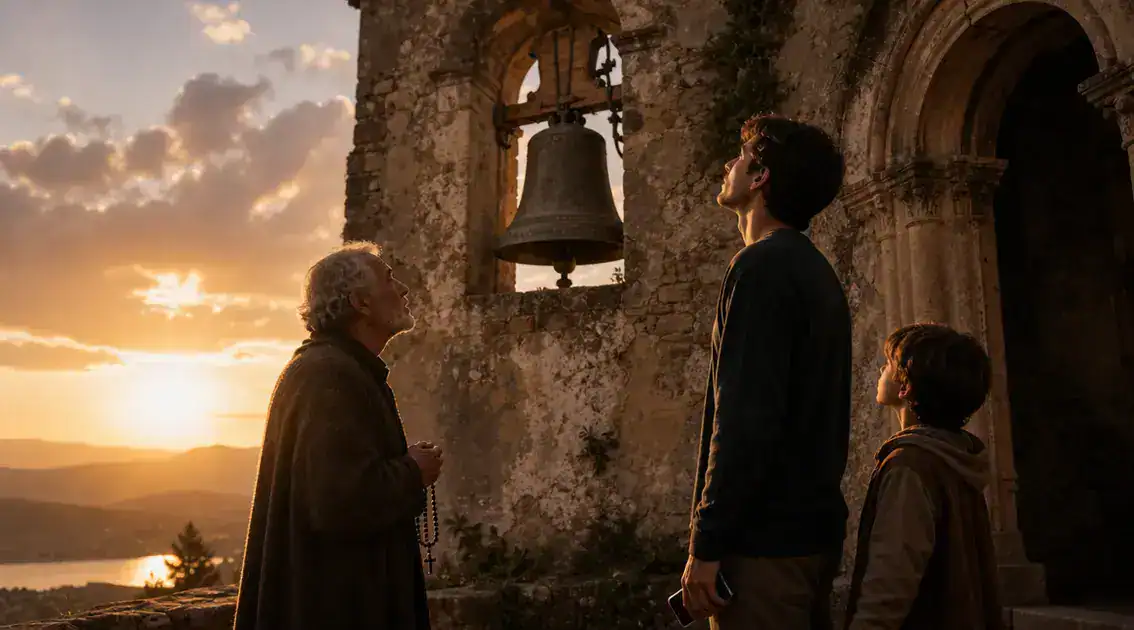
Over the last century many church bells fell quiet as towns changed and daily life sped up. Factories, war, and shifting habits made the old rhythm harder to keep, and fewer people heard the call to pause. This quiet can feel like a loss, because the Angelus once gave whole communities a shared moment of attention.
Yet there are signs of gentle renewal, often in unexpected places. Small prayer groups, parish revitalizations, and even simple phone reminders have helped the devotion find fresh ground. In pockets of revival people rediscover the value of a short, regular pause and the way it knits ordinary tasks to prayer.
Whatever its form, the Angelus still carries a deep, quiet power: it calls us back to the mystery of God made near and to the habit of shared memory. That power is not tied to one ritual style but to the way repeated attention shapes the heart. For many, the sound of a bell or the brief silence it signals remains a tender way to name hope, ask for help, and keep faith alive day by day.
A closing prayer for the day
May the bell that calls us to pause become a gentle teacher, guiding us to notice God in small moments. the Angelus reminds us that even brief attention can hold great love and steady our hearts.
Lord, help us make room in our day for a quiet nod of thanks, a breath of trust, and a small answer like Mary’s quiet yes. Let these short pauses shape our choices and give us courage to serve with kindness.
Carry this simple rhythm into work, family, and rest. In each brief silence may you find renewed hope, calm presence, and the grace to keep walking in faith.
May peace go with you now, and may the memory of that sacred greeting light your path today and always.
FAQ – Common questions about the Angelus and its roots in Scripture and tradition
What exactly is the Angelus and where does it come from?
The Angelus is a short devotion recalling the Annunciation and the Incarnation. It grew from biblical moments (notably Luke’s account of the angel’s greeting to Mary) and from the rhythm of daily prayer kept by Jewish and Christian communities and later shaped by medieval monastic practice.
Which Bible passages support praying three times a day?
Scripture names a threefold pattern of prayer (for example, Psalm 55:17 “evening, morning, and at noon”) and shows figures like Daniel praying three times daily (Daniel 6:10). The New Testament also records believers coming at set hours to pray (see Acts 3:1), which the tradition remembers and builds upon.
Why is the Annunciation central to the Angelus devotion?
The Angelus takes its heart from Luke 1:26–38, where the angel greets Mary and she responds in faith. That brief divine greeting and Mary’s willing reply become a model for turning ordinary time into moments of listening, trust, and faithful assent.
Do Christians outside the Catholic Church pray the Angelus?
Yes. While the Angelus is most common in Catholic practice, similar brief devotions and fixed-hour prayers appear in Anglican, Lutheran, and some Orthodox contexts. Many Christian communities value the same goal: to mark the day with regular moments of attention to God.
How can I pray the Angelus if I want to start this practice?
Begin with three daily pauses—morning, midday, and evening—at the sound of a bell or a chosen reminder. Traditionally the devotion includes a brief Gospel versicle recalling the angel’s greeting, three Hail Marys, and a closing prayer; the key is the intentional pause to listen, give thanks, and offer yourself to God.
Do I need a church bell to keep the Angelus, or can I adapt it today?
You do not need a bell. The bell is a beautiful historic cue, but a phone alarm, a moment at meals, or a simple breath of prayer will do. The spirit of the practice is regular, humble attention—adaptable to your life while keeping its call to remembrance and praise.