Cherubim in sacred art history appear as throne-attending, winged beings whose evolving forms—from Ezekiel’s multi-faced living creatures and Byzantine mosaics to Renaissance humanized figures and modern abstraction—serve as theological symbols that guide worship, embody divine presence, and shape devotional practices across Christian traditions.
cherubim in sacred art history — have you ever paused before a carved altar or painting and felt wings brush the edge of your imagination? Walk with me through a few centuries of images where Scripture, theology, and devotion meet the artist’s hand.
Cherubim in Scripture: visions, wheels, and prophetic language
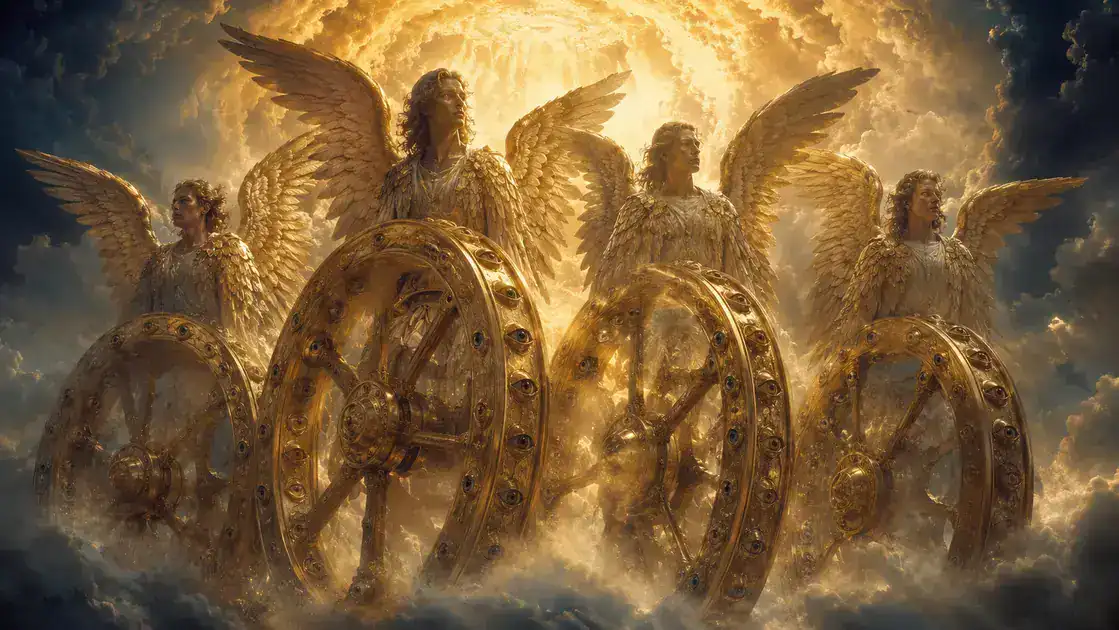
Ezekiel’s vision opens with a startling scene: living creatures with four faces and four wings, each accompanied by wheels that seem to move with them. The prophet uses plain, vivid language so the reader can almost hear the wheels’ sound and see the flash of lightning around the forms. These images are not meant to confuse but to point toward a reality beyond ordinary sight—a presence that moves and watches with purpose.
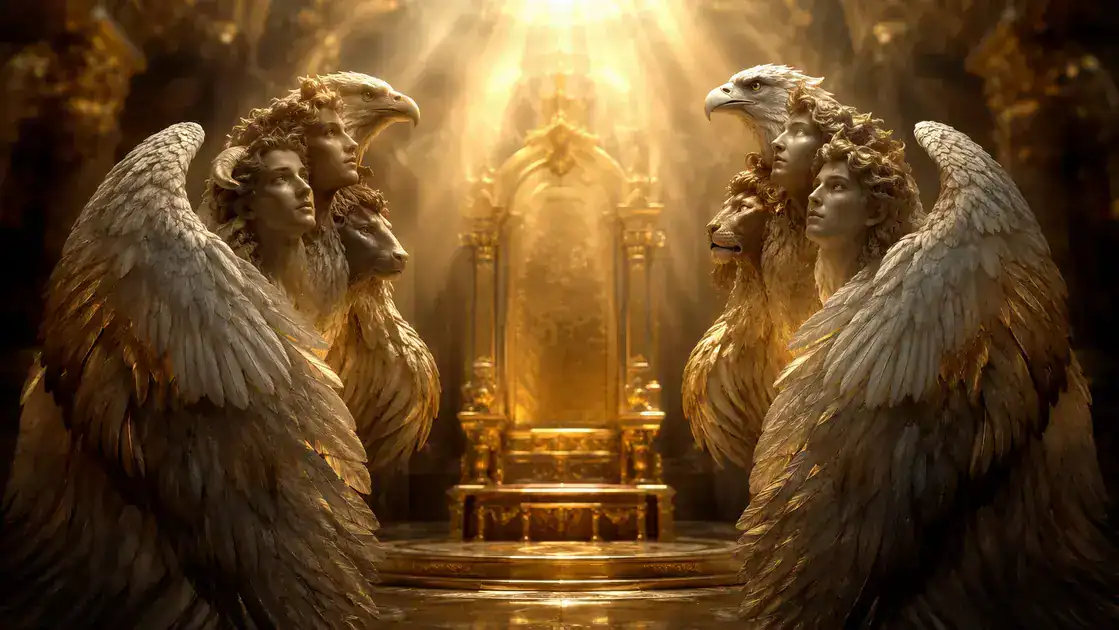
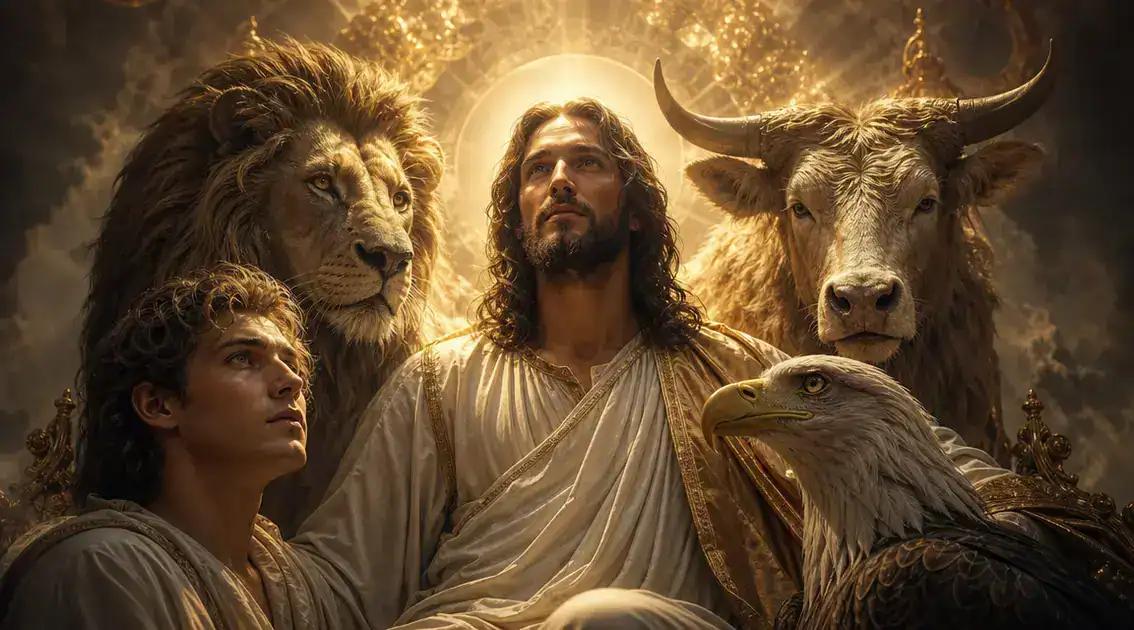
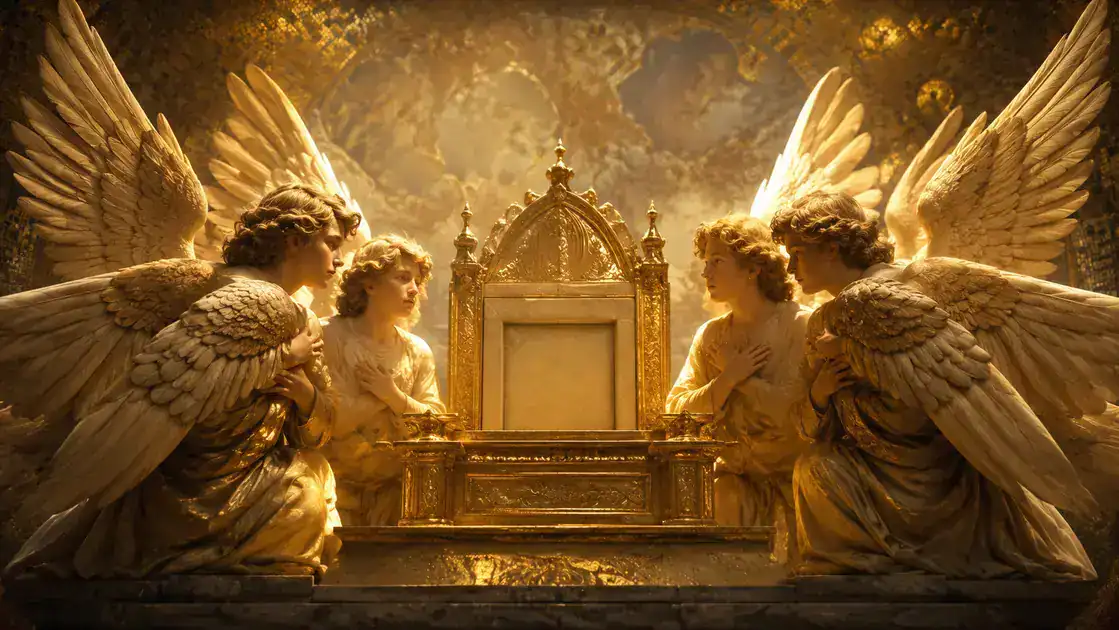
Scripture links these beings to the closest places of worship and mystery. The cherubim carved above the mercy seat on the Ark and the throne-borne creatures in prophetic visions both mark where God meets the world. They serve as guardians and as bearers of the divine presence, a paradox of awe and intimacy: fierce, attentive, and tender all at once. The prophetic language—wheels full of eyes, faces of a man, lion, ox, and eagle—gives us symbolic tools to hold that paradox in word and image.
For devotion, these scenes invite a gentle, reverent attention rather than mere curiosity. When we read of wheels that follow and wings that shelter, we are invited to feel both watched over and called into deeper reverence. Let those images shape a quiet prayer: to approach the holy with humility, to honor the mystery, and to remember that the same presence who is above the throne is willing to meet us where we are.
Early Christian and Byzantine portrayals: throne guardians in mosaics
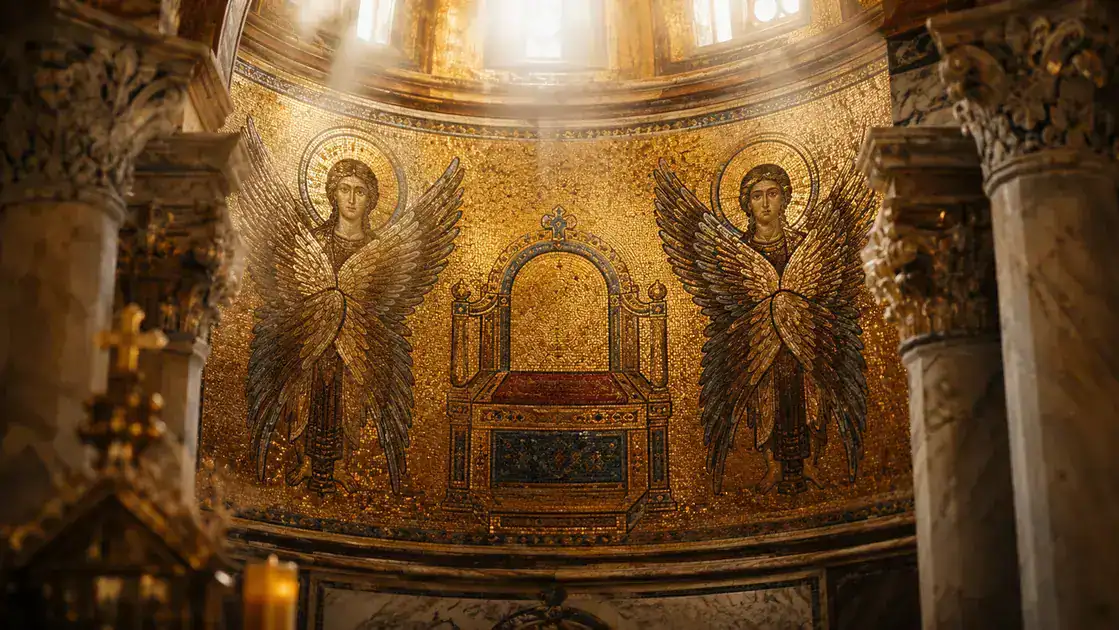
In early Christian and Byzantine churches, artists set cherubim as throne guardians in glittering mosaics above altars and apses. The figures are often frontal and still, with stylized wings and calm faces that stare gently toward the central throne. Gold tesserae catch candlelight and afternoon sun, so the image seems to breathe with light rather than move with the body.
Placed high in the basilica, these mosaics shaped how people prayed. The cherubim do not shout or act; they mark a holy place and invite quiet attention. Worshippers looking up felt the space hold a promise: that God is both distant in majesty and close in presence. The steady gaze of the mosaic made devotion a matter of posture and sight, not just words.
For devotion today, these images still teach a simple lesson. The art keeps returning us to the idea that the sacred can be made visible and steady. When we stand beneath a golden apse, we are led to a small, solemn act: to breathe, to kneel, and to let the steady light and the cherubim’s calm keep our hearts centered on the divine presence.
Medieval imaginations: angelic guardians shaping liturgical art
In the medieval mind, churches were windows into heaven, and artists filled them with angelic guardians carved in wood and painted in manuscripts. Choir stalls, misericords, and altar panels show cherub-like figures bending, holding small scrolls, or simply watching in quiet stillness. These images are often humble in scale, yet they lift the eye and ask the worshiper to meet what lies beyond the stone and timber.
Artists used clear, simple symbols to teach and to comfort. The cherubim echo Old Testament throne scenes and quietly remind the faithful of God’s nearness; in illuminated pages and stained glass, gold leaf and bright pigments make a small, luminous sky on earth. By placing angels near the altar and the lectern, craftsmen made a living lesson: the rites of worship unfold under the watch of the heavenly court, and the visual order supports the prayerful heart.
Standing before these works today, we can let the medieval gaze shape our devotion. The carved angels and painted initials invite a slow breath, a slight bow, and a settling of attention toward the mystery being celebrated. Allow the care of those images to remind you that prayer is often formed by beauty, by familiar shapes that point us back to Scripture and to a long line of quiet devotion.
Renaissance reinterpretations: human form, symbolism, and anatomy
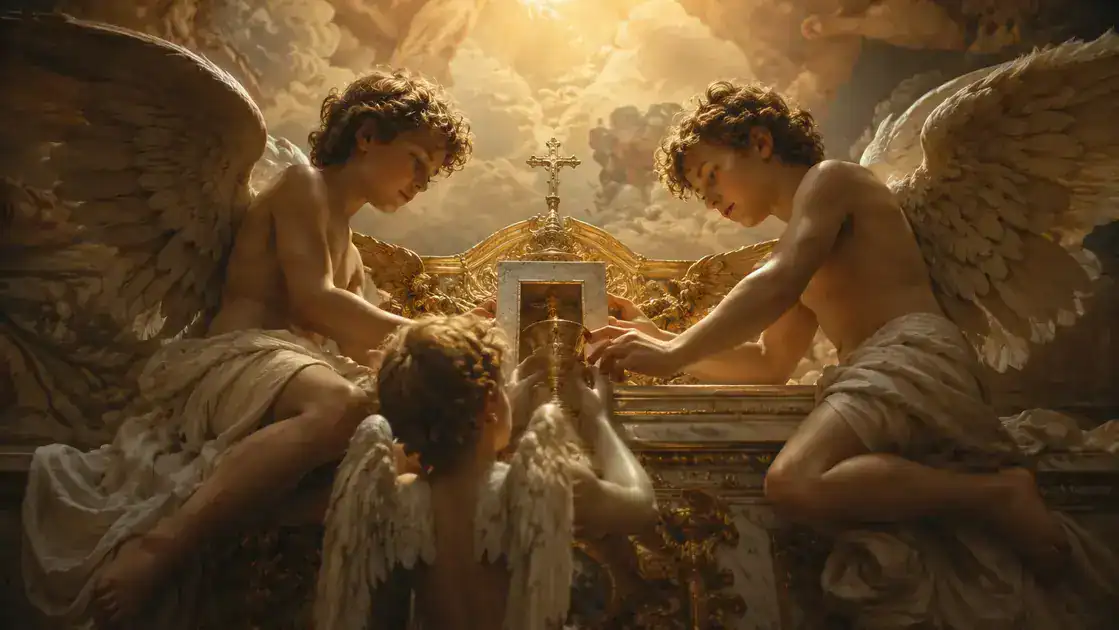
Renaissance artists looked again at the body and brought cherubim closer to human form, studying muscles, gestures, and the way light falls on skin. Where earlier art had used rigid symbols, painters and sculptors sought a lived realism that still kept the creatures otherworldly. Wings, luminous eyes, and small halos remained, but the faces grew tender and familiar, as if heaven had been seen through a human gaze.
That new realism carried a quiet theological note: by shaping angelic figures with human anatomy, artists echoed the truth of the Incarnation, the idea that God meets us in flesh and in ordinary human beauty. The cherubim thus became a bridge between glory and our daily life. Their careful proportions and soft expressions invite a gaze that is both admiring and reverent, helping worshipers to feel welcomed rather than overwhelmed.
Seen in a chapel or on an altarpiece, these Renaissance cherubim guide prayer by presence rather than by sermon. The realism steadies the imagination, and the symbolic elements — wings, light, posture — keep the scene sacred. Standing before such an image, a person can breathe, look, and let a simple sense of wonder turn into quiet prayer and trust.
Baroque to modern: emotion, movement, and spiritual abstraction
Baroque painters and sculptors brought cherubim into motion, giving wings a sense of wind and bodies a living rhythm. Artists used sweeping drapery, strong diagonals, and deep shadow to make the figures seem to move through space. Light itself felt active, cutting across faces and feathers so the scene reads like a sudden, holy breath rather than a still picture.
That strong movement shaped how people felt the sacred. The dramatic gestures and open faces invite the viewer into emotional prayer, a joining of heart and body with what is seen. Worship became less a thing of quiet study and more a lived, sensory encounter where music, incense, and the image together quicken the spirit.
In the modern era, artists often turned toward abstraction while keeping that Baroque energy. Cherubim reappear as swirls of light, fragmented wings, or layered color fields that suggest presence without telling the whole story. These works ask the viewer to linger in possibility, to let form dissolve into wonder, and to receive the sacred as an open movement toward God rather than a finished picture.
Devotional meaning: how depictions of cherubim shape prayer and worship
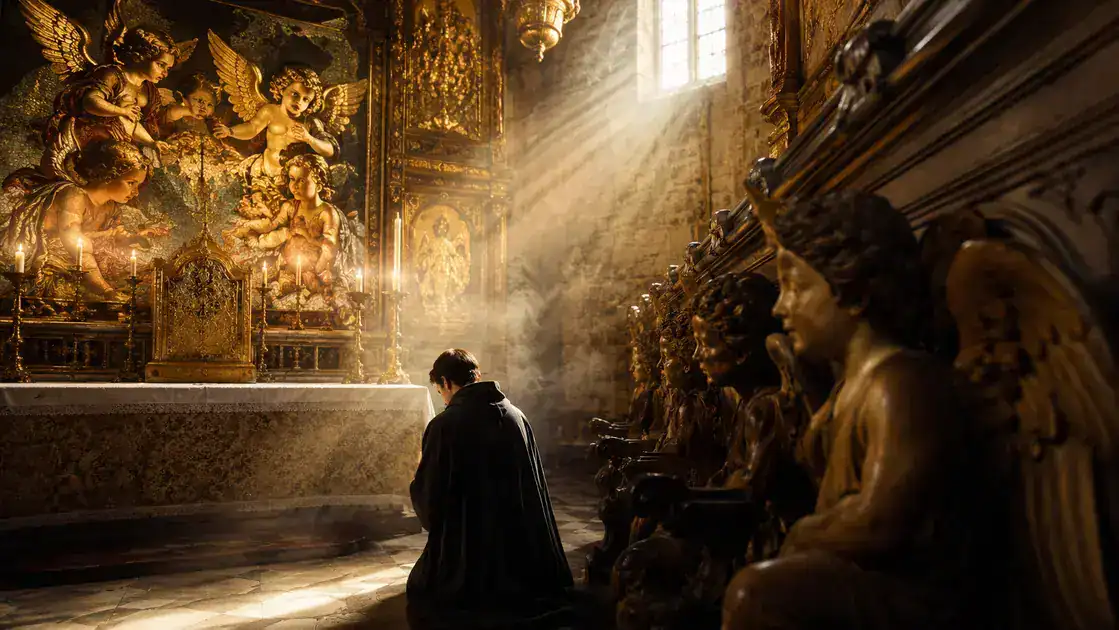
Images of cherubim shape how we stand and look in worship. When wings and faces are set above the altar, our bodies follow: we bow, we lift our gaze, and we slow our pace. Art trains attention and invites a quiet readiness for what may come.
Scripture and liturgy place cherubim near the throne to name the place of God’s presence. Seeing the cherubim calls to mind the mercy seat and the heavenly court, reminding us that worship happens in a shared story. These visual cues make the unseen feel nearer and help words like prayer and awe become lived gestures.
In practice, let these images guide you into simple, steady prayer rather than into empty looking. Use them as companions for breath and memory: a breath with each wingbeat, a short word of thanks, a gentle return to attention when the mind wanders. Such small acts form a habit of prayer as encounter, where the image points us toward the One we seek.
May the images and words you have met here settle gently in your heart like a soft lantern on a dark road.
As you remember the cherubim—wings that shelter, faces that watch—may they guide your posture in prayer and your steps through the day. These figures point to a simple truth: God is near, both majestic and close.
Carry this truth in small acts: a quiet breath before a choice, a bow of thanks at a meal, a moment of attention when you notice a shaft of light. These habits turn sight into prayer and memory into kindness.
May peace follow you, fear fall away, and wonder open your eyes. Amen.
FAQ – Common questions about cherubim, Scripture, and sacred art
What does the Bible actually say about cherubim?
The Bible presents cherubim as sacred attendants of God’s presence. Key passages include Exodus 25:18–22, where God commands cherubim to cover the mercy seat, and Ezekiel 1 and 10, which describe living creatures with complex forms and wheels. These texts picture cherubim as both guardians of holy space and symbolic witnesses to God’s glory.
Why do some biblical visions show cherubim with multiple faces and wheels?
Prophetic visions use vivid, symbolic language to convey truth beyond ordinary sight. Ezekiel’s four faces (human, lion, ox, eagle) and wheels full of eyes suggest intelligence, strength, and watchful presence rather than literal anatomy. Church tradition reads these images as theological signs pointing to God’s holiness, sovereignty, and activity in creation.
Why are cherubim often placed above altars and thrones in Byzantine and medieval art?
Artists followed Scripture and liturgical logic: the cherubim mark the place where God meets his people. In Byzantine mosaics and medieval carvings they function as throne guardians, visually naming the altar or apse as a locus of divine encounter. This placement trained worshipers to lift their eyes and hearts, reinforcing the sense that worship takes place within the company of heaven.
How did Renaissance artists change how cherubim were depicted, and what does that teach the faithful?
Renaissance painters gave cherubim more human features and natural anatomy, reflecting a renewed study of the body and a theological emphasis on the Incarnation. By making angelic figures tender and accessible, artists invited devotion that recognizes God’s nearness in human flesh. The result is art that both comforts and points beyond itself to the mystery of God made present.
Are cherubim the same as guardian angels or archangels like Michael and Gabriel?
No; biblical and traditional sources distinguish roles among angelic beings. Archangels (Michael, Gabriel, Raphael) appear with named missions in Scripture, while guardian angels are understood in tradition as personal protectors (see Matthew 18:10 for Jesus’ reference to angels of children). Cherubim, by contrast, are chiefly described as attendants of the divine throne and symbols of God’s immediate presence, not necessarily as individual guardians.
How can images of cherubim actually help my prayer and daily worship?
Sacred images work as companions for the eyes and heart: they steady attention, shape posture, and recall Scripture’s vision of a heavenly court. Use them to form small practices—pause to breathe, offer a brief thanksgiving, lift your gaze at the sign of the cross—and let the image draw you into prayer as encounter. Tradition consistently encourages that art should lead us from looking to living faith, not replace it.