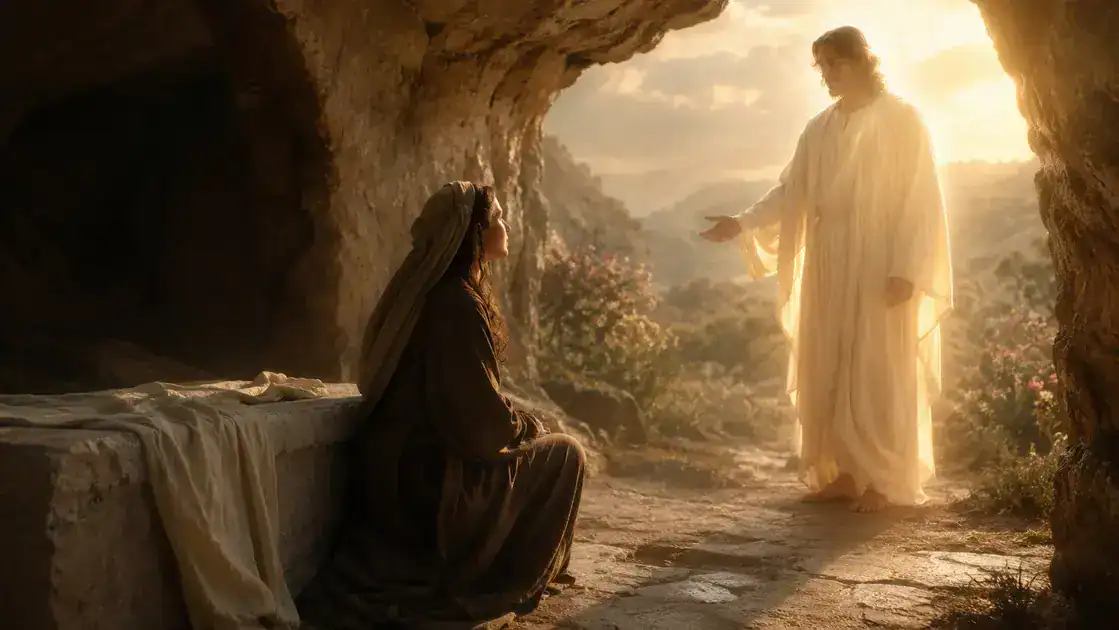

On the question ‘do we become angels when we die’, Scripture and Christian tradition answer no: believers receive a transformed, resurrected, glorified human existence (1 Corinthians 15; Hebrews 1), sharing some angelic qualities yet remaining a distinct created order healed and perfected by God, not made into angels.
do we become angels when we die? Have you ever felt that quiet tug when reading the tomb scene or an old hymn — a mix of sorrow and wonder. I’ll walk with you through Scripture, tradition, and pastoral wisdom, leaving room for mystery as we seek clarity.
what scripture actually says about angels and human destiny
The Bible speaks of angels from Genesis through Revelation, and it also teaches about the destiny God has in store for people. Yet if you read those passages closely, you find a careful distinction: angels appear as heavenly messengers and servants, while Scripture never plainly says that humans become angels at death. That quiet fact matters because it keeps the promise of our own transformation from being a copy of angelic life to something uniquely granted by God.
Hebrews 1:14 calls angels “ministering spirits,” sent to serve those who inherit salvation, and Jesus’ words in Luke and Matthew point to likeness, not identity, when he speaks of life after the resurrection. The texts suggest that at the resurrection we are changed — freed from decay, taken into a new mode of being — but not turned into a different created order. Angels and human beings share the stage of God’s purposes, yet each has a distinct place in the sacred story.
Paul’s teaching in 1 Corinthians 15 helps us see the heart of the matter: our hope is a transformed, imperishable body suited to eternal life. That hope brings comforting pastoral truth — angels may minister and appear at key moments, and they point toward God’s care, but our destiny is to be fully human in a glorified way. Hold both truths together: the gentle presence of angels and the sure promise that God will make us new in a manner only God can accomplish.
how church tradition and patristic voices answered the question
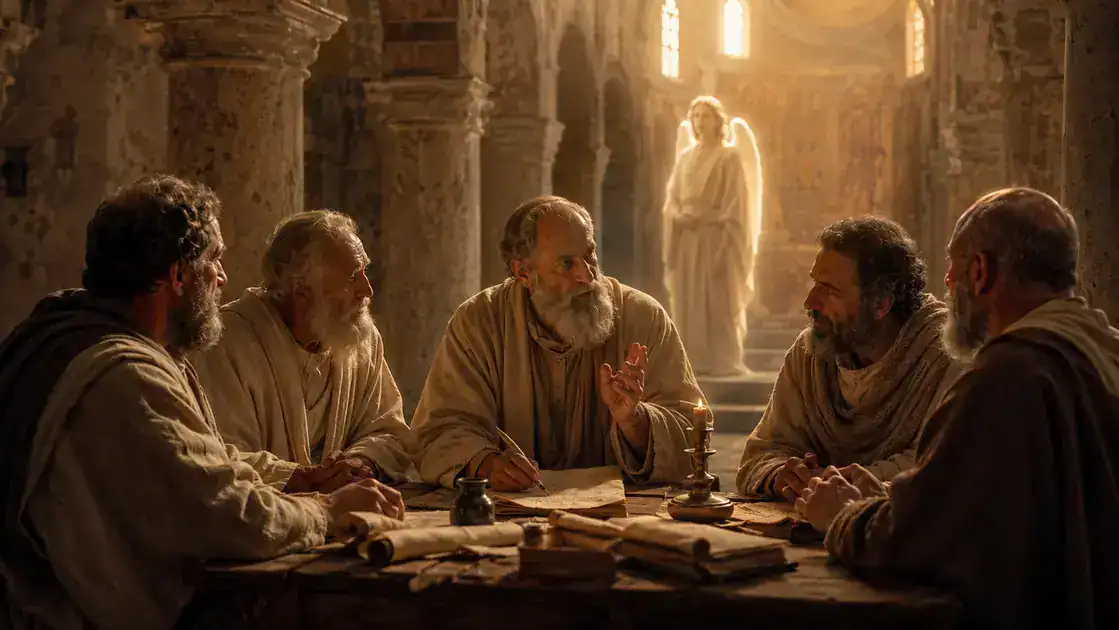
Early Christians read Scripture and lived by it, and they kept a clear line between angels and people. They saw angels as messengers and servants who help God’s work. This view holds that angels have a different role and place in God’s creation, which the church calls angels as a different created order.
Patristic writers like Irenaeus and Athanasius reflect on how God saves and changes us without making us into something else. Athanasius speaks of theosis — our call to share God’s life — but he and others still insist that this is a transformation of our human nature, not a change of category. The fathers describe a healed, glorious human life that keeps its identity even as it is raised and renewed.
Later voices in both East and West, including Augustine, hold the same steady line: we are promised resurrection and communion with God, yet we are not turned into angels. That teaching shapes how the church prays and comforts the grieving. Hymns and homilies may picture angels nearby, but the promise that matters is our own renewal as glorified, fully human persons in God’s presence.
distinguishing angels, saints, and the resurrected body
Angels are described in Scripture as spiritual beings who serve God and carry out his purposes. They appear as messengers, protectors, and worshipers in a way that marks them as a different created order from human beings. Noticing that difference helps us read biblical scenes rightly: angels point to God’s action, but they do not become the object of our faith.
Saints, by contrast, are human persons who are made holy by grace and kept in God’s love. Even in the life to come they are presented as fully human, not replaced by another kind of creature. The New Testament holds a steady hope for a resurrected, transformed body—a renewed human life that bears the imprint of God’s victory without turning us into angels.
Keeping these distinctions is pastoral and consoling. Angels may comfort and attend us, and the witness of the saints guides our prayer, but our deepest hope is the renewal God promises for human life itself. That promise invites a prayerful trust: we long for heaven not to become someone else, but to be wholly and beautifully ourselves before God.
pastoral care: grief, consolation, and the language of hope
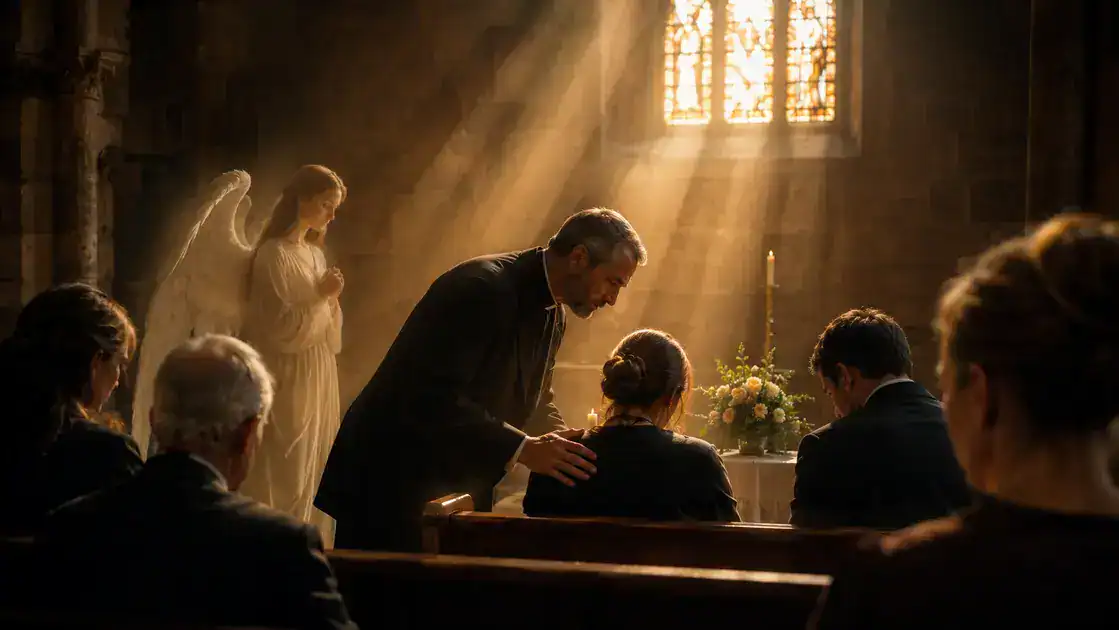
Grief arrives like a heavy silence, and pastoral care first sits with that silence rather than trying to fill it with easy answers. In the Gospels we see Jesus weeping at loss, and that simple witness gives us permission to mourn honestly while trusting that God is near. When we name sorrow aloud and allow space for tears, we make room for God’s comfort to enter in ways words alone cannot summon.
Consolation in the church often takes shape through shared practices: a ritual blessing, a whispered prayer, a hymn sung slowly. These acts do not pretend to remove pain, but they reframe it within a larger story of resurrection and eternal life. Funerals, memorials, and the regular rhythm of prayer help the grieving remember that loss is held within God’s faithful purposes, even when answers feel distant.
Practical care matters as much as theology. Sit beside someone, listen without fixing, offer simple, steady gestures of presence—meals, calls, a handwritten note. Use language that names hope without dismissing pain: speak of God’s steadfast love, of the community that will walk with them, and of memories that keep the beloved alive among us. In these small, faithful acts, the church embodies the hope it proclaims and gives the grieving a way to carry sorrow toward healing.
practical devotion: prayer, remembrance, and sensing the sacred
Prayer often begins with a simple return: a slow breath, a short name of Jesus, a folded pair of hands. These small acts train the heart to notice God’s nearness in the ordinary day, turning routine moments into doors for grace. Practicing a brief daily prayer or a one-line breath prayer helps you stay rooted, especially when sorrow or busyness would pull attention away.
Remembrance holds our loved ones within the life of the church without making loss a secret. Lighting a candle, placing a small token on a home altar, or speaking a name aloud at mealtime keeps memory alive and gathers it into hope. Such acts are not about forgetting pain but about letting memory meet the promise of resurrection, so grief is held within a story of care and future healing.
Sensing the sacred often happens through steady rhythms and simple senses: silence, a favorite hymn, the feel of water on the hand, the taste of bread shared at table. Create small practices you can return to—a corner with a candle, a moment of two minutes of quiet, a repeated line of scripture—and let those practices form a language of presence. Over time, these gestures teach you to recognize God’s gentle work even in quiet, ordinary days.
A gentle prayer to carry with you
Lord, keep us close when we grieve and teach us to trust your care. Help us know that angels attend and that you promise to make us new. Let this truth bring comfort and steady our hearts in days of loss.
Scripture and the church remind us of a resurrected hope that heals and lifts without erasing who we are. We are not turned into angels, but we are held by a promise that makes our human life whole before you. Hold these words softly in your heart.
Let simple practices of prayer and remembrance shape your days: a short prayer, a named memory, a quiet candle. These small acts gather grief into the greater story of God’s care and help us notice grace in ordinary moments.
May peace meet you on the road ahead. May wonder guide your steps, and may you walk each day with the calm assurance of being known, loved, and gently held.
FAQ – Common questions about angels, death, and our destiny
Do we become angels when we die?
No. Scripture and Christian tradition draw a clear distinction: angels are a different created order (Hebrews 1:14), and the New Testament speaks of believers receiving a transformed, resurrected body (1 Corinthians 15:42–44). Jesus’ phrase that we will be “like the angels” (Matthew 22:30) points to likeness in the risen life, not to a change of creaturely identity.
What does Jesus mean when he says people will be “like the angels” in heaven?
In context Jesus is answering a question about marriage in the resurrection (Matthew 22:23–33). His point is that earthly social arrangements no longer apply and that the risen life shares certain qualities with angels—immortality, service to God, and a different mode of being—without implying we become angels in essence.
Do the saints become angels or join the angelic host after death?
No. Patristic teaching (for example, themes in Athanasius and Augustine) affirms the great hope of theosis or glorification—participation in God’s life—while preserving human identity. Saints are understood as glorified humans, not transformed into a different order like angels; their holiness is the healing and perfection of human nature.
What role do angels play for believers after death?
The Bible presents angels as ministering spirits sent to serve those who will inherit salvation (Hebrews 1:14) and as attendants at key moments (e.g., annunciations, resurrection scenes). They comfort, worship, and carry out God’s purposes, but they are not the final object of our hope—God’s presence and the community of redeemed persons are.
How can the promise of resurrection comfort someone who hoped a loved one ‘became an angel’?
You can offer comfort by pointing to the Bible’s promise of personal continuity and renewal (1 Corinthians 15): the beloved is not erased but made new in a way only God can do. Emphasize God’s steadfast love, the ongoing communion of saints, and pastoral practices—prayer, remembrance, and liturgy—that hold memory within the hope of resurrection.
Is it proper to pray to my guardian angel or ask saints to intercede?
Prayer should always direct worship to God alone. Many Christian traditions encourage addressing a guardian angel briefly in prayer for protection or thanking God for angelic care (Matthew 18:10), while others emphasize asking saints to pray for us as fellow members of the body of Christ (a longstanding practice in Catholic and Orthodox tradition). In all cases, these practices are meant to point us back to Christ as the source of grace, not to replace direct prayer to God.