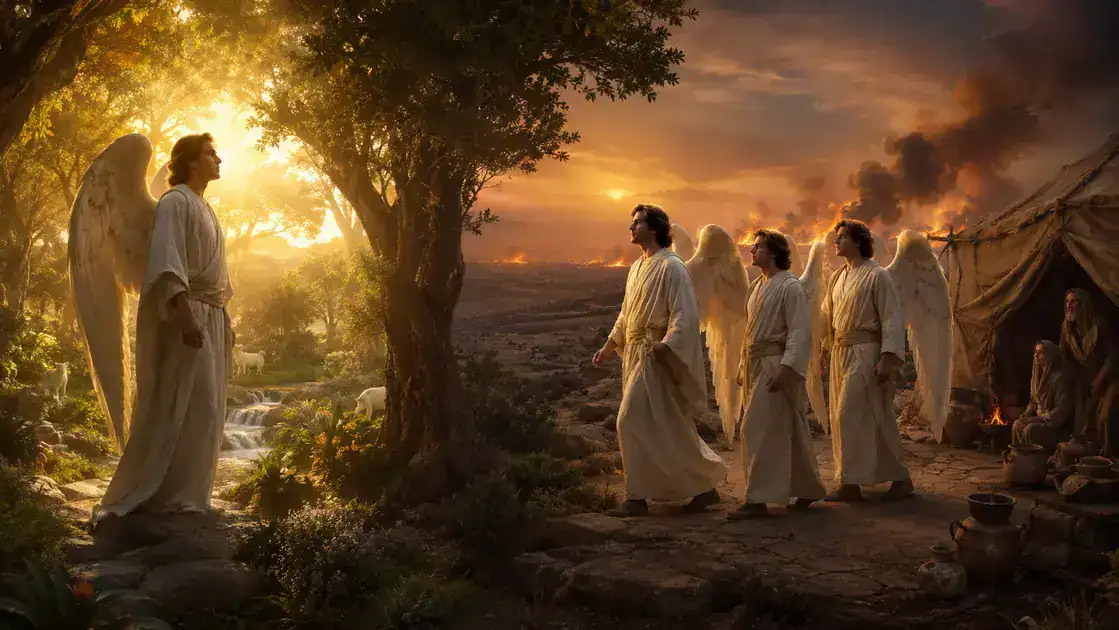

angel abraham visit three men recounts Genesis 18, where three visitors arrive at Abraham’s tent—one spoken of as the LORD and two as angelic messengers—turning Abraham’s swift hospitality into a covenantal moment that announces the promise of a son and teaches that simple welcome can become a place of divine encounter.
Have you ever imagined the hush of a desert night as strangers appear by the tent? angel abraham visit three men invites us into that small, holy moment — a story that stirs wonder and asks how hospitality opens the way for promise.
The scene at Mamre: reading Genesis 18
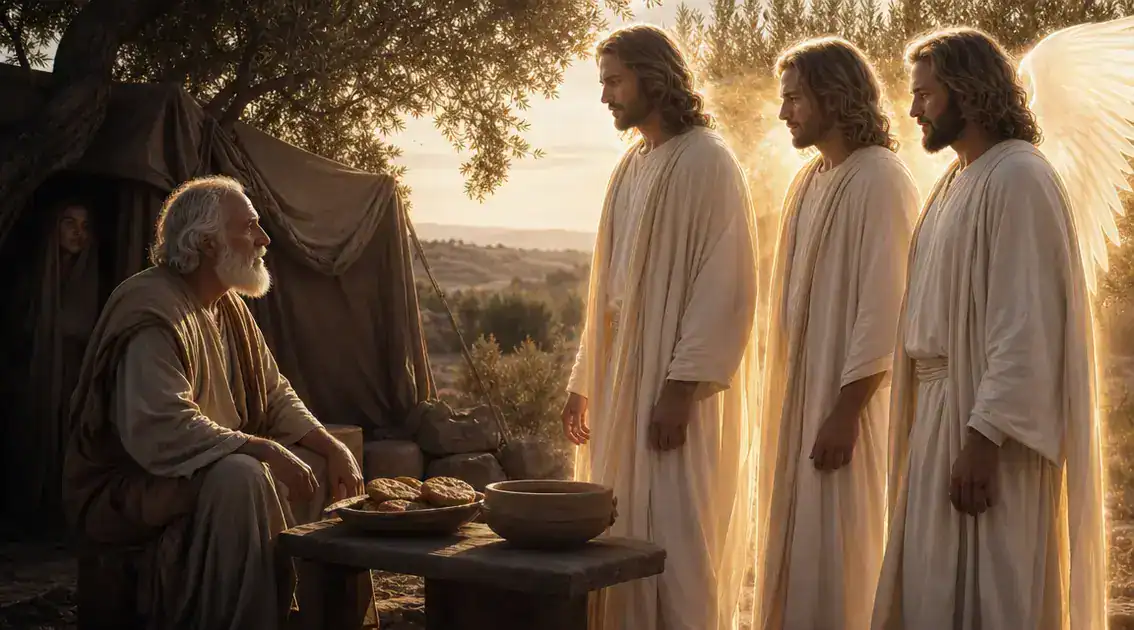
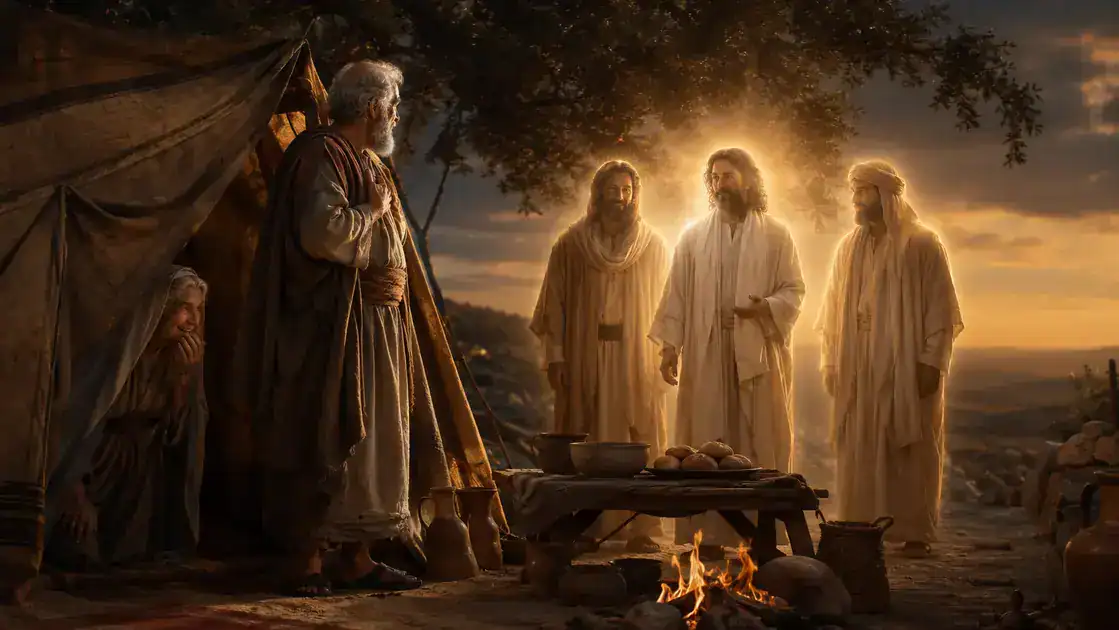
Evening settles at Mamre: a low tent, warm wind, and the hush of the plain. Three strangers appear on the road, and Abraham sees them from his tent. He runs out, bows to the ground, and offers water to wash their feet and a place to rest, laying out bread and a roasted calf as an offering of welcome.
The biblical narrator frames this visit in a surprising, tender way. In Genesis 18 one visitor is spoken to as the LORD while the others move like heavenly messengers; the scene shifts quickly from table talk to a solemn promise. This blend of everyday care and divine presence shows how ordinary hospitality can become a space for revelation and covenant.
As you read the scene, notice how small acts—water, bread, a seat by the fire—open room for blessing. Abraham’s swift hospitality models a faithful readiness that invites God into the household. The story asks us to live so that our doors and tables might also become places where heaven and earth meet.
God and angels: who were the three visitors?
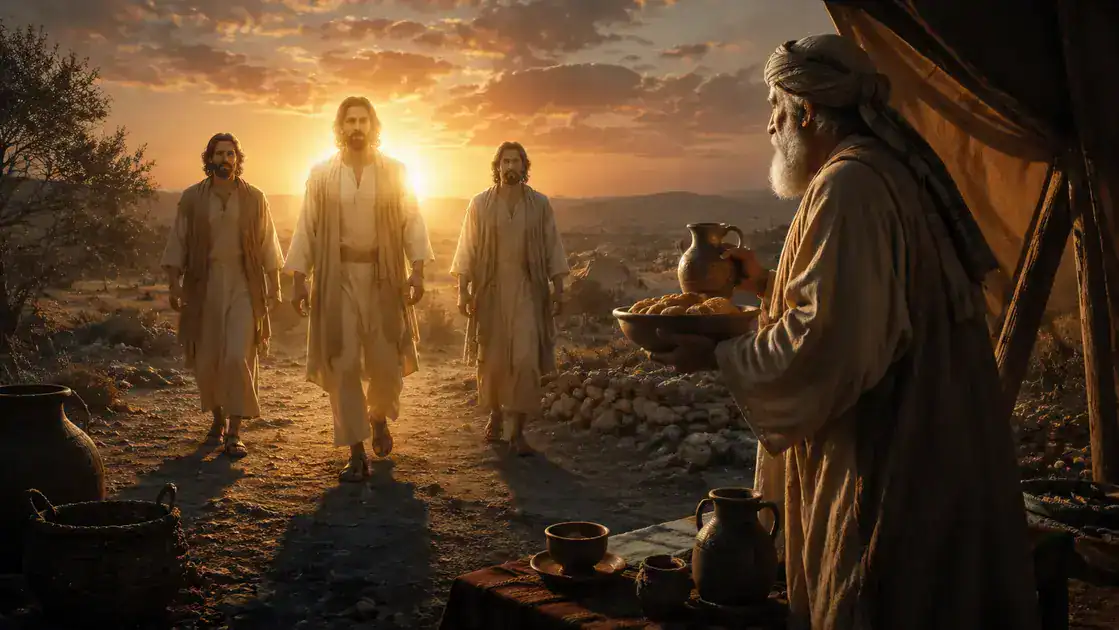
When the three visitors arrive at Abraham’s tent, the story quickly blends the ordinary with the holy. In Genesis 18 one figure is spoken of as the LORD while the others behave like heavenly messengers, and the narrative holds both realities together without forcing a tidy explanation. The scene reads like a theophany—a gentle but weighty moment when God draws near through hospitality and speech.
Readers across traditions have leaned into different angles of the same text: some Jewish readings stress that God visits by sending angels, while many Christian voices have seen in the encounter a hint of deeper, even Trinitarian, mystery. Still, the text itself keeps a soft tension. It invites faith to sit with the question rather than demand a final answer, leaving room for reverent wonder instead of quick doctrine.
For those who come to this story for spiritual care, the point is not solving a puzzle but learning posture. The visitors are both messengers and signs that God can come through plain human gestures. Abraham’s quick service shows how hospitality becomes a way to welcome the divine. When we open our doors and hands, we practice readiness for grace in forms we might not expect.
Hospitality as sacred ritual: Abraham’s welcome
Abraham meets the strangers with speed and care. He bows, speaks gently, and offers water to wash their feet, a place to rest, and a simple meal of bread and a roasted calf. These are small, concrete acts—hands at work, a low table set, a bowl for washing—that show hospitality as something lived rather than announced.
In the scene at Mamre, those ordinary gestures become sacred. The narrative in Genesis 18 links welcome and revelation, showing how a meal and a washed foot can open the door for blessing. Here hospitality is not just social courtesy; it is a ritual of readiness, a way of making space where the divine may speak and promise can be heard.
That practice matters for us today. We do not need ceremony or skill, only a willing heart and simple offerings: water, bread, a listening seat. These humble moves form a pattern of care that trains us to expect God in the everyday. When we practice such welcome, we learn to live with open hands and quiet hope.
The promise of a son: covenant and hope
The visitors speak a startling word: Sarah will bear a son. Abraham hears and laughs in the quiet dusk, and Sarah, listening from the tent, laughs too. The narrator names this moment in Genesis 18 with a gentle, almost human touch—laughter breaks into a scene heavy with promise and everyday care.
This promise is not an isolated gift but part of a larger covenant that frames Abraham’s life. God’s word here reaches back to earlier vows about descendants and blessing, and it pushes the story forward toward fulfillment. Calling the child Isaac (laughter) ties the personal surprise to the long arc of God’s faithfulness.
For spiritual life, the scene teaches patience and trust. Hope often arrives wrapped in the ordinary—meals, tents, names spoken aloud. When promise and doubt meet, laughter can be a faithful response: it names wonder and opens the heart. We are invited to live so that our readiness and simple trust make room for God’s surprising gift.
Angelic signs and human response: symbols to note
The visit at Mamre is full of small signs that point beyond themselves. The soft light around the visitors, the bowl of water for washing feet, the simple loaf of bread, and Abraham’s low bow all serve as symbols of welcome and presence. These images do not shout; they invite attention. They show how the ordinary can carry a hint of the sacred when met with humble care.
Abraham’s quick service and Sarah’s quiet laughter are responses that match those signs. Abraham moves without delay to provide rest and food, and his action becomes a kind of prayer in motion. Sarah’s laugh names surprise and deep hope, and the conversation that follows makes space for promise. Together, gesture and word teach us that listening and offering are proper replies when God draws near.
Noticing such symbols helps us practice readiness in daily life. A warm meal, a clean cup, a willing ear—these small things train us to expect blessing in plain forms. When we welcome others with real care, we create a place where the divine might speak again. Let those quiet signs shape how you open your door and your heart.
How this story guides our own hospitality and faith
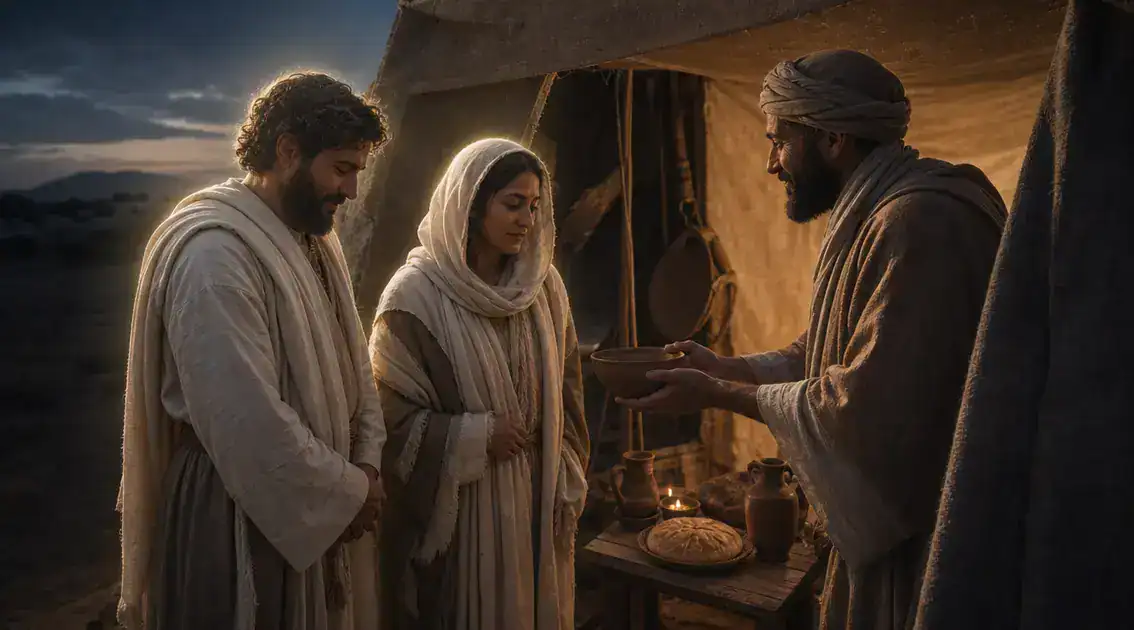
The story of Abraham teaches that simple acts can be holy work. When he runs to welcome the visitors, offers water, and sets bread before them, those small gestures become a way to meet God. This shows how hospitality is not just social politeness but a living practice that trains our hearts.
You can try this in small, faithful ways: keep a cup of water ready, offer a seat and a listening ear, share a warm meal without hurry. These habits teach patience and attentiveness. Over time, they shape us to notice quiet signs of grace in ordinary moments and to respond without hesitation.
Practicing welcome also grows trust. When we open our doors and tables with kindness, we prepare a space where hope can enter and promises can be spoken. Let those simple acts become your prayer in action—an expectant, humble way to live in hope and meet the unexpected presence of God.
A prayer for open hands
Lord, thank you for coming in small things—bread, water, a warm seat. Let our homes be places where heaven and earth meet. Teach us to welcome with open hands and quiet hearts.
Give us the grace to notice strangers and friends alike, to listen more than we speak, and to offer what we have without show. Make our simple acts into ways of prayer, and let them become doors for your presence.
May the memory of Abraham’s tent guide our days: swift service, humble courage, and expectant hope. When surprise and promise meet, help us to laugh with wonder and to trust your faithfulness.
Send us forth with peace to live hospitality as worship. Amen.
FAQ – Questions about Abraham’s visitors and sacred hospitality
Who were the three visitors in Genesis 18?
The text presents them as three men who arrive at Abraham’s tent (Genesis 18:1–2). The narrator then speaks of the LORD among them while the others act as messengers. Jewish and Christian traditions read this as God coming with angelic companions; the scene holds both divine presence and heavenly service without forcing a single technical label.
Why does the narrative sometimes call one of them the LORD?
Genesis 18 shifts from human hospitality to divine speech when the narrator identifies the visitor as the LORD (see Genesis 18:13–17). This is a theophany: God draws near in a way people can meet. The text shows God wearing an ordinary form to speak promises, which invites reverent listening rather than neat explanation.
What makes Abraham’s hospitality spiritually significant?
His welcome is swift, sacrificial, and practical—water for feet, a place to rest, a meal (Genesis 18:3–8). Scripture links such care with covenant life: hospitality becomes a way to receive blessing and to be ready for God’s word. The scene teaches that ordinary service can be a posture of prayer and expectation.
Why did Sarah laugh, and what does that laughter mean?
Sarah laughs at the promise that she will bear a son because it seems impossible in her old age (Genesis 18:10–12). The laughter names both doubt and wonder; later the child is named Isaac, which means “he laughs” (Genesis 21:3–6). The story holds human surprise beside divine faithfulness, turning hesitation into the sign of God’s surprising gift.
Do angels often come as ordinary travelers in Scripture?
Yes. Angels frequently appear in human form, especially in Genesis (the visitors at Abraham and the messengers to Lot, Genesis 19). The Bible shows they can be indistinguishable from strangers until their mission is revealed. This teaches caution and hospitality: treat others with care, for you may be meeting a messenger of God (cf. Hebrews 13:2).
How can I live out this story’s call to hospitality today?
Start with simple, concrete acts: offer a seat, a cup of water, a listening ear, a shared meal. The New Testament echoes this practice (Matthew 25:35; Hebrews 13:2) and treats such care as service to Christ. Make readiness a habit—small, humble gestures that form you to notice and welcome God in ordinary people and moments.